cold running lycoming O- 360

henryinparadise

Pre-Flight
Joined
Oct 27, 2023
Messages
42
Display Name
Henry
I have a midtime O- 360 in an RV7 ive owned for a year now.
Oil temp rarely gets over 165 and the CHT rarely gets over 360.
The engine has survived this long and seems to be in very good shape.
Should I:
Leave it alone? or
Fabricate a "cowl flap" adjustable device to limit air flow? shouldnt be too hard. or
Partially block air flow before take off depending on the air temp of the day?

your thoughts please
 
I wouldn't worry about the CHT's. You do want the oil temp around 180. Have you checked the oil bypass for the oil cooler? I had 2 go bad in the past 5 years or so.
 
I have a similar issue with the O-360 in my Cherokee, which was overhauled by Ly-Con and installed about six months ago (now about 60 SMOH). Temps are similar (CHTs I'm happy with) with the oil usually ranging from 140F to 160F. Not sure if this was an issue before overhaul, as I installed an engine monitor during that period, so I'm only getting accurate readings with the new engine. Otherwise the engine is running flawlessly, and burning almost no oil at all. The issue, of course, is that if the oil temp doesn't get to at least 180F, the risk of internal corrosion increases significantly. Not something I'm willing to contemplate in an engine I just paid $55k to overhaul.

I have replaced the vernatherm and verified function on both. Probe is correctly located and confirmed reading correctly. Gauge is a GI-275 EIS, so no issues with the display. Best-effort borescoping shows no obvious blockage of the bypass channel. Laser thermometer measurement of the oil cooler with the cowling off and a ground-run appears to show inappropriate warming of the oil cooler (i.e. getting warm despite oil temps being low enough that minimal oil should be routing to the cooler). After a chat with Ly-Con, my mechanic and I have decided to bypass the oil cooler entirely and do a test-flight to see if temps rise to an appropriate level. If so, we have confirmed that it's an issue of oil going to the cooler inappropriately. Annoyingly, even putting a winterization plate on to entirely block airflow to the cooler only gave a slight rise in oil temp (I have managed 190F one time, while cruising leaned at 9500ft, at 2600rpm).

It has stumped several A&Ps so far, including Savvy. Let me know if you figure it out!

 
your thoughts please
Make sure your indications are accurate first. And while 180-200 is the preferred range on oil temp to remove internal condensation you're still within Lycomings accepted range of 165-220.
 
I have a midtime O- 360 in an RV7 ive owned for a year now.
Oil temp rarely gets over 165 and the CHT rarely gets over 360.
The engine has survived this long and seems to be in very good shape.
Should I:
Leave it alone? or
Fabricate a "cowl flap" adjustable device to limit air flow? shouldnt be too hard. or
Partially block air flow before take off depending on the air temp of the day?
Those CHTs are GREAT!

What OATs do you have in your area right now? Do you have an oil cooler restrictor plate?
 
I have an IO-360 with similar issues in part because it is in Alaska, just the CHT though, my oil temps stay pretty close to 180 all the time in flight.

I didn’t realize it was going to be a problem but for awhile I was running it lean of peak in the winter at low power settings for sight seeing, etc and the CHT’s were around 250 for long periods, with the back cylinders being especially cold.

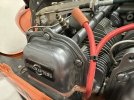
Turns out that CHT less than 300F can cause lead build up in the exhaust valve guides, apparently. Mike Busch did a podcast on this. The engine has become tricky to start when cold after 500 hours. marvel mystery oil in the fuel helps a little. I suspect the valve guides but haven’t found anyone willing to help me ream the guides in situ, they only want to pull jugs, so I just live with it for now. The baffling goes through the middle of the valve covers so I haven’t brought myself to attempt it yet.

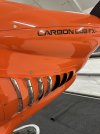
I taped over my engine gills for the winter and it raised my CHT’s about 15 degrees. Not huge but it helps. I also tend to keep it close to peak at low power settings and do everything I can to keep CHT above 300.
 

Attachments

  • IMG_4357.jpeg
    IMG_4357.jpeg
    1.5 MB · Views: 12
  • IMG_3004.jpeg
    IMG_3004.jpeg
    2.5 MB · Views: 12
If you are EX-AB you might try using Decalin Run-up Fuel Additive. Certified use TCP Fuel Treatment. Both are said to help against lead build up.

Pretty sure I'm preaching to the choir ...
 
If you are EX-AB you might try using Decalin Run-up Fuel Additive. Certified use TCP Fuel Treatment. Both are said to help against lead build up.

Pretty sure I'm preaching to the choir ...

Yeah, good ideas! Thanks! might try TCP; now that I know it’s a problem I’m hoping that just keeping the CHT’s over 300 all the time will prevent more build up too. It hasn’t gotten worse in a hundred hours or so; so far it just chugs a bit on cold starts if it’s been shut down more than 4 or 5 days. Maybe it was a coincidence but it started around the time I tried 35-40 hour oil change intervals instead of 25. Preheat before start completely masks the problem.

I’m also using Aeroshell W15W-50 and I wonder if that oil isn’t the best at carrying lead. Started camguard as soon as I had the problem, should’ve done that a long time ago. Oil analysis is around 3500 ppm Pb at 25 hour intervals. I do like that the Aeroshell is supposed to be good down to 0F or so without preheat even though I’d only attempt that in an emergency.
 
Aero shell is part synthetic so in theory yes less able to carry the lead vs Dino.
 
I have a midtime O- 360 in an RV7 ive owned for a year now.
Oil temp rarely gets over 165 and the CHT rarely gets over 360.
The engine has survived this long and seems to be in very good shape.
Should I:
Leave it alone? or
Fabricate a "cowl flap" adjustable device to limit air flow? shouldnt be too hard. or
Partially block air flow before take off depending on the air temp of the day?

your thoughts please
IIRC my oil temps are usually around 145 and my CHTs range from 320-380 depending on the OAT and leaning used. I just thought that was normal.
 
Back
Top