
You are using an out of date browser. It may not display this or other websites correctly.
You should upgrade or use an alternative browser.
You should upgrade or use an alternative browser.
Cirrus down 9A5, south of Chattanooga
- Thread starter Tools
- Start date


- Joined
- Mar 2, 2005
- Messages
- 16,628
- Location
- Southeast Tennessee
- Display Name
- This page intentionally left blank
METARS don’t really reflect conditions, it was a very windy blustery day here. Doing pattern work today? That’s a NOPE.

455 Bravo Uniform
Final Approach
Anyone have a tail number yet?
- Joined
- Mar 2, 2005
- Messages
- 16,628
- Location
- Southeast Tennessee
- Display Name
- This page intentionally left blank
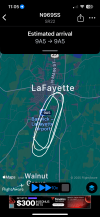
I think that’s what they were doing. Cartersville GA airplane, 30 miles ish away.
Yeah, local article says rhey were doing pattern work, supported by the flight track.
- Joined
- Mar 2, 2005
- Messages
- 16,628
- Location
- Southeast Tennessee
- Display Name
- This page intentionally left blank
Accident Cirrus SR22 GTS G2 turbo N969SS, Thursday 20 March 2025
On March 20, 2025, about 1430 eastern daylight time, a Cirrus SR-22, N969SS, was destroyed when it was involved in an accident near LaFayette, Georgia. The flight instructor and pilot rec...
asn.flightsafety.org
Very sporty today IMHO.

Flying Keys
Cleared for Takeoff
- Joined
- Jul 2, 2021
- Messages
- 1,027
- Display Name
- Flying Keys
METARS an hour before to an hour after:
K9A5 201735Z AUTO 29008KT 270V330 10SM SCT043 08/M01 A2997 RMK AO2 T00751014
K9A5 201755Z AUTO 26010KT 10SM SCT041 07/M01 A2997 RMK AO2 T00731012 10093 20070
K9A5 201815Z AUTO 26007KT 10SM SCT041 08/00 A2996 RMK AO2 T00831005
K9A5 201835Z AUTO 33010KT 10SM SCT043 08/M01 A2997 RMK AO2 T00761011
K9A5 201855Z AUTO 30005G08KT 10SM SCT041 07/M01 A2997 RMK AO2 T00741006
K9A5 201915Z AUTO 32006G14KT 10SM BKN039 07/00 A2997 RMK AO2 T00700000
K9A5 201935Z AUTO 29012G17KT 10SM SCT037 08/00 A2997 RMK AO2 T00751002
Everywhere else around there was gusting to 17-23 out of the west to west-northwest around the accident time.

- Joined
- Jun 13, 2008
- Messages
- 9,173
- Location
- Marietta, GA
- Display Name
- Drake the Outlaw
- Home Airfield
- Cartersville, GA
I'm based at Cartersville. Don't recognize the airplane or the listed owner.I think that’s what they were doing. Cartersville GA airplane, 30 miles ish away.
As Bill said, really windy here mid-day yesterday. Probably a substantial crosswind and mechanical turbulence at Lafayette.
- Joined
- Mar 2, 2005
- Messages
- 16,628
- Location
- Southeast Tennessee
- Display Name
- This page intentionally left blank
Everywhere else around there was gusting to 17-23 out of the west to west-northwest around the accident time.
There are six significant NE to SW ridges west of Lafayette starting about three miles west of the airport spaced roughly 1/2 mile apart. When there are strong west or west north west winds this whole area turns into a big tumble dryer.
- Joined
- Mar 2, 2005
- Messages
- 16,628
- Location
- Southeast Tennessee
- Display Name
- This page intentionally left blank
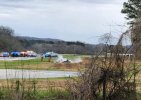
From a local news station.
Flying Keys
Cleared for Takeoff
- Joined
- Jul 2, 2021
- Messages
- 1,027
- Display Name
- Flying Keys
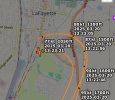
Looking at the ADS-B track, the last pattern before the crash was a tighter and shorter approach than the previous several patterns.
If the data are correct, the final ping was during the base to final turn and was in a spot that would have required a pretty tight turn, only about 500’ (1/10 mile) from the threshold, whereas the previous patterns had a little more gentle of an angle, rolling out at about 1/4 to 1/3 mile.
From the pic @Bill posted, the wreckage was adjacent to the approach end of runway 20, just west of the piano keys, as if the final trajectory overshot - very much foots with the turn angle I described.
Flying Keys
Cleared for Takeoff
- Joined
- Jul 2, 2021
- Messages
- 1,027
- Display Name
- Flying Keys
This describes it better:
- Joined
- Jun 13, 2008
- Messages
- 9,173
- Location
- Marietta, GA
- Display Name
- Drake the Outlaw
- Home Airfield
- Cartersville, GA
With a nominal 20 knot wind out of the West, their airspeed at the last measured point was >90 knots. I’d bet on turbulence/gust induced loss of control over a base/final stall.

ahmad
Line Up and Wait
The weather has been absolutely brutal the last few days in the midwest and south. I flew on wed and the LLWS and gusty 40kts was not fun. Hit the roof with my head 3 times. Wings dropping like crazy. Gaining/losing couple 100 ft instantly. Def not a pattern work time of weather. Terrible tragedy.

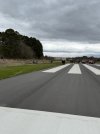
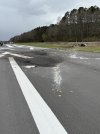
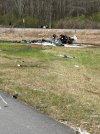
A friend sent me these photos. Hard to make sense of it, especially the debris trail at the threshold.
- Joined
- Jun 13, 2008
- Messages
- 9,173
- Location
- Marietta, GA
- Display Name
- Drake the Outlaw
- Home Airfield
- Cartersville, GA
I saw those pic's earlier. Looks to me like they were never aligned with the runway and impacted HARD on the runway, but way off-line. Even with the big crosswind and turbulence, it is hard to understand how they hit that hard.A friend sent me these photos. Hard to make sense of it, especially the debris trail at the threshold.
Oddly enough, there’s no tire marks. I can’t figure it out.I saw those pic's earlier. Looks to me like they were never aligned with the runway and impacted HARD on the runway, but way off-line. Even with the big crosswind and turbulence, it is hard to understand how they hit that hard.
- Joined
- Mar 2, 2005
- Messages
- 16,628
- Location
- Southeast Tennessee
- Display Name
- This page intentionally left blank
Assuming wheel side was down :-(
traumamed
Pre-takeoff checklist
Does anyone know if there are simulator options available that are both realistic enough to be useful and also not cost-prohibitive for practicing approaches and landings in adverse wind conditions? It is nice to be able to practice when conditions are suboptimal. It is not so nice to have to do so in an actual airplane with actual consequences in play with every single lap.
- Joined
- Jun 13, 2008
- Messages
- 9,173
- Location
- Marietta, GA
- Display Name
- Drake the Outlaw
- Home Airfield
- Cartersville, GA
Pure speculation. Looking in the direction of flight, a wingtip hit first, ruptured the tank, the airplane flipped and burned.Oddly enough, there’s no tire marks. I can’t figure it out.

Ed Haywood
Final Approach
17G23 is frisky but not particularly dangerous for pattern work. Headwinds on base are easy to deal with.
Turbulence from nearby terrain could be a different story.
Turbulence from nearby terrain could be a different story.
- Joined
- Jun 13, 2008
- Messages
- 9,173
- Location
- Marietta, GA
- Display Name
- Drake the Outlaw
- Home Airfield
- Cartersville, GA
I was flying on Wednesday with a friend's son who flys Cirri in Oklahoma State's flight program. He indicated that the demonstrated crosswind limit on the SR-20's he flies is 12 knots. Is that the same for the -22's? Does the airplane have an undersized rudder, or is Cirrus simply publishing low demonstrated limits?17G23 is frisky but not particularly dangerous for pattern work. Headwinds on base are easy to deal with.
Turbulence from nearby terrain could be a different story.

bbchien
Touchdown! Greaser!
Reminds me of the accident on Runway 5 @ MMU some years back. ERA10FA347
I know I might provoke the dogs, but at high alpha is NOT where you want to be in an SR 22 (And the lack of a protected fuel system leads to immolation if you have runway LOC).
RIP.
I know I might provoke the dogs, but at high alpha is NOT where you want to be in an SR 22 (And the lack of a protected fuel system leads to immolation if you have runway LOC).
RIP.
Flying Keys
Cleared for Takeoff
- Joined
- Jul 2, 2021
- Messages
- 1,027
- Display Name
- Flying Keys
Exactly. Came in at the angle crossing the runway because that was the ballistic trajectory tangentially to the point in the turn when it stalled, according to the data. It actually makes more sense, not less.Gravity. And an absence of lift.. ie stalled.

wanttaja
Final Approach
- Joined
- Jun 7, 2008
- Messages
- 5,667
- Location
- "War-Torn" Portland
- Display Name
- Ron Wanttaja
- Home Airfield
- Twin Oaks Airpark
Reminds me of the accident on Runway 5 @ MMU some years back. ERA10FA347
I know I might provoke the dogs, but at high alpha is NOT where you want to be in an SR 22 (And the lack of a protected fuel system leads to immolation if you have runway LOC).
RIP.
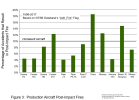
Ron Wanttaja
- Joined
- Jun 13, 2008
- Messages
- 9,173
- Location
- Marietta, GA
- Display Name
- Drake the Outlaw
- Home Airfield
- Cartersville, GA
Looking at the ADSB track it appears they were acute to the runway based on the last ADSB ping. Maybe they were still in a left bank near the ground, got windshear or turbulence, dug in the left wingtip, cartwheeled, and ended upside down and backwards. Uggh.

pfarber
Pattern Altitude
- Joined
- Jun 20, 2021
- Messages
- 1,653
- Display Name
- pfarber
Google-fu says -20 and -22 direct crosswind limit is 21kts. I couldn't find a published Vb speed.I was flying on Wednesday with a friend's son who flys Cirri in Oklahoma State's flight program. He indicated that the demonstrated crosswind limit on the SR-20's he flies is 12 knots. Is that the same for the -22's? Does the airplane have an undersized rudder, or is Cirrus simply publishing low demonstrated limits?
12kts seems more like club limit not a design limit.
- Joined
- Jun 13, 2008
- Messages
- 9,173
- Location
- Marietta, GA
- Display Name
- Drake the Outlaw
- Home Airfield
- Cartersville, GA
That makes more sense. Low time 20 year old pilots. Probably don't want to turn 'em loose in a screaming crosswind.12kts seems more like club limit not a design limit.

flyingcheesehead
Taxi to Parking
- Joined
- Feb 23, 2005
- Messages
- 28,191
- Location
- UQACY, WI
- Display Name
- iMooniac
- Home Airfield
- KUES/KMKE
Yup. Cirrus didn't have integral metal tanks in the wings until... 2015ish? Before that, they were just wet wings, composite of course. Metal bends in a crash, composites shatter and make a nice splash out of all the remaining fuel, leading to a very large fire in tiny fractions of a second. I remember seeing footage of a Cirrus crash where consecutive frames (1/30th of a second apart) showed crash, splash, completely engulfed. Very sobering.
I'm glad Cirrus finally put metal tanks in the wings, but there are an awful lot of them out there not so equipped still.
EDIT: Turns out they didn't. I believe this was reported at the time one of the new generations of SR22s came out, but that report was incorrect. All SR series aircraft are still all-composite wet wings.

Last edited:
Flying Keys
Cleared for Takeoff
- Joined
- Jul 2, 2021
- Messages
- 1,027
- Display Name
- Flying Keys
That was my thought. The last pattern looks like a fairly typical “short approach.”It is sporty there at tree top level, although that shouldn’t matter.
I’m kind of wondering about the guy working on commercial, and power off 180s.
Doc is right, that’s no plane for high AOA anything…

- Joined
- Jun 11, 2015
- Messages
- 5,612
- Display Name
- Piperonca
- Home Airfield
- M52
And the lack of a protected fuel system leads to immolation if you have runway LOC


Hengelo
Cleared for Takeoff
- Joined
- Aug 31, 2021
- Messages
- 1,228
- Display Name
- Hengelo
You answered the question before I had time to ask.
Yup. Cirrus didn't have integral metal tanks in the wings until... 2015ish? Before that, they were just wet wings, composite of course. Metal bends in a crash, composites shatter and make a nice splash out of all the remaining fuel, leading to a very large fire in tiny fractions of a second. I remember seeing footage of a Cirrus crash where consecutive frames (1/30th of a second apart) showed crash, splash, completely engulfed. Very sobering.
I'm glad Cirrus finally put metal tanks in the wings, but there are an awful lot of them out there not so equipped still.
- Joined
- Mar 2, 2005
- Messages
- 16,628
- Location
- Southeast Tennessee
- Display Name
- This page intentionally left blank
It is sporty there at tree top level, although that shouldn’t matter.
I’m kind of wondering about the guy working on commercial, and power off 180s.
Doc is right, that’s no plane for high AOA anything…
That was my thought. The last pattern looks like a fairly typical “short approach.”
Updates to local news articles report that the “passenger” was indeed a CFI and the pilot was working on his commercial.
I don’t mean to speak ill of the dead, and y’all can flame me if you wish, but it was IMHO poor judgement to be doing those maneuvers in that aircraft in those conditions.
One of Dirty Harry’s tag lines was “A man’s got to know his limitations.”

FastEddieB
Touchdown! Greaser!
- Joined
- Oct 14, 2013
- Messages
- 11,865
- Location
- Lenoir City, TN/Mineral Bluff, GA
- Display Name
- Fast Eddie B
- Home Airfield
- Big T Airport (80TN)
I assume most here have seen this video, but I’ll post it again in case some have not. Seems relevant as to how fast things can go to hell in a Cirrus, though it takes some work…

Velocity173
Touchdown! Greaser!
- Joined
- Jul 3, 2012
- Messages
- 16,369
- Display Name
- Velocity173
Yep, I’ve been there several times for maintenance (Gann overhaul) and it can get squirrelly there with cross winds. Did two go arounds once trying to get in on a windy day.It is sporty there at tree top level, although that shouldn’t matter.
I’m kind of wondering about the guy working on commercial, and power off 180s.
Doc is right, that’s no plane for high AOA anything…
- Joined
- Mar 2, 2005
- Messages
- 16,628
- Location
- Southeast Tennessee
- Display Name
- This page intentionally left blank
Interesting. So left wing stalled, applied enough right rudder to simultaneously stall the right wing, get the left wing flying again, and roll right inverted. Scary.I assume most here have seen this video, but I’ll post it again in case some have not. Seems relevant as to how fast things can go to hell in a Cirrus, though it takes some work…
- Joined
- Mar 2, 2005
- Messages
- 16,628
- Location
- Southeast Tennessee
- Display Name
- This page intentionally left blank
This is typical of many small GA airports in this area (including my home drome), they are nestled down in valleys between ridges. When strong gusty winds blow orthogonal to the ridges and runway, the mechanical turbulence gets very unpredictable.Yep, I’ve been there several times for maintenance (Gann overhaul) and it can get squirrelly there with cross winds. Did two go arounds once trying to get in on a windy day.
Flying Keys
Cleared for Takeoff
- Joined
- Jul 2, 2021
- Messages
- 1,027
- Display Name
- Flying Keys
Consider what the effect of a strong crosswind from the dead side of the pattern will do to groundspeed during the base leg, and how that affects overall pattern geometry and descent angle, especially in a power-off situation. And that’s before considering the effect of turbulence.Updates to local news articles report that the “passenger” was indeed a CFI and the pilot was working on his commercial.
I don’t mean to speak ill of the dead, and y’all can flame me if you wish, but it was IMHO poor judgement to be doing those maneuvers in that aircraft in those conditions.
One of Dirty Harry’s tag lines was “A man’s got to know his limitations.”
Granted, we don’t know that’s what happened, but we have several data points, and that last pattern was different than the others, and to continue to line up would have required a pretty tight turn at pretty low altitude.