
david.h
Pre-takeoff checklist

Plane crash near Wimberley kills 5
Five people have been killed in a plane crash overnight in the Wimberley area.

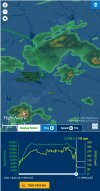

Aircraft is registered to an LLC name that's never been registered in Texas with this address in Amarillo:N291AN - if the flightaware weather reflects what was going on at the time of the accident, they seem to have flown near some bad weather.
View attachment 151807

The tax rolls show the property is owned by someone with the same name as a private pilot with ASEL, AMEL, and instrument ratings.Aircraft is registered to an LLC name that's never been registered in Texas with this address in Amarillo:
View attachment 151809

N291AN - if the flightaware weather reflects what was going on at the time of the accident, they seem to have flown near some bad weather.
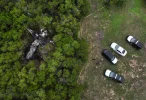

FB "witnesses" claim the engine nose stopped before the crash. One article quotes a neighbor as saying it was making an erie spaceship sound. Perhaps some sort of inflight breakup. Of course witnesses are terribly unreliable. I'm sure DG knows what happened.Flat Spin or lost of Tail?
View attachment 151815
That didn't take long! There were two planes, both were part of a Pickelball Club. The other plane landed safely in New Braunfels.From BT:
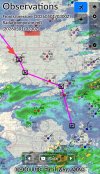
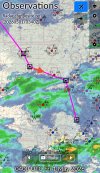
Well this is interesting… the other 421 was N41106, departed 2 minutes prior to the accident airplane N291AN. Their ADSB ground tracks are virtually identical; it appears that N41106 was IFR, but 1AN was VFR… did they do this as a “two-ship” IFR flight I wonder? Will be curious to see how this shakes out.

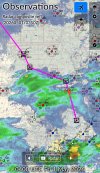
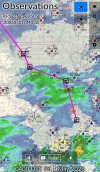

Very suspiciousAircraft is registered to an LLC name that's never been registered in Texas with this address in Amarillo:
View attachment 151809

Yeah, it's waaaaay suspicious that people try to keep things private.Very suspicious


The autopilot in that plane may have been a factor in its own right. I have never flown with a fully operational Cessna Flight-o-Matic or whatever they’re called. The one in our 310 was inop before we got the plane. They’re not famous for being easy or cheap to maintain. I don’t know what the mishap plane had for a panel, but a lot of 421s have the original panel. It’s easy to imagine getting behind the plane trying to dodge weather, even without icing.It appears that continued flight into icing conditions while relying on the autopilot may have caused a situation where it ran out of authority to fly the aircraft and kicked off, presenting a condition the pilot was unable to correct in a timely manner which resulted in a loss of control.

Where did you get that from?I take it this was a Part 135 Operation?
I would put 421 in a class of plane that can handle some weather. This one is a head-scratcher for me.
Another forum had an anecdote about "lost instruments" but... still not sure how that equates to that charcoal briquette landing.
“ I Take It” is I’m guessing. Maybe a Southern thing. Or two benevolent 421 owners lent the passengers a free ride?Where did you get that from?
Had read somewhere either pitot or static was iced up. Ask @NealRomeoGolf how disorienting that can be.I would put 421 in a class of plane that can handle some weather. This one is a head-scratcher for me.
Another forum had an anecdote about "lost instruments" but... still not sure how that equates to that charcoal briquette landing.
The flight track produced on the tracking sites was multilaterated (MLAT), so no available/discernable ADS-B out on this flight.It appears that continued flight into icing conditions while relying on the autopilot may have caused a situation where it ran out of authority to fly the aircraft and kicked off, presenting a condition the pilot was unable to correct in a timely manner which resulted in a loss of control.

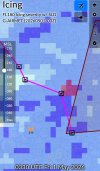
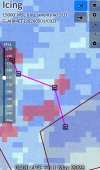
I believe, the RED in the icing forecast indicates SLD.
I hope not. The owner (one of the deceased) has a private certificate.I take it this was a Part 135 Operation?
Only mildly so. The owner of the address on the registration is a pilot and was on board. The non-existent LLC could just be an oversight.Very suspicious


My immediate thought about the pickleball aspect of this crash was my go-to assessment that industrial-scale pickleball is the dumbest thing I’ve ever heard of. But that’s purely an example of Hazardous Attitude #3: invulnerability. What idiotic side quest of mine will seem important enough to launch into conditions that I shouldn’t? Hopefully, when I find the answer to that question someday, I remember posting this.All because of a pickle ball tournament and get-home-itis.
But…but…it’s TURBOCHARGED! We HAVE to go up there!My question is what was the compelling reason to flying in the upper teens with icing and buildups forecast and occurring as the route was over Texas low country? Seems that encounters with thunderstorms and severe SLD icing occurring in the teens have very bad outcomes.
I knew a retired Eastern Airline pilot that earlier in his career flew "the line" in DC-3's throughout the midwest and eastern U.S., and retired flying L-1011's. I asked him how did they avoid thunderstorms in normally aspirated DC-3's before the days of weather radar and accurate forecasts? His response was to stay low and visual, and change plans as necessary. He advised that climbing or remaining high to stay visual and dodge weather in the low teens was not a good option.
Of historical interest, this retired pilot worked for Eddie Rickenbacker (the founder of Eastern Airlines) who when asked informed pilots "we don't use autopilots, I pay you guys to fly".
Was on a Texas Air DC9 jumpseat a long time ago who went from LRD to HOU at 2000 or so skirting S. TX TSTMs. Smooth as silk. Tried that once later in a 727 and also went well. Gotta have the gas though.But…but…it’s TURBOCHARGED! We HAVE to go up there!
I’ve spent my fair share of time at 4000 and 5000 feet dodging thunderstorms in King Airs, and also gotten my fair share of grief for doing it.
I read NTSB reports about loss of control crashes that occur at night, and it seems more than a few that involved passengers have a commonality. The report will state the planned takeoff was at X, but failure of the party to arrive at the airport at the appointed time resulted in a later takeoff at X. That moved the flight to night hours, and it became a causal factor in the mishap. The GIII crash at Aspen a few years ago stands out as an example.Low-time multi engine qualified, flying late at night with passengers, with bad weather.
All because of a pickle ball tournament and get-home-itis.
The last several minutes were probably worth it to take the risk.

Whatever your backup is, be REALLY good at it.Audio has come out indicating that the pilot was reporting that the pitot heat had iced up and they were on back up gauges.
