Can Approach Controllers vector traffic through Class D airspace underneath Class C?

Mileage

Pre-takeoff checklist
Joined
Dec 15, 2022
Messages
103
Display Name
Mileage
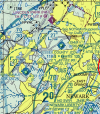
I was using FF and talking to Savannah Approach as I neared the Savannah Class C airspace. I was planning to maneuver around a "fin" of Class D airspace (KSVN) that sits under the Class C shelf but also wraps up and around it, but then the Approach Controller vectored me right through it. I am used to Approach Controllers seeming to get permission from Class D towers (e.g., in Miami and NJ) before doing such a thing - and maybe he did do it without telling me - but have never had it happen quite like this before. Later the same day a New York Approach controller expressed frustration because he could not get the Morristown Tower (KMMU) to clear me through the Morristown Class D on my way to Caldwell (KCDW). Seems inconsistent. I am curious if this is something ATC can do and if it's consistent nationwide.
 
We have Class C El Paso, Class D Biggs Field military under El Paso, and Juarez Mexico Class C right next door to us. They have LOAs (Letters of agreement, especially with Mexico ... sometimes they won't allow over-flight which eliminates RWY 4 KELP as am option when they "block").

Have seen the reverse also: Was on FF with ABQ Center, they told me to contact Class D Tower at KAEG for landing, when I did Double Eagle KAEG was irate and that their wasn't a hand off from center (review indicated this was centers fault for not co-ordinating).

EDIT: I *ask* now ... trust but verify on all handoffs and unusual approaches
 
Around my neck of the woods (central gulf coast) it seems that the Deltas all have LOA's with the Charlies/Bravos and it is usually seamless.
 
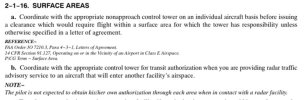
If you are in contact with a radar controller whether VFR or IFR, and your course will take you through Class D airspace, it is the controller's responsibility to coordinate this transition with the local tower. As mentioned above, even though airspace shows on the chart as Class D, it may in fact belong to the overlying approach control, or there may be letters of agreement between facilities.
The bottom line for the situation in the original post is that you do not need to worry about it. If for some reason you need to keep clear of the D airspace, you will be given that specific instruction.
Jon
 
Yep, they can vector you through it all day long. It’s up to them to get the transition from SVN tower. There’s also SVN GCA so I imagine they call them on the landline as well to see if they’re working anything in the pattern. I was stationed at SVN for 3 years.
 
Yep, they can vector you through it all day long. It’s up to them to get the transition from SVN tower. There’s also SVN GCA so I imagine they call them on the landline as well to see if they’re working anything in the pattern. I was stationed at SVN for 3 years.
Can you quote the .65 reference saying that the pilot is not expected to get the CDA authorization? You can probably find it quicker than I can.
 
At least part of the reason is that what we see on our Sectionals is not necessarily how ATC sees airspace boundaries. There are LOAs (Letters of Agreement) between ATC facilities which can change who the facility controlling the airspace is. We don’t know that.

When I was teaching primary I used to set up my students in a situation where they would call a Tower for a Class D transition at an altitude inside the Class D. Student would call Tower and be told to contact Approach instead.
 
It may depend on the Letter of Agreement between the Radar Facility and the Tower.
 
Morristown and Caldwell are a tough example as the two airports basically touch and sit under the bravo. If your not careful on a busy day you might get the magic number to call.
 
Morristown and Caldwell are a tough example as the two airports basically touch and sit under the bravo. If your not careful on a busy day you might get the magic number to call.
How so? I'm not disagreeing with you, but I don't understand the context of the statement.
 
I am used to Approach Controllers seeming to get permission from Class D towers (e.g., in Miami and NJ) before doing such a thing - and maybe he did do it without telling me - but have never had it happen quite like this before. Later the same day a New York Approach controller expressed frustration because he could not get the Morristown Tower (KMMU) to clear me through the Morristown Class D on my way to Caldwell (KCDW). Seems inconsistent. I am curious if this is something ATC can do and if it's consistent nationwide.
You are correct, they must have or get permission. The have may be a Letter of Agreement (LOA) or some other document that lets Approach send you through their Airspace if they see there is no traffic in that area. They obviously cannot send you through a section NE in the D if I happened to be flying through VFR. Usually though, I believe it is all permission per event. So Approach would get on the intercom/phone to the Tower and ask if it was okay. You and I may never know this conversation took place, just that we get vectored right on through. If there is an issue, it would be on the Controller as we are required to follow their instructions unless it was felt to be unsafe, but a Vector through a Class D is pretty common, so I would not see it as something I would need to refuse just because the Controller didn't bother to tell me they got it okayed.

As for CDW and MMU, not sure if you were visiting or based at CDW, but they can get very busy. So I can see the Local Controller at MMU having their Airspace full and no way to move anyone to let you transition through. And there's nothing Approach (or Departure) can do if MMU says no, MMU owns their Airspace.
 
It’s not just vectoring either. As the reference I provided, just giving radar service they’re responsible for getting the transit approval. But as in your New York example, it’s not automatic approval. At my old facility, there were plenty of times tower would either deny (busy) or approve with “at or above” or “put him on me.”
 
How so? I'm not disagreeing with you, but I don't understand the context of the statement.
The controllers don’t always get the essays onthe had off recently I departed CDW with a handoff to MMU tower and continued south. The class B controller didn’t get that the tower was working me. Never entered class B
 
The controllers don’t always get the essays onthe had off recently I departed CDW with a handoff to MMU tower and continued south. The class B controller didn’t get that the tower was working me. Never entered class B
I'm sorry- I still don't understand. Departing KCDW to the southwest to KMMU, if you stay below 3000', Class B shouldn't be involved. I read that there was a handoff to MMU. If you maintained below 3000', you would stay clear of the bravo if you went far enough southwest, such as overflying KMMU. If you were told to fly south earlier, you might have gotten into the Bravo depending on your altitude. The maximum elevation figure there there appears to be 2000', which could conflict with part of the bravo at 1800 feet, but someone that knows the area could still stay clear of the bravo by flying below 1800.

So I think that whoever was handling that sector of the bravo thought you were in their airspace and gave you a number? Is this a coordination issue, or the bravo controller mistakenly thinking you were in their airspace? It seems the class delta controllers were coordinated?

1762120782410.png
 
Back
Top