Camshaft going flat

brien23

Pattern Altitude
Joined
May 31, 2005
Messages
1,624
Location
Oak Harbor
Display Name
Brien
Home Airfield
76S
Seems to be a rash of O-320 camshafts going flat. A lot of engines have been sitting for a long time not being flown and people are starting to use them again.

 
Seems to be a rash of O-320 camshafts going flat. A lot of engines have been sitting for a long time not being flown and people are starting to use them again.

That will do it...........:yes:..

Why the aero engine companies didn't adapt roller cam technology 40 years ago is beyond me..:dunno:.............:mad:
 
Getting my engine overhauled right now. Yesterday the shop showed me the cam. Rust all over it and one of the lobes was worn to a nubb. Not good to let the engine sit.
 
That will do it...........:yes:..

Why the aero engine companies didn't adapt roller cam technology 40 years ago is beyond me..:dunno:.............:mad:

Most likely because it would cost more to get the new designs certificated than they could ever recover from sales of the engines.

-Rich
 
It's not just 320s that are having cam problems. The last few 360s I've split have had cam problems too. They were even in high use airplanes, had relatively recent overhauls, and they still didn't make TBO without issues.

After seeing what I've seen lately I'm having a hard time believing that the airplanes/engines I'm seeing for sale that are near TBO with a new top really have good cams in them.
 
so question. If the engine is not getting used, how do the lobes wear down? I think they'd wear due to the friction of use?
 
so question. If the engine is not getting used, how do the lobes wear down? I think they'd wear due to the friction of use?

Mainly rust and loss of lubrication, which lead to excessive wear during startup, before the parts have a chance to be sufficiently coated with oil.

-Rich
 
Mainly rust and loss of lubrication, which lead to excessive wear during startup, before the parts have a chance to be sufficiently coated with oil.

-Rich

This. ^ The overhaul shop said that with rust that was in the engine prior to me buying it sped up the wearing process once I started using it. Combine that with the fact I had no air filter setup except for a wire screen and it was only a matter of time before I started having problems.
 
Mainly rust and loss of lubrication, which lead to excessive wear during startup, before the parts have a chance to be sufficiently coated with oil.

-Rich

It's not just excessive wear at startup, engines that have sat for a while will have enough corrosion in them that they may have pitted cam lobes and followers which will continue to destroy themselves as you use the engine.

The worst cam and followers I've seen came out of an o-320 that had 600 hours on it. The engine was overhauled in the late '90s, used for a few hundred hours over a few years then the airplane was parked for an extended period of time. After it was resurrected the oil screen was filled with metal at every oil change until we finally pulled the plug and started pulling cylinders to look at the cam. There wasn't much left of things by then, and metal was everywhere in the engine.

That's not all, the crank was so corroded it was junk too. About the only thing left of the original engine after the overhaul were the case halves and the oil pan.
 
Is this really a new phenom? Seems like I've been hearing it for many years.
 
Most likely because it would cost more to get the new designs certificated than they could ever recover from sales of the engines.

-Rich

That is correct. However, Lycoming did switch to roller cams around 15ish years ago (not sure of the exact time) for reliability. Penetration is so-so, as many people send engines to other shops for overhaul. All overhauls coming out of the factory have roller cams, with some turbo engines excluded.
 
Last edited:
It's not just excessive wear at startup, engines that have sat for a while will have enough corrosion in them that they may have pitted cam lobes and followers which will continue to destroy themselves as you use the engine.

The worst cam and followers I've seen came out of an o-320 that had 600 hours on it. The engine was overhauled in the late '90s, used for a few hundred hours over a few years then the airplane was parked for an extended period of time. After it was resurrected the oil screen was filled with metal at every oil change until we finally pulled the plug and started pulling cylinders to look at the cam. There wasn't much left of things by then, and metal was everywhere in the engine.

That's not all, the crank was so corroded it was junk too. About the only thing left of the original engine after the overhaul were the case halves and the oil pan.

Right. The rust / corrosion is its own problem, in addition to the startup wear, but I didn't phrase it properly.

-Rich
 
I guess this is why its a good idea to do an oil analysis with every oil change. If one was doing this one would see a lifter or cam lobe is coming apart.

Tony
 
Nothing kills an engine faster than not running.
And nothing makes an engine last longer than being run every day.
 
Nothing kills an engine faster than not running.
And nothing makes an engine last longer than being run every day.

That said, I expect that installing the preoiler STC and setting it up to run a couple of times a day would help keep things oiled. You would have to have the battery on a float charger and figure out how to trigger the preoiler, but it should help. I don't know what all gets oiled when the preoiler goes, but I would expect it would be the crankshaft, camshaft, and the bearings. If you had the piston sprayers then they might get wet also.

http://www.oilamatic.com/

Jim
 
There is nothing in a stock engine to oil the camshaft.
 
There is nothing in a stock engine to oil the camshaft.
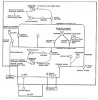
So how does the camshaft get oil?

Edit: I think I found my answer at http://egaa.home.mindspring.com/engine3.htm :
[FONT=Arial, Helvetica, sans-serif]In the O-235 and other solid tappet engines, Lycoming designed the case halves with what we refer to as a "catch basin" in the upper portion of each to collect oil splashed during normal operation. These basins in turn funnel the captured oil to internal passages that drain it directly to the pushrod shroud tubes, through which the oil gravity flows to the rocker box. In the rocker box, this oil drains from the pushrod shroud tubes directly onto the exposed valve guide and valve stem, thereby providing both lubrication and cooling of these components. This method is simple and has generally served well in transferring sufficient oil to the rocker box to meet lubrication and cooling requirements in those smaller Lycoming engines which use it. [/FONT]​
 

Attachments

  • oil flow lycoming.jpg
    oil flow lycoming.jpg
    41.1 KB · Views: 23
Last edited:
Just do like I do - run 4 hour legs. Severely reduces start-up wear.
 
I guess this is why its a good idea to do an oil analysis with every oil change. If one was doing this one would see a lifter or cam lobe is coming apart.

Tony

I wouldn't place complete faith in an oil sample/analysis program catching a budding problem. I've seen a number of cases during my time in a test lab where there were engine problems developing that the oil analysis program never caught. Ironically, a couple of the cases were for flat cams and spalling cam followers.

So how does the camshaft get oil?

Edit: I think I found my answer at http://egaa.home.mindspring.com/engine3.htm :

What you quoted is describing how the valvetrain gets oiled, not how the cam gets oiled.
 
Splash oil oils the cam. From what I understand the cam in a Lycoming is above the the crank and has a tough time getting the oil its needed.
The cam in a Continental sets under the crank and gets more oil dripped on it after the engine is shut down.
This is according to Mike Busch. I heard him speak on this subject. He said to use a cam break in fluid or Cam Guard fluid with every oil change. Use this for how it clings and does not just drip off.

Tony
 
I wouldn't place complete faith in an oil sample/analysis program catching a budding problem. I've seen a number of cases during my time in a test lab where there were engine problems developing that the oil analysis program never caught. Ironically, a couple of the cases were for flat cams and spalling cam followers.


What you quoted is describing how the valvetrain gets oiled, not how the cam gets oiled.

I would seriously wonder about the quality of a oil analysis lab that misses the high iron reading in a motor that had spalled lifter faces and that were sawing the lobes off the camshaft.....:eek:.....:confused:.......:idea:
 
I would seriously wonder about the quality of a oil analysis lab that misses the high iron reading in a motor that had spalled lifter faces and that were sawing the lobes off the camshaft.....:eek:.....:confused:.......:idea:

:thumbsup:
 
I would seriously wonder about the quality of a oil analysis lab that misses the high iron reading in a motor that had spalled lifter faces and that were sawing the lobes off the camshaft.....:eek:.....:confused:.......:idea:

I don't believe it has anything to do with the lab analyzing the oil. I am told the reports indicated iron on the higher end of the normal range but still normal. The oil filter caught most of the metal.

I should mention that the spalling was nowhere near as bad as what I typically see in aircraft engines but it was still there. It was slight enough that nobody knew until the engines were disassembled.
 
Splash oil oils the cam. From what I understand the cam in a Lycoming is above the the crank and has a tough time getting the oil its needed.
The cam in a Continental sets under the crank and gets more oil dripped on it after the engine is shut down.
This is according to Mike Busch. I heard him speak on this subject. He said to use a cam break in fluid or Cam Guard fluid with every oil change. Use this for how it clings and does not just drip off.

Tony


Both cams will get dry while sitting. The Lycoming cam runs fairly dry for the first few seconds after startup, with cold, sticky oil reluctant to squeeze past the rod bearings and fly onto the cam above them. There's an aftermarket camshaft manufacturer that drills their Lyc shafts lengthwise and cross-drill holes out to the lobe heels, making sure that the cam and lifter faces get oil ASAP. Lycoming's answer was to use roller lifters instead, about ten years ago. They work well.

Cam and lifter surfaces are about the most highly-loaded surfaces in the whole engine. The contact areas are extremely tiny, being essentially a line.

Dan
 
That will do it...........:yes:..

Why the aero engine companies didn't adapt roller cam technology 40 years ago is beyond me..:dunno:.............:mad:


My 1947 Gipsy Major engine in my Auster MK 6 had roller lifters. British, you see. The Brits were often thought of, by North Americans, as overcomplicating things, but in this area they were way ahead. I bet they'd been using those roller lifters way back in the 1930s when the Tiger Moth had earlier versions of the Gipsy in them.

Dan
 
What you quoted is describing how the valvetrain gets oiled, not how the cam gets oiled.

I thought what I quoted showed how the rocker section gets lubricated...ahhhh....dang pushrods!!! The cams are not overhead cams! (Too much automotive experience pushing into my aviation brain.)

I stand corrected.

Jim
 
I still maintain the best way to protect the cam is to fly the airplane at least weekly :). That's my story and I'm sticking to it!
 
I do not do oil analysis.
I am not saying it is wrong or bad. I am saying it costs more than it returns in value most of the time.
Your engine talks to you. Listen to it.
Be there for the oil changes and the annual condition inspection. Look, touch, listen, smell. Be suspicious.
A flat lobe had been crying for help long, long before it went flat.
No one was listening.
And no one was cutting the oil filter and inspecting it with a strong light and a magnet.

Tip of the day. Let the filter drain upside down over night before cutting it open. Much less messy that way.
 
Doing oil analysis is a no brainer. It's probably the best $25 you can spend on a $30k+ engine. There is no single best way to judge the health of the engine but there are several good ways, an oil analysis is definitely one of those ways.
 
Last edited:
Lurked for a long time and learned a lot. Thanks! But...

Looking for first airplane to own. 'Been flying since '82. Found a great late '60s Cherokee. The first owner had it for over 30 years in the dry northwest of Nevada. A very low time airframe. A local good guy has it for sale. Looked at it with my AI. He said the rear inside of the fuselage looked like it had just left the factory. Like elves had polished it. Has over 1,000 hours on the engine and runs good. But the engine log showed the first and only overhaul was in the early '70s! The owner wants something in the low $30K range due to the "exceptional" condition. My AI advised to buy it priced on a few hundred hours and then an overhaul. Owner doesn't want to move much on price, so I moved on. Worked out to 25 hours a year for the the last 40+ years.

If I hadn't found a great AI, talked to a local engine rebuilder and read this forum... I would of pounced on this airplane at his price and would've been sorry. Thanks to everyone for sharing your knowledge!
 
Camguard.

"In addition to aircraft engines,*CamGuard*is extremely beneficial for corrosion control when added to the crankcase of any infrequently used engine."


http://spenceraircraft.com/camguard.html?gclid=CK2H_cilnL4CFUcV7AodiXMA4w

Yup, however, talked to the CamGuard guys on using the product on engines that sat for a while - the answer was "Won't hurt for sure, but if there was pitting and corrosion in there, the engine will work fine for a 100-200 hours and then the lobes will still start wearing fast"
 
Yup, however, talked to the CamGuard guys on using the product on engines that sat for a while - the answer was "Won't hurt for sure, but if there was pitting and corrosion in there, the engine will work fine for a 100-200 hours and then the lobes will still start wearing fast"
So when the lobes start to wear out what are you going to see? As in how is it going to run? Compressions should still be good since the valves should be firmly seated. Your power should go down since the intake and exaust valves will not get lifted as far, but that change is going to be gradual. Is there anything else that will clue you in that there is an issue? (Says the guy with an O320-D2A that sat for several years and now has been flown by me for about 200 hours in three years...)

Jim
 
So when the lobes start to wear out what are you going to see? As in how is it going to run? Compressions should still be good since the valves should be firmly seated. Your power should go down since the intake and exaust valves will not get lifted as far, but that change is going to be gradual. Is there anything else that will clue you in that there is an issue? (Says the guy with an O320-D2A that sat for several years and now has been flown by me for about 200 hours in three years...)

Jim

I understand the climb rate will suffer. That's where the change will be the most dramatic. At least that's what I have read/been told.
 
Well, my climb rate sucks! I guess I should pull a jug or two and take a look at the lobes. Time to buy/borrow a good Borescope. If we (the A&P and I) are careful we should be able to pull the cylinder out enough to get the probe in there without pulling it past the bottom ring/seal.

Jim
 
Back
Top