
C172 AirKit Tail Skid ACS: Is the fleet unairworthy before the AD? (DPE/Legal input needed)

  • Thread starter Thread starter CirriusGeorge
  • Start date Start date
C

CirriusGeorge

Guest
Hi everyone,
Here's the doc I found lately: https://drs.faa.gov/browse/excelExt...85976211120260515153547.0001?modalOpened=true

Here is the situation: At least two flight schools at my field have those aftermarket J-hook tail skids (AirKit P/N 16316 or similar) installed on almost all their Cessna 172s.

But I looked up the FAA Airworthiness Concern Sheet (ACS) from May 2026 (above). It explicitly says this part "is not eligible for installation on type-certified aircraft without further approval" because it can bend and completely jam the rudder.

The catch? The ACS also says “the FAA has not made a determination on what type of corrective action (if any) should be taken”—so there is no formal AD out yet.

As a renter and CPL applicant, I’m looking at FAR 91.7 and sweating. If I sign the logbook as PIC, am I legally flying an unairworthy airplane right now just because that hook is attached?
  • To Aviation Attorneys: Does the ACS automatically render a Cessna with a J-hook installed not airworthy, even without an Airworthiness Directive issued? Can the FAA actually cite a PIC for a 91.7 violation during a routine ramp check based only on ACS text before an active AD? The 'is not eligible' sounds pretty strict for an ACS.
  • To DPEs: If a student brings a 172 with this AirKit hook to a checkride today, do you discontinue the test on the spot based on the "not eligible" language?
  • In general: If airworthiness is compromised, what's the next step to protect affected PICs? From my experience, the ACS may not be enough for the owner or head of maintenance.
I really need an independent legal and DPE perspective on this grey area. Thanks!
 
Until there's an AD, there's no action. This is the tail of the plane I rent weekly, it has one. Without a decent sized passenger in back, it's probably safe from destruction. The plane was used this morning (10/13) for a commercial checkride.
1791916979319.png
 
If I sign the logbook as PIC, am I legally flying an unairworthy airplane right now just because that hook is attached?
No. An ACS is not regulatory, so it has zero effect on the aircraft airworthiness regardless of what is stated in the ACS. The ACS guidance plainly states that. Same with the "eligibility" comment which was given with no context other than "without further approval." There are a number of items that are installed on TC'd aircraft that are technically not eligible as per Part 21 but can be legally installed as an alteration per Part 43. So, in general, the statement is meaningless without any context. However, if you as PIC do not feel comfortable flying this aircraft that is your right under Part 91, but the aircraft will still be airworthy under its AWC.
 
Hi everyone,
Here's the doc I found lately: https://drs.faa.gov/browse/excelExt...85976211120260515153547.0001?modalOpened=true

Here is the situation: At least two flight schools at my field have those aftermarket J-hook tail skids (AirKit P/N 16316 or similar) installed on almost all their Cessna 172s.

But I looked up the FAA Airworthiness Concern Sheet (ACS) from May 2026 (above). It explicitly says this part "is not eligible for installation on type-certified aircraft without further approval" because it can bend and completely jam the rudder.

The catch? The ACS also says “the FAA has not made a determination on what type of corrective action (if any) should be taken”—so there is no formal AD out yet.

As a renter and CPL applicant, I’m looking at FAR 91.7 and sweating. If I sign the logbook as PIC, am I legally flying an unairworthy airplane right now just because that hook is attached?
  • To Aviation Attorneys: Does the ACS automatically render a Cessna with a J-hook installed not airworthy, even without an Airworthiness Directive issued? Can the FAA actually cite a PIC for a 91.7 violation during a routine ramp check based only on ACS text before an active AD? The 'is not eligible' sounds pretty strict for an ACS.
  • To DPEs: If a student brings a 172 with this AirKit hook to a checkride today, do you discontinue the test on the spot based on the "not eligible" language?
  • In general: If airworthiness is compromised, what's the next step to protect affected PICs? From my experience, the ACS may not be enough for the owner or head of maintenance.
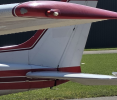
I really need an independent legal and DPE perspective on this grey area. Thanks!
As a CPL applicant, do you know what an STC, airworthiness concern and an AD is?
Why would you be concerned about a violation flying an unairworthy aircraft because it had a modification approved by the FAA (STC), installed and endorsed in the airframe logbook by an AP and no AD existed?

Tail strikes in C172s are not common. Personally I would be more concerned with flying at a flight school where they installed these devices because their instruction was so bad they needed them.
 
Last edited:
Why would you be concerned about a violation flying an unairworthy aircraft because it had a modification approved by the FAA (STC), installed and endorsed in the airframe logbook by an AP and no AD existed?
I don't believe the tail skid was installed via an STC as that number would have been listed in ACS plus there wouldn't have been the "eligibility without further approval" comment as an STC approval would have made the part eligible and approved.
 
If one bends that hook up enough to jam the rudder you have much bigger problems than just that hook jamming the rudder.
:dunno: Guilty as charged. As a very new student pilot, practicing a softfield take off in an Air Plains STC 172, the instructor told me to pull the CW back into my lap the apply full throttle. As I did, the nose very quickly rose and we heard/felt a bang! Rhut Rho... We taxied back to the ramp and noticed a definite new gouge in the previously gouged eye bolt and a little bend. No Flyee that evening for that plane. The mechanic noted to damage other than that visible on the eye bolt, fortunately. The hit felt really hard and shocked both of us.
 
If you look hard enough, there probably isn't an airworthy airplane to be found!
You'll find there are a lot more airworthy aircraft out there than you think. But there are certain groups of owners and operators that tend to have more airworthiness issues than others. Interestingly, to correct most of those unairworthy trends, it doesn't take a whole lot of effort, unless one outright chooses not to follow the rules, which unfortunately exist in the industry on all levels.
 
Over 10 years ago the FSDO told the flight school I worked at that these skids were an unapproved modification and made them remove them.
 
I don't believe the tail skid was installed via an STC as that number would have been listed in ACS plus there wouldn't have been the "eligibility without further approval" comment as an STC approval would have made the part eligible and approved.
A STC is a blanket field approval. Absent an STC, the mod required a field approval and a 337 assuming this mod was done legally. The FAA states, “not eligible for installation on type-certified aircraft without further approval”. That doesn’t mean the FAA never issued a field approval for this part.

If the flight school is banging the tails on 172s and their solution is installing unapproved parts as part of an unapproved modification, it says a lot. But, it seems there are at least 2 flight schools with them installed.
 
Last edited:
A STC is a blanket field approval.
Not quite. A field approval is a completely separate process done at the FSDO level for a single aircraft serial number. An STC is a design and installation approval done at the Certification Office level for a single or multiple aircraft models. Interesting you didn't know the difference.

Absent an STC, the mod required a field approval and a 337 assuming this mod was done legally.
Why do you think this is a major alteration requiring a 337? I suspect these hooks were installed as a minor alteration, ie., “approved,” under a logbook entry, which would also not trigger a Part 21 "eligibility" approval for the part.

If the flight school is banging the tails on 172s and their solution is installing unapproved parts as part of an unapproved modification, it says a lot.
I think what says more is per the above a FSDO called out the hooks 10 years ago and now an ACS, yet no AD or other official action to ground all those aircraft for that “unapproved” installation.
 
Last edited:
If the flight school is banging the tails on 172s and their solution is installing unapproved parts as part of an unapproved modification, it says a lot. But, it seems there are at least 2 flight schools with them installed.

Perhaps they should use airplanes with the little wheel on the tail, and really teach their students how to fly a real airplane! :biggrin:
 
The mechanic noted to damage other than that visible on the eye bolt, fortunately. The hit felt really hard and shocked both of us.
I have found damage elsewhere due to that exact type of tailstrike.

There is a heavy lead mass-balance weight on the top of the rudder, at the forward end of the rudder's aerodynamic balance horn. When that tail hits something that doesn't move, that weight keeps going down and can bend the skin of that horn, as well as put a large vertical load on the rudder hinges. Those hinges are just light bits of aluminum bent into shape and riveted to the rudder and fin spar. They are designed to take chordwise loads, not spanwise loads, and they flex and can crack at the bends where their mounting tabs are formed. I have replaced several hinges due to that. It usually takes more than one tailstrike to fatigue the aluminum.

The horizontal stab can also suffer. The elevator has lead weights at its tips that yank down hard on the stab, and deformation or cracking of the stab spars can result. At the very least, the elevator balance horns work their rivets loose.

The bulkhead that carries the stab's aft spar and the fin's aft spar also carries that tiedown ring. That bulkhead can develop cracks.

It must be six or eight years ago that I warned this group about the possibility of those skids bending up and fouling the rudder.
 
I used to know an examiner who wasn’t happy with a soft field takeoff unless you were grinding the tail tie down ring on the runway. I suspect that’s the purpose of this skid…which means it WILL get bent up.
 
I believe I remember my sons flight school had these installed on their C172's.
If the FAA thought a problem then why not AD them?

I remember seeing them installed 30 years ago or so.
 
I believe I remember my sons flight school had these installed on their C172's.
If the FAA thought a problem then why not AD them?

I remember seeing them installed 30 years ago or so.
My flight school has many planes in many locations; most have either a tail wheel (Cub variants) or tail skids (Cessna 152/172).
 
:dunno: Guilty as charged. As a very new student pilot, practicing a softfield take off in an Air Plains STC 172, the instructor told me to pull the CW back into my lap the apply full throttle. As I did, the nose very quickly rose and we heard/felt a bang! Rhut Rho... We taxied back to the ramp and noticed a definite new gouge in the previously gouged eye bolt and a little bend. No Flyee that evening for that plane. The mechanic noted to damage other than that visible on the eye bolt, fortunately. The hit felt really hard and shocked both of us.
No, your CFI and the flight school are guilty as charged. Thr flight school should not be mixing primary training 172s (with and without this STC) and requiring proper CFI make /model checkout is the schools responsibility.
 
Last edited:
The practical answer here is to find out if other applicants have taken the same airplane to the same DPE and ask them if it came up or not. My bet would be no...
 
Back
Top