Buying a project plane, absolute no-gos?

pfarber

Pattern Altitude
Joined
Jun 20, 2021
Messages
1,653
Display Name
pfarber
I'm looking to buy a project certificated plane for reasons.

I am looking at PA-sand maybe 172s as a start, but would consider a Cessna 140.

But in general, what are some absolute 'dude, just walk away' items does PoA recommend?

I can IRAN an engine, and really only am thinking of VFR. My very long term (and definitely not set in stone) goal would be maybe a 2-5 ship flight school.
 
There’s an operation nearby that has a partial fleet of ‘project’ Cherokee 140s. The owner of school was a long time A&P-IA and had a few airframes around for ‘spare parts’ he used to cobble together totaled out auction aircraft.

The only things I would be aware of is what scrap value is for the plane and not pay a penny more for it and not but anything that’s been underwater.

https://www.underwriterssalvagecompany.com/Browse Underwriters Salvage Company

https://www.mclarens.com/auctions/ Auctions Archive - McLarens
 
Post covid landscape for parts and shop time is COMPLETELY different. 5-7 years an engine rebuild was not that big a deal... still a hassle but not a 6mo/$40k affair.

I would like to start with a project and see how it goes... but what would have been a non-issue THEN is a major issue now. With the PA-22 rudder AD on the horizon that's one new issue. I know the engine and prop is always a big ticket item... but what other things have PA-22 or other owners/flippers seen change from 'minor annoyance' to 'major red flag'?
 
Don’t take this personally, but I wouldn’t want to be part of a flight school that originated from project airplanes shotgunned together. YMMV.

Good luck!

Me either, but it works for the one around here.
 
Post covid landscape for parts and shop time is COMPLETELY different. 5-7 years an engine rebuild was not that big a deal... still a hassle but not a 6mo/$40k affair.

I would like to start with a project and see how it goes... but what would have been a non-issue THEN is a major issue now. With the PA-22 rudder AD on the horizon that's one new issue. I know the engine and prop is always a big ticket item... but what other things have PA-22 or other owners/flippers seen change from 'minor annoyance' to 'major red flag'?
No my question was why would you want to buy a project airplane? If the reason is to hopefully end up with a good airplane on the cheap you need to take a hard look in the mirror and reconsider your life choices.
 
A flying airplane is almost always less expensive than a project. A nicely modified plane is almost always cheaper than buying a plain Jane and modding it. Aircraft economics 101. If you want to fly, buy a plane that’s airworthy.
 
Airworthy is airworthy... repairs done properly are not an issue. I want to meet the student that has any idea how to interpret an MX logbook. Most only see it before the checkride and are only shown the ADs and current inspections.

Post covid insanity tripled the price of 'flying' aircraft. So now I think is the time to get a good project started. I bought my BD-4 for $3k and will have it in the air for less than $20k even if I have to buy an engine. A 172/PA-28 is $50k+.

At some point the only source of flyable AC will be repaired wrecks. An E/AB is not an option for most... $100k + 2-5 years minimum or $30-50k for a flying plane that just passed its annual?

That said... what MECHANICAL issues are hard passes? Corrosion is a good one. Depending where I would think. Anything spar related would be a pass or SIGNIFICANT discount to account for the need to buy good used parts. Univair seems to have PA-22 parts.
 
Last edited:
I want to meet the student that has any idea how to interpret an MX logbook.
What does that have to do with anything? The student may not be able to initially, but the CFI certainly should be able to - and hopefully identify anomalies/shoddy work in short order. This reads as though you’d attempt to pull the wool over someone’s uneducated eyes. Maybe I’m wrong.
Post covid insanity tripled the price of 'flying' aircraft. So now I think is the time to get a good project started.
Do you really think you can get a ‘non flying’ airplane back into ‘flying’ condition cheaper than if you just bought an already ‘flying’ aircraft? Only if you’re being cheap and cutting corners maybe.
 
No my question was why would you want to buy a project airplane? If the reason is to hopefully end up with a good airplane on the cheap you need to take a hard look in the mirror and reconsider your life choices.
Have you done it? Can you share some pitfalls? Were there things that just screwed up the plans?
 
What does that have to do with anything? The student may not be able to initially, but the CFI certainly should be able to - and hopefully identify anomalies/shoddy work in short order. This reads as though you’d attempt to pull the wool over someone’s uneducated eyes. Maybe I’m wrong.

Do you really think you can get a ‘non flying’ airplane back into ‘flying’ condition cheaper than if you just bought an already ‘flying’ aircraft? Only if you’re being cheap and cutting corners maybe.
So a CFI sees a few approved 337s in a log book. Then what? Take them on a test flight and show them its safe? Again, what CFI has any idea what a proper tube splice looks like? Or a worn pulley?

Have you brought a damaged aircraft back to airworthy condition? Was there an area that made you spend more money than you planned?
 
Don’t take this personally, but I wouldn’t want to be part of a flight school that originated from project airplanes shotgunned together. YMMV.

Good luck!
A prop strike or gear up landing are common occurances and AC are repaired every day.

A ground loop that put an tailwheel AC on its back can't be repaired? Or even if a wingtip drags?

My point is that there are worthy projects and then there are basket cases.... just trying to figure out where that line might be.
 
Have you done it? Can you share some pitfalls? Were there things that just screwed up the plans?
The cost of parts is a huge factor for certified aircraft. I found this one to trip up many buyers of "cheap old airplanes." They get a deal on some older, less-popular model such as a Bellanca Viking, and then find that parts are scarce and expensive. They're shocked, as they didn't pay much for the airplane, so parts should be cheaper too, right? Well, are parts for 50-year-old Ferraris cheap?

Even older 172s with the flat-leaf main gear legs are quickly in trouble if corrosion is found on those legs, and that is very common. The underside of those legs were shot-peened to improve tensile strength, and they were also high-carbon steel that corrodes easily, and when pitting is found, and deep enough that it can't be dressed out and the leg re-heat-treated, you must have replacement legs that haven't been made for 40 or more years. Junkyard legs tend to be shot, too. Nothing lasts forever.

Many airplanes are full of horror stories simply because they have had drive-thru annual inspections. Lots of stuff that hasn't been opened up in many years, sometimes decades. Cracks, corrosion, corroded and/or frayed cables, seized pulleys are really common. And then a buyer wants a quick and dirty prebuy and doesn't want you to take the time to get inside stuff. His first annual tends to be a shocker.

Some old airplanes might have outstanding ADs that could sink whatever value is left in them. Sometimes replacing a single part can cost as much as the new airplane did originally. Think spar replacements, for example. Or the engine in it is so obsolete that you can't even get parts for it. I owned an Auster MK6 that had a deHavilland Gipsy Major engine in it, a British engine that had been out of production since 1950 or so. Good luck finding airworthy parts for it. Franklins are in the same boat, along with some old Continentals and Lycomings. Any airplane project that has more modern stuff in it will have a higher value just because parts are more available.

One doesn't rebuild airplanes to save or make money. One does it because he loves the work and plans to keep it. He's not going to rent it out to people who will abuse it.

 
A prop strike or gear up landing are common occurances and AC are repaired every day.
And many are written off everyday, too. Parts and labor costs cause that.
A ground loop that put an tailwheel AC on its back can't be repaired? Or even if a wingtip drags?
Before I owned it my Auster had been blown over onto its back in a windstorm. The owners patched it up and kept flying it. When I bought it and stripped it, I found that the rear spar (wood) in the right wing was cracked 3/4 of the way through at the strut attach point. Slamming a high-wing airplane upside-down onto its wingtips will do that. And I had been flying it, too. I once ferried a 172 that had just come out of an "annual" inspection that had the horizontal stabilizer forward spar broken all the way through; only the skin was holding anything. No nuts on the wing strut lower attachment bolts, too. Just out of annual. A signature in a log-book can mean nothing sometimes.

Sure, this is all repairable, if you throw enough money at it, but there is a limit to that. You only have so much money.
 
PA-28s, FWIW. Sounds like you're not worried about having to rebuild an engine. So spars, and anything that looks like the aircraft has been over-stressed - bent wing, repaired or bent skins on the wing, cracked or wobbly stabilator, wobbly vertical stabilizer, landing gear driven up into the wing. I'm not an a&p, but some of those things I've seen in flying aircraft that I wouldn't want to ride in. Oh, and some old ones had aluminum battery cables. Just me, but I'd avoid that or replace on purchase. If you want to teach in them, and will have students soloing them, I'd stay away from Arrows and anything else that has a constant speed prop. Because higher risk for no reward at all. If you're going to fly where it's really hot or mountainous, I'd avoid the 150's and stick with 180 or better.
 
…if you throw enough money at it, but there is a limit to that. You only have so much money.
There’s a market for most things if you throw enough money at it. It’s a business if you can make a profit. That comes down to where your margin is.

Today’s profitable Part 61 operation is competing with a Part 141 operation that bought at fleet prices and is financed by student loan backed contracts (guaranteed income). The challenge is to find the market segment for your product that will return a profit.

Returning a profit by most really doesn’t when labor is discounted 100%. Between CapEx, OpEx, and resale or 1061 swap, it rarely pencils out over a timeframe that isn’t decades long.

I’ll have to dig it up, bet 10 or so years ago a similar thread was posted by a dude out of Arizona. His thesis was the same, so I did a free, hasty market research study talking to a broker (Jimmy Garrison) and an operator nearby that had done something similar. The bottom line was it wasn’t profitable as a leaseback operation over a 20 year period.
 
Project planes are false economy. Guys imagine they’ll be cheaper to complete than an airworthy plane. Those guys are almost always wrong. If you plan to keep it forever you may be happy. Ignorance is bliss. The day you sell it for $30-40K less than you have into it, your opinion will likely change. And yes, my opinion is based on experience.
 
But in general, what are some absolute 'dude, just walk away' items does PoA recommend?
If you have never participated in a previous non-restoration project aircraft, todays market offerings are not one I would want to learn in. 20+ years ago sure. If your end goal is a home-grown flight school better to find a broker who deals with 141 schools and buy one of their clapped-out aircraft and spruce it up. But for a recommendation, storm-damaged aircraft are better options, become a good friend/customer with a reputable salvage business that handles the model you choose, and if you don't have your IA get it before you start. Regardless, money-wise you're better off restoring a legacy tube and fabric aircraft and go from there.
 
But for a recommendation, storm-damaged aircraft are better options,....

Well, there are storms and then there are storms.

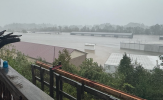
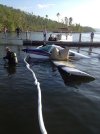
This is a little of what Hurricane Helene did to an airport near Asheville last fall.

1750538787206.png 1750538862372.png​

Planes were paritally submerged for about 10 hours. That silt on the hangar floor (notice the footprints) will give you some idea of what's inside the plane.

But in general, what are some absolute 'dude, just walk away' items does PoA recommend?

Personally, I'd walk away from any plane that's been in a ditching or otherwise submerged.
 
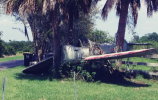
This Ercoupe near Frostproof, FL, might make an "interesting" project for you.

1750539236608.png
 
Well, there are storms and then there are storms.
Not really. The context here is there is storm damage and there is accident damage. I can repair a set of 172 wings and sign off the work identically except for the reason for the repair and most of your average pilots will initially decline the wings if I state “due to accident.” Not so much with “due to storm damage.” This is why I always state an aircraft’s repair history is very subjective to the person.

Same goes for submerged aircraft. It all depends on what transpires right after the submerging that counts. For example, I know of 8+ helicopters still flying that were under 8 feet of saltwater about 25 years ago when a levy failed due to storm surge.

Okay, but the OP's question was:
But in general, what are some absolute 'dude, just walk away' items does PoA recommend?

I gave my items. Yours are different. I would walk away from the aircraft you mention. Perhaps they're repairable, but I would not want such a project, especially out of my own wallet.

Probably your wallet is fatter than mine, and you would take on such. Not me.
 
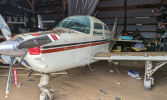
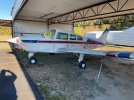
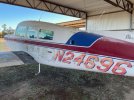
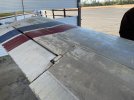
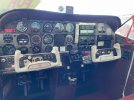
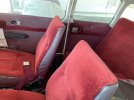
Someone restored this, and it is currently for sale.
 

Attachments

  • Guntersville Aircraft Salvage.jpg
    Guntersville Aircraft Salvage.jpg
    49.2 KB · Views: 28
I've looked at some planes that have sat for years and of the 5 one was a possibility. I 172 that sat. It last few 7 years ago, no damage, but also incomplete logs.It was just a ramp queen. No visible damage but the owner wanted north of $20k for it. I laid out my issues (obvious paint/tires/annual/avionics/interior) and gave the estimated costs of the repairs and told him that the engine was at least another $10-15k expense.

Owner wouldn't budge... kept saying that 172's are worth $50-70k. So $25k plus repairs still gets me a flying plane. My counter, as many people have stated, that if I wanted to spend $70k on a flying 172 I would buy a flying 172. I'm looking to make a small profit, learn some stuff and enjoy the process.

Walked away. Plane is still sitting. I've already set my financial limits so I am not about to throw good money after bad.

I'm starting to think the unfinished E/AB kits might be a better route.
 
Even with a free project the math more often doesn’t work out.
 
This one is still sitting. If the owner would take about half the asking price it might sell. I'm not interested at the current asking price ...

 
Even with a free project the math more often doesn’t work out.
Then you didn't pick the right project. People make money, people lose money, there is no sure thing. I've worked with a shop that did make lots of money. To be honest they did low ball everything and the owners that just wanted the 'problem' to go away it worked. The owners that thought their sitting outside for 10+ years hunk of scrap was worth current flying prices were passed over.
 
Then you didn't pick the right project. People make money, people lose money, there is no sure thing. I've worked with a shop that did make lots of money. To be honest they did low ball everything and the owners that just wanted the 'problem' to go away it worked. The owners that thought their sitting outside for 10+ years hunk of scrap was worth current flying prices were passed over.
lol good luck!
 
This one is still sitting. If the owner would take about half the asking price it might sell. I'm not interested at the current asking price ...

No a good option. Price is to high.

Even if it came with an annual by an IA of my choosing for a flip the paint alone is an issue. Also I would avoid complex aircraft as they have more expensive parts to fix (retracts, prop hub, prop blades).

I would not consider this.
 
No a good option. Price is to high.

Even if it came with an annual by an IA of my choosing for a flip the paint alone is an issue. Also I would avoid complex aircraft as they have more expensive parts to fix (retracts, prop hub, prop blades).

I would not consider this.
Well, there’s one answer to your question.;)
 
Even if it came with an annual by an IA of my choosing for a flip the paint alone is an issue.
That lets out about 75% of the GA fleet. Can't do paint? Can't do an affordable restoration. Paint is very labor-intensive and can easily cost more than some airplanes are worth. To be done right, all the old paint needs to be stripped off and all surfaces inspected for corrosion. Then it all needs acid-etching and alodining, priming, masking, painting (perhaps several colors, meaning lots more masking paper and masking tape) and so on. The painting time is often less than 1/10th of the time the rest of the tasks take. Moreover, to be done right, the airplane needs to come apart so that stripper and its residue can be properly washed out, and all bolted connections and other usually-hard-to-inspect areas can be checked.

You will use up a lot of waterproof sandpaper, thinners, tape, paper, fine Scotchbrite, and so on. The paint itself isn't much of the total cost.

Been there, done that, five or six times at least.
 
That's why I said the paint alone was a no go on that plane posted. Yes, it DOES exclude 75% of the fleet because picking GOOD restoration candidates means you walk away from most. How is that even a controversial position? No, you can't/won't make money on a flip if your finished cost is more than a current flying example.

BUT

That 172 that was $25k 4-5 years ago is now $60k with more hours on it. The artificial inflation due to covid means that there is a potential for profit where there was none before. Problem is you have to BUY at sub-2019 prices.
 
Back
Top