B737 vs UH-60

Velocity173

Touchdown! Greaser!
Joined
Jul 3, 2012
Messages
16,369
Display Name
Velocity173
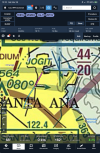
I think they’re searching for anything that’s an RA these days and if a Black Hawk is involved, the better. Based on my in depth analysis, :p the Black Hawk (1,450 ft) was well below the Class C shelf (2,000 ft). UAL, was at 1,900 ft which really doesn’t match any IAP altitudes for that area. Of course they could’ve been on a VA which would make sense.

Not sure what more could have been done. UAL was given traffic. They responded accordingly. Unless you redesign the airspace to push aircraft further below the C, or change RA tolerances to a bigger buffer, we’re gonna keep having these “close calls.”

 
The rules for crossing heli and comm traffic on final just changed recently. If the Boeing had an RA, someone needs to answer for it. From the peanut gallery,, I dont much like hearing a 737 out of the class B/C lower shelf. Because, I fly just under those shelves(rings) and think I'm always safe from Boeings and Buses. So, get back inside your damn box United.
 
The rules for crossing heli and comm traffic on final just changed recently. If the Boeing had an RA, someone needs to answer for it. From the peanut gallery,, I dont much like hearing a 737 out of the class B/C lower shelf. Because, I fly just under those shelves(rings) and think I'm always safe from Boeings and Buses. So, get back inside your damn box United.
The new rules apply in Class B & C airspace. In this event, the helicopter was in Class E airspace.
 
The new rules apply in Class B & C airspace. In this event, the helicopter was in Class E airspace.
I repeat: So, get back inside your damn box United.

Stay in the C, and don't get an RA. BTW, the CBS article mentioned the new crossing rules too. Make sure you crawl up CBS's butt as well.
 
That's...not how it works at all.
It's not how it works at all, but it's easy to get spoiled.

I've never seen an airliner under my home bravo. Imagine my surprise, as I'm flying fat/dumb/happy under the EWR bravo, when I see something big and heavy out my left window...
 
I think they’re searching for anything that’s an RA these days and if a Black Hawk is involved, the better. Based on my in depth analysis, :p the Black Hawk (1,450 ft) was well below the Class C shelf (2,000 ft). UAL, was at 1,900 ft which really doesn’t match any IAP altitudes for that area. Of course they could’ve been on a VA which would make sense.

Not sure what more could have been done. UAL was given traffic. They responded accordingly. Unless you redesign the airspace to push aircraft further below the C, or change RA tolerances to a bigger buffer, we’re gonna keep having these “close calls.”

1774717834996.png
 
I think they’re searching for anything that’s an RA these days and if a Black Hawk is involved, the better. Based on my in depth analysis, :p the Black Hawk (1,450 ft) was well below the Class C shelf (2,000 ft). UAL, was at 1,900 ft which really doesn’t match any IAP altitudes for that area. Of course they could’ve been on a VA which would make sense.

Not sure what more could have been done. UAL was given traffic. They responded accordingly. Unless you redesign the airspace to push aircraft further below the C, or change RA tolerances to a bigger buffer, we’re gonna keep having these “close calls.”
1774717910455.png
 
It's not how it works at all, but it's easy to get spoiled.

I've never seen an airliner under my home bravo. Imagine my surprise, as I'm flying fat/dumb/happy under the EWR bravo, when I see something big and heavy out my left window...
Exactly. It is routine for airliners to be vectored below class B airspace at DFW and Chicago.
We were supposed to slow down to 200 knots, but that usually just messed up the controller's plans.
 
It is routine for airliners to be vectored below class B airspace at DFW and Chicago.
Similar for JFK and LGA arrivals.

Letter to Airmen: LTA-N90-134:
"Due to the volume and complexity of air traffic flows in the New York and Connecticut areas, it is a common occurrence for arrival aircraft to be vectored into New York Class Bravo (B) airspace and then out again. Geographical vicinity where pilots can expect to be vectored outside the Class B once they have been in it, and where pilots can expect to ..."
 
Last edited:
Yeah, UAL hadn’t reached FEBTA yet. Probably a mile outside of it. I think they were doing the visual anyway.

Either way, they had approved separation for a VFR vs IFR. In this case, not even sure if the Black Hawk was in comms with ATC so it’s not required anyway. This is what I talked about with the DCA accident. You've got ATC separation that doesn’t jive with the tolerances of RAs. I’ve had an RJ go over me at 500 ft in CHA’s airspace and report an RA. ATC was like, “Yeah, that’s approved separation in my airspace.”
 
Last edited:
If the Boeing had an RA, someone needs to answer for it.
Not really. TCAS doesn't know what kind of airspace you're in or what your clearance is. It only knows the point of closest approach, measured in time, that it calculated, and it projects trends into the future. From what the 737 pilot said, the RA they received was a "Monitor vertical speed" RA which prohibited descending below their current altitude. This is expected when a VFR target is crossing 500' below. The problem is if that prevented them from continuing the descent profile as published on the approach with which they were backing up their visual approach. We should be able to fly the published procedures without getting RAs from nearby VFR aircraft. In this case, the controller allowed the helicopter to maintain separation visually and the helicopter's idea of visual separation is not necessarily the same as TCAS.

Stay in the C, and don't get an RA
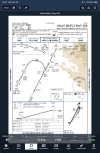
The procedure takes us below CCA or, at least, right to the edge of it.
 
The rules for crossing heli and comm traffic on final just changed recently. If the Boeing had an RA, someone needs to answer for it. From the peanut gallery,, I dont much like hearing a 737 out of the class B/C lower shelf. Because, I fly just under those shelves(rings) and think I'm always safe from Boeings and Buses. So, get back inside your damn box United.
While 91.131, the B FAR requires “…large turbine engine-powered airplanes…” to remain at or above the floor of the B, 91.130, the C FAR, does not. There may be something in FAR 121 that requires it for Air Carriers, I dunno or maybe some OPSEC’s. @dmspilot ??? @Larry in TN ???
 
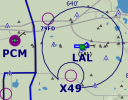
I go over the top of Amazon heavies all the time when shooting the gap between Tampa Bravo and Lakeland Delta. My home airfield is just south of there, and my XC destinations are usually north.

The floor of the B is at 3000, while the top of the adjacent D is at 2600. The gap is about a half mile wide. Not unusual to look down and see a 737 on final under the Bravo at 2000 feet.

Screenshot_20260328-120834.png
 
Last edited:
While 91.131, the B FAR requires “…large turbine engine-powered airplanes…” to remain at or above the floor of the B, 91.130, the C FAR, does not. There may be something in FAR 121 that requires it for Air Carriers, I dunno or maybe some OPSEC’s. @dmspilot ??? @Larry in TN ???
That only applies to aircraft operating in or out of the primary airport for the class B. Example - Love Field in Dallas and Midway in Chicago are not the primary airports.
 
There’s a good chance UAL was still in the C. I believe FR24 still uses PA for the altitude depictions with no correction. If that’s the case, they would’ve been above 2,000.
 
That only applies to aircraft operating in or out of the primary airport for the class B. Example - Love Field in Dallas and Midway in Chicago are not the primary airports.
Yeah. This incident was to the core airport of the C. Do you know if there are FAR 121 rules or OPSPEC’s that require Air Carriers to stay above the floor?
 
Operations Specifications vary between carriers, but I have never heard of such a requirement.
 
Well that sucks. Ive been operating outside under the B and C for years and have never seen comm traffic below the shelf. One more thing to deal with. Sucksnfor us actually.
 
I flew for a 121 many times into MDW and LAS. On approaches into MDW we would be below the Class B floor. The only requirement was slowing to 210 knots. We used 210 because that was the slowest we could fly without using flaps. On approaches to LAS we had to stay withing the Class B unless ATC cleared us to go out of the Bravo.
 
Back
Top