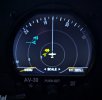
AV-30C reliability reports? - 1st hand experiences or published data preferred

pburger

Pre-takeoff checklist
Joined
May 26, 2007
Messages
489
Location
Houston, TX
Display Name
Paul B.
Home Airfield
TS07
I've been watching the AV-30 since it was introduced by AeroVonics. It looked promising way back then, but it was early days. uAvionix purchased AeroVonics and continued to improve and expand the capabilities of the instrument. At Oshkosh last year (2024), I sat in on a uAvionix forum session about the AV-30. I learned that the AV-HSI module was nearing FAA approval. This would allow the AV-30C to serve as an HSI on certificated aircraft. I wanted to ask about integration with my specific equipment, but before I could raise my hand, the next slide came up showing integration with an Avidyne IFD-540 and a TruTrak Vizion (aka - AeroCruze 100) autopilot -- my exact setup!! That exact configuration has been demonstrated in the experimental world, and would be supported by the FAA-approved version. I WAS SOLD!! I pre-ordered the AV-HSI in December, and when the approval came through this June (2025), my preorder shipped. (I saved $100 by committing early). I have spent the last few months resolving a mechanical issue with the plane, but I'm now ready to get these AV-30s installed!

I recently posted on FB asking for recommendations for avionics shops in the Houston area to do the installation. I got a few negative comments in response:

"If you are planning on flying IFR, do some research. Those AV-30 have had a lot of failures. I think they are cool units but… not as reliable as Garmin."​
​
"I've seen failures at local flight schools."​
​
"as problematic as the ADSB Skybeacon’s are is the reason I don’t trust the AV30’s. The AV20 I put in the little plane has been very good and a great “emergency” instrument, but I’d go with anything else before uAvionics for ADI/HSI"​
​
"they are cool units but they do have a higher failure rate than I would be willing to accept for IFR. Hopefully they work the bugs out. There is a lot of incidents where they lose ADHRS randomly"​

My response to the last statement was:
"that’s a serious accusation for an FAA-approved piece of equipment. I will certainly do research but I would think if you are making such claims in a public forum you might have references to back up your claims. What is the failure rate? Where did you get the data? Is it just anecdotal? Hearsay? personal experience? I don’t work for uAvionix, but I also don’t make decisions based on some dude on the internet. I will do some research though."

So, this is me seeking data. Usage reports, references to articles or other data sources if you know of them. I'm looking for the good, the bad, and the ugly. Hopefully more good than bad.

One problem I'm having is that a lot of the reports I find are from 3-4 years old, prior to many updates and prior to the release of the external magnetometer which solves the heading drift issue.

Full disclosure: I am biased. I really want to do this upgrade. I have been watching these for years, waiting for certification, and for integration information. It seems to be a perfect fit for my setup. I doubt there is anything that will change my mind, but I'm trying to keep an open mind. Some guy spouting "...not as reliable as Garmin" without any facts won't do it.
 
a lot of the reports I find are from 3-4 years old

Although I am not aware of current status or reliability, “growing pains” is what I was thinking. If you have an opportunity to stop at a few avionics shops I would ask about them in-person. Hopefully you’ll get a more recent input (and hopefully a truthful assessment vs whatever the shop might want to sell).
 
No usage report yet, but the persons I have spoken to that have them are happy particularly since the AV-Mag came out as most of the complaints I saw were about DG gyro precession. AV-HSI I suspect will be very popular, but they are not Garmin 275 nor intended to be. Sign up for Social Flight and go to the FAAST tab at top as there are some very recent AV-30C videos in there going over the new capabilities and technical stuff. BTW, I am not affiliated with SF just a member and I am planning upgrading to the AV-30c.
 
I have two installed, plus the AV-MAG and AV-LINK. Zero problems and I love 'em. I think most of the reputational questions stem from the DG precession issue, which was entirely solved by the AV-MAG.

If you are at all handy, consider installing yourself under supervision. It is very easy. Most of the install time is spent noodling through the pin outs and building the harnesses, which is not hard to learn at all. Save yourself a bag of dough to buy another gadget.
 
Last edited:
I have two installed, plus the AV-MAG and AV-LINK. Zero problems and I love 'em. I think most of the reputational questions stem from the DG precession issue, which was entirely solved by the AV-MAG.

If you are at all handy, consider installing yourself under supervision. It is very easy. Most of the install time is spent noodling through the pin outs and building the harnesses, which is not hard to learn at all. Save yourself a bag of dough to buy another gadget.
Thanks for the report. In my research I'm wading through what appears to be a lot of Garmin fan-boy shade being thrown and growing pain issues over the last few years that seem to be resolved now. I am unaware of any current red flags with these units right now. But I am keeping my eyes and ears open.

As far as a supervised install, I'd love to do that. I have the capability, but my longtime A&P retired recently. I'm getting quotes for the install, but I may ask another A&P friend if he's willing to supervise the installation and handle the paperwork.

You know how the internet works. A guy heard a guy who heard about another guy with a problem. It gets repeated until it is a thing. Most of the guys repeating it don't bother to learn enough to understand that it was a discrete issue (internal magnetometer) that has been resolved (external magnetometer).

Like anything, it is subject to being correctly installed. Most Garmin products are installed by authorized shops at a premium price. Since the AV-30 can and will be installed by anyone, it is not surprising that there will be a problem install or two. Of course when that happens, they are going to blame the device rather than the installer. My A&P buddy has installed at least 10, with zero problems.

I installed my first AV-30 as an AHI 2 years and 200 hours ago. Zero problems. I fly hard aerobatics and it always holds orientation, never a red X. Installed the second as a DG last month. Just took it to Oshkosh, 10 hours each way, zero issues.

One feature I love: the AV-LINK allows you to display traffic. This fall they are releasing a feature to underlay the nav route on the traffic display, which is cool and super handy when transiting areas of high traffic.

Having said all that, if I were a serious IFR flyer I would probably look hard at the GI-275 too. The benefits of integration with a newer Garmin GPS NAV system are hard to ignore.

PXL_20250501_002419230 (2).jpg
 
I have installed a few and have also flown behind them for a few hundred hours now. Most of the negative reports you will read are real, especially those concerning DG precession. I think most of the complaints are now fairly dated though, so I would check the dates of complaints before worrying too much. (My personal suspicion is that the precession problems were related to whether or not the unit was installed in a rubber isolated panel or not.) I believe most of the kinks have been worked out of them as time has went on however, and I wouldn’t hesitate to install new ones at this point.

The displays in my personal aircraft are some of the first ones released and one of the screens is showing some signs of impending failure. Hopefully the newer screens are better.
 
Bet they are more reliable than an Aspen, but not apples to apples.
 
The displays in my personal aircraft are some of the first ones released and one of the screens is showing some signs of impending failure. Hopefully the newer screens are better.

That's a little bit alarming.

uAvionix may also suffer some reputational overlap from their skybeacon and tailbeacon issues. There are a few threads on here about those. As I recall, some of those suffered from water intrusion. I think sticking a sensitive piece of electronics outside in the elements is asking for trouble.

I really dig the company and their spirit of innovation though. They are constantly coming up with new features on the AV-30. Last software update added turn rate and standard bank indicators, among other things. Next one adds Nav underlay to traffic display. IMO adding a DB9 update port to each AV-30 harness is a must, though an AV-LINK/AV-HSI combo also makes it possible to update all devices with WiFi.
 
Last edited:
Our schools Cherokee N1764T had issues with its Av30. It was at the avionics shop and supposably repaired but I haven't flown since it was back in service. Honestly I've ignored it for so long I probably won't really use it. I will ask what the issue was.
 
"as problematic as the ADSB Skybeacon’s are is the reason I don’t trust the AV30’s. ​
My Skybeacon worked flawlessly from the day it was installed until I sold my plane, including after sitting outside on an asphalt ramp for several summers in the southern heat.
 
Well, the die is cast. I ordered them yesterday (while the 10% off sale was still active.) I had one avionics shop candidly tell me that they would be too expensive and that I should just find a regular A&P to do the install. Another avionics shop that I have used in the past said they don't have an installer currently. I also asked the mobile avionics guy that I use for my bi-annual xponder checks, and he is booked up for the rest of the year. So now I'm hoping to do an A&P-supervised install (as Ed Haywood recommended) sometime over the next few months. I have to start talking to my A&P buddies...
 
Have three AV-30 (AI) across three aircraft and well over a thousand hours experience in total. Two aircraft are IFR capable and flown; AI is primary in one and back up in the other. Certified units all.

Will dispense with crud first - uAvionix made a poor choice to not have an external magnetometer in their DG from the get go. Initially there was none, then there was an internal one (was always present, but not initially allowed to be enabled), and finally threw in the towel and went external like Garmin. So they suffered some reputation diminishment across the board, even if it was only one issue with one kind of unit (their DG).

On the positive side, the units have worked well, are bright and easy to read. The presentation is very clean, without trying to cram too much into a small screen, such as tapes the way a G5 does with airspeed and altitude. Just the number. Two serial pins from about any navigator (one of mine is driven by a 30 year old box) will give present a magenta course line with d-bar in DG mode which is nice for VFR. Very easy to install, though you may need some adapters for the 1/4" press-to-engage pitot-static tubing after it leaves the unit.

Earlier on the AHRS gyro seemed to precess a bit, leading to slight indications of bank when there was none - do the software upgrades, as they improve performance. Still recommend gyro calibration every six months or so, takes about five minutes in a closed hangar. Recent software update made it so that the baro pressure on boot is almost always within .01-.03 of correct all by itself. Didn't used to do that. Update is via serial line (put in at least the wires behind the panel at install) or now via AV-LINK wirelessly.

AV-LINK is very nice in crowded airspace; no experience with HSI module as aircraft already have those separately. The comparable round unit is the -275 which is much more expensive. G5 is of course square; your aesthetics may vary.

If you have a temp probe (about $200) you get TAS readout continuously. Early units came with standard crimped pins which could come loose - had to update one to swaged barrel pins which are now standard anyhow. You need a tool for those, but they are around and easy to use.

They go in a on 337, so A&P with IA needed for final sign-off as understand it.
 
There's an AC that deems the swap from a vacuum AI/DG to the electronic a minor, so no IA needed.
Even if breaking into the pitot-static system? I could see that for the naked unit with just power, but once you add RS-232 and pitot-static connections (highly recommended by uAvionix) I'm not as sure. Will have to read the AC. Thanks for letting me know about it - I'm much more familiar with the one that allows removal of the TC for another AI - very good idea.
 
I have a TailBeacon and a pair of AV-30C in my 172, and removed the vac system entirely. I did this because with the vac system, it seemed that I had rebuild or replace something every year or two: pump, AI or DG. I got tired of that and now I don't have to do it anymore. One drawback is that IFR pitot-static certification is more expensive because I now have 3 "altimeters" to certify - since each of the AV-30C units has a pitot-static connection.

The TailBeacon hasn't been that reliable. I'm on the 3rd unit, having had 2 warranty replacements and extensive troubleshooting over the years. There's a thread on that here with details.

The AV-30C has been much more reliable. I got mine before the AV-Mag was available and the DG drifted worse than my old mechanical one. I had some detailed back and forth with uAvionix on that but now I've got the AV-Mag and it's solid.

I've had one failure of the AV-30C. One day I turned it on and it booted up "clean" with factory default settings. That means it was in "drift mode", it forgot there was an AV-Mag connected. I called the shop that installed it, they told me 2 key installation settings that I had to re-enter in the AV-30. That took 10 minutes and since then it's worked fine.

To put that in perspective, I've had occasional failures of radios, CDI and DME over the years too, and they were harder and more expensive to fix. So overall, I've been pretty happy with the AV-30C reliability and factory support from uAvionix.
 
The TailBeacon hasn't been that reliable. I'm on the 3rd unit, having had 2 warranty replacements and extensive troubleshooting over the years. There's a thread on that here with details.
The Tailbeacon repeater I've learned is very dependent on aircraft wiring. Since it is looking for mV drops as the txp sends out grey code, it's sensitive. On one very old aircraft gave up and installed a 335. Understand today could have gone tailbeacon X alternatively since that's a real txp.

On the other hand, just put one in a restored Cherokee with much new wiring, especially to the rear which is rarely touched, and it works flawlessly with a clean PAPR report.
 
The Tailbeacon repeater I've learned is very dependent on aircraft wiring. Since it is looking for mV drops as the txp sends out grey code, it's sensitive. On one very old aircraft gave up and installed a 335. Understand today could have gone tailbeacon X alternatively since that's a real txp.
My Tailbeacon units did not have that problem - they picked up the xponder code just fine. They had poor GPS performance. NIC would be too low or the GPS would drop entirely.

I posted details in case it helps others: https://pilotsofamerica.com/communi...a-false-sense-of-security.139613/post-3406320
 
One drawback is that IFR pitot-static certification is more expensive because I now have 3 "altimeters" to certify - since each of the AV-30C units has a pitot-static connection.
The altimeter section ofthe AV-30 is not "official". You still only have 1 altimeter from the FAA standpoint.
There shuld be no need to certify the AV30s. Yes, you do the system leak check with them installed, but that should be it.
 
The altimeter section ofthe AV-30 is not "official". You still only have 1 altimeter from the FAA standpoint.
There shuld be no need to certify the AV30s. Yes, you do the system leak check with them installed, but that should be it.

You can also trim them to match the primary altimeter and ASI.
 
The altimeter section ofthe AV-30 is not "official". You still only have 1 altimeter from the FAA standpoint.
There shuld be no need to certify the AV30s. Yes, you do the system leak check with them installed, but that should be it.
That is not what 91.411 says, nor how the avionics shops I spoke with interpreted it.

FAR 91.411: https://www.ecfr.gov/current/title-14/chapter-I/subchapter-F/part-91/subpart-E/section-91.411

It says, "each static pressure system, each altimeter instrument, and each automatic pressure altitude reporting system has been tested and inspected..."

It does not say anything about "official" systems or instruments, but simply "each" system or instrument. Once you connect pitot-static to an AV-30C, it becomes such an instrument. Of course, that connection is optional, you can install them without connecting pitot-static, and then you don't have to certify it as an altimeter. But it's nice to have the true airspeed and density altitude displays.
 
FAR 91.411: https://www.ecfr.gov/current/title-14/chapter-I/subchapter-F/part-91/subpart-E/section-91.411

It says, "each static pressure system, each altimeter instrument, and each automatic pressure altitude reporting system has been tested and inspected..."
The rule was written when attitude indicators with non-approved altimeters were not a thing.
You can turn the altimeter/airspeed indicators off on the AV-30. The pitot-static connections are only required for the augmentation of the attitude function.

Once you connect pitot-static to an AV-30C, it becomes such an instrument.
By that logic you should do a 411/413 on the auto gear extension system.
 
Even if you have to test it, how much extra effort is that? If the unit configured as AI is trimmed to match the primary altimeter, seems like a simple matter to check both as part of the same procedure.

Units configured as DG do not display altitude or airspeed.
 
Even if you have to test it, how much extra effort is that?
You have to remove it, connect it to the pitot-static tester, run it to 18k ft, do a leak check there (I recall no more than a couple hundred feet per minute), then check it every 1000 ft from 18k down to -1000, then reinstall it.
You could potentially do that with it in the panel, but lots of avi shops usually remove the altimeters and test them on the bench.
 
Update is via serial line (put in at least the wires behind the panel at install) or now via AV-LINK wirelessly.

I installed a 9 pin Dsub on each unit for updates.

If the HSI is installed, a single AV-LINK can wirelessly update all units.

AV-LINK is very nice in crowded airspace;

I spoke to the product manager at Oshkosh. Next software update will add option for flight plan on traffic display. In effect it will be arc view with traffic. That will be a nice addition.
 
The rule was written when attitude indicators with non-approved altimeters were not a thing.
You can turn the altimeter/airspeed indicators off on the AV-30. The pitot-static connections are only required for the augmentation of the attitude function.
That's a convenient interpretation of 91.411 that obviously came to mind to me too. Unfortunately, I was unable to convince any of the avionics shops to adopt this. They interpret it to mean what it says in plain English. Your results may vary ;)
 
Your results may vary ;)
Yes.
My shop tested the altimeter and encoder and ignored the AV30.
And we're not talking about some shade tree mechanic, they probably have $50 mil plus worth of aircraft that they are working on.
 
Even if you have to test it, how much extra effort is that?
$200 worth of effort.

The repair station I use would not consider not checking all installed altimeters, even if altitude is not primary on the AV-30. So the $400 pitot-static goes to $600 every two years. I have never had them remove an altimeter to test it, though last year one of mine failed and had to be replaced. Now it's nice and new and shiny.
 
My Tailbeacon units did not have that problem - they picked up the xponder code just fine. They had poor GPS performance. NIC would be too low or the GPS would drop entirely.

I posted details in case it helps others: https://pilotsofamerica.com/communi...a-false-sense-of-security.139613/post-3406320
I seem to be one of the lucky ones.
My tailBeacon has been flawless. I installed it myself (under supervision) on my Warrior (-161). Was careful to cleanup the ground connection spanning the gap from rudder to frame. I added a non-OEM gasket. It's been enclosed hangared, and I don't fly in the rain. I carry a roll of Glad Press 'n Seal in the back bin to cover the fuel caps, vents, and tailBeacon if I get trapped by weather somewhere.
 
Last edited:
I've been watching the AV-30 since it was introduced by AeroVonics. It looked promising way back then, but it was early days. uAvionix purchased AeroVonics and continued to improve and expand the capabilities of the instrument. At Oshkosh last year (2024), I sat in on a uAvionix forum session about the AV-30. I learned that the AV-HSI module was nearing FAA approval. This would allow the AV-30C to serve as an HSI on certificated aircraft. I wanted to ask about integration with my specific equipment, but before I could raise my hand, the next slide came up showing integration with an Avidyne IFD-540 and a TruTrak Vizion (aka - AeroCruze 100) autopilot -- my exact setup!! That exact configuration has been demonstrated in the experimental world, and would be supported by the FAA-approved version. I WAS SOLD!! I pre-ordered the AV-HSI in December, and when the approval came through this June (2025), my preorder shipped. (I saved $100 by committing early). I have spent the last few months resolving a mechanical issue with the plane, but I'm now ready to get these AV-30s installed!

I recently posted on FB asking for recommendations for avionics shops in the Houston area to do the installation. I got a few negative comments in response:

"If you are planning on flying IFR, do some research. Those AV-30 have had a lot of failures. I think they are cool units but… not as reliable as Garmin."​
​
"I've seen failures at local flight schools."​
​
"as problematic as the ADSB Skybeacon’s are is the reason I don’t trust the AV30’s. The AV20 I put in the little plane has been very good and a great “emergency” instrument, but I’d go with anything else before uAvionics for ADI/HSI"​
​
"they are cool units but they do have a higher failure rate than I would be willing to accept for IFR. Hopefully they work the bugs out. There is a lot of incidents where they lose ADHRS randomly"​

My response to the last statement was:
"that’s a serious accusation for an FAA-approved piece of equipment. I will certainly do research but I would think if you are making such claims in a public forum you might have references to back up your claims. What is the failure rate? Where did you get the data? Is it just anecdotal? Hearsay? personal experience? I don’t work for uAvionix, but I also don’t make decisions based on some dude on the internet. I will do some research though."

So, this is me seeking data. Usage reports, references to articles or other data sources if you know of them. I'm looking for the good, the bad, and the ugly. Hopefully more good than bad.

One problem I'm having is that a lot of the reports I find are from 3-4 years old, prior to many updates and prior to the release of the external magnetometer which solves the heading drift issue.

Full disclosure: I am biased. I really want to do this upgrade. I have been watching these for years, waiting for certification, and for integration information. It seems to be a perfect fit for my setup. I doubt there is anything that will change my mind, but I'm trying to keep an open mind. Some guy spouting "...not as reliable as Garmin" without any facts won't do it.
I have one as my primary. Installed 2 years ago.

I flew it in IFR several times. As long as you use the magnetometer it's pretty stable. I would not install it without the magnetometer honestly. Originally I didn't have it and I was disappointed. After installing it I was pretty satisfied with my investment. I trust the AV30 more than my vacuum system.

I will likely add another with the new HSI and remove my vacuum system. The AV 30 couples to the aerocruz 100 autopilot.
 
Well, the die is cast. I ordered them yesterday (while the 10% off sale was still active.) I had one avionics shop candidly tell me that they would be too expensive and that I should just find a regular A&P to do the install. Another avionics shop that I have used in the past said they don't have an installer currently. I also asked the mobile avionics guy that I use for my bi-annual xponder checks, and he is booked up for the rest of the year. So now I'm hoping to do an A&P-supervised install (as Ed Haywood recommended) sometime over the next few months. I have to start talking to my A&P buddies...
I installed it myself. My A&P signed it off. There is only a 9 pin plug. The magnetometer I had installed by the A&P because it required drilling holes to mount it in my wing. I did the OAT myself.
 
I have one as my primary. Installed 2 years ago.

I flew it in IFR several times. As long as you use the magnetometer it's pretty stable. I would not install it without the magnetometer honestly. Originally I didn't have it and I was disappointed. After installing it I was pretty satisfied with my investment. I trust the AV30 more than my vacuum system.

I will likely add another with the new HSI and remove my vacuum system. The AV 30 couples to the aerocruz 100 autopilot.
Are we talking AI or DG? The AI works fine in IMC and gives backup airspeed and attitude. HDG is worthless without a magnetometer in either set up.

The only thing about a MEM accelerometer based AI is assume that if it fails it’s dramatic. Feel a vacuum unit will fail more gracefully so keep one of each.
 
Often wondered that but so far prefer insidious as there are so many ways to cross reference an AI. Anyhow split the baby since have one EFIS and once wet pump vacuum AI in the main IFR ship.
 
Often wondered that but so far prefer insidious as there are so many ways to cross reference an AI. Anyhow split the baby since have one EFIS and once wet pump vacuum AI in the main IFR ship.
I'll take the opposing stance in that with a dual-ADAHRS EFIS, the system does the cross reference rather than the pilot and probably does it better.
 
Back
Top