At what OAT do you think it’s not worth flying anymore ?

When I was a kid my dad had an old piston twin with a broken heater. He was too cheap to fix it, I think they are made of titanium or something, and he said it was dangerous to operate…so we would bundle up for the long flight from College Station TX to Brown Field, TX to visit the fam for the holidays. Great memories.
 
As long as everything is preheated well the cold doesn’t seems to be much of an issue. Trying to get a cold plane going though, things don’t work. They are made to go high and be cold. It’s just the risk is higher “if” something were to go wrong. Your chance of survival is less when it’s 5 degrees out.
 
Gloves are always in the cockpit with me and in close reach just in case. Same for any passenger
 
Around here the general rule of thumb for most owners follow is 0F for flying piston engines, 10F or warmer for pattern work since the engine loses heat quickly at low power settings. Pre heat or heated hangar is a must. Anything colder than that, the airplane and engine just don't stay warm enough, and things have more tendency to break. Oil lines and coolers can congeal, plastic and metal trim gets brittle, and honestly its hard to keep the cabin warm.
 
0F/-17C for me. I used to say I didn't have a hard limit, then @masloki convinced me to fly him to MN on a -20C day. The vernatherm had a hard time regulating the engine temperature and I was cold even with the heat on full blast. That was too cold. I have to have a really good reason to go below about -10C. It's just too unpleasant to pull the plane out/put it away.
To be fair, I think it was 0f when we departed WI. It was colder than that departing MN. Things I learned on that trip: 1) there is a lower temperature limit for a stratux and below that it powers off 2) keep a microfiber towel handy to clean the frost off the windshield….on the inside. Mooney plus rajay is damn whimpy on the cabin heat front.

My lower limit for traveling is Of and even then I try to avoid it. For a breakfast jaunt, seems to be about 25f.
 
I flew from Riverside CA, to Provo UT, to Grand Island NE, to Kalamazoo MI on February 14. Grand Island was minus 18F and they fueled the plane quickly.
The winds were very high. It was a good flight in the Rockwell Commander and 10.5 hours flight time.
 
Once you down that first shot of Rumple Minze you have 8 hours before you can fly so the decision is easy... repeat as necessary.
Typically that first shot of rumple minze was to chase the first of malort. Which was probably after several makers. So that shot of rumple minze is gonna get partially spilled. That's gonna make the yoke all sticky
 
I’ve flown at 10F at ground level. The cold air leaked into the cabin from the doors and windows so I propped my jacket between me and the door. Just resting against the door leaches heat.

I’ve skydived recreationally at about 20 F. There were three of us and we had a blast. Sudden footsteps in the snow were fun to view from above. Impossible to keep your hands warm while steering the parachute.
 
Anything above 105F I just stay home in the air conditioning.
Wise words. For me it is more about high temps vs low temps. The times low temps influence my flying are if they cause problems with engine starts or frost.
 
Above 80% and 85 degrees? definitely don't move to central or south FL!
Yeah, we used to live in the mid-Atlantic area and visited Florida pretty often. It was never a viable retirement location. It's waaaay too flat for me as well as being too hot and too humid. I like mountains with my salt water!
Baker-Fog.jpeg

Skykomish-Valley-Entrance.jpeg
 
If I HAD to go someplace, I would go. But if you've ever taken a hydraulic hose and flexed it 90 degress by hand, in -5F, you'll think twice. Flexing those gear leg hoses below 0F, has GOT to take life off of the hoses.

So the next question is do I leave the gear down? (At altitude, I don't care as to the -35F temps as the cabin is well sealed and I have a heat 3x larger than factory stock). Most of the time, that cold, I just don't go....Schmookeeg- CD Associates' digitally controlled heater has been well worth the investment. NO ADs.
 
Does everyone run winterization plates on their PA-28's for cold weather, and for those that do, when is it cold enough that the oil temps are still low in flight?
 
How good is your heater? Are you sure?

Do you have a cabin heater and an engine heater so you don't freeze before you get to the runway?

Do you have to pull your plane out by hand, or by tug, or does someone else pull it out for you?

Can you preflight inside?

Are you prepared to survive if your engine quits and you have to set it down in a random field? What if the plane burns so you can't use it as shelter?

I've flown as low as -20ºF (182). We had to spend a significant amount of time prior to takeoff waiting for the ice to melt out of the air filter - had to start with carb heat on, and then test by turning it down until the engine groaned, turn it back on, wait, and repeat. Eventually it worked, and we climbed to pattern altitude before the end of the runway.

In the Mooney, I've got an engine heater and a cabin heater plugged in in the (unheated) hangar plus cowl plugs and blanket so the engine is taken care of. I've got an electric tug that isn't too finicky about cold. But I've gotta REALLY want to go to fly below about 0-10ºF these days. There's a reason our annuals get done in February.
 
Companies I flew for in Alaska stopped operations at -38 for pistons and -48f for turbine.

Not because it was hard on folks, but because it was hard on the airplanes.

And yes, -38 makes for a VERY short TO run and steep climb out for a 207. With contrail.

I’m curious how much you could overboost a NA 207 at -38.

For me, 108 is the hottest I’ve flown in, single digits the coldest, and neither seemed limiting other than pilot comfort. The engine of my current TU206G would probably melt at OAT of 108 degrees though so…

Edit: In thinking about this I guess overboost would be the wrong term, technically, but you get the point.
Usually at temps below 20f I used 25/25 for take offs, depending on runway length and weight.

At -35 or so DA was around -5500 to -5000. I probably coulda used cruise settings for TO.
 
Below 20f its too cold to preflight and its unpleasant to be in the plane with bulky clothing. I dont have a high limit. Maybe over 100f.
 
0F/-17C for me. I used to say I didn't have a hard limit, then @masloki convinced me to fly him to MN on a -20C day. The vernatherm had a hard time regulating the engine temperature and I was cold even with the heat on full blast. That was too cold. I have to have a really good reason to go below about -10C. It's just too unpleasant to pull the plane out/put it away.
I wish I could remember the temperature, but I did a charter in a Lance years ago with a couple hours’ wait in South Dakota. Kept the engine warm, but when we took off and I retracted the gear, the pump wouldn’t shut off. It went back down just fine, so I resigned myself to a long flight with the gear down.

After maybe half an hour, I remembered where the hydraulic reservoir was located, and apparently it had warmed up enough to work when I retracted the gear.
 
Does everyone run winterization plates on their PA-28's for cold weather, and for those that do, when is it cold enough that the oil temps are still low in flight?
I use them on a 172 in the cowl in real cold weather.
My buddies pipers use a block off plate inside the air box I believe?
I helped him install and remove it a couple times. He don't fly it much in the winter so I don't know about the oil temps. He don't fly it much, 21 hours last year as I just helped with his annual. He has a buccaneer now that keeps him in the air and water in Fla.
The pipers have a placard on the panel, I think it says 50°or warmer to remove the plate?
ace6881c-7b0e-46a8-8a57-5b31fbfba7fa.jpg
 
Last edited:
I love the pilots that say, won’t fly at night, too dangerous, won’t fly over a river too dangerous, won’t fly xyz, too dangerous. But will have no hesitation in 10f weather. And they have nothing fir survival, what do you think the survival time in those temps will be?
 
My airplane has a temperature limit of -40 degrees F, below which operation is prohibited. Living in South Texas, it is not an issue...
 
Does everyone run winterization plates on their PA-28's for cold weather, and for those that do, when is it cold enough that the oil temps are still low in flight?

Yes. I’ve flown it down to about 10 degrees and we just use aluminum tape and shut off holes. That day there was one hole open. Worked fine.
 
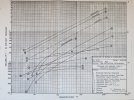
I wrote about my hair raising experience :oops: w a '67 C172 & bitterly cold flying in an article in the Dec 1986 EAA Sport Aviation mag. It needs some editing etc but dissolved water in the 80 octane fuel is something that can still happen today. Look in the EAA archives or find someone that saves old Sport Aviation. It is old data (1936 but it just might still be true.
1769382533700.jpeg
 
My little 150 has a pretty good heater, my open cab tractor with snowblower, not so much! For me, the question is whether it's worth clearing the runway to fly off my strip. I have flown down to about 0°F, but not below. Plane stays in hangar with heater until just before departure.
 
Man, I remember some of those cool, crisp mornings in Alaska where the gyros would howl like banshees on start up. Also the oil in the lines to the pressure gauges would be frozen, taking 5 minutes or so until the oil pressure gauge(s) would show oil pressure.
 
And they have nothing fir survival, what do you think the survival time in those temps will be?
That's my concern as well. If an engine failure or other emergency puts me on the ground in a remote area, maybe with injuries, what are the odds of survival? I had set myself a hard limit of 0 deg F years ago, but as I get older, my tolerance for cold weather is diminishing... and I'm getting more risk-averse.

Fun fact: one night I grabbed my cold-soaked iPad from my cockpit and tried to turn it on. The "overheat" warning appeared on the screen, at a few degrees below 0F! I had to take it inside and warm it up to make the "overheat" warning go away!

- Martin
 
I normally ride my bicycle to the airport from home. So, if I don't want to ride my bike, that's a pretty good sign.

Hasn't happened, yet. Though I'm sure there will be the day when it is 110° and I'm willing to ride my bike, but the DA will be a little high for my comfort in the C150.
 
I have flown in the single digits, but the plane just felt so brittle somehow. The stress of getting the engine started as soon as pre-heat was removed was real. But the air was super smooth and very little traffic to deal with. With a retract, I would hate something causing the lines or doors to freeze.
 
I had set myself a hard limit of 0 deg F years ago, but as I get older, my tolerance for cold weather is diminishing... and I'm getting more risk-averse.

I'm with you sir! I don't like the cold in my unheated experimental airplane. My tolerance for cold, heat, and turbulence is mostly determined by how many days it's been since I've gotten high ... ;)
 
Had a great time buzzing around for fun this afternoon. It finally warmed up and has been hovering around zero Fahrenheit this week here in central MN. ❄️IMG_1441.jpeg
 
I was flirting with the high 150s. Like to see it get over 160 and can for sure do that with an oil cooler cover. But with any luck headed to warmer temps in a week so skipped that for today’s flight (and plugged in the engine dehumidifier when back in the hangar).
 
Last week when I posted this I ended up flying a little later in the afternoon, when it was 16 degrees out and the sun was out. I went double layered everything and it was fine. But I couldn’t get the oil temp up with cooler 70% covered

Tomorrow I have to fly first thing in the AM and temps will be 0F. Dropping my plane to annual and it’s the only window that works. Wondering if I cover the cooler 100% with aluminum tape. Any risk to 100% coverage of the cooler ?
Well I’m certainly not the most qualified to be answering but to my understanding any oil temps in the green will be fine. Target 160+ in order to “boil off” any moisture. Accomplish that in cold weather by restricting airflow onto the oil cooler radiator. I have the tin cold weather cover then my a+p suggests foils speed tape if more restriction is needed. To my understanding, anything which allows running below the oil temp redline is acceptable.

You heard it from a bloke you don’t know on the internet…
 
When I had my Hatz I would start adding strips of aluminum tape to the oil cooler in the fall, up to 100% coverage in the winter, and then start peeling them off in the spring. Eventually I got tired of this and installed a cockpit controllable shutter to control airflow into the cooler (though that may not be an option on a factory built aircraft).
 
I'm good for +40°F in the biplane and around -20°F in a Cessna with a good preheat and long ground warm-up run. My current club prohibits operations below -5°F, though.
 
I have had water bottles freeze while in the inside pocket of my parka, and I am warm and toasty.
 
Back
Top