Arizona Dust Storms?

I don’t know much about jet engines, but asking that question is not quite like asking how long a piece of string is, but kinda.

Dust storms are variable in 3D size, duration, and intensity (wind velocity). The grain sizes of the airborne dust particles (higher velocity = larger grains), their mohs hardness (rock source area), and their density (in number of grains per cubic, not mass) will contribute differently to damage.
 
How much damage will a dust storm cause to a turbine engine if it's running during the storm?

I don't know how to quantify it but have one anecdote.

A previous airline had a contract with DHL Middle East out of Bahrain flying B767 freighters. Once an engine had operated in that region, they tried to keep that engine there so as to minimize the number of engines exposed to the dusty environment. When they swapped out airplanes, they'd also swap the engines.
 
How much damage will a dust storm cause to a turbine engine if it's running during the storm?
The answer is... it depends.
Turbofans/turbojest will take more of a beating than a turboprop that has an inlet particle separator or a barrier filter.

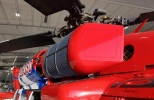
Can't they put big K&N filter on the front of those jet engines?
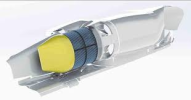
They do.

1756563841319-png.144599


1756563889416.png
 

Attachments

  • 1756563841319.png
    1756563841319.png
    1.9 MB · Views: 86
That sounds counterintuitive, because the purpose of the inertial separator on a turboprop is to allow particles with mass (dirt/rock/ice) to travel out through the inertial separator without making the turn back to the engine?? In a PT6 a particle has to make a 180 degree turn to come back into the compressor. Not sure about Garrets.
 
Back
Top