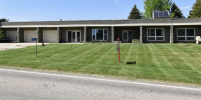
Any earth home experts?

MauleSkinner

Touchdown! Greaser!
Joined
Oct 25, 2005
Messages
21,670
Location
Wichita, KS
Display Name
MauleSkinner
My wife and I are browsing house listings in anticipation of places we might land when I retire in a couple of years, and this morning she ran across a house that she was getting pretty excited about until I pointed out that it was an earth home. “Living in a cave” isn’t an option, but as we went through the day, we thought it might be pretty decent with a patio excavated out the back side with a decent amount of glass.

So I want to do a little research on earth homes, the pros and cons, problems that might arise, and generally how to evaluate the structure if we run across one when the time comes.

Some questions that come immediately to mind:
If the house has made it 30 or more years without evidence of roof leakage, how likely is it to make another 30 years?

If it does develop issues, how difficult is it to repair?

I presume that drainage and ventilation should have been designed properly, but how does one evaluate those things (particularly ventilation) on a house that’s 30+ years old?

How does one determine a “well built” earth home vs one to walk away from?

Are there any trustworthy online resources that you know of?

When I was a teenager, there was an earth home builder in town for several years, so I assume they actually built some, but the only one I ever saw was driving by their office.

FWIW, I emailed my insurance agent this evening to see what kind of perspective the underwriters might have.

Any info would be appreciated. Thanks!
 
Earth or rammed earth? A rammed earth home would be above ground (plus a basement depending on location). The walls provide excellent thermal mass and allow for windows. Other alternatives include stay in place polystyrene concrete forms and hay bales.
 
Is this still in KS, or are you shopping in the Shire now?

In a hole in the ground there lived a hobbit. Not a nasty, dirty, wet hole, filled with the ends of worms and an oozy smell, nor yet a dry, bare, sandy hole with nothing in it to sit down on or to eat: it was a hobbit-hole, and that means comfort.​
Well, two (and soon to be all 3) daughters and all 4 (soon to be 5) grandkids are in Wisconsin, so we may be stuck there.

My wife would rather retire to Florida, but I hear it’s full. ;)
 
Wisco is better than Florida. We have snow!
I would tend to agree, but my wife isn’t a big fan of snow. Well, not so much snow, but weather cold enough to have it. She’d probably enjoy shoveling it if it was 80 degrees outside.;)
 
Are you talking about "Earth Ships", of the Dennis Weaver variety? My uncle made one in UT. It's sorta neat actually, but I can't speak to longevity of the roof sadly.

He used packed earth and tires for his wall construction. That mofo is WARM even in the dead of Utah winter. It's uncannily well insulated.
 
Make sure to post what you find out. I have seen videos and some posts about those styles homes; but everything is really vague and generalized. e.g. Usually they are super warm, super insulated, dark....

Tim
 
I don't know much about "earth homes", but I do know a little bit about coal mines. When they aren't going to use a mine for a while, they mothball it.

The things that need to be done, from memory: Keep the ventilators working and air moving, so it doesn't blow up, and keep the pumps running so it doesn't flood.
 
The first Python episode I ever saw! On a 9" B&W Sony portable TV.
Black and White? Portable? Luxury! The first Python episode I ever saw was on a 6-inch grey-scale television anchored to the ground. We didn't move in the sort of social circles that had access to bloody portable proper Black and White tellys, I'll tell you that for nothing sonny my lad.
 
Black and White? Portable? Luxury! The first Python episode I ever saw was on a 6-inch grey-scale television anchored to the ground. We didn't move in the sort of social circles that had access to bloody portable proper Black and White tellys, I'll tell you that for nothing sonny my lad.
We were at the cabin in the summer of 1969, where there never was a TV (or telephone or indoor plumbing, but I digress), but Dad bought the Sony so we could watch the Apollo 11 moon landing. Later that TV ended up in my bedroom.

Early teenage me saw "Monty Python's Flying Circus" in the TV Guide and assumed it would be airplane related, so I tuned in.
 
Black and White? Portable? Luxury! The first Python episode I ever saw was on a 6-inch grey-scale television anchored to the ground. We didn't move in the sort of social circles that had access to bloody portable proper Black and White tellys, I'll tell you that for nothing sonny my lad.
You were lucky to have a television! There were 150 of us, huddled around a zoetrope in a shoebox in the middle of the road.
 
This is something I have wanted to do for a long time. Not an expert but I did a fair amount of research several years ago.

The two main styles of earth sheltered homes I saw were a buried Quonset hut style with shot crete (https://www.formworksbuilding.com/) and square modules 24’x24’ or 28’x28’ of reinforced concrete walls with domed reinforced concrete ceilings (https://earthshelteredtechnology.com/ or https://www.terra-dome.com/) and then buried by several feet of dirt. A lot would be build into the sides of hills so less dirt would have to be trucked in.

I was most interested in the square modules with domed ceilings. They use specialized forms for the concrete and once it was cured the outside would be sealed for water proofing, a layer of dirt put down, pond liner layer over the dirt and then a final thicker layer of dirt. Solar tubes could be integrated into the design to provide sky lights in areas that did not have windows. I would not have gone that route since they could be a source of water intrusion if not done properly.

My dream design would have been 4 modules in an L shape. The outside of the vertical side of the L would be the front with lots of windows, the inside corner of the L would also be open to the outside to a courtyard type area, the the bottom side and top side of the L sloped with earth to the roof. I think that would give plenty of windows and light but still plenty of thermal mass to keep the earth sheltered benefit.

My wife isn’t a fan so it will likely not be in our future. If you decide to go that route post updates here so I can live vicariously.

These types of homes are very uncommon and a lot of the links I had to companies that built them 5-6 years ago are now dead. If you’re interested in homes that have some of the thermal mass benefits of an earth sheltered home but look more traditional, look into ICF (insulated concrete forms) homes. That’s one I could probably talk my wife into if we ever move.

Here is a well timed, recently released video on YouTube of a 50 year old earth home that took a direct hit from an F4 tornado:
 
If it were me, I'd go all out concrete bunker.
I know you're kidding, but not so fast. Do a search on 'insulated concrete form' houses. Ours is 6" concrete from the footers to the rafters, with 3" of styrofoam on both the inside and exterior. No seams, no holes...air tight, pretty much. When we built our 2400 sq. ft. place in 2011, after they got it closed in, they heated it with a 1500w milk house heater before they got the heat pump put in....in N Ohio....in February!! Very happy with it!!

Jim
I could go with that.
 
I grew up in one, we called it an "underground house" although really only the rear wall was underground. I don't really remember any serious issues with it, the only thing was that since the back wall was underground the roof was at about waist level back there and the dogs and cats would jump up on the roof and run around sometimes. I remember my dad talking about how energy efficient it was... that's about it.
 
I know you're kidding, but not so fast. Do a search on 'insulated concrete form' houses. Ours is 6" concrete from the footers to the rafters, with 3" of styrofoam on both the inside and exterior. No seams, no holes...air tight, pretty much. When we built our 2400 sq. ft. place in 2011, after they got it closed in, they heated it with a 1500w milk house heater before they got the heat pump put in....in N Ohio....in February!! Very happy with it!!

Jim
We built one with similar results. In addition we put a radiant barrier in the attic which kept the inside cool on 100º+ sunny days without air conditioning. In addition there is a "solid" feel inside compared with conventional stick frame construction. I suspect the earth homes would be similar.
 
These types of homes are very uncommon

There's probably a reason for that.

One thing I've noticed about enthusiasts of alternative designs for common products is they fixate on one main benefit, while ignoring the cumulative weight of benefits that originally led to other designs becoming the market norm.

Examples would be recumbent bikes and canard aircraft.
 
There's probably a reason for that.

One thing I've noticed about enthusiasts of alternative designs for common products is they fixate on one main benefit, while ignoring the cumulative weight of benefits that originally led to other designs becoming the market norm.

Examples would be recumbent bikes…
Sometimes the one main benefit outweighs the cumulative weight of benefits of wedgies.
 
My wife and I are browsing house listings in anticipation of places we might land when I retire in a couple of years, and this morning she ran across a house that she was getting pretty excited about until I pointed out that it was an earth home. “Living in a cave” isn’t an option, but as we went through the day, we thought it might be pretty decent with a patio excavated out the back side with a decent amount of glass.

So I want to do a little research on earth homes, the pros and cons, problems that might arise, and generally how to evaluate the structure if we run across one when the time comes.

Some questions that come immediately to mind:
If the house has made it 30 or more years without evidence of roof leakage, how likely is it to make another 30 years?

If it does develop issues, how difficult is it to repair?

I presume that drainage and ventilation should have been designed properly, but how does one evaluate those things (particularly ventilation) on a house that’s 30+ years old?

How does one determine a “well built” earth home vs one to walk away from?

Are there any trustworthy online resources that you know of?

When I was a teenager, there was an earth home builder in town for several years, so I assume they actually built some, but the only one I ever saw was driving by their office.

FWIW, I emailed my insurance agent this evening to see what kind of perspective the underwriters might have.

Any info would be appreciated. Thanks!
Hello
We purchased an earth home in western Colorado home last year and we like it a lot for its solid bunker feel. It's not dark because it has a skylight and south facing windows. It was built in the 1980s by a Terra Dome contractor. Terra Dome still builds homes and you can look them up. Ventilation hasn't been an issue but then Kansas is more humid.
Here are some thoughts / possible drawbacks:
>Finding insurance was difficult; that was surprising to me because they cannot burn or be damaged much by hail or wind. I believe the reason is the type is so rare and it is thrown in the same category as alternative styles such as earthbag homes or those DIY tire constructed ones. Also, when there are structural issues, the repair would be more costly than stick built.
>I had the same concerns as you and did some research online and there do seem to be a disproportionate number of examples that developed leaks over time. We had it inspected and have had no issues except one of the vent hoses that go through the ceiling became brittle and had small cracks. That's a quick and inexpensive repair.
>The energy savings claim (cool in summer, warm in winter) should be taken with a grain of salt unless it sits under more than 3 feet of dirt. Ours probably averages 2 feet and the resistance to outdoor temp seems not all that different when compared to the stick built we moved out of. There is research that says 3 feet plus is when it starts making a big difference but also depends in the region where you live.
>Reinforced concrete is strong and lasts a long time but you have to get it right the first time, and sometimes mistakes don't manifest themselves until years later and at that point you'd presumably be digging to find and correct the problem. The same goes for the water proofing.

Hope that helps
One more thing re: water drainage. They install French drains, tiles and gravel along the valleys of the domes and the footers which can last a very long time too, if done right. Is it easier to trust the visible water drainage systems on conventional houses? Absolutely. But for us it was worth the risk and we haven't had issues.
 
One more thing re: water drainage. They install French drains, tiles and gravel along the valleys of the domes and the footers which can last a very long time too, if done right. Is it easier to trust the visible water drainage systems on conventional houses? Absolutely. But for us it was worth the risk and we haven't had issues.
Thanks for the info.

Good to know about the depth of dirt, but I guess it makes sense since the “constant temperature” earth doesn’t start for 4-6 feet. Sometimes stating the obvious is important. :)

It kind of surprises me that insurance was an issue…my agent (State Farm) didn’t indicate any potential issues there.
State Farm is who finally went with , 5 others wouldnt even give a quote and it had nothing to do with location.
It’s our dream house that we don’t intend to sell , they are probably hard to flip because the type is not everyone’s cup of tea. To her it’s a cute hobbit home, to me a prepper bunker .
Sorry to jump in here as a non aviator but wanted my experience be known, there was little first hand info back when I looked .
Safe travels and thank you for what you do.
 
Back
Top