Another logbook question....

Half Fast

Touchdown! Greaser!
Joined
May 7, 2016
Messages
21,187
Location
Central Florida
Display Name
Half Fast
Home Airfield
KGIF
I recently got my plane back into the air after an engine overhaul. According to CFR 91.407(b), I believe I need to make a logbook entry for the operational checkout flight I did last Saturday. The reg reads:
No person may carry any person (other than crewmembers) in an aircraft that has been maintained, rebuilt, or altered in a manner that may have appreciably changed its flight characteristics or substantially affected its operation in flight until an appropriately rated pilot with at least a private pilot certificate flies the aircraft, makes an operational check of the maintenance performed or alteration made, and logs the flight in the aircraft records.​
​
Does anyone have a good example of a similar entry? I assume this will go into the airplane logbook.
 
"Performed operational flight check for engine replacement. No defects noted. Aircraft returned to service. 07/03/2025. Sky God, PP1234567"
That should work. Interestingly, the FAA doesn’t have a sample form for this entry. The only thing I might add is the FAR section since the FAA loves regulatory references. Another form of this I’ve seen was something like,

Performed operational flight check for engine replacement in accordance with §91.407(b). The aircraft has been determined to be in a condition for safe operation.​
 
Does an overhauled engine "appreciably change its flight characteristics or substantially affect its operation in flight"? If it was replaced by a different engine that's one thing, but if it's identical?
 
Now that it’s been overhauled, don’t let it sit around, go fly!!!!
 
What we documented:

"Engine Break-In accomplished IAW instructions in Lycoming Service Instruction No. 1427C. Changed engine oil filter: Champion CH48110-1. Removed filter cut, examined for particulates. Few carbon flakes found. 1 quart Aeroshell 100 SAE 50W mineral oil added. Engine run, post-maintenance leak check OK."

My A&P/IA stressed the importance of citing Lycoming's instructions for engine break-in to ensure warranty coverage. The Lycoming instruction includes the parameters of flight to be used for engine break-in, including power settings, duration, etc.
 
Last edited:
Does an overhauled engine "appreciably change its flight characteristics or substantially affect its operation in flight"? If it was replaced by a different engine that's one thing, but if it's identical?
The problem is that there's not much in the way of FAA guidance on the subject. No sample entries and not much on what ""appreciably change its flight characteristics or substantially affect its operation in flight" means. The closest is in FSIMS 3-277, which applies to certificated operators, which have more specific requirements:

Section 91.407(b) requires that an OCF be performed after maintenance, preventive maintenance, rebuilding, or alteration whenever that work may have appreciably changed the aircraft's flight characteristics or could affect its operation in flight. An OCF is also conducted, as decided by the operator, to determine whether an aircraft airframe, engine(s), accessories, or equipment is functioning according to established standards while the aircraft operates in its intended environment. These checks should be conducted with only the necessary personnel on board to complete the check. POIs and Principal Maintenance Inspectors (PMI) of parts 91K, 121, 125, and 135 operators are jointly responsible for oversight of OCF activities. (my emphasis)​

Considering that the consequences of a failed engine overhaul can be catastrophic, I hope, regardless of either substantive or logging rules, most will do a post-maintenance operational check flight check. If in doubt whether it must be logged, the conservative approach would be to take two minutes to log it.
 
Does an overhauled engine "appreciably change its flight characteristics or substantially affect its operation in flight"? If it was replaced by a different engine that's one thing, but if it's identical?

I think an engine OH would be considered “maintenance” that may have “substantially affected its operation in flight.”
 
Now that it’s been overhauled, don’t let it sit around, go fly!!!!

Unfortunately, we've had a steady dose of low cloud cover, rain, and t-storms the last few days. I flew Tue morning for a couple of hours, but the WX hasn't been great since. With the new engine, I need to know the WX will let me stay up for 2+ hours and I want to be in cruise at 75% power for break-in, so I'd like a decent radius of good sky conditions.

Personally, I need to do some pattern work, but I can't until the rings are seated.
 
My A&P/IA stressed the importance of citing Lycoming's instructions for engine break-in to ensure warranty coverage.

No Lycoming warranty for me, but my new Superior cylinders do have a warranty, so a reference to break-in instructions sounds wise.
 
Unfortunately, we've had a steady dose of low cloud cover, rain, and t-storms the last few days. I flew Tue morning for a couple of hours, but the WX hasn't been great since. With the new engine, I need to know the WX will let me stay up for 2+ hours and I want to be in cruise at 75% power for break-in, so I'd like a decent radius of good sky conditions.

Personally, I need to do some pattern work, but I can't until the rings are seated.
Sounds like a perfectly good excuse to get your instrument rating. :)
 
Interestingly, the FAA doesn’t have a sample form for this entry.
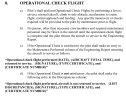
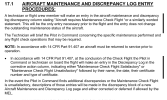
Not at the Part 91 level, but there is guidance at the 135/121 levels. So technically, a simple “Operational check flight performed.” entry is perfectly acceptable for 91. However the 135/121 guidance can also be applied to Part 91 which is what I usually recommended to my customers when they needed to make a similar records entry. Couple different 135 examples below.

1751643028484.png

1751643091369.png

Does an overhauled engine "appreciably change its flight characteristics or substantially affect its operation in flight"?
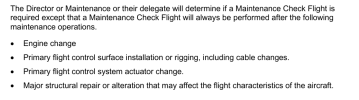
Sure. How do you know if the new engine will meet the AFM/POH performance requirements? You’ll also find at the higher 135/121 level guidance on the topic, engine change is usually the 1st item on the list that requires a ops flight check.

1751643168646.png
 
OP didn't read the cited references. NO, you don't have the authority to RTS:

91.407 (a) doesn't apply: you are not authorized under 43.7

91.407 (b) doesn't apply as noted above: "No person may carry any person (other than crewmembers) in an aircraft that has been maintained, rebuilt, or altered in a manner that may have appreciably changed its flight characteristics or substantially affected its operation in flight"

Overhauling an engine listed on the TCDS IAW approved/accepted documentation/parts does not do any of the above. There is a HUGE qualifier that you seemed to overlook: "in a manner that may have appreciably changed its flight characteristics or substantially affected its operation in flight"

So no, you don't qualify under any part of 91.407.

So 5 points for reading the FARs, -3 points for not reading the cited references and -2 points for not understanding the limitation of the FAR you did cite.
 
I think an engine OH would be considered “maintenance” that may have “substantially affected its operation in flight.”
How so? If an engine is not broken (ie it still running) did you 'fix' anything with an overhaul?

What characteristics/operations were substantially altered by returning an engine to its 'new' state?

Also PPLs are not authorized to approve MAINTENANCE return to service. Only PREVENTATIVE maintenance (far 43.7 (f) A person holding at least a private pilot certificate may approve an aircraft for return to service after performing preventive maintenance under the provisions of § 43.3(g). )
 
Last edited:
Not at the Part 91 level, but there is guidance at the 135/121 levels. So technically, a simple “Operational check flight performed.” entry is perfectly acceptable for 91. However the 135/121 guidance can also be applied to Part 91 which is what I usually recommended to my customers when they needed to make a similar records entry. Couple different 135 examples below.

View attachment 142542

View attachment 142543


Sure. How do you know if the new engine will meet the AFM/POH performance requirements? You’ll also find at the higher 135/121 level guidance on the topic, engine change is usually the 1st item on the list that requires a ops flight check.

View attachment 142544
There is no regulatory requirement to use these rules as you noted: they are not for Pt 91 aircraft.

As to the "How do you know if the new engine will meet the AFM/POH performance requirements?" AFM/POH is not the controlling document for engine overhaul. The approved maintenance manual is.

An overhauled engine should come with a test cell sheet as they are required to veryify RPM/leak check etc... there is ZERO chance that a PPL can sign off a dyno run to figure out the HP.

Also just about every AFM/POH has this verbiage 'used as a guide':

This Pilot's Operating Handbook is designed for maximum utilization as an operating guide for the
pilot
. It includes the material required to be furnished to the pilot by C.A.R. 3 and FAR Part 21, Subpart J.
It also contains supplemental data supplied by the airplane manufacturer.

So if your performance numbers are off, do you get a refund?
 
How so? If an engine is not broken (ie it still running) did you 'fix' anything with an overhaul?

In my case, two of the cylinders had cracks, the crankshaft and camshaft were worn below limits, and the camshaft had substantial corrosion. The OH fixed that. It also satisfied a crankshaft AD.

What characteristics/operations were substantially altered by returning an engine to its 'new' state?

That's not the point. The operational check flight is to confirm that the work has not altered performance outside normal operating parameters. An OH, if done incorrectly or if a replaced part has some unnoticed discrepancy, certainly has the potential to degrade aircraft performance.

Also PPLs are not authorized to approve MAINTENANCE return to service. Only PREVENTATIVE maintenance (far 43.7 (f) A person holding at least a private pilot certificate may approve an aircraft for return to service after performing preventive maintenance under the provisions of § 43.3(g). )

But a PPL (or higher) pilot is required to perform the flight and to log it in the aircraft maintenance records. Rather than stating "return to service" in the log, the pilot might simply write "operational check flight confirmed proper operation."
 
This was always interpreted by me as meaning a major repair or alteration, something that would have required a form 337 to be filed.
 
There is no regulatory requirement to use these rules as you noted: they are not for Pt 91 aircraft.
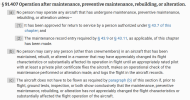
So Part 91.407 is not for a Part 91 aircraft? "No person" is no person, right? I hope in your "vast" maintenance background someone taught you that a mechanic can only provide an approval for return to service? And only a pilot can provide the aircraft return to service. Its also the reason why the operational check requirements for 91.407 are in Part 91 and not Part 43. This is really basic Maintenance 101 stuff here.

1751655024598.png


AFM/POH is not the controlling document for engine overhaul.
Never said it was. But for the requirements of 91.407 its required to meet those performance values otherwise it would not pass the required operational check flight. Again this is really basic stuff.
 
It seems the intent and practical effect of this reg is to prohibit:
A) carrying passengers on the first flight after major alterations or repairs, and
B) a student pilot from making that first flight.

Since there is no guidance on what constitutes an operational check, the log entry just documents that the first flight happened. I doubt it really matters past the second flight.

Part C arguably provides latitude on an engine overhaul to do a ground run to meet the requirement instead.

Angels on head of pin questions:

1. Does part b prohibit taking your A&P up on the first flight, or can they be a "crew member"?

2. Does a fast taxi with crow hop meet the requirement?
 
I'd take a closer look at 91.407 (c) The aircraft does not have to be flown as required by paragraph (b) of this section if, prior to flight, ground tests, inspection, or both show conclusively that the maintenance, preventive maintenance, rebuilding, or alteration has not appreciably changed the flight characteristics or substantially affected the flight operation of the aircraft.

If you replaced same for same, then nothing was done "...in a manner that may have appreciably changed its flight characteristics or substantially affected its operation in flight..." Don't go reading into the regs what's not there.
 
Part C arguably provides latitude on an engine overhaul to do a ground run to meet the requirement instead.
Not really. About 85% of maintenance can meet the requirements of 91.407(c). In the case of the OPs work, the majority of the operational checks can be completed on the ground. However, while engine static loads and conditions can be verified on the ground, dynamic loads and normal operating conditions cannot as those can never be achieved on the ground. But at the private 91 level whether 91.407 (b) or (c) is used is strictly a judgment call on the pilot performing the return to service. Beyond private 91, how the ops check flights are determined changes.

1. Does part b prohibit taking your A&P up on the first flight, or can they be a "crew member"?
No. Mechanics are considered crew and there is guidance to support that.

2. Does a fast taxi with crow hop meet the requirement?
If that is what you determine is only needed to sign off a 91.407 requirement, sure. In my opinion and experience, no.
 
So Part 91.407 is not for a Part 91 aircraft? "No person" is no person, right? I hope in your "vast" maintenance background someone taught you that a mechanic can only provide an approval for return to service? And only a pilot can provide the aircraft return to service. Its also the reason why the operational check requirements for 91.407 are in Part 91 and not Part 43. This is really basic Maintenance 101 stuff here.

View attachment 142554


Never said it was. But for the requirements of 91.407 its required to meet those performance values otherwise it would not pass the required operational check flight. Again this is really basic stuff.

Earlier you posted:
"However the 135/121 guidance can also be applied to Part 91 which is what I usually recommended to my customers when they needed to make a similar records entry. Couple different 135 examples below."

You threw in your examples from 135/121 and THOSE EXAMPLES are what I said were not applicable to Pt 91.

THE MOST IMPORTANT QUALIFIER:

"substantially affected its operation in flight"


What part of making an engine work as the TCDS specified would 'SUBSTANTIALLY' affect its operation in flight?

If it was an STC to a different engine? Sure. But using the exact same engine that came off the AC, overhauled/IRAN to new/serviceable limits is a non event.

REREAD 91.407 (c) as it PROVES MY POINT IN SPADES:

"The aircraft does not have to be flown as required by paragraph (b) of this section if, prior to flight, ground tests, inspection, or both show conclusively that the maintenance, preventive maintenance, rebuilding, or alteration has not appreciably changed the flight characteristics or substantially affected the flight operation of the aircraft." emphasis is mine

Please show your math were 91.407 is applicable. I am genuinly curious. What could possibly be sustiantially changed by installing the motor that meets the design specifications?

I'll agree that you can log it, but there is absolutely no reason that its legally required in OPs case. You simply don't meet any of the standards of para (a) or (b) and (c) actually absolved OP of 91.407 entirely.
 
Last edited:
You threw in your examples from 135/121 and THOSE EXAMPLES are what I said were not applicable to Pt 91.
Context is everything. I was replying to a post stating “the FAA doesn’t have a sample form for this entry [for 91.407].” Since the requirements of 91.407 are mandatory at the 135, 10 pax > and 121 levels, there are existing examples of the verbiage used for those 91.407 record entries of which I provided a couple of examples. So in the context of my post, I simply stated you can use those same 135/121 examples for the entry on a private Part 91 aircraft for 91.407 which was the OPs inquiry. And had you read Post 28, I expanded on how 91.407 applies at the private 91 level.

What part of making an engine work as the TCDS specified would 'SUBSTANTIALLY' affect its operation in flight?
What could possibly be sustiantially changed by installing the motor that meets the design specifications?
Except 91.407 has zero to do with TCDS or design specification conformity, and everything to do with the physical operation of the aircraft in flight, or on the ground, after maintenance was performed to ensure the maintenance was done properly. Determining the aircraft is airworthy takes care of TCDS/spec conformity. In some guidance this ops check is referred to as a maintenance check flight or maintenance function check flight, however, regardless of what it is called the regulatory requirement to check that actual mx work is 91.407. The fact as a mechanic you don’t understand this is quite telling.
 
If you replaced same for same,....

And if you torqued all the fasteners in the proper sequence, and if you routed the silk thread sealing the case halves correctly, and if you used the proper amounts of assembly lubricants, and if you used the proper amounts of the correct sealants, and if..., and if..., and if...

There are a thousand things that can go wrong in the assembly of an engine. It's not like swapping a failed vac pump.

The aircraft does not have to be flown as required by paragraph (b) of this section if, prior to flight, ground tests, inspection, or both show conclusively that the maintenance, preventive maintenance, rebuilding, or alteration has not appreciably changed the flight characteristics or substantially affected the flight operation of the aircraft.

Unless you have a test cell and can run the engine in it for an hour or two before installation, you can't show conclusively that it was reassembled properly and hasn't "substantially affected the flight operation of the aircraft." In fact, some might consider even that to be inconclusive, and argue that only flight can really confirm correct flight operation.

Really - think about it. With a fresh engine that's only been run on the ground for 10 minutes, and only had about 10 seconds at full static rpm, would you load up spouse and kids and go blasting off into the blue? Or would you do an operational check flight, spending an hour or two circling over the airport, then landing and inspecting the work closely?
 
For me the wording "...appreciably changed its flight characteristics or substantially affected its operation in flight..." is very much like the official Part 43 description of a major repair or alteration which, in regards to reciprocating engines, would only be in the case of one having an integral supercharger, reduction gearing or structural repairs. So I don't really see this as being applicable in the case of a normal engine overhaul. It seems unlikely that an overhauled engine would be installed and the aircraft not subjected to a test flight but it is quite likely that this "test" flight may have included a passenger in some cases.
 
Then there are those that want the Tech to go.

I have no issue IF:

I’m on Insurance as PIC

They stay behind.
 
Ummm.... You do know they're run on a test bed after the rebuild, right? So they are delivered post testing by the facility that overhauled/rebuilt the engine. So you are receiving a known working engine. Not to say that something won't break, just like any other flight.

Then the mechanic will do a test run after they have installed the "working" engine with whatever accessories, hoses, etc., that need to be reinstalled for the particular aircraft. You're reading WAY to much into a reg that is for MAJOR changes. Maybe take a trip into the FSDO and see what they say the Reg is for.
The OP has stated in this thread his engine was field overhauled by him and an A&P.
 
And if you torqued all the fasteners in the proper sequence, and if you routed the silk thread sealing the case halves correctly, and if you used the proper amounts of assembly lubricants, and if you used the proper amounts of the correct sealants, and if..., and if..., and if...

There are a thousand things that can go wrong in the assembly of an engine. It's not like swapping a failed vac pump.

Unless you have a test cell and can run the engine in it for an hour or two before installation, you can't show conclusively that it was reassembled properly and hasn't "substantially affected the flight operation of the aircraft." In fact, some might consider even that to be inconclusive, and argue that only flight can really confirm correct flight operation.
Umm... You know the overhaul/rebuild facility does multiple checks on seals, etc. And you know they also run the engine on a test bed. Then after that the shop that reinstalls the engine does it's own test run(s) and then finally, when they're sure they're done, the IA signs off on it.

Don't read into the Regs what not there. Maybe take a trip down to the local FSDO and ask them if the logbook entry, other than the IA's, is needed after an engine change with the same type engine.
 
Maybe take a trip down to the local FSDO and ask them if the logbook entry, other than the IA's, is needed after an engine change with the same type engine.

Oh FFS, he's already made the check flight. Just log it and move on.
 
Umm... You know the overhaul/rebuild facility does multiple checks on seals, etc. And you know they also run the engine on a test bed. Then after that the shop that reinstalls the engine does it's own test run(s) and then finally, when they're sure they're done, the IA signs off on it.

Umm.... You apparently have not been following along. I did not use an "overhaul/rebuild facility." There wasn't any "shop that reinstalls the engine" and then "does it's own test run(s)."

My A&P-IA and I removed the engine, performed the OH, and reinstalled it. Our own brief ground run and my first flight were the test runs.


Oh FFS, he's already made the check flight. Just log it and move on.
:yeahthat:

Engine is in, I've made two flights with it so far, and I entered the first flight into the plane's logbook as a check flight.

People seem to envision only one way of a pilot/owner doing an overhaul, and that's with a pen and checkbook. Some of us also use wrenches, and don't simply ship the engine to a major shop and wait for it to come back.
 
Umm... You know the overhaul/rebuild facility does multiple checks on seals, etc. And you know they also run the engine on a test bed. Then after that the shop that reinstalls the engine does it's own test run(s) and then finally, when they're sure they're done, the IA signs off on it.

Don't read into the Regs what not there. Maybe take a trip down to the local FSDO and ask them if the logbook entry, other than the IA's, is needed after an engine change with the same type engine.
I’m not sure you realize that all shops don’t operate this way.
 
Umm... You know the overhaul/rebuild facility does multiple checks on seals, etc. And you know they also run the engine on a test bed. Then after that the shop that reinstalls the engine does it's own test run(s) and then finally, when they're sure they're done, the IA signs off on it.

Don't read into the Regs what not there. Maybe take a trip down to the local FSDO and ask them if the logbook entry, other than the IA's, is needed after an engine change with the same type engine.

Why does it require an IA to sign off on it?
 
Back
Top