
1RTK1
Pattern Altitude
instead of this big expedition why didn’t they fly a plane over that area and take some low level pictures first. That would have to be much cheaper.


Yet, they ended up lost.1. The Timeline of the "Drinking" Rumor
The rumor did not exist in public records during Noonan's lifetime. Noonan was celebrated as one of the finest celestial navigators in the world, responsible for pioneering and mapping Pan Am’s transpacific China Clipper routes. [1, 2]
The widespread story of his alcoholism did not appear in print until 1966, nearly 30 years after his disappearance, with the publication of The Search for Amelia Earhart by Frederick Goerner. Goerner’s claims reportedly relied on an alleged 1937 police report that has never been found. Later biographers repeated the claim, with some sensationalized accounts alleging Noonan had to be "poured" onto the plane or dragged out of whorehouses in Manila—claims that are completely without documentary support

Which could happen to anyone, right?Yet, they ended up lost.

Like Nungesser and Coli. Both men, both famous pilots, Coli had fame as a navigator, both lost crossing a smaller ocean.Which could happen to anyone, right?

instead of this big expedition why didn’t they fly a plane over that area and take some low level pictures first. That would have to be much cheaper.

What, and miss out on a $900k island jaunt funded with other people’s money?

Well, we didn't find it so of course we have to keep looking! Next time for sure...nah, they could have done what other "researchers" do, at the end of the "research" show justification why more "research" is called for...
I got lost today (flying a different airplane than usual). Didn't have a slaved directional. Doh! Luckily there were three TFRs in the vicinity, so I'd have escorts if I really got lost.Like Nungesser and Coli. Both men, both famous pilots, Coli had fame as a navigator, both lost crossing a smaller ocean.
Ron Wanttaja

Yeah, that story about him is all lies to blameshift for this disaster from Earhart. You know, because she's a hero.1. The Timeline of the "Drinking" Rumor
The rumor did not exist in public records during Noonan's lifetime. Noonan was celebrated as one of the finest celestial navigators in the world, responsible for pioneering and mapping Pan Am’s transpacific China Clipper routes. [1, 2]
The widespread story of his alcoholism did not appear in print until 1966, nearly 30 years after his disappearance, with the publication of The Search for Amelia Earhart by Frederick Goerner. Goerner’s claims reportedly relied on an alleged 1937 police report that has never been found. Later biographers repeated the claim, with some sensationalized accounts alleging Noonan had to be "poured" onto the plane or dragged out of whorehouses in Manila—claims that are completely without documentary support
That makes too much sense. Mods, ban this guyinstead of this big expedition why didn’t they fly a plane over that area and take some low level pictures first. That would have to be much cheaper.

instead of this big expedition why didn’t they fly a plane over that area and take some low level pictures first. That would have to be much cheaper.

You must be referring to the epaulettes wearing/lanyard and hard card sporting/self identifying Captain and expert with the purposely misspelled first name.Reminds me of a certain present-day YouTube pilot who has been more interested in fame and money raising than paying attention to the requirements of safe flight.
Who is an actual retired ATP and flight engineer, with big iron type ratings. I think his problem (or is it a feature) is that he "dumbs down" stuff; perhaps better for a larger audience.You must be referring to the epaulettes wearing/lanyard and hard card sporting/self identifying Captain and expert with the purposely misspelled first name.
Are you familiar with the appeal to authority fallacy?Who is an actual retired ATP and flight engineer, with big iron type ratings. I think his problem (or is it a feature) is that he "dumbs down" stuff; perhaps better for a larger audience.
We have nothing to exclude believing that Earhart simply ran out of fuel, either. Maybe even had been a mechanical issue...maybe Noonan had dropped his sextant.I'd never heard of Nungesser, that was interesting. But my guess would be maybe not navigation error compared to mechanical or simply running out of fuel. I say that because getting to the destination of "North America" from France requires quite a bit less precision than finding to a 2x1 mile island in the Pacific.
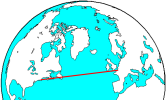
When you're flying from Paris to New York, the North American continent looks like a big 'ol barrier, hard to miss. But the great circle route shows it differently. An unexpected wind from the north, a bit of compass error to the south, and the destination shore is trending away from you.

OrMostly because she was doing what her mentor had told her not to do.
Followed up withOr
The Official U.S. Army Air Corps Crash Report from the Luke Field disaster includes the highly illuminating, verbatim statements of the military ground crews who serviced the aircraft. [1]
When investigators dug into why the aircraft failed to track straight and why the right landing gear sheared off so abruptly, the testimony of the Hawaiian Air Depot mechanics exposed the exact operational error regarding the pneumatic oleo struts.
The Testimony of Staff Sergeant Frank McKee
Staff Sergeant Frank McKee was one of the lead mechanics assigned to inspect the Electra's fueling and landing gear alignment. During his testimony before the official Army Investigative Board, McKee recounted the pre-flight check when they noticed the heavy list to the right:
- The Unlevel Discovery: McKee confirmed that with a full load of fuel, the right wingtip was significantly closer to the ground than the left. He testified that the right oleo strut was severely compressed under the tremendous fuel payload.
- The Erroneous Action: Under pressure to prepare the plane quickly for its historic departure, the crew sought the fastest cosmetic solution. McKee admitted under oath that rather than hoisting the heavily laden aircraft to inject hydraulic fluid and pump high-pressure air back into the collapsed right strut, the crew took the shortcut: they opened the air valve on the high left strut.
- The Admission: McKee testified that they bled air out of the left strut until the fuselage sat visually level to the eye, actively acknowledging that they were lowering the total system pressure to make the plane look visually balance-correct on the tarmac.
The Core Findings of the Investigative Board
The U.S. Army Board of Officers used this mechanical testimony to map out exactly how the structural physics failed Amelia Earhart on her takeoff roll:
The official testimony firmly solidified that what appeared to the public as a simple "blown tire" or an "unfortunate overcorrection" was actually a catastrophic structural failure guaranteed the moment the air pressure was bled out of those struts on the hangar floor. [1]
- "Bottomed Out" Volatility: The board's engineering assessment concluded that by deflating the left strut to match the damaged right one, the mechanics left both shock absorbers entirely "bottomed out." The internal pistons were already resting hard against the mechanical bottom limits of their travel before the takeoff roll even commenced.
- No Structural Buffer: Without any pneumatic air pocket left to compress, the suspension could not act as a shock absorber. When the Electra reached high speed on the runway, any minute ripple, runway seam, or minor puddle sent raw, un-cushioned kinetic energy directly into the rigid metal of the landing gear forks.
- The Mechanical Snap: As soon as Earhart made a necessary, high-speed steering correction to stabilize the plane's tracking, the tremendous lateral (sideways) load slammed into a right landing gear assembly that had absolutely zero dynamic "give" or suspension cushion left. The metal instantly reached its ultimate yield strength and snapped at the fork connection. [1]
We have nothing to exclude believing that Earhart simply ran out of fuel, either. Maybe even had been a mechanical issue...maybe Noonan had dropped his sextant.
Finding a 2x1 mile in the Pacific is obviously a harder job than hitting North America. But looking at a Mercator projection is deceptive. Here's the approximate great-circle route between New York and Paris....
The Switching Device and Its MechanismOh I'm willing to bet that Earhart ran out of fuel....while looking for the island. From my read of all the links on here, my take is that between the two of them they didn't understand the radio navigation systems they were trying to use well, and that was the real problem.
Yep, the great circle angles are narrower than someone might expect, but still not approaching the roughly 1.5 MOA for what was supposed to be Earhart's last leg. Also possible that Nungesser could have miscalculated and ended up flying that great circle course parallel to the east coast of NA, but after X hours you'd think that would occur to him as a possibility, and he'd just head magnetic west.
Maybe Nungesser did crash in Canada, hit his head in the crash, walked into a bar in Montreal, and when he heard everyone speak just a different dialect of French he figured he never left the continent...or that he was really a Canadian! Much better story than Earhart being a spy. If I were younger I'd see if I could get support from one of the colleges to fund a field trip to some of the bars up there to start looking for evidence.
All obviously part of the conspiracy to make people believe that women can be competent pilots.Or
The Official U.S. Army Air Corps Crash Report from the Luke Field disaster includes the highly illuminating, verbatim statements of the military ground crews who serviced the aircraft. [1]
When investigators dug into why the aircraft failed to track straight and why the right landing gear sheared off so abruptly, the testimony of the Hawaiian Air Depot mechanics exposed the exact operational error regarding the pneumatic oleo struts.
The Testimony of Staff Sergeant Frank McKee
Staff Sergeant Frank McKee was one of the lead mechanics assigned to inspect the Electra's fueling and landing gear alignment. During his testimony before the official Army Investigative Board, McKee recounted the pre-flight check when they noticed the heavy list to the right:
- The Unlevel Discovery: McKee confirmed that with a full load of fuel, the right wingtip was significantly closer to the ground than the left. He testified that the right oleo strut was severely compressed under the tremendous fuel payload.
- The Erroneous Action: Under pressure to prepare the plane quickly for its historic departure, the crew sought the fastest cosmetic solution. McKee admitted under oath that rather than hoisting the heavily laden aircraft to inject hydraulic fluid and pump high-pressure air back into the collapsed right strut, the crew took the shortcut: they opened the air valve on the high left strut.
- The Admission: McKee testified that they bled air out of the left strut until the fuselage sat visually level to the eye, actively acknowledging that they were lowering the total system pressure to make the plane look visually balance-correct on the tarmac.
The Core Findings of the Investigative Board
The U.S. Army Board of Officers used this mechanical testimony to map out exactly how the structural physics failed Amelia Earhart on her takeoff roll:
The official testimony firmly solidified that what appeared to the public as a simple "blown tire" or an "unfortunate overcorrection" was actually a catastrophic structural failure guaranteed the moment the air pressure was bled out of those struts on the hangar floor. [1]
- "Bottomed Out" Volatility: The board's engineering assessment concluded that by deflating the left strut to match the damaged right one, the mechanics left both shock absorbers entirely "bottomed out." The internal pistons were already resting hard against the mechanical bottom limits of their travel before the takeoff roll even commenced.
- No Structural Buffer: Without any pneumatic air pocket left to compress, the suspension could not act as a shock absorber. When the Electra reached high speed on the runway, any minute ripple, runway seam, or minor puddle sent raw, un-cushioned kinetic energy directly into the rigid metal of the landing gear forks.
- The Mechanical Snap: As soon as Earhart made a necessary, high-speed steering correction to stabilize the plane's tracking, the tremendous lateral (sideways) load slammed into a right landing gear assembly that had absolutely zero dynamic "give" or suspension cushion left. The metal instantly reached its ultimate yield strength and snapped at the fork connection. [1]
I understand that I have fallen closely in the past and from this thread I'm just kind of refreshing but I've learned a bunch more from grinding away at it.I don't know if I have the source anymore, but believe it was more complicated than that, and likely not a failed part. It might have been a Proceedings article? And I think there was a link from one of the posts here. Anyway, it was along the lines that she was asking for people to get a bearing on her on frequencies where it was not possible, and she may have been trying to transmit and ask for a bearing where it was equally impossible. Along the lines of, a loop HF antenna can't transmit, and there was no DF available on the ships on that island on some frequencies, and you can't DF a signal that doesn't have a carrier - SSB with no modulation, for example.
Gray pointed out a crucial technical detail to prove the relay failed: Earhart was temporarily able to hear the Itasca's high-frequency carrier signal on 7500 kHz, but only when she manually switched her antenna selector to the "Loop/DF" position. Signals from the directional loop antenna went directly into the receiver, entirely bypassing the broken "send-receive" relay. When she switched back to the fixed antenna ("FA") to listen for normal voice contact, she heard nothing but static because the damaged relay blocked the signal pathI don't know if I have the source anymore, but believe it was more complicated than that, and likely not a failed part. It might have been a Proceedings article? And I think there was a link from one of the posts here. Anyway, it was along the lines that she was asking for people to get a bearing on her on frequencies where it was not possible, and she may have been trying to transmit and ask for a bearing where it was equally impossible. Along the lines of, a loop HF antenna can't transmit, and there was no DF available on the ships on that island on some frequencies, and you can't DF a signal that doesn't have a carrier - SSB with no modulation, for example.
sorry about that voice typing on the phoneI understand that I have fallen closely in the past and from this thread I'm just kind of refreshing but I've learned a bunch more from grinding away at it.
the basis of the failure at the front end when things weren't so desperate appeared to me to be a mechanical failure whereas as it got closer and things became more frantic we saw the misconfigurations.
part of what I learned in this thread and further research was the amount of time that was spent by her to try and resolve these radio issues prior to the expedition.

Looks like the search is a go, starting in October...

When I was a junior enlisted GI transiting Germany to Ft Hood, I ended up eating in a cafe in Atlanta, dressed in my greens. Big black guy wearing a suit and a badge sitting next to me at the counter tells me he's a detective, looks at my uniform and asks, "What kind of marksman are you?"Are you familiar with the appeal to authority fallacy?
An appeal to authority becomes a logical fallacy when any of the following occur:
• Irrelevant Expertise: Citing someone who is famous or knowledgeable in one field to prove a point in an unrelated field (e.g., quoting a physicist about macroeconomics).
• Out of Domain: Using a legitimate expert who is speaking outside of their specific discipline.
• Bias or Conflict of Interest: Relying on an expert who has a financial stake, paid endorsement, or personal bias regarding the claim.
I'll break it down.
1.) Irrelevant Expertise: He can fly big airplanes, but I doubt he has documented experience in crash investigation. I can pontificate on why airplanes hit the ground too, using the same media reports and NTSB releases he does, and arrive at the same conclusions.
2.) Out of Domain: See #1 above.
3.) Bias or Conflict of Interest: He uses his presumed position of authority to make money from clicks and views.
Now that they know what a tree looks like probably have a better chance of finding a twin engine aircraft. I'm betting find her inside of 5 years now.Technological efforts to determine the location of the aircraft by a very impressive man and his team.
Alan Eustace funded the third phase under the Nauticos banner in 2017. Following the conclusion of Purdue University’s island expedition on October 19, 2026, Nauticos officially announced plans to move forward with their fourth ocean floor expedition. [1, 2, 3, 4]
The Strategy for the Next Phase
- Refined Search Grid: Nauticos President Dave Jourdan stated that new mathematical data and a fresh re-analysis of radio signals have "narrowed the search area dramatically". The new phase will target a tight grid close to Howland Island where they believe Earhart was located less than an hour before her final radio transmission. [1]
- Deep-Sea Technology: The follow-up will continue using deep-ocean sonar mapping, building directly on the 1,800 square miles of seafloor mapped during Eustace's 2017 deployment of the REMUS 6000 autonomous underwater vehicle.
[1]- Current Status: Nauticos is currently raising the necessary capital and coordinating logistics for this next maritime deployment. [1]

Verifying the facts may take place but no doubt very difficult searching 18,000 ft below the surface.When I was a child in grade school, when the disappearance was closer in time to us than Operation Desert Storm is to us today, we were taught that they got lost, ran out of fuel, and ditched in the ocean.
Everyone believed it.
And is the 60+ years since being taught that, I've seen zero evidence to sway my mind.

