172 flipped by 737 @SNA

FPK1

Line Up and Wait
Joined
Apr 21, 2021
Messages
921
Location
Orange County, CA
Display Name
FPK1
Home Airfield
KFUL
On Saturday, November 7, 2026, a Cessna 172 overturned at John Wayne Airport after being caught in the powerful jet blast of a commercial airliner.

While initial statements from airport officials attributed the incident around 2:38 p.m. to high winds, air traffic control recordings and statement from the Orange County Flight Center (which owns the aircraft) confirmed the flip was triggered by a commercial aircraft—specifically identified as United Airlines Flight 2611, a Boeing 737.

The 737 was taxiing or spooling up for takeoff on the runway when its intense engine exhaust caught the high-winged, lightweight Cessna 172, rolling it onto its roof on the ACI Jet ramp.

A flight instructor and a student were inside the Cessna at the time of the incident, but fortunately, no injuries were reported.


Haven't found any video yet...
 
Ground ops at SNA are very tight quarters for a 737.

Yeah. I’m always very aware of my jet blast. At SNA I’m worried about it…

Wow, I just looked at the satellite view, tons of small planes parked just off the taxiways at the south end of the runway. Yeah, I’d be concerned with jet blast.
 
Ground ops at SNA are very tight quarters for a 737.
Three decades back I flew out of there on a widebody (thought it was an MD-11) that had less than a dozen people onboard (repositioning flight) and fuel to make it to SLC.
I didn't think they operated regularly out of there. That's a marginal runway even for a light MD-11, makes me wonder about the balanced-field calculation. (Had to look it up, it could have been vastly lighter than gross and still had plenty of fuel.)
 
It looks like the 172 might have been taxing too close to the 737. Anyone know if it was or was it parked where it was supposed to be?
 
It’s more likely the 172 was flipped by a CFI no using SA and getting to close to the larger aircraft.

Yes, you’d think a CFI based there would be keenly aware and cautious of jet blast. I also didn’t see any crosswind correction on the ailerons, although it’s hard to tell from the vid.
 
I hope that no one was injured. When I was a student at Michigan State University back in the mid-60s I belonged to the Winged Spartans Flying Club. I was taking some night flying lessons from a fellow pilot and we taxiied out to runway 9 where a Douglas DC-7 was preparing for takeoff. We were quite a ways behind the airplane and thought there was no problem; however, during the DC-7 runup we were upset a little bit and caught the end of the prop on the Cessna 172 we were flying. Surprised both of us!
 
From my viewpoint, this is on the CFI.

1 He should not have permitted his student to taxi behind, or potentially behind a jet with running engines. Contact the jet's Captain on ground frequency if in doubt.

2 When taxiing in potentially windy conditions, the controls must be positioned so that any wind forces the tail and upwind wing down, and at their limit of travel. If this had been done, the tail would have been forced to the pavement, the nose wheel lifted off the pavement, and the Cessna would have weather cocked to faced the jet blast.
As the plane weather cocks into the wind, the elevator is smoothly moved to give nose down, producing negative lift from the wings.


EDITED TO ADD
The CFI should have been aware of the departure routes for jets at his home field, and seen to it that they were never behind, or potentially behind any heavy exec or airline aircraft.
I would also think he would have been monitoring the ground frequency to stay aware of the status of other aircraft potentially in motion around them.

No injuries reported, so the seat belts were on and tight.


Been there, done that in winds 40 gusting 60, and taxied with wind diagonally from front left, an rear left. I did not shut the engine down until the tie downs were secure, and then had the guys hold the door while my family departed the plane, then come to my side to hold mine. One of the advantages of diverting to a large full service, and expensive airport.

A little less seriously, man those strut braced Cessna wings are tough!
 
Last edited:
Yes, you’d think a CFI based there would be keenly aware and cautious of jet blast. I also didn’t see any crosswind correction on the ailerons, although it’s hard to tell from the vid.
One might think that, but standard wake turbulence training doesn’t include taxi spacing for large aircraft or the 3-2-2 rule for helicopters.
 
One might think that, but standard wake turbulence training doesn’t include taxi spacing for large aircraft or the 3-2-2 rule for helicopters.
At my former home airport (KLUK) there were a lot of bizjets, and 727/737 charters, among other things.
As students three decades back it was hammered into us to stay way behind, and never end up at right angles to the back end of any jet. High-wing Cessnas love to tip over.
 
From that video, looks like they were trying to sneak behind the 737 to get to the ramp when the 737 powered up to start moving again at just the wrong time.
 
At my former home airport (KLUK) there were a lot of bizjets, and 727/737 charters, among other things.
As students three decades back it was hammered into us to stay way behind, and never end up at right angles to the back end of any jet. High-wing Cessnas love to tip over.
When have you heard of a Cessna Caravan, 210, 207, 206, 182, R182, 177, 177RG, or 172RG tipped over? Is that list less prone to tipping over than 172s and 152s or not commonly flown by students and low time pilots?

Yes, a Cessna high wing has a higher CG and a narrower landing gear that many low wing models, but the don’t love to tip over.
 
Last edited:
When have you heard of a Cessna Caravan, 210, 207, 206, 182, R182, 177, 177RG, or 172RG tipped over? Is that list less prone to tipping over than 172s and 152s or not commonly flown by students and low time pilots?

Yes, a Cessna high wing has a higher CG and a narrower landing gear that many low wing models, but the don’t love to tip over.
High wings, with one side "blanked", is the thing. In severe crosswinds, it's common (if one is not paying attention, or is "gusted") to have a wing lift just after touchdown, as the wind will get under only the exposed wing. I've seen it many times, and "done it" more than once. Only one time was it excessive, and it was my fault for trying to land in those conditions. At my current flight school (from which I rent, sold my plane) they hammer crosswind controls into you, as it's a "crosswind" airport, with a 160' hill just to the north.
It doesn't happen in Cherokees (at least to any degree.
And it's not because of a high C/G.
 
Three decades back I flew out of there on a widebody (thought it was an MD-11) that had less than a dozen people onboard (repositioning flight) and fuel to make it to SLC.
I didn't think they operated regularly out of there. That's a marginal runway even for a light MD-11, makes me wonder about the balanced-field calculation. (Had to look it up, it could have been vastly lighter than gross and still had plenty of fuel.)
The MD11 never operated out of SNA.
 
S
High wings, with one side "blanked", is the thing. In severe crosswinds, it's common (if one is not paying attention, or is "gusted") to have a wing lift just after touchdown, as the wind will get under only the exposed wing. I've seen it many times, and "done it" more than once. Only one time was it excessive, and it was my fault for trying to land in those conditions. At my current flight school (from which I rent, sold my plane) they hammer crosswind controls into you, as it's a "crosswind" airport, with a 160' hill just to the north.
It doesn't happen in Cherokees (at least to any degree.
And it's not because of a high C/G.
I teach in both Piper and Cessna. The x wind landing technique for both are identical. The Piper is better because it has an ~18” wider wheel base, lower CG and a more effective rudder. The fact one is high wing of low wing have nothing to do with it. Maybe the issue is a flight school allowing pilot operation during severe crosswinds and wind shear conditions and CFIs who have never heard of wheel barrow accidents (most haven’t).

All certified aircraft had to demonstrate they could be landed in a 90° 10 knot crosswind without exceptional pilot effort and why most flight schools have 10 knots as a limitation for student pilots. Also if you read the airplane flying handbooks, the FAA considers any crosswind of more than 15 knots hazardous. The max demonstrated x wind for a 172 is only 15 knots and a factor of rudder.

The Cessna has a very effective elevator vs the less effective Piper stabilator and is prone to wheel barrow if the pilot releases the elevator control after landing or fails to go full aft control after touch down, which I suspect is why you are observing the “easy to tip” characteristic. This is especially a problem when pilots drive the plane at a flat pitch attitude and at high speed on to a runway during a crosswind situation. It’s an easy demo to show the elevator shifting all weight to the nose wheel and lifting the main gear off the surface in a Cessna. The 182RGs are very prone to it resulting in a prop strike.


Last edited:
Watching the ops at SNA while waiting for a flight home, I’m somewhat amazed this hasn’t happened more often.
 
I teach in both Piper and Cessna. The x wind landing technique for both are identical. The Piper is better because it has an ~18” wider wheel base, lower CG and a more effective rudder. The fact one is high wing of low wing have nothing to do with it.
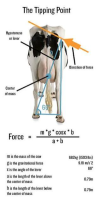
High vs low wing is definitely part of it. It's partly because of the wing weight on top or bottom that the Piper has a lower CG, and the high wing also has a higher drag center. All of these things make the high wing more prone to tipping due to a side gust or jet blast.
 
High vs low wing is definitely part of it. It's partly because of the wing weight on top or bottom that the Piper has a lower CG, and the high wing also has a higher drag center. All of these things make the high wing more prone to tipping due to a side gust or jet blast.
A 737 at gross takeoff weight can weigh 190,000#. A 172 or a Warrior has a max gross weight of ~2400# (1-2% of the 737). Physics suggest this is a bit of a moot argument that one will flip easier than the other.
 
Last edited:
High vs low wing is definitely part of it. It's partly because of the wing weight on top or bottom that the Piper has a lower CG, and the high wing also has a higher drag center. All of these things make the high wing more prone to tipping due to a side gust or jet blast.
The blocked "far" wing is a big part of it.
 
Back
Top