Kenny Phillips
Final Approach
- Joined
- Jul 29, 2018
- Messages
- 6,572
- Display Name
- Kenny Phillips


Wow. That's rather a rare bird, at least in the USA. After seeing what remains, I'm sure that the first responders will remember this forever.It was being leased I’m pretty sure. I have several hundred hours in that plane…
Still trying to get details… awful…

Sometimes the most dangerous part of skydiving is the ride up.I flew jumpers for a few summers. I considered skydiving, but, never jumped myself...not because I was afraid of the skydiving...but because I was afraid of the other pilots.
Or if movement caused a CG issue (which has happened in the past.)Will be interesting to see if there was any initial mass movement by the jumpers to get out during the event.
Exactly. I worked one incident where the aircraft lost control when everyone moved toward the door during an in-flight engine partial decel. Thankfully there was enough altitude to recover the aircraft to a field once everyone bailed out.Or if movement caused a CG issue (which has happened in the past.)


 www.bbc.com

I wondered….It was being leased I’m pretty sure. I have several hundred hours in that plane…
Still trying to get details… awful…

Board (NTSB) will investigate. The NTSB will lead the investigation.“It was being leased I’m pretty sure. I have several hundred hours in that plane…
Still trying to get details… awful…
Source of the aboveBoard (NTSB) will investigate. The NTSB will lead the investigation.“
According to flight radar, a Pacific Aerospace 750XL took off from the airport Sunday morning, and reached an altitude of about 13,400 feet before descending for about two minutes at a rapid speed of 227 mph.

Misleading conclusion. The NTSB said the accident happened around 11:35AM local. The last track on Flightradar 24 ended around 10:50AM local. This track was likely from the flight prior to the accident and the accident flight never got high enough to be tracked. “Sudden turn backs” and descending at high speed are pretty typical for jump profiles.Board (NTSB) will investigate. The NTSB will lead the investigation.“
According to flight radar, a Pacific Aerospace 750XL took off from the airport Sunday morning, and reached an altitude of about 13,400 feet before descending for about two minutes at a rapid speed of 227 mph.

I did similar in the twotter. Fun flyingWith a light load and cool weather I could get maybe 8 jumpers to 14000 feet and be back on deck and put .2 on the tach. But even on a hot day you could usually get 16 jumpers to 12k and back on deck and log a .3.
I believe it’s the only plane to be designed as a sport jumping plane. It does a lot of other things, but designed for jumping. The main difference is that the pilot can close the jump door from the seat and then come down at VNE, 160 kts. Lot of fun.
I didn’t find it dangerous, but was definitely pretty tactical flying… max gross, slow, hot days, up to 18k frequently, minimum fuel, max performance descent. I started it one day at 9 am… didn’t shut the motor off until 9 pm! Hot pumps, ate in the seat.
Flying 182s… dangerous…
Just digging for info-The same type of plane took off earlier Sunday morning for a separate flight. Flight Aware shows the aircraft leaving the airport at 9:20 a.m. and returning about 22 minutes later. It then went back up in the air about an hour laterMisleading conclusion. The NTSB said the accident happened around 11:35AM local. The last track on Flightradar 24 ended around 10:50AM local. This track was likely from the flight prior to the accident and the accident flight never got high enough to be tracked. “Sudden turn backs” and descending at high speed are pretty typical for jump profiles.
With this being at least the second turn. What are the chances they forgot to fuel? Didn't see much indication of fire.With a light load and cool weather I could get maybe 8 jumpers to 14000 feet and be back on deck and put .2 on the tach. But even on a hot day you could usually get 16 jumpers to 12k and back on deck and log a .3.
I believe it’s the only plane to be designed as a sport jumping plane. It does a lot of other things, but designed for jumping. The main difference is that the pilot can close the jump door from the seat and then come down at VNE, 160 kts. Lot of fun.
I didn’t find it dangerous, but was definitely pretty tactical flying… max gross, slow, hot days, up to 18k frequently, minimum fuel, max performance descent. I started it one day at 9 am… didn’t shut the motor off until 9 pm! Hot pumps, ate in the seat.
Flying 182s… dangerous…
Often it's the most obvious cause. A glider tow plane crashed a couple of decades back, killing the pilot who I knew. Everyone said he must have had a heart attack. The NTSB said he mishandled an emergency which was not specified. Occam says it was the latter.What little we know can we guess stall spin impossible turn event?
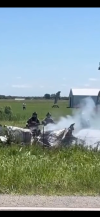
Crash picture looks a lot like it.
Often it's the most obvious cause. A glider tow plane crashed a couple of decades back, killing the pilot who I knew. Everyone said he must have had a heart attack. The NTSB said he mishandled an emergency which was not specified. Occam says it was the latter.

Fear.Or, non judgmental, engage in hypothetical and ask WHAT might have caused an experienced pilot to lose track of his airspeed, albeit only for a nano second?

My problem with a local operator is the way the disregard entirely any traffic pattern entry as they bomb steeply on the downwind, in a low-wing, with high-wing trainers in the pattern beneath them. About half the time, they manage to remember to swtich back from approach frequency to CTAF, but only so they can use CTAF as their operations frequency.With a light load and cool weather I could get maybe 8 jumpers to 14000 feet and be back on deck and put .2 on the tach. But even on a hot day you could usually get 16 jumpers to 12k and back on deck and log a .3.
I believe it’s the only plane to be designed as a sport jumping plane. It does a lot of other things, but designed for jumping. The main difference is that the pilot can close the jump door from the seat and then come down at VNE, 160 kts. Lot of fun.
I didn’t find it dangerous, but was definitely pretty tactical flying… max gross, slow, hot days, up to 18k frequently, minimum fuel, max performance descent. I started it one day at 9 am… didn’t shut the motor off until 9 pm! Hot pumps, ate in the seat.
Flying 182s… dangerous…
In the incident I'm familiar with the difference was in your example it was an organized, steady stream of people leaving vs everyone in panic mode piles up at the door which put the aircraft into rocket mode and stalled it.I had 16 jumpers run out as fast as they could, in THAT plane, was barely noticeable. It’s possible a shift had an impact, hard to say. Doesn’t seem too likely to me.
Depends on the PIC. They get to decide how that happens. Having worked a couple drop zones that’s my takeaway.My problem with a local operator is the way the disregard entirely any traffic pattern entry as they bomb steeply on the downwind, in a low-wing, with high-wing trainers in the pattern beneath them. About half the time, they manage to remember to swtich back from approach frequency to CTAF, but only so they can use CTAF as their operations frequency.
Absolute clowns.

Pretty curious about this one. The airplane involved was used at the local skydiving operation here for a long time that @Tools is familiar with. It was apparently either sold or leased to this company in Butler just recently.
Very sad news.
I believe someone familiar with the operation said engine issues. But a loosed parachute in a flying plane has certainly created havoc in the past.A photo I've seen circulating online today appears to show a deployed parachute extending from the wreckage. I don't know enough about skydiving operations to comment, but could that be a clue?
FSDO.My problem with a local operator is the way the disregard entirely any traffic pattern entry as they bomb steeply on the downwind, in a low-wing, with high-wing trainers in the pattern beneath them. About half the time, they manage to remember to swtich back from approach frequency to CTAF, but only so they can use CTAF as their operations frequency.
Absolute clowns.
I don’t get it? Look at what?Look carefully in the background… a whole new perspective… oooph…
This is a screenshot capture from a video that local news aired apparently. I believe that’s looking due east…
View attachment 152890