Where Stalls Occur

wanttaja

Final Approach
Joined
Jun 7, 2008
Messages
5,667
Location
"War-Torn" Portland
Display Name
Ron Wanttaja
Home Airfield
Twin Oaks Airpark
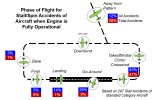
I ran this analysis several years back based on my homebuilt accident database. Been looking at writing a follow-up to my article on common myths regarding General Aviation accidents, so I ran the same analysis on a 5,700-accident database I have of accidents involving Standard category airplanes.

Basically, I extracted the accidents where the pilots accidentally stalled, and identified where the aircraft was at the time. The stalls, in this case, are of *perfectly fine* aircraft. This has nothing to do with engine failures; it's stalls involving aircraft with fully-functional engines. Of that ~5700-accident set, about 300 accidents involved stalls...again, with nothing wrong with the engines.

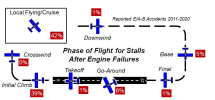
Here's a graphic:
1776221402842.png
The results are generally close to what I came up with in for homebuilts. Surprisingly, the most accidental stalls occur on the takeoff or initial climb. Stalls do occur on base, final, and the base-to-final turn, but they don't happen nearly as often.

The blue percentages show what percentage of ALL the stall accidents occurred in that area, while the red numbers show the percentage of fatal accidents.

There are a lot of different reasons for the stalls on takeoff and initial climb. Density altitude, too-short runways, students at the controls, etc. But there are still a number when the pilots just stall.....

Probably the biggest surprise for me is the number of stall accidents that occur during go-arounds. Still, the fatality rate is lower, probably because the plane is already close to the ground.

Ron Wanttaja
 
Excellent data mining, as usual. Quite surprised at the amount of departure stalls compared to arrivals.
 
When I learned years ago that taking off was where most stall/spin accidents occurred I admit I was surprised. The data you have access to likely doesn't show precisely where in the departure sequence these occur. I would tend to think that the turn to crosswind would be most likely but that could be absolutely incorrect. It might also be that pilots are taking the plane out of ground effect early or trying to force it up & over the tree line that's approaching fast at the end of the runway.

The rate of accidents on go-arounds is surprising. Thanks for this most useful information!
 
I ran this analysis several years back based on my homebuilt accident database. Been looking at writing a follow-up to my article on common myths regarding General Aviation accidents, so I ran the same analysis on a 5,700-accident database I have of accidents involving Standard category airplanes.

Basically, I extracted the accidents where the pilots accidentally stalled, and identified where the aircraft was at the time. The stalls, in this case, are of *perfectly fine* aircraft. This has nothing to do with engine failures; it's stalls involving aircraft with fully-functional engines. Of that ~5700-accident set, about 300 accidents involved stalls...again, with nothing wrong with the engines.

Here's a graphic:
View attachment 151479
The results are generally close to what I came up with in for homebuilts. Surprisingly, the most accidental stalls occur on the takeoff or initial climb. Stalls do occur on base, final, and the base-to-final turn, but they don't happen nearly as often.

The blue percentages show what percentage of ALL the stall accidents occurred in that area, while the red numbers show the percentage of fatal accidents.

There are a lot of different reasons for the stalls on takeoff and initial climb. Density altitude, too-short runways, students at the controls, etc. But there are still a number when the pilots just stall.....

Probably the biggest surprise for me is the number of stall accidents that occur during go-arounds. Still, the fatality rate is lower, probably because the plane is already close to the ground.

Ron Wanttaja

Premature rotation, torque effect, excessive pitch-up, or improper flap management and the same reason students should not be allowed T&Gs.
 
Excellent data mining, as usual. Quite surprised at the amount of departure stalls compared to arrivals.
Was surprised, too, when I first looked into this using the homebuilt data. Was frankly a bit worried that my processes were wrong, and that looking at the rates for production aircraft would come out wildly different. To my relief, they weren't that far off.

Much of the reason I do these analyses is that I *love* being surprised. It gives me some assurance that my personal biases aren't affecting the data too much.
When I learned years ago that taking off was where most stall/spin accidents occurred I admit I was surprised. The data you have access to likely doesn't show precisely where in the departure sequence these occur. I would tend to think that the turn to crosswind would be most likely but that could be absolutely incorrect. It might also be that pilots are taking the plane out of ground effect early or trying to force it up & over the tree line that's approaching fast at the end of the runway.

The rate of accidents on go-arounds is surprising. Thanks for this most useful information!
I didn't notice the turn to crosswind having that much of an impact. Generally, the pilot was in trouble before he or she got to that point. It's a thin line between stalls on "Takeoff" vs. stalls on "Initial Climb," one reason I combine them on the graphic. I generally went with what the NTSB called it, but if the impact occurred at the end of the runway, I usually deemed it "Takeoff" since the pilot obviously hadn't gotten very far.

The go-arounds were a bit of a surprise, as well. Not much to argue with there; the NTSB references failed go-around a LOT in the Probable Causes. Usually system-related (not retracting flaps), or the plane was already in serious trouble, or the pilot just botched it.

Ron Wanttaja
 
Premature rotation, torque effect, excessive pitch-up, or improper flap management and the same reason students should not be allowed T&Gs.
Kinda tend to agree with you, here. Since my data set included 150 and 172 accidents, there were a lot of student errors, including problems on go-arounds...and for that matter, cleaning up for touch-and-goes, as well. The airport I'm now based at bans touch-and-goes; the airport owner told me that he did that to discourage the students from doing them at the fairly short, uphill runway with obstructions.

Ron Wanttaja
 
Not terribly surprisingly in some ways, since you've demonstrated that the majority of stalls occur in the pattern sequence when the aircraft is necessarily at a lower airspeed and higher pitch, which naturally brings it closer to stall territory.

What is interesting to me is that the base-to-final region accounts for a lower percentage than landing! When I was growing up, I assumed that quicksand was going to be a significant life hazard since it was in so many movies. Not so much, it turns out. Similarly, the base-to-final stall-spin is the major landing-pattern boogieman taught by CFIs, resulting in students doing standard-rate turns in a bomber-sized pattern. It's still a concern, of course, but it appears that they perhaps should focus more on landing and departure stalls!
 
Seems like heavier training on TOGA would be prudent. I was always told the base to final turn was the big killer...
 
Seems like heavier training on TOGA would be prudent. I was always told the base to final turn was the big killer...
Yep, another example of "common knowledge" that is wrong. I can see the go-around being an issue, especially if you are inexperienced in, say, a Cessna with the 40° flaps deployed, and don't handle that properly.
But I've also been in a plane on climbout with the stall horn occasionally bleating, causing me to chastise the pilot.

On climbouts during windy takeoffs in moderate turbulence my stall horn briefly beeps. Don't know if that's common with other types of light GA aircraft.

This used to be a concern until after an Angle of Attack indicator (reserve lift type) was installed. A quick glance always shows gobs of lift remaining immediately following the beeps.
 
A stall on go-around isn't too surprising. You're slow, the flaps are out if you have them, and there's already something wrong (too windy or gusty, usually), and transitioning from a landing mindset to a climb mindset. And then you gotta get the flaps up... but not too fast...

Ron, how does the go-around data shake out for high vs. low wing? High wing, with the extra flap drag up above the vertical CG, would seem to make for even more of a pitch-up tendency. But it's been many years since I've flown a low wing or even any plane with flaps, so I really don't remember.
 
Premature rotation, torque effect, excessive pitch-up, or improper flap management and the same reason students should not be allowed T&Gs.
I will disagree with you on this. A T&G is just a go-around that happened after the wheels touched the ground. Are you going to prevent studens from practicing go-arounds now?

The go-arounds were a bit of a surprise, as well. Not much to argue with there; the NTSB references failed go-around a LOT in the Probable Causes. Usually system-related (not retracting flaps),
Trim mis-management will get you stalled on go-around (and T&G) in a 172, if you're not prepared for it and/or your upper body strength is not that good.

The airport I'm now based at bans touch-and-goes;
Going back to this, there was a pretty high profile fatal accident a few years ago when a young woman died after attempting a go-around. Come to find out she only trained for full stop landings, and when things went wrong (I recall it was her solo XC) and she firewalled the throttle the plane being still trimmed for landing pitched up and stalled.

Probably not enough data available, but it would be interesting to see how many landing/go-around accidents happened to people that only trained for full stop landings, vs the T&G crowd.

Here, found it:

 
Last edited:
I tend think the departure stalls are more frequent because they are less "benign " when improperly managed, are more violent and tend to result in an accident report. Arrival stalls I suspect don't result in as high a percentage of accident reports.

Great data mining, Ron. Thanks.
 
IMO a well-executed Touch and Go is the sign that a pilot has advanced to a higher skill set level by accomplishing a connected series of multiple and correct raw flying skills. This includes takeoff, a spin around the pattern followed by a T&G and climb out.

I've conducted flight reviews with experienced pilots that struggle with T&G's that can be outright scary events. Most haven't done a T&G for many years, but IMO the skill sets needed to conduct an acceptable one directly relate to pilot performance (or lack of) during other stick and rudder events that can be conducted sloppy and potentially dangerous in the real world (i.e., a surprise low altitude missed approach - deer on the runway, etc).

If a student pilot is at the level of training and understanding to consistently conduct safe and clean touch and go's, they shouldn't remain a student for very much longer.
 
I ran this analysis several years back based on my homebuilt accident database. Been looking at writing a follow-up to my article on common myths regarding General Aviation accidents, so I ran the same analysis on a 5,700-accident database I have of accidents involving Standard category airplanes.

Basically, I extracted the accidents where the pilots accidentally stalled, and identified where the aircraft was at the time. The stalls, in this case, are of *perfectly fine* aircraft. This has nothing to do with engine failures; it's stalls involving aircraft with fully-functional engines. Of that ~5700-accident set, about 300 accidents involved stalls...again, with nothing wrong with the engines.
Years ago I read an AOPA article on carb icing. The stats showed that carb ice was the major factor in power loss. One thing they mentioned was taking off and being unable to climb adequately due to carb ice that had accumulated during taxi and runup and wasn't caught by the pilot. The investigators can't positively pin the accident on carb ice since the ice is long gone when they get there, and all they can say is that the prevailing atmospheric conditions were conducive to carb ice. As an instructor I frequently saw students (and other instructors) simply open the throttle farther soon after startup when the engine was trying to die. They didn't recognize the ice. And this was in the summer, too.

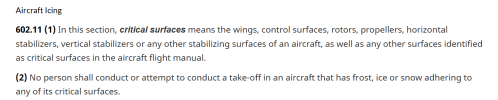
Another factor is frost or ice on the wings. Did the accident reports on the takeoff stall wrecks mention any of that? Here in Canada takeoff is forbidden with ice or frost on the wings and/or control surfaces.

1776269411652.png
 
Years ago I read an AOPA article on carb icing. The stats showed that carb ice was the major factor in power loss. One thing they mentioned was taking off and being unable to climb adequately due to carb ice that had accumulated during taxi and runup and wasn't caught by the pilot. The investigators can't positively pin the accident on carb ice since the ice is long gone when they get there, and all they can say is that the prevailing atmospheric conditions were conducive to carb ice. As an instructor I frequently saw students (and other instructors) simply open the throttle farther soon after startup when the engine was trying to die. They didn't recognize the ice. And this was in the summer, too.

Valid points. My only experience with FAA investigators followed an engine failure (and forced off-airport landing) occurring in well below freezing temperatures.

The inspectors quickly formed and shared an opinion and a blanket determination that the issue was carb ice. Turned out the inspectors were 100% wrong, and should have known better.
 
A stall on go-around isn't too surprising. You're slow, the flaps are out if you have them, and there's already something wrong (too windy or gusty, usually), and transitioning from a landing mindset to a climb mindset. And then you gotta get the flaps up... but not too fast...

Ron, how does the go-around data shake out for high vs. low wing? High wing, with the extra flap drag up above the vertical CG, would seem to make for even more of a pitch-up tendency. But it's been many years since I've flown a low wing or even any plane with flaps, so I really don't remember.
My stall database has a lot of Cessnas, but about 70 low-wing aircraft (PA-28, Cirrus, Bonanza 35). The percentage of accidents that are go-arounds is about the same between them and the Cessnas...26.3% vs. 28.6% for the low-wing set. The sample size for the low-wingers is small enough that I figure they're about equal.

Ron Wanttaja
 
Seems like heavier training on TOGA would be prudent. I was always told the base to final turn was the big killer...
That's what I originally went in believing, and was surprised when the data came out like it did.

The "classic" case of stalling due to tightening the base-to-final turn was actually quite rare. Perhaps we can credit the warnings we received as students, for that.....

Ron Wanttaja
 
But I've also been in a plane on climbout with the stall horn occasionally bleating, causing me to chastise the pilot.
Heh. This led me to re-running my analysis using production aircraft rather than just using my existing summary of where stalls occur with homebuilts:

A sudden remembering that homebuilts don't HAVE stall warning devices. Using that data is an article aimed at the overall fleet of GA didn't make much sense.....

Ron Wanttaja
 
Trim mis-management will get you stalled on go-around (and T&G) in a 172, if you're not prepared for it and/or your upper body strength is not that good.

The Mooney is nearly full nose up trim on short final. You will need Popeye arms to hold the nose down if you go full power on a go around.

Obstacle and conditions permitting, it is much better to add just enough power to arrest descent, fly level, get flaps and trim back to takeoff settings, then smoothly power up and depart the runway environment. Once normal climb out is established, clean up the airplane as you would on a normal departure.
 
Years ago I read an AOPA article on carb icing. The stats showed that carb ice was the major factor in power loss. One thing they mentioned was taking off and being unable to climb adequately due to carb ice that had accumulated during taxi and runup and wasn't caught by the pilot. The investigators can't positively pin the accident on carb ice since the ice is long gone when they get there, and all they can say is that the prevailing atmospheric conditions were conducive to carb ice. As an instructor I frequently saw students (and other instructors) simply open the throttle farther soon after startup when the engine was trying to die. They didn't recognize the ice. And this was in the summer, too.

Another factor is frost or ice on the wings. Did the accident reports on the takeoff stall wrecks mention any of that? Here in Canada takeoff is forbidden with ice or frost on the wings and/or control surfaces.
This particular analysis was performed only on accidents where the NTSB didn't find evidence of loss of power.

I did look at my production-aircraft database for cases where carb ice was reported (or claimed by the NTSB analyst). There were 107 cases among the ~5,700 total accidents. Of those 107 cases, "stall" was mentioned in the Probable Cause five times.

LAX03LA238
CEN14LA161
CEN17LA298
CEN18FA277
WPR13CA252

Don't recall seeing any cases mentioning clearing airframe frost or ice in my stall study. Using keywords in the Probable Cause, there were six accidents where the failure to remove ice or frost was listed....MIA00LA074, IAD03LA029, CHI03LA061, NYC98FA063,ANC03LA014, ANC06CA006. In several of these cases, the pilots never stalled; the aircraft wouldn't climb, but they retained control through impact.

Ron Wanttaja
 
The Mooney is nearly full nose up trim on short final. You will need Popeye arms to hold the nose down if you go full power on a go around.

Obstacle and conditions permitting, it is much better to add just enough power to arrest descent, fly level, get flaps and trim back to takeoff settings, then smoothly power up and depart the runway environment. Once normal climb out is established, clean up the airplane as you would on a normal departure.
Always been close to my technique and I’ve never even been in a Mooney :biggrin:
 
Juan would say fly a stabilized approach and the go around isn’t necessary.

Way to many pilots I see land way to far down the runway for Touch and goes.
 
I wonder if the one case in the downwind was a commercial student doing slow flight waiting for a short approach clearance from the tower so they could do a power off 180.
 
Years ago I read an AOPA article on carb icing. The stats showed that carb ice was the major factor in power loss. One thing they mentioned was taking off and being unable to climb adequately due to carb ice that had accumulated during taxi and runup and wasn't caught by the pilot. The investigators can't positively pin the accident on carb ice since the ice is long gone when they get there, and all they can say is that the prevailing atmospheric conditions were conducive to carb ice.
Now I have to go on a rant!

The NTSB likes to use the carb ice as a reason for anything they can't figure out or they're too lazy to write up. The NTSB agent actually told me I should put on carb heat and keep it on all the way until shortly takeoff since he believes that carb ice is the cause of many takeoff accidents and as you mentioned, the evidence melts. I told him it's a grass field and I would not ever tell anyone to keep carb heat on while taxiing and it's not in the operating handbook, so not wise to advise this. He actually wrote in the report that I suspected carb ice and that I wrote that in my report... I did not!

"On his written report the pilot stated that he believed the engine may have developed carburetor ice from the time that he performed his run-up to the time that he took off.In a telephone interview, the pilot was asked about his procedure for checking the carburetor heat. He said that he would apply carburetor heat, note a slight drop in rpm to indicate that the carburetor heat valve was working and then pull the throttle to idle to make sure the engine would idle with the carburetor heat on. He noted that he did not leave the carburetor heat onfor more than a few seconds at increased rpm."

This crash changed the way I deal with the FAA and NTSB.
 
Perhaps decades of emphasis on preventing base-to-final stalls has actually worked.
That's a fair point. I don't recall that much emphasis on base-to-final stalls in my own training (nearly 30 years ago, at this point) but my instructors were the kind to throw their coats over the instruments and tell me to land the airplane by feel, so there's that. Perhaps it has been increasingly emphasized more recently. I tend to fly a tight pattern in my Cherokee since it glides like a brick and I'd be terribly embarrassed to have an engine-out in the pattern and not make the runway! That means a reasonable amount of bank in the turns with relatively unloaded wings in the descent. In contrast, I see flight-school Cessnas almost in the next county turning base, in what appears to be perhaps a standard-rate turn. Horses-for-courses, naturally, and perhaps I'm the one in error.
 
Agree, I recently ran across a similar analysis, Sorry I don't remember where. But my thought and question the presenter asked was is the low percentage base to final accidents the result of CFI's emphasizing it, or is it simply not as dangerous as the departure phase?
I lean more toward the "emphasis" camp. However, the base-to-final turn scenario is pretty fixed (compared to the other stall accidents I looked at) and is probably easier to teach and easier to remember. The whole tightening-turn-to-line-up-on-final scenario is pretty definite, compared to just trying to remind folks to keep their airspeed up during the initial climb.

I know that I recall my training whenever the temptation to make that base-to-final turn a liiiittle bit steeper strikes me.

Ron Wanttaja
 
Agree, I recently ran across a similar analysis, Sorry I don't remember where. But my thought and question the presenter asked was is the low percentage base to final accidents the result of CFI's emphasizing it, or is it simply not as dangerous as the departure phase?
 
I will disagree with you on this. A T&G is just a go-around that happened after the wheels touched the ground.
I'll disagree with you on that. During a touch and go, you should be retracting flaps and adjusting trim while you're rolling, before you go to full power. During a go-around, you typically apply full power first and then adjust trim and (slowly) retract the flaps.

When I learned to fly it was touch and goes from day one, and I see no problem with them, as long as the runway is long enough. That said, nowadays I almost never do one, because in a tailwheel airplane you have to be slowed way down to make the landing "complete". And in a tailwheel airplane, a landing has to be to a full stop to count for currency.
 
My only experience with FAA investigators followed an engine failure (and forced off-airport landing) occurring in well below freezing temperatures.
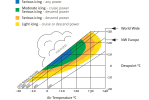
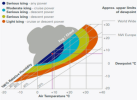
Water can exist as liquid down to -20°C. Carb ice has been noted down to around -15°C.

1776286270539.png

The most serious icing happens at very low throttle settings such as at idle, so it's a hazard if the conditions are right and you're not wary enough.
 

Attachments

  • 1776286144159.png
    1776286144159.png
    234.6 KB · Views: 5
Always informative…and sort of confirms my informal idea of when stall accidents happen. Thanks for all your work over the years to confirm and bring awareness that actually has great value.
 
Awesome analysis (as usual). I always thought base-to-final was a bigger thing. I'd like to think maybe we've trained it down.
 
Ron, is there a way you can correlate engine failures and takeoff stalls? Takeoff is probably the most dangerous time to have the engine quit, so I wonder whether that could be driving the high rate during takeoff.

Incidentally, the only time I had my seat come unlatched and slide back was during takeoff in a Tecnam. Fortunately it was during a lesson and the CFI took the controls while I fixed the seat. If a seat is going to slide back, takeoff is the most likely time.
 
Ron, is there a way you can correlate engine failures and takeoff stalls? Takeoff is probably the most dangerous time to have the engine quit, so I wonder whether that could be driving the high rate during takeoff.
The data I posted earlier all were from cases where no problems were found with the engine power. There were cases where the pilots claimed the engine wasn't making full power, but no evidence was presented in the NTSB report.

I have looked at stalls after engine failures, but only for the EAB world....
1776301053405.png
Initial climb is a major factor, again, though the "Local Flying/Cruise" is a bit higher. However, when you consider what proportion the Initial Climb is of each flight, it's obviously where it's happening.

Ron Wanttaja
 
Ron, the stuff you do with data analysis and presentation of same is amazing. It's clear and easy to read, and given your background we know it's based in reality. Thank you.

I have two comments. First is on the go-around. I had an unexpected stall on a go-around. I initiated it late in the landing, and set the pitch to climb-out pitch after full throttle, but I didn't have the energy for that. Immediate full stall, and just thanks to luck and good training I recovered as a reflex. Typing this in I can still remember the feeling of falling then, although it was many years ago. It wasn't a config error, there were no flaps. It was simply putting the aircraft into an angle of attack that was too steep. A dumb move on my part that I bring up so that others might avoid it.

Second comment is a guess on the frequency of stalls on climb out and crosswind. I do think part of it is because of training and awareness of the base to final stall potential. But I'm wondering if part of it is incorrect pitch based on how a pilot flies out in headwinds and gusts. Everybody knows you increase your approach speed a little bit with gusts on landing. I'm not sure if everyone gets equivalent training on takeoff, though. If you get a sudden headwind, don't use that to increase your climb angle. Keep the same climb angle and be prepared for that headwind or gust to go away. Similarly, I'm not sure if everyone understands that while you're probably not going to takeoff with a tailwind, you very well may be turning crosswind with a tailwind.
 
But I'm wondering if part of it is incorrect pitch based on how a pilot flies out in headwinds and gusts. Everybody knows you increase your approach speed a little bit with gusts on landing. I'm not sure if everyone gets equivalent training on takeoff, though. If you get a sudden headwind, don't use that to increase your climb angle. Keep the same climb angle and be prepared for that headwind or gust to go away. Similarly, I'm not sure if everyone understands that while you're probably not going to takeoff with a tailwind, you very well may be turning crosswind with a tailwind.

Considering Ron's research confirms that the initial climb is overwhelmingly a most dangerous phase of low altitude stall potential, your incident and concern is a great learning example for others.

It's been a long time for me since primary training, but can't remember ever being instructed about wind and turbulence immediately following liftoff and during the initial low altitude climb out as airspeed was building into a climb. Maybe because that training was always conducted in light winds. It became a subject that was picked up alone in the "license to learn" time following gaining the Private Pilot rating as more challenging weather was encountered.

The statistics show it's something flight instructors should spend some time with early on...
 
Back
Top