

You are using an out of date browser. It may not display this or other websites correctly.
You should upgrade or use an alternative browser.
You should upgrade or use an alternative browser.
When the wimpiness started
- Thread starter Ed Haywood
- Start date
Ed Haywood
Final Approach
Just kidding. 


- Joined
- Mar 2, 2005
- Messages
- 16,628
- Location
- Southeast Tennessee
- Display Name
- This page intentionally left blank
Just kidding.
But not really.

MooneyDriver78
En-Route
- Joined
- Aug 13, 2013
- Messages
- 4,928
- Display Name
- Tom
- Home Airfield
- KSUA
2 things stand out:
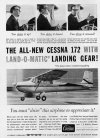
$8750 price tag and the guy’s wearing a suit and tie.
If inflation rates was correct, a new one would go for $90,000 today.
$8750 price tag and the guy’s wearing a suit and tie.
If inflation rates was correct, a new one would go for $90,000 today.
OneCharlieTango
Cleared for Takeoff
- Joined
- Dec 21, 2018
- Messages
- 1,274
- Display Name
- OneCharlieTango
And there's a local Cessna dealer in the Yellow Pages.
2 things stand out:
$8750 price tag and the guy’s wearing a suit and tie.
If inflation rates was correct, a new one would go for $90,000 today.
And your salary would be about $40K today. Supply/demand does play a role, too. Both were going up until about 1981. Both have been going down since.

Matthew
Touchdown! Greaser!
Cubs are easy to land, too.
Steamflyer
Line Up and Wait
- Joined
- Mar 23, 2022
- Messages
- 954
- Display Name
- Steamflyer
Inflation calculation gets readjusted all the time, and has weird deflators in it having to so with "better" technology for same dollar, so the multiples don't really work over time though it saves agencies whose payments are tied to the rate of inflation money.2 things stand out:
$8750 price tag and the guy’s wearing a suit and tie.
If inflation rates was correct, a new one would go for $90,000 today.
Actually, personally think the list price of a Cessna is a decent stand-in for the true rate of inflation in the US since they are entirely US built, with US labor, and margins barely scale with production numbers. So a 9k Cessna 172 and a 600k Cessna 172 now implies about a 60 fold increase in inflation over the period, which is probably not that far off for many capital goods.
FWIW we trained in nosedraggeas not long after the school transitioned away from taildraggers, so the landings were performed in the same manner - nose very high, touchdown at or very close to stall, absolutely straight, rudder control and use absolutely graded and mandated. However, it's clear that Cessna eventually won, for you can stand by the runway at the training airport I frequent and watch Cessnas and Pipers, one after the other, being literally driven onto the runway. Often they even manage to get them down and stopped in the allotted 4000', though not always.


- Joined
- Sep 11, 2019
- Messages
- 2,885
- Display Name
- Domenick
Well, hell. After this I'm ready for my tailwheel endorsement!
I don't need any stinking tail wheel endorsement, my first 5 training aircraft were genuine Piper Cubs!
I do need a valid medical, though.
Main gear touchdown has always been my preference in trigear planes, regardless of brand. Plant the nosewheel when rudder loses effective power.
I do need a valid medical, though.
Main gear touchdown has always been my preference in trigear planes, regardless of brand. Plant the nosewheel when rudder loses effective power.
Last edited:

Half Fast
Touchdown! Greaser!
- Joined
- May 7, 2016
- Messages
- 21,187
- Location
- Central Florida
- Display Name
- Half Fast
- Home Airfield
- KGIF
I do need a valid medical, though.
What for? Got a driver’s license?
Ed Haywood
Final Approach
But not really.
I really am. I genuinely believe the 172 is the greatest plane ever made.
But the ad man who came up with Land-O-Matic should be beaten.

Waaaay off. The overall cost of living has only increased 4.7 times since 1976 when I got my pilot's license. At the time, a well equipped 172 ran about $25k. Applying the overall cost of living increase since then would suggest the same plane would only cost $117,500. So, the $400K+ cost of a 172 now has increased far more than the cost of living index over the same time frame. Heck, in 1976 you could buy a new Chevrolet Malibu for $3,671. The car called a Chevrolet Malibu now sold in 2025 for $26,995 - a 730% jump from 1976 compared to the 1600% increase for the 172. In 1976 I rented a C-152 for $15/hr wet. The closest FBO to my home now rents a 152 for $130/hr - an 867% jump from 1976. Food, car gas and power costs have stayed closer to the 470% increase in the COL index, but many things far outstrip the average cost growth curve. Everything associated with flying has been on the high side for the cost growth curve. I'm still committing aviation, but now that I'm fully retired that may not be the case much longer. The bite out of my reduced financial resources is not sustainable long term. If aviation costs (airplanes, insurance, avgas & maintenance) had stayed closer to the average COL index, I'd be able to keep flying as long as I wanted to.So a 9k Cessna 172 and a 600k Cessna 172 now implies about a 60 fold increase in inflation over the period, which is probably not that far off for many capital goods.
I think the giant elephant in the room that is always ignored is the number of people trained to become pilots in WWII. Assuming they were 20 in 1944 they would have been 50 in 1974 (most likely the period of their life that they had peak disposable income). The market was larger because there was a much larger market base of pilots that had their training funded by Uncle Sam.

texasclouds
En-Route
- Joined
- Aug 23, 2018
- Messages
- 4,361
- Location
- Bryan, Texas
- Display Name
- Mark
- Home Airfield
- Coulter Airfield CFD
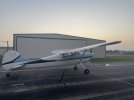
That is a very nice looking airplane

455 Bravo Uniform
Final Approach
Land-o-manual
455 Bravo Uniform
Final Approach
Just kidding.
You know you ain’t.

Llewtrah381
Pattern Altitude
- Joined
- Apr 9, 2010
- Messages
- 1,762
- Display Name
- Llewtrah
The other elephant in the room is liability costs
Ed Haywood
Final Approach
You know you ain’t.
I genuinely am. I think the 172 is a great plane. Almost as cool as a 182 with weird canards in the front!
But seriously, I hate that ad. Hate hate hate it.
My drivers license is still valid, but my judgement says no solo flying anymore. It has been 2 years since my las PIC, not solo.What for? Got a driver’s license?
The onus is on the individual to honestly evaluate if they are still qualified for PIC without another pilot. More than a modest cross wind with a narrow runway may be beyond my skill and reflex time. If I returned to flying status in the club, that would probably drive the insurance up, so if I had full membership (flying status), that would be unfair to the partners.
Flying with other pilots is not a bad choice. Especially since I am rapidly closing in on 92.
You have my respect. “A man’s got to know his limitations” is a concept I wish was more broadly common in all aspects of life.My drivers license is still valid, but my judgement says no solo flying anymore. It has been 2 years since my las PI, not solo.
The onus is on the individual to honestly evaluate if they are still qualified for PIC without another pilot. More than a modest cross wind with a narrow runway may be beyond my skill and reflex time. If I returned to flying status in the club, that would probably drive the insurance up, so if I had full membership (flying status), that would be unfair to the partners.
Flying with other pilots is not a bad choice.
Ed Haywood
Final Approach
Flying with other pilots is not a bad choice. Especially since I am rapidly closing in on 92.
That is awesome.
- Joined
- May 15, 2020
- Messages
- 7,764
- Display Name
- Ernie
- Home Airfield
- C81
Lots of reasons for the downfall of mass produced GA. WWII vets probably played a part. But we also reached a saturation point. Planes have a much longer shelf life than cars/trucks.I think the giant elephant in the room that is always ignored is the number of people trained to become pilots in WWII. Assuming they were 20 in 1944 they would have been 50 in 1974 (most likely the period of their life that they had peak disposable income). The market was larger because there was a much larger market base of pilots that had their training funded by Uncle Sam.
Also the interstate highway system made flying your own plane a pretty silly way to travel. And then we have commercial flights becoming more available.
Sure some of it is inflation. But economy of scale is a major factor.
Yeah, agreed. Piston singles were in the perfect storm of forces working against them. At the end of the day, they end up being practical only for a narrow range of maybe 200 - 600 miles. Something like that. Anything less and you're better off driving. Anything more and you're better off catching a commercial flight. And you have to have want to travel 200-600 miles often enough to justify the plane.Lots of reasons for the downfall of mass produced GA. WWII vets probably played a part. But we also reached a saturation point. Planes have a much longer shelf life than cars/trucks.
Also the interstate highway system made flying your own plane a pretty silly way to travel. And then we have commercial flights becoming more available.
Sure some of it is inflation. But economy of scale is a major factor.
So, we end up with a market for piston singles being nearly exclusively for impractical owners. That's a small market.
Half Fast
Touchdown! Greaser!
- Joined
- May 7, 2016
- Messages
- 21,187
- Location
- Central Florida
- Display Name
- Half Fast
- Home Airfield
- KGIF
Especially since I am rapidly closing in on 92.
Look at it this way: you’d be risking very little of your life.

nrpetersen
Line Up and Wait
I got my ASEL license summer of 1963 at KFCM. Solo rental of C-150 was $10/hr, & C-172 was $15/hr. Fuel was included (of course!), but an instructor was another $5. He was also my ASEL examiner. Winter 1963/64 with a new ASEL, a Mooney Super-21 was $18/hr.

- Joined
- Jun 13, 2008
- Messages
- 9,173
- Location
- Marietta, GA
- Display Name
- Drake the Outlaw
- Home Airfield
- Cartersville, GA
I'd blame economies of scale right up there with the number of pilots. The US was scaled up in 1945 to make a near unlimited amount of alclad aluminum and air cooled engines. After the war, the choice was to either make airplanes using that "free" equipment and well trained labor, or to walk away from all of it. So aluminum and engines it was and we benefitted for 30 or 40 years. Also, we had tons of A&P's and IA's trained by the armed forces.The other elephant in the room is liability costs

Tools
En-Route
- Joined
- Aug 6, 2020
- Messages
- 2,919
- Display Name
- Tools
Just kidding.
No you’re not… ha!

- Joined
- Oct 28, 2014
- Messages
- 5,139
- Display Name
- Jack Fleetwood
When are we doing a photoshoot? She would look good on the cover of Cessna Owners magazine.
- Joined
- Oct 28, 2014
- Messages
- 5,139
- Display Name
- Jack Fleetwood
I’m old enough that I have over 8700 tailwheel hours and no tailwheel endorsement! Not sure I like the term grand-fathered! I joke that when I bought my 182 I had to get a nosewheel endorsement!
Half Fast
Touchdown! Greaser!
- Joined
- May 7, 2016
- Messages
- 21,187
- Location
- Central Florida
- Display Name
- Half Fast
- Home Airfield
- KGIF
But we also reached a saturation point. Planes have a much longer shelf life than cars/trucks.

I do think that's a major piece of it. There are so many planes still flying that are decades old that it is really tough to justify buying a new one. The initial purchase price of my 1969 Beech plus the cost of new paint plus the cost of a fresh engine overhaul is still less than 1/3 the cost of a comparable new plane. I rarely see a new plane at my home drome, but I see lots and lots of Mooneys, Cessnas, Pipers, and Beechcraft from the 1960s and 1970s. Most of the new planes I do see are homebuilts.
Also the cost of training has created a tough entry hurdle. MOSAIC + Sport Pilot have a possibility of easing the entry cost a bit, but so far I don't see anyone marketing that. The first few schools to start advertising low-cost pilot certificates, with no medical required, might crack open a new market.
Our aviation organizations aren't helping much, either. All the recruitment of new pilots is career-oriented.
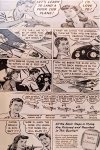
When was the last time you saw an ad like the two ads above in any sort of general interest publication?

- Joined
- Jun 11, 2015
- Messages
- 5,612
- Display Name
- Piperonca
- Home Airfield
- M52
That's how dad met mom. Soloed her in 1944.

Last edited:

Dana
Final Approach
So what kind of publication did those ads appear in?When was the last time you saw an ad like the two ads above in any sort of general interest publication?
Half Fast
Touchdown! Greaser!
- Joined
- May 7, 2016
- Messages
- 21,187
- Location
- Central Florida
- Display Name
- Half Fast
- Home Airfield
- KGIF
So what kind of publication did those ads appear in?
Airline magazines.

I suspect you would have seen such ads in business pubs, news magazines, outdoor mags, etc.

gregjay
Pre-Flight
When I had my 56 172, I believe Land-O-Matic was literally in the POH.