What hole did the bug crawl into? Airspeed...

Kiddo's Driver

Pattern Altitude
Joined
Oct 5, 2013
Messages
1,927
Location
Somewhere in the Southeast
Display Name
Jim
Took off today. Airspeed worked as normal. Hit the expected airspeed at the expected distance on the runway. Rotated. As I climbed, my indicated airspeed decreased, while my actual airspeed remained unchanged. It went to zero by about 300-500 feet. I left the plane trimmed for 75 and climbed up to 3500 feet, out of the pattern. As soon as I started descending, the airspeed rose and fairly quickly pegged at the top of the range on the gauge. The VSI tracked climb as I went up, but indicated lower than what Foreflight said my climb rate was. When I descended, my VSI went to zero and stayed there, I think. I was not watching VSI on descent as closely as I should have. Indicated altitude was 500-700 feet lower than GPS altitude on Foreflight. I ignored altitude when approaching to land. There was no traffic, so I did a straight-in approach and used the PAPI to guide me in. Landing was uneventful. I flew it at the trimmed speed, reduced power when low over the runway until I touched down. Roll-out was a little longer than normal, but not really an issue on a 6,000-foot runway.
Static and Pitot holes all looked clear. I did a high-speed taxi on the runway, and it showed the expected speed at the predicted distance down the runway.
What the heck is going on???
Bugs blocking something?
Hose come loose?
Something in the static port or line.
 
A number of years ago I took off, as my airspeed decayed. I could tell I was at ‘flying speed’. I was on a cross-country flight. I flew with a combination of GPS ground speed and aircraft feel, of course my stall indicator was still working normally.

Upon landing I had a bug perfectly covering the pitot tube port. Once removed, airspeed was fine on the next leg.
 
my indicated airspeed decreased, while my actual airspeed remained unchanged
You have received your answer, but I'm kind of curious about this. How do you know that your "actual airspeed" remained unchanged as opposed to, for example, your ground speed?
 
You have received your answer, but I'm kind of curious about this. How do you know that your "actual airspeed" remained unchanged as opposed to, for example, your ground speed?
No change in engine power, steady climb rate, climbing out with the trim set to 75 knots, and GPS speed remained consistent. My initial reaction was to lower the nose, but then everything else began contradicting the airspeed indication. Air speed continued to go down as air noise increased, climb halted (visually), and engine noise slightly increased with increased airspeed.
I let the pressure on the yoke ease back, and it returned to the trimmed-out conditions, no surprise, right? ;)

Edit: Changed "Speed" to "Air speed" to clarify.
 
Last edited:
I know a few grizzled old pilots that have had a bug up their tailcones for years.
 
Ok, found out why I couldn't find the Alternate Air Knob.
I don't have one.

Not unusual. You just have two ports and a tee in the line.

Figuring out how to blow out your static and pitot lines is a handy skill. If you get under the glare shield or panel, you can trace the lines and find a place to disconnect. You want to blow out the lines running from the panel to the ports and tube, but NOT anything running to a gauge or device.

That's one reason I like push-to-connects and soft tubing. Super easy to disconnect and reconnect in 30 seconds.

I used to not use a pitot cover in my hangar. Then some hard working bug cut up a leaf and stuffed it in there. Air pressure in flight jammed it another foot into the line, resulting in zero airspeed indication. When I got back on the ground and blew it out, the leaf shot out 3 feet.
 
Last edited:
That is the plan. Luckily, it is super easy to access the back of the panel in the TB series.
No compressor available, so I am going to try using a can of air. If that is not enough pressure, I will invest in a portable air compressor.
 
That is the plan. Luckily, it is super easy to access the back of the panel in the TB series.
No compressor available, so I am going to try using a can of air. If that is not enough pressure, I will invest in a portable air compressor.

An air compressor is super handy. If you have a hangar, it's almost a must have. Less convenient otherwise. If you have battery tools like Ryobi, many have a low/high pressure inflator that might work.
 
An air compressor is super handy. If you have a hangar, it's almost a must have. Less convenient otherwise. If you have battery tools like Ryobi, many have a low/high pressure inflator that might work.
No hangar. My car has a 1500-watt inverter, so I can run lots of electrical items if I need them.
My portable compressor with tank is out of commission. I tried to drain it one day & the valve ate itself, then refused to come out to be replaced. Probably should fix that...
 
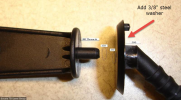
I think I'm going to add a 3/8" steel washer on the inside of the plane or static port so I can use a magnetic port cover with a big red flag attached to it.
I don't have any instruments installed in the rear of the fuselage, so it shouldn't be an issue. I'll have to make sure I store the covers back there & not in the seat back.
Maybe I should install ring magnets there & put galvanized washers in the cover instead?

1756316789246.png
 
I used to not use a pitot cover in my hangar. Then some hard working bug cut up a leaf and stuffed it in there. Air pressure in flight jammed it another foot into the line, resulting in zero airspeed indication. When I got back on the ground and blew it out, the leaf shot out 3 feet.
I put plugs and covers in or over every opening I can - pitot, cowling, exhaust, vents. Even with a pretty tight hangar, there are occasional mud daubers and other bugs. Much better to spend an extra 15 seconds pre- and post-flight inserting and pulling plugs than to abort because of something that a bug did.
 
Ok, found out why I couldn't find the Alternate Air Knob.
I don't have one.
What are you flying?

Just a terminology note: “alternate air” is not what is being discussed. “Alternate air” is for fuel injected airplanes to bypass a blocked engine air filter. Kind of the fuel injected version of carb heat.

We are discussing the alternate static source. I don’t think I’ve seen too many aircraft without one of those.
 
Do they still teach to break the glass on the VSI if you do not have a alternate static source?
 
What are you flying?

Just a terminology note: “alternate air” is not what is being discussed. “Alternate air” is for fuel injected airplanes to bypass a blocked engine air filter. Kind of the fuel injected version of carb heat.

We are discussing the alternate static source. I don’t think I’ve seen too many aircraft without one of those.
Fixed it.
No, I don't have an alternate static source knob. It was an option that the Embry Riddle did not purchase.
Socata Tampico, TB9
 
Problem solved.
BTW, Amazon sells foot-long straw cleaning brushes.
I recommend keeping one in your plane.

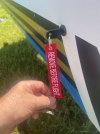
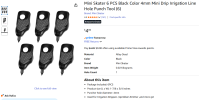
Also, static plugs are cheap & easy to make:
$5 for a pack of 6 mini drip line hole punch tools
$13 for a pack of 5 Remove Before Flight flags

Put the extra tool on a keychain. It is great for breaking tape on boxes when you open them.
 

Attachments

  • IMG_4800.jpeg
    IMG_4800.jpeg
    1.3 MB · Views: 25
  • Static Plug parts.png
    Static Plug parts.png
    210.5 KB · Views: 25
Last edited:
Do they still teach to break the glass on the VSI if you do not have a alternate static source?
I didn't have an alternate static source. But told the examiner I'll break glass in case of emergency.
 
Problem solved.
BTW, Amazon sells foot-long straw cleaning brushes.
I recommend keeping one in your plane.

Also, static plugs are cheap & easy to make:
$5 for a pack of 6 mini drip line hole punch tools
$13 for a pack of 5 Remove Before Flight flags

Put the extra tool on a keychain. It is great for breaking tape on boxes when you open them.
The drip line punch looks like it may also work as a vehicle glass breaker. Anyone care to test and report back?
 
I put plugs and covers in or over every opening I can - pitot, cowling, exhaust, vents. Even with a pretty tight hangar, there are occasional mud daubers and other bugs. Much better to spend an extra 15 seconds pre- and post-flight inserting and pulling plugs than to abort because of something that a bug did.
I do this too in a fully enclosed hangar… extra insurance in my mind that only costs a little bit of time.
 
I use a sharpened 16 penny nail (16d) for my drip system.
 
Back
Top