Voltage drops

soarohio

Pre-Flight
Joined
Aug 2, 2008
Messages
91
Display Name
soarohio
Flying along in cruise my Davtron is showing a steady 13.3 volts. I engage my auto pilot and the voltage drops to 12.9 volts. The ammeter is showing 0 to a slight charge and bouncing back and forth. Disengage the auto pilot and back to a steady 13.3 volts and the ammeter showing a slight steady charge. Do I have an electrical system problem? We replaced the voltage regulator recently in hopes of solving our alternator belt problem discussed in a prior thread. C182P and Areocruze 100 auto pilot.
 
Flying along in cruise my Davtron is showing a steady 13.3 volts.
13.3 is way too low and will eventually damage your battery, if it hasn't already. Hopefully a voltage regulator adjustment is all you need.

www.pilotsofamerica.com/community/threads/voltage-slow-to-come-up.125456

Do I have an electrical system problem? We replaced the voltage regulator recently in hopes of solving our alternator belt problem discussed in a prior thread.
Hope and $5 will get you a cup of coffee...
 
Flying along in cruise my Davtron is showing a steady 13.3 volts. I engage my auto pilot and the voltage drops to 12.9 volts. The ammeter is showing 0 to a slight charge and bouncing back and forth. Disengage the auto pilot and back to a steady 13.3 volts and the ammeter showing a slight steady charge. Do I have an electrical system problem? We replaced the voltage regulator recently in hopes of solving our alternator belt problem discussed in a prior thread. C182P and Areocruze 100 auto pilot.
I was also at 13.3Volts and ended up replacing the battery (which I believe was 6-7 years old), and was still at 13.3Volts post replacement, so after some back and forth here, I sent some screenshots to my mechanic and he adjusted the voltage regulator and now it’s at 14.5Volts. I think I mentioned 14.2Volts as ideal but guessing you don’t really know what it is while adjusting? and you have adjust it, then start up the airplane and check the voltage, and play with it until you get it where you want it?
 
Most probably.


Who is "we" and did you perform any troubleshooting of the problem?
The voltage regulator was changed after consulting with my A&P and the engine shop that did some engine work when some corrosion issues were found during the pre-buy. Some have suggested that the belt problem could be the counterweight busing but they were replaced 800hr ago, so the engine shop thinks it is and electrical issue.
 
I think they have embarked on the standard troubleshooting procedure: Replace parts until the problem goes away.
Hope not. I have had two mechanics look at it and they have consulted with a well-known engine overhaul shop that did an IRAN on the engine before the plane was purchased.
 
I was also at 13.3Volts and ended up replacing the battery (which I believe was 6-7 years old), and was still at 13.3Volts post replacement, so after some back and forth here, I sent some screenshots to my mechanic and he adjusted the voltage regulator and now it’s at 14.5Volts. I think I mentioned 14.2Volts as ideal but guessing you don’t really know what it is while adjusting? and you have adjust it, then start up the airplane and check the voltage, and play with it until you get it where you want it?
The battery is less than 12 months old. Going to have the voltage regulator adjusted as soon as I can get the plane to the mechanic. Thanks.
 
Flying along in cruise my Davtron is showing a steady 13.3 volts. I engage my auto pilot and the voltage drops to 12.9 volts.
Adjusting the regulator isn't going to fix this. Either the alternator has an internal problem and is unable to produce enough current to keep the voltage up, or there is a resistance somewhere between the alternator and battery. There are many, many places for that resistance to occur, including the ground path between the battery and alternator. Corroded or loose crimp terminals, dirty connections, even the regulator's connections between it and the alternator field terminal.
 
The voltage regulator was changed after consulting with my A&P and the engine shop that did some engine work when some corrosion issues were found during the pre-buy.
So no actual troubleshooting performed, eg., voltage drops, ground checks, etc.?
Who changed the voltage regulator, your mechanic?
 
So no actual troubleshooting performed, eg., voltage drops, ground checks, etc.?
Who changed the voltage regulator, your mechanic?
The original problem was the alternator belt coming off. It only happened on return flights. Had two mechanics look at the belt system. Both say the pulleys are aligned, in good condition, the belt tension is proper and no apparent issues with the alternator bearings. The engine shop thinks it is an electrical problem. The mechanic and engine shop think something in the system is heating up, cooling down and heating up again and then causing a sudden surge on the alternator causing the belt to come off.

The mechanic had a regulator on the shelf so it was installed and if the belt does not come off in 25 hours, I will replace his stock. So far, we have 10 flights with no belt problems. I’m going to have the battery, wiring, grounds and alternator checked as soon as I can get the plane to the mechanic. I’m not sure how else to trouble shoot an intermittent alternator belt coming off.
 
Flying along in cruise my Davtron is showing a steady 13.3 volts. I engage my auto pilot and the voltage drops to 12.9 volts. The ammeter is showing 0 to a slight charge and bouncing back and forth. Disengage the auto pilot and back to a steady 13.3 volts and the ammeter showing a slight steady charge. Do I have an electrical system problem? We replaced the voltage regulator recently in hopes of solving our alternator belt problem discussed in a prior thread. C182P and Areocruze 100 auto pilot.
Not an A&P. Am familiar with how electricity works. Two points. 1 - The above doesn't sound like it has anything at all to do with an alternator belt problem to me. 2 - That the voltage regulator was replaced doesn't have any correlation with it working.

To me, troubleshooting non-intermittent electrical problems are generally way easier than mechanical problems. In this case, maybe put a significant load on the alternator while the engine is running and find where the voltage drop(s) is/are happening. And maybe even before that, determine what the base load on the alternator is, including battery, and make sure you don't have anything drawing power that isn't right, including the battery itself. Could be a lot of different things, the AP might be drawing way too much power for instance. My bet would be bad connections or wires from either hot or ground side of alternator, bad alternator, or bad or mis-adjusted voltage regulator. I suppose that's really just a list of the things from A to B, but way smarter to do a couple of tests than just start randomly replacing parts like some guy at the auto parts store. And to the other person's post, yep 13.3 is too low for the battery to be charging correctly.

Not meant to be mean, just a little tired tonight, trying to be helpful.

 
I would start with simply putting a load on alternator.... say 20 amp amps depending on your system ....watch your bat voltage and load meter ....if working normal you should see increase in amps and voltage as the regulator increases out put, and volts and amps return to normal after load is removed.

if alternator does not try to keep at least 13.2v (or more after load is removed and battery fully charged) under load then likely regulator issue. you can also watch volts after ending start ... voltage should stay high and load increases initially after start but both decrease as battery reaches full charge.

there's cheap car battery load meters that would work if your plane doesn't have anything drawing such amps.
 
Not an A&P. Am familiar with how electricity works. Two points. 1 - The above doesn't sound like it has anything at all to do with an alternator belt problem to me. 2 - That the voltage regulator was replaced doesn't have any correlation with it working.

To me, troubleshooting non-intermittent electrical problems are generally way easier than mechanical problems. In this case, maybe put a significant load on the alternator while the engine is running and find where the voltage drop(s) is/are happening. And maybe even before that, determine what the base load on the alternator is, including battery, and make sure you don't have anything drawing power that isn't right, including the battery itself. Could be a lot of different things, the AP might be drawing way too much power for instance. My bet would be bad connections or wires from either hot or ground side of alternator, bad alternator, or bad or mis-adjusted voltage regulator. I suppose that's really just a list of the things from A to B, but way smarter to do a couple of tests than just start randomly replacing parts like some guy at the auto parts store. And to the other person's post, yep 13.3 is too low for the battery to be charging correctly.

Not meant to be mean, just a little tired tonight, trying to be helpful.
Not mean at all. I appreciate the help. I was skeptical that the belt problem was electrical, but I have several flights now with belt staying on.
 
Thanks everyone for the information. I will discuss all of this info with my mechanic and see if we can come up with a game plan to trouble shoot the electrical system.
 
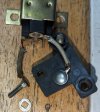
I had an issue where the alternator would periodically cut out in flight. It would quit when I took off, and start working again when I landed.

Turns out one of the tiny internal wires that connects the terminal posts to the brush housing was broken. Vibration from landing on the grass field would jiggle the wire ends out of contact.

image.jpg

Not likely your problem. But an illustration that methodical troubleshooting is more likely to be successful than guessing and throwing parts at it.
 
I have a special troubleshooting tool. It is a piece of half-inch plywood, about two inches by ten, with four screws in it. Soldered to those screws are four long wires. The plywood is labelled as to where each of those wires go. The other ends of those wires are connected to a ground point on the firewall, the field terminal on the alternator, the output terminal on the alternator, and the battery positive.

I sat in the pilot's seat and had that board in my lap. I ran the engine, and used a voltmeter between the ground screw and the others to diagnose charging issues. The voltage between ground and the battery positive should read around 13.8, no load on the alternator. The field voltage should be several volts as the battery is recharging after start, and should fall off as the battery fills up. The battery voltage should remain stable. Load up the system with the landing lights and whatever else, and the battery voltage should remains stable at 13.8 or whatever it was unloaded, and the field voltage should rise. The rising field voltage reflects increased current flow into the field from the regulator as the regulator senses a falling system voltage due to the increased load and so instantly increases field voltage to make that alternator produce more current to prevent system voltage from dropping. If I raise the engine RPM, that field voltage should fall some, and reducing the RPM should see it rise. The system voltage should remain steady the whole time.

If the system voltage is falling (battery), see if the alternator output is also falling. If not, there is a problem between the alternator and the system, possibly a bad breaker or connection at the bus. If the field voltage does not rise with the load or reduced RPM, the regulator might be bad, or there's a bad connection between the regulator and alternator field ("F") terminals, or between the alternator's output terminal ("A") and regulator A terminal (common in Cessnas). In Pipers and some others, that A terminal is fed off the bus, and there might be bad connections somewhere along that line. If the load causes increased field voltage, but decreased alternator output voltage, the alternator might be bad. Worn brushes are a common problem, as are greasy brushes caused by overlubrication of the alternator's rear bearing by whoever did the last overhaul or internal inspection (common in the Ford alternators). Or contamination with engine-washing solvent. Grease and solvent or engine oil all cause the brushes to smear a resistive sludge on the rotor slip rings, limiting field current and therefore alternator output. It takes current IN to get current OUT.

All of this sort or troubleshooting requires a knowledge of exactly how that system works. Every part of it. If the mechanic doesn't understand how all that stuff interacts and generates power, he's lost. He just starts replacing stuff. Electrical troubleshooting is easily the weakest skill among many mechanics.
 
Last edited:
I have a special troubleshooting tool. It is a piece of half-inch plywood, about two inches by ten, with four screws in it. Soldered to those screws are four long wires. The plywood is labelled as to where each of those wires go. The other ends of those wires are connected to a ground point on the firewall, the field terminal on the alternator, the output terminal on the alternator, and the battery positive.

<snip>

All of this sort or troubleshooting requires a knowledge of exactly how that system works. Every part of it. If the mechanic doesn't understand how all that stuff interacts and generates power, he's lost. He just starts replacing stuff. Electrical troubleshooting is easily the weakest skill among many mechanics.
That setup and procedure is worth an article someplace. You're walking through some really great dynamic tests of the system. Most of the tests I've seen around electrical systems are static and provide a lot less info. (Maybe a write up like that exists already, and I've never seen it because I kinda live under a rock.)
 
Back
Top