
Let'sgoflying!
Touchdown! Greaser!
Everything I read says, without explanation, that this cannot be seen from inside the aircraft.
T or F?
(If T, it can’t be seen - why?)
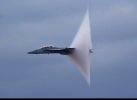
T or F?
(If T, it can’t be seen - why?)


F. It’s the speed of sound being broken, not light. Probably not that simple. Standing by to get edumicatedEverything I read says, without explanation, that this cannot be seen from inside the aircraft.
T or F?
(If T, it can’t be seen - why?)
View attachment 142976


How would said pilot stick to the canopy at that speed?Sheesh. That ain’t the point. Let’s rephrase the question. Could a pilot doing reverse cowgirl on the canopy see it


Those shock cones aren't indications that the aircraft is going supersonic.F. It’s the speed of sound being broken, not light. Probably not that simple. Standing by to get edumicated
Yes, you can easily see these kinds of vapes from the cockpit if you have the ability to turn and look at 'em.Sheesh. That ain’t the point. Let’s rephrase the question. Could a pilot doing reverse cowgirl on the canopy see it
No mirror required for that.That looks like an F-18. They have rear view mirrors that aid in the air refueling process so it is possible to see that from inside the cockpit
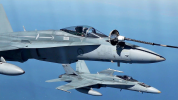
My education begins. What are they?Those shock cones aren't indications that the aircraft is going supersonic.
Note to self. Don’t read maulskinner’s posts with mouth full of coffeeHow would said pilot stick to the canopy at that speed?
Never mind…
The explanation used to be that they are Prandtl singularities. But they are just condensation clouds happening in areas where the pressure/temperature drops as the localized airflow (but not the actual aircraft) exceeds the speed of sound.My education begins. What are they?

ThxThe explanation used to be that they are Prandtl singularities. But they are just condensation clouds happening in areas where the pressure/temperature drops as the localized airflow (but not the actual aircraft) exceeds the speed of sound.
Prandtl–Glauert singularity - Wikipedia
en.wikipedia.org

Technically, is this self-service or full-service?
Confusing since nobody is getting out and washing the windshield.Technically, is this self-service or full-service?
Thanks! I found the same, everyone used to call them Prandtl-Glauer clouds then they dropped that name (right after I pretended to be able to pronounce it lol).The explanation used to be that they are Prandtl singularities. But they are just condensation clouds happening in areas where the pressure/temperature drops as the localized airflow (but not the actual aircraft) exceeds the speed of sound.
Prandtl–Glauert singularity - Wikipedia

Well, I’ve never seen it while flying my Musketeer, so the statement must be true.
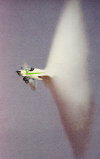
It helps to have an open(able) canopy
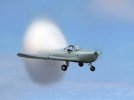


In that photo, the camera is looking at that cone from the side so that the full width of the cone, at any point, blocks the light from behind it. From the cockpit, the pilot would see only the fore-aft thickness of the cone, which is relatively thin.Everything I read says, without explanation, that this cannot be seen from inside the aircraft.
T or F?
(If T, it can’t be seen - why?)
Sounds like that new motor needs a tune upWell, I’ve never seen it while flying my Musketeer, so the statement must be true.

