

You are using an out of date browser. It may not display this or other websites correctly.
You should upgrade or use an alternative browser.
You should upgrade or use an alternative browser.
Tool ID
- Thread starter Let'sgoflying!
- Start date

SixPapaCharlie
May the force be with you
- Joined
- Aug 8, 2013
- Messages
- 17,546
- Display Name
- First Officer 6PC
O ring remover

- Joined
- Jun 7, 2008
- Messages
- 27,381
- Display Name
- Bob Noel
- Home Airfield
- KBED
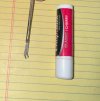
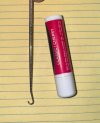
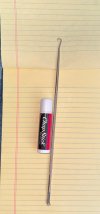
Found outside my hangar.
Chapstick for size.
I know of no dentists at the airport lol
Maybe it is an aviation tool? <shrug>
I probably could use something like that when restringing a piano, but there are better versions available.

Safety wire pigtail tucking tool? I use something similar when tucking the pigtail on surgical wire when repairing facial fractures. We use 24ga wire most frequently and tuck the cut end of the twisted wire back against the bone. We affectionately call it a ‘pickle fork’ or a gauze packer (which was a much less common use for the instrument). As a side story, when in training we had an exchange fellowship with another residency program in Adelaide, Australia. They called gauze ‘tampons’. When one of the Aussies asked for a tampon pusher, the young surgical tech manning the Mayo stand gave him her finger. True story. 
Edit for clarity- the young lady was not offended, she was laughing while she gave him a finger, not ‘The Finger’, as in the one she used for such a feminine specific maneuver.
Edit for clarity- the young lady was not offended, she was laughing while she gave him a finger, not ‘The Finger’, as in the one she used for such a feminine specific maneuver.
Last edited:

SCCutler
Touchdown! Greaser!
- Joined
- Feb 27, 2005
- Messages
- 17,409
- Display Name
- Spike Cutler
- Home Airfield
- T82
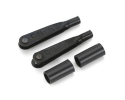
Spring hook/installer.
Use the hook to pull a spring to install; the forks, to push.
Used often in my earlier life, working at Bell & Howell and servicing microfilm equipment.
Use the hook to pull a spring to install; the forks, to push.
Used often in my earlier life, working at Bell & Howell and servicing microfilm equipment.
GaryM
En-Route
- Joined
- Apr 16, 2020
- Messages
- 3,087
- Location
- Was KMMU, now KCOE
- Display Name
- Gary M
- Home Airfield
- Was KMMU, now KCOE
I was at a medchem conference in DC some years ago, and one evening I suggested going to a nearby tapas bar for dinner. A woman in the group got VERY offended.As a side story, when in training we had an exchange fellowship with another residency program in Adelaide, Australia. They called gauze ‘tampons’. When one of the Aussies asked for a tampon pusher, the young surgical tech manning the Mayo stand gave him her finger. True story.
I think we have a winner!Spring hook/installer.
Use the hook to pull a spring to install; the forks, to push.
Used often in my earlier life, working at Bell & Howell and servicing microfilm equipment.

DaleB
Final Approach
Exactly correct. I think I still have one or two around. I used them often in my own previous (long past) life working in IBM systems, including the Selectric which was used as a console device on some really old mainframes.Spring hook/installer.
Use the hook to pull a spring to install; the forks, to push.
Used often in my earlier life, working at Bell & Howell and servicing microfilm equipment.

A1Topgun
Cleared for Takeoff
Ditto!Exactly correct. I think I still have one or two around. I used them often in my own previous (long past) life working in IBM systems, including the Selectric which was used as a console device on some really old mainframes
Can't replace a Selectric rotate tape without a spring hook.
Last edited:

Exactly correct. I think I still have one or two around. I used them often in my own previous (long past) life working in IBM systems, including the Selectric which was used as a console device on some really old mainframes.
You guys do know that to anyone under 40 it sounds like you're just making up words, right?Ditto!
Can't replace a Selectric rotate tape without a spring hook.

It's also used to perform adjustments to the turbo encabulator which increases billable hours for the service department while providing no useful function.You guys do know that to anyone under 40 it sounds like you're just making up words, right?
DaleB
Final Approach
Yer dam skippy you can't.Ditto!
Can't replace a Selectric rotate tape without a spring hook.
That's OK. There's a vast amount of pop culture references that I see and hear daily that are exactly the same.You guys do know that to anyone under 40 it sounds like you're just making up words, right?
SCCutler
Touchdown! Greaser!
- Joined
- Feb 27, 2005
- Messages
- 17,409
- Display Name
- Spike Cutler
- Home Airfield
- T82
Dave's a committed devotee of the Selectric, so he'll find good use for the tool.

Just don’t get the hydrocoptic marzel vanes out of alignmentIt's also used to perform adjustments to the turbo encabulator which increases billable hours for the service department while providing no useful function.

donjohnston
En-Route
Can't get the two dust covers off either.Ditto!
Can't replace a Selectric rotate tape without a spring hook.

Omalley1537
Cleared for Takeoff
- Joined
- Mar 13, 2015
- Messages
- 1,495
- Display Name
- Sean
You guys do know that to anyone under 40 it sounds like you're just making up words, right?

Half Fast
Touchdown! Greaser!
- Joined
- May 7, 2016
- Messages
- 21,187
- Location
- Central Florida
- Display Name
- Half Fast
- Home Airfield
- KGIF
...including the Selectric which was used as a console device on some really old mainframes.
Ah, those were the days. Sigh....
1 a.m. in the computer lab, cold pizza, large bag of Doritos, a couple gallons of Mountain Dew, a mile-long printout on watermelon paper, chasing some @$#%! bug for so long that I can only speak in FORTRAN,....
- Joined
- Jun 7, 2008
- Messages
- 27,381
- Display Name
- Bob Noel
- Home Airfield
- KBED

Craig
Cleared for Takeoff
LOL...I was in high cotton when I finally could afford a Fortran77 compiler for my IBM desktop at college..Still remember being amazed at how much faster everything ran when I got the daughter board and could load a total of 1 meg of RAM on it.Ah, those were the days. Sigh....
1 a.m. in the computer lab, cold pizza, large bag of Doritos, a couple gallons of Mountain Dew, a mile-long printout on watermelon paper, chasing some @$#%! bug for so long that I can only speak in FORTRAN,....

A1Topgun
Cleared for Takeoff
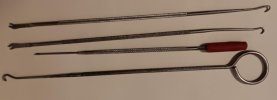
And I use then quite often.
MauleSkinner
Touchdown! Greaser!
So, the real question becomes, who’s running a mainframe with an IBM Selectric terminal in their hangar?
Half Fast
Touchdown! Greaser!
- Joined
- May 7, 2016
- Messages
- 21,187
- Location
- Central Florida
- Display Name
- Half Fast
- Home Airfield
- KGIF
So, the real question becomes, who’s running a mainframe with an IBM Selectric terminal in their hangar?
Undoubtedly someone flying a ‘60s or ‘70s vintage aircraft. That should certainly narrow it down....
A1Topgun
Cleared for Takeoff
Not many Selectrics were used as mainframe terminals. Most Selectrics were stand alone typewriters. Millions were in steno pools and offices. Steno pools also had a MTST (Magnetic Tape Selectric) typewriter which used a 16mm sprocket driven magnetic tape cartridge to record and play back keystokes. Many legal offices used them for boilerplate contracts.So, the real question becomes, who’s running a mainframe with an IBM Selectric terminal in their hangar?
DaleB
Final Approach
True. And they didn’t call it a Selectric; it was a 1052 printer/keyboard. The keyboard actuated contacts that were used as inputs to the S/360, and the system actuated solenoids in the 1052 to print using a Selectric mechanism. The keyboard and print mechanism were pretty much identical to the Selectric, other than there being no mechanical connection between the two.Not many Selectrics were used as mainframe terminals.
All of this from distant memory. The Army was still using 360s into the mid 1980s; the 1052 console had to be present and functional, but it was rarely used. There was a 3272 controller and 3277 terminal for the operators.

Dana
Final Approach
R/C'ers from the 1970s-80s will recognize the little metal clevises with a #2-56 thread on the linkages inside Selectric typewriters. Supplied by Du-Bro for use on pushrod ends and sold in hobby shops, some people called them "IBM clevises"; Du-Bro called them "Kwik-Links".
And back to the tool that started this thread, I have an assortment of dental picks in my toolbox; they're useful for all sorts of things (including removing o-rings).
And back to the tool that started this thread, I have an assortment of dental picks in my toolbox; they're useful for all sorts of things (including removing o-rings).

3393RP
En-Route
- Joined
- Oct 8, 2012
- Messages
- 4,720
- Display Name
- 3393RP
This reminded me of the System 38 that went down on a power surge from a PDU circuit with an improperly grounded neutral, I was there because they also called me, the UPS contract guy. I fixed the grounding issue, but the mainframe was a dead fish.Exactly correct. I think I still have one or two around. I used them often in my own previous (long past) life working in IBM systems, including the Selectric which was used as a console device on some really old mainframes.
After he let me look at the schematics in the big blue books, I told the IBM tech the power supply likely had a blown time delay fuse, and if we opened it up I had a replacement for it. He got a horrified look on his face..."That's not an FRU! I can't touch it."
When I pointed out the customer was getting a murderous eye twitch, he relented, pulled the PS module out of the chassis, and I removed the cover. There it was, a blown 10 amp time delay fuse with soldered axial leads on the main PCB. I had it replaced and back in the unit in 10 minutes, and when the tech hit the button, it began the power up sequence.
The customer was happy, and the tech stopped sweating so profusely.
Last edited:
donjohnston
En-Route
After spending time fixing the Selctrics, Standards, E-trons and Displaywriters, I went to work for a company that trained techs how to fix those. We also provided replacement parts. The ROM's in the Displaywriters used to fail at an alarming rate. IBM wouldn't sell them because they weren't FRU's (Field Replacement Unit, for you non-IBM types). So you had to buy the whole board which was thousands of dollars. We figured out how to copy the ROMs and started exchanging those. That business was very good until the Displaywriters starting getting replaced by PC's running the IBM Displaywrite software."That's not an FRU! I can't touch it."
Fun times.
