If I’m not mistaken the company was a spin off a company that makes certain “tool mounts” for the DOD, and much of the team were transfers from there. I would bet they were pretty selective of who was involved with the work “across the street”.

You are using an out of date browser. It may not display this or other websites correctly.
You should upgrade or use an alternative browser.
You should upgrade or use an alternative browser.
The new Spirit SE 1: What are your thoughts?
- Thread starter DMD3.
- Start date

pfarber
Pattern Altitude
- Joined
- Jun 20, 2021
- Messages
- 1,653
- Display Name
- pfarber
On a more serious note, I cannot find any articles about the flying qualities. Its a very light plane (< 800lbs gross) so crosswinds in a light taildragger would be interesting.
Even the company doesn't have much other than touting the new-ness and high tech-ness.
The FAQ is not very confidence building:
"Additional testing is required to determine the long-term effects of running avgas." Ummm.. the number of airports with MOGAS is extremely small 3% or so.
"Thus far, the test has demonstrated an overhaul interval of 780 hours." But no cost estimate? With only a single source supplier?
I have many questions that cannot be waved away because its new and costs less than $100k. Lots of LSAs cost less than 100k
Also I am never going to be a customer. single seat putt putting is not my mission.

RyanShort1
Final Approach
- Joined
- Feb 18, 2010
- Messages
- 6,480
- Location
- Dallas, Texas
- Display Name
- RyanShort1
- Home Airfield
- KRBD
On a more serious note, I cannot find any articles about the flying qualities. Its a very light plane (< 800lbs gross) so crosswinds in a light taildragger would be interesting.
Testing takes time, lol. I know a couple of people that are on the engine team.The FAQ is not very confidence building:
"Additional testing is required to determine the long-term effects of running avgas." Ummm.. the number of airports with MOGAS is extremely small 3% or so.
Dude, for the price of the engine, you can buy a new one cheaper than getting an overhauled Lyc."Thus far, the test has demonstrated an overhaul interval of 780 hours." But no cost estimate? With only a single source supplier?
Some people are always going to be negative! You should find something else to be negative about.I have many questions that cannot be waved away because its new and costs less than $100k. Lots of LSAs cost less than 100k
Also I am never going to be a customer. single seat putt putting is not my mission.

Doc Holliday
En-Route
On a more serious note, I cannot find any articles about the flying qualities. Its a very light plane (< 800lbs gross) so crosswinds in a light taildragger would be interesting.
And what tailwheel aircraft have you flown to make such a comparison. You ARE tailwheel endorsed, aren't you?
"Additional testing is required to determine the long-term effects of running avgas." Ummm.. the number of airports with MOGAS is extremely small 3% or so.
Ever see one of these?

"Thus far, the test has demonstrated an overhaul interval of 780 hours." But no cost estimate? With only a single source supplier?
Did you write or call them and ask for a cost estimate? And BTW, it's not uncommon for a new design engine to start out with a lower TBO. Once hours are built in the field that time typically grows.
I have many questions that cannot be waved away because its new and costs less than $100k. Lots of LSAs cost less than 100k
New ones? Remember, stay with the subject at hand.
Also I am never going to be a customer. single seat putt putting is not my mission.
Well, I'm sure there's also limitations on pilot size, so yea, that takes you out of the market on one.
Doc Holliday
En-Route
Ugly, impractical .. whats not to like .
It's like a Harley. Uncomfortable, unattractive, impractical, over priced but somehow people still buy them.
BigghHauss78
Pre-Flight
- Joined
- Aug 15, 2025
- Messages
- 55
- Display Name
- BiggHauss
I think its cool as heck! Looks like a little mini WW2 Fighter. I watched the engineering video on it and seems like it has some pretty neat, well thought out elements that I can appreciate. The video posted above, at the end when it flew by, had a nice little throaty sound to it. I don't get all the hate, really. We should be supporting ANYTHING that helps push GA forward, gets more butts in seats flying, as greater GA pilot numbers using the system gives us more voice.
I think they nailed the core of what they were after - A unique, small, single person airplane, that's economical, looks cool, and is meant for pure flying fun. The build process appeared well thought out and executed. The design and overall end product, given the goal, I think was nailed. All this gripe about using a Lyc/Cont, or some auto engine I find funny. Everything is a clean sheet design at some point in it's history. What's the harm in trying to improve with your own idea??? Takes guts to do that.
This entire project, IMO, harks back to barnstorming days with dudes with visions trying to build something simple, fun and to the point. And now we have a company with some genuine engineering behind it, building these in a factory that appears to be well run, with modern processes, materials, and machines, on a design that is well thought out. This is what moves the needle. My hats off to you Spirit!

Dan Thomas
Touchdown! Greaser!
- Joined
- Jun 16, 2008
- Messages
- 12,389
- Display Name
- Dan Thomas
Cessna and Piper purchase a lot of 360s, and I don't see a raft of SBs or ADs about them popping jugs or rotting cams. They just don't. You are believing a self-created myth. You know what rots cams? Owners that ground-run their airplanes without flying them. Aircooled engines hate that, and always have, even aircooled auto engines.I'm not trying to be revolutionary.. I'm trying to be AFFORDABLE. I can purchase an o-360 tomorrow if I wanted to... but I have way better use of $60k than a motor that will rot a cam or pop a jug in a few hours... then take months to fix because one of the largest GA motor makers can't keep parts in stock.
We've asked you a dozen times what your aviation credentials are. Did you even finish a private license? Have you ever even started an airliner's engines?P.S. did you ever get to sit in a A350 yet HAHAHAHAHA tell me more about a flight deck you've never been in. HAHAHAHAHAHA
Homebuilders have been building small, light single-seat taildraggers since the 1930s, nearly 100 years. Even today, there are aluminum Hummel Birds and Hummel Ultra cruisers being built and flown. Tiny single-seat taildraggers. Then there are a few BK-1s, a good little aluminum taildragger, but I think the plans are no longer available. Nobody has ever complained about the handling qualities of these airplanes. How many KR-1s were built? A lot. A hot little airplane.On a more serious note, I cannot find any articles about the flying qualities. Its a very light plane (< 800lbs gross) so crosswinds in a light taildragger would be interesting.
The Centurion diesel, a converted and certified Mercedes, had a 300-hour TBR (Time Before Replacement) on its PSRU. That was raised to 600 hours as field experience proved it, and I think it's at 1000 hours now, about half of the engine's TBR. That says something about the difficulty of designing PSRUs. Even your famous WW2 fighters and bombers that had PSRUs had really low TBOs on those engines. So much HP from a small package just wears things out real quick, but the engineers had to make compromises in order to win a war.Did you write or call them and ask for a cost estimate? And BTW, it's not uncommon for a new design engine to start out with a lower TBO. Once hours are built in the field that time typically grows.
Dan Thomas
Touchdown! Greaser!
- Joined
- Jun 16, 2008
- Messages
- 12,389
- Display Name
- Dan Thomas
A criticism of the Lycoming without any context. Who rebuilt that particular engine? Was it a field overhaul, honing out cylinders that already had 6000 hours on them? Were the valve guides replaced and reamed to spec? Were the valves replaced with new? Were the pistons bead-blasted in violation of Lycoming's injunctions? Was the whole engine within the specs for continued service? Was NDT done on critical parts as per the Lyc overhaul manual? Was the engine broken in with AD oil? Was it ground-run extensively and allowed to sit for weeks before it was flown? Was it broken in as per Lycoming's instructions?So this isn't the place to bring up the clunker of a Lycoming on our plane? Swapping out cylinders after less than 20 hours. All things can break and the time that they have been around is no guarantee of success.
I need answers before I can give your comments any credibility.
Warmi
Cleared for Takeoff
Well, pretty much except that Harleys are pretty attractive ( at least as compared to this plane ).It's like a Harley. Uncomfortable, unattractive, impractical, over priced but somehow people still buy them.
Frankly, when I think about it - flying a small GA plane is very much like a cross country on a Harley …. you are bound by weather, not very comfortable but ultimately loads of fun if everything aligns right ( and also, for one Harleys are not taildraggers !!!)
You’ve obviously never ridden on a rigid framed knucklehead with stretched forks.( and also, for one Harleys are not taildraggers !!!)

- Joined
- Jun 7, 2008
- Messages
- 16,742
- Location
- DXO124009
- Display Name
- Light and Sporty Guy
- Home Airfield
- ONZ
It's not a Bonanza. If you need a Bonanza it's not going to work for you.I don't get all the hate, really.
But as some people have pointed out, Harley Davidson sells motorcycles. Lots of motorcycles. POS motorcycles, but motorcycles non the less. Slow, vibrating, unreliable.** However they sell.
** My personal knowledge of H-D is probably 40 years out of date. But, as the t-shirt said "I would rather push my Harley than ride a rice burner." To which the response was "good thing you like to push it..."

wanttaja
Final Approach
- Joined
- Jun 7, 2008
- Messages
- 5,667
- Location
- "War-Torn" Portland
- Display Name
- Ron Wanttaja
- Home Airfield
- Twin Oaks Airpark
Guess I'll kick a couple of pennies into this debate....
Figure I'm pretty unique here; I've been flying open-cockpit single seaters like the Spirit nearly exclusively for about forty years (BFRs in 172s and Cherokees, and a two-year dalliance with a Stinson). There are people for whom a small, cheap single-seater is all they need. I understand that others need their crowd-killers with seven-league boots. Me...and other folks like me... don't. Small, slow, single-seater is just fine.
WOULD they sell more planes with a second seat, and a closed cabin. Perhaps. But there's *some* sort of market out there. Whether it's sufficient to keep the company alive, who knows?
Now, I've never been closer to a Spirit than to lick a photo (don't ask), but it's not difficult to do a theoretical comparison between the SE-1 and the Bowers Fly Baby.
Here's a side-by-side shot of the two airplanes.
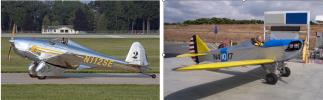
First thing that caught my eye is how the Spirit's cockpit appears to protect the pilot from the slipstream. Just the pilot's head sticks outside the cockpit. There's going to be some drafts from behind, but that is going to be a relatively warm cockpit...great for winter flying.
The Spirit accomplishes that with a throwover cockpit cover that looks like it gives great access for ingress and egress. Also has a built-in rollover bar, another good feature.
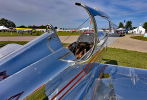
The downside of this is in trying to exit if the plane is on its back. Not that a Fly Baby is any great shakes if it turns turtle, but it doesn't have that huge coaming and diagonal cable in the way.
Here's a picture of one of the Story Specials (very similar to a Fly Baby), which flipped on its back when the snow was deeper than the pilot anticipated. The airport where this happened was deserted at the time.

The pilot actually tunneled out through the snow, and was standing by the airplane when rescuers came.
Now, no question this was a pretty unique accident. But if it had been a Spirit, the pilot probably couldn't have gotten that cockpit cover out of the way.
One comment referred to the forward visibility being poor. But if you compare it to the side-by-side photos above, it's not that much worse than the Fly Baby. But I think it'll be a bit worse. You're going to have to S-turn, like a lot of taildraggers. Or you can install a small camera and screen.
After ~40 years of flying Fly Babies, I'm pretty accustomed to S-turning. But I recently moved to a new airport where the runway has a pretty good slope. Noticed, landing downhill, that the runway REALLY disappears when one is trying to land.
Aesthetically, I like the look of the aircraft. It's smoother and less "clunky" than the Fly Baby.
The one exception is the full wheel enclosures. I realize that there's plenty of historical precedent for them....
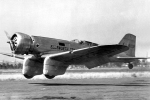
But I don't like them now, and the gamete in which I existed back then probably didn't like them, either. I'd rather see a tighter fit.
But generally? I like the airplane, and sure wish the company luck.
Ron Wanttaja
Figure I'm pretty unique here; I've been flying open-cockpit single seaters like the Spirit nearly exclusively for about forty years (BFRs in 172s and Cherokees, and a two-year dalliance with a Stinson). There are people for whom a small, cheap single-seater is all they need. I understand that others need their crowd-killers with seven-league boots. Me...and other folks like me... don't. Small, slow, single-seater is just fine.
WOULD they sell more planes with a second seat, and a closed cabin. Perhaps. But there's *some* sort of market out there. Whether it's sufficient to keep the company alive, who knows?
Now, I've never been closer to a Spirit than to lick a photo (don't ask), but it's not difficult to do a theoretical comparison between the SE-1 and the Bowers Fly Baby.
Here's a side-by-side shot of the two airplanes.
First thing that caught my eye is how the Spirit's cockpit appears to protect the pilot from the slipstream. Just the pilot's head sticks outside the cockpit. There's going to be some drafts from behind, but that is going to be a relatively warm cockpit...great for winter flying.
The Spirit accomplishes that with a throwover cockpit cover that looks like it gives great access for ingress and egress. Also has a built-in rollover bar, another good feature.
The downside of this is in trying to exit if the plane is on its back. Not that a Fly Baby is any great shakes if it turns turtle, but it doesn't have that huge coaming and diagonal cable in the way.
Here's a picture of one of the Story Specials (very similar to a Fly Baby), which flipped on its back when the snow was deeper than the pilot anticipated. The airport where this happened was deserted at the time.
The pilot actually tunneled out through the snow, and was standing by the airplane when rescuers came.
Now, no question this was a pretty unique accident. But if it had been a Spirit, the pilot probably couldn't have gotten that cockpit cover out of the way.
One comment referred to the forward visibility being poor. But if you compare it to the side-by-side photos above, it's not that much worse than the Fly Baby. But I think it'll be a bit worse. You're going to have to S-turn, like a lot of taildraggers. Or you can install a small camera and screen.
After ~40 years of flying Fly Babies, I'm pretty accustomed to S-turning. But I recently moved to a new airport where the runway has a pretty good slope. Noticed, landing downhill, that the runway REALLY disappears when one is trying to land.
Aesthetically, I like the look of the aircraft. It's smoother and less "clunky" than the Fly Baby.
The one exception is the full wheel enclosures. I realize that there's plenty of historical precedent for them....
But I don't like them now, and the gamete in which I existed back then probably didn't like them, either. I'd rather see a tighter fit.
But generally? I like the airplane, and sure wish the company luck.
Ron Wanttaja
Doc Holliday
En-Route
What's the max weight of a fly baby?
That’s enough to start “informal racing…”. When is somebody going to get the ball rolling on making a “stock car” style racing class out of these things?….I know of three or four in Texas
wanttaja
Final Approach
- Joined
- Jun 7, 2008
- Messages
- 5,667
- Location
- "War-Torn" Portland
- Display Name
- Ron Wanttaja
- Home Airfield
- Twin Oaks Airpark
Bowers says 925 pounds. Mine is 805 pounds empty, so I fly a bit heavier than that.What's the max weight of a fly baby?
And yes, I'm sure the Fly Baby handles winds better than the Spirit...

Ron Wanttaja

- Joined
- Aug 9, 2022
- Messages
- 1,171
- Location
- Surrounded by Civil War ghosts
- Display Name
- Probably AI
- Home Airfield
- KHWY
I seem to recall from one of the longer-form engineering videos that they said they're already nearly finished with a bubble-canopy design that is owner-swappable with the open-cockpit. Presumably once that's available, flying in winter would become more pleasant. Harder to get your scarf to wave in the breeze, but more pleasant!WOULD they sell more planes with a second seat, and a closed cabin. Perhaps. But there's *some* sort of market out there. Whether it's sufficient to keep the company alive, who knows?
MauleSkinner
Touchdown! Greaser!
The only real negative I see is that they started with the single-place instead of the two-place. My narrow view is that, at least for the time being, they’re limiting sales to those who are comfortable with a self-checkout in a new airplane.
As Ron said, self-checkouts have been happening for a lot of years, but my feeling is that the number of pilots willing to do that is decreasing.
But then, maybe that’s a trait of early adopters, and the two-seater will be available before they run out of early adopters.
As Ron said, self-checkouts have been happening for a lot of years, but my feeling is that the number of pilots willing to do that is decreasing.
But then, maybe that’s a trait of early adopters, and the two-seater will be available before they run out of early adopters.
Albany Tom
Final Approach
- Joined
- Jul 23, 2021
- Messages
- 5,703
- Display Name
- Albany Tom
I still think it's cool. As far as looking cool, it's an airplane, and it's tailwheel, so I think that kinda defines cool. I'm wondering if the older sport weight limit was what drove them to single seat. I think it would be great if they had a slightly longer version that was a two seater. Love that they developed their own engine. Trying to retrofit something from a chainsaw or weedeater or whatever is just starting out with a compromise.
RyanShort1
Final Approach
- Joined
- Feb 18, 2010
- Messages
- 6,480
- Location
- Dallas, Texas
- Display Name
- RyanShort1
- Home Airfield
- KRBD
I talked with some team members about that several times. At Osh they straight up said that by their estimates, adding that second seat would literally and necessarily double the cost. Their dream was to make as affordable of an aircraft as they could while meeting certain performance and other specs, so they wanted to do this first.The only real negative I see is that they started with the single-place instead of the two-place. My narrow view is that, at least for the time being, they’re limiting sales to those who are comfortable with a self-checkout in a new airplane.
As Ron said, self-checkouts have been happening for a lot of years, but my feeling is that the number of pilots willing to do that is decreasing.
But then, maybe that’s a trait of early adopters, and the two-seater will be available before they run out of early adopters.

Cap'n Jack
Final Approach
I wondered what the price differential would be. Thanks for sharing the information.I talked with some team members about that several times. At Osh they straight up said that by their estimates, adding that second seat would literally and necessarily double the cost. Their dream was to make as affordable of an aircraft as they could while meeting certain performance and other specs, so they wanted to do this first.

Shepherd
Final Approach
- Joined
- Nov 24, 2012
- Messages
- 5,569
- Location
- Hopewell Jct, NY
- Display Name
- Shepherd
- Home Airfield
- KPOU
No question about it, it's a cute little airplane.
With a single seat taildragger I would want to be able to spin it, roll it, and loop it occasionally.
Nope. Aerobatics prohibited.
Moving on.
With a single seat taildragger I would want to be able to spin it, roll it, and loop it occasionally.
Nope. Aerobatics prohibited.
Moving on.

- Joined
- Mar 4, 2007
- Messages
- 501
- Display Name
- Don
It’s a pretty plane. Love the price point, and am rooting for spirit.
The nose over accident at Oshkosh gives me pause. This was one of only a few SE-1s built, flown at an expo by a demonstration pro, and it nosed over.
I have about 25 hrs to time in a champ, for reference.
Can some of you tw gurus comment?
SE-1 noseover, about 5 minutes in
The nose over accident at Oshkosh gives me pause. This was one of only a few SE-1s built, flown at an expo by a demonstration pro, and it nosed over.
I have about 25 hrs to time in a champ, for reference.
Can some of you tw gurus comment?
SE-1 noseover, about 5 minutes in


texasclouds
En-Route
- Joined
- Aug 23, 2018
- Messages
- 4,361
- Location
- Bryan, Texas
- Display Name
- Mark
- Home Airfield
- Coulter Airfield CFD
Looks like pilot error. He appears to have landed long and was still hopping down the runway way down there. Seemed to veer right at the end hence the panic brakes.
RyanShort1
Final Approach
- Joined
- Feb 18, 2010
- Messages
- 6,480
- Location
- Dallas, Texas
- Display Name
- RyanShort1
- Home Airfield
- KRBD
I saw it happen in person. Personally, I think, with no prejudice against the pilot, that it was a challenging situation and he probably hadn't practiced for it on location, and most of the flying they'd done prior to the four-ship arriving at Oshkosh had been at much higher altitude / DA performance. Everything I've heard is that it's a very slick airframe that doesn't slow down quickly, and I think he floated a lot longer than he expected to.It’s a pretty plane. Love the price point, and am rooting for spirit.
The nose over accident at Oshkosh gives me pause. This was one of only a few SE-1s built, flown at an expo by a demonstration pro, and it nosed over.
I have about 25 hrs to time in a champ, for reference.
Can some of you tw gurus comment?
SE-1 noseover, about 5 minutes in
Personally, I was impressed by the lack of damage to the plane, the crashworthiness, and the speed at which they got it repaired - and they flew it home.
- Joined
- Mar 4, 2007
- Messages
- 501
- Display Name
- Don
@RyanShort1 appreciate the response. Know they flew it home and quickly, but don’t understand how. A prop strike such as that requires a tear down engine inspection, I believe.
Realize the se-1 has a small 2 cyl, but still, to remove, open, inspect, at Oshkosh…
Realize the se-1 has a small 2 cyl, but still, to remove, open, inspect, at Oshkosh…
ateamer
En-Route
- Joined
- Dec 19, 2007
- Messages
- 2,982
- Location
- Port St. Lucie, FL
- Display Name
- ateamer
- Home Airfield
- FD88
It depends on the engine manufacturer’s instructions. There isn’t a regulation mandating it.@RyanShort1 appreciate the response. Know they flew it home and quickly, but don’t understand how. A prop strike such as that requires a tear down engine inspection, I believe.
Realize the se-1 has a small 2 cyl, but still, to remove, open, inspect, at Oshkosh…
wanttaja
Final Approach
- Joined
- Jun 7, 2008
- Messages
- 5,667
- Location
- "War-Torn" Portland
- Display Name
- Ron Wanttaja
- Home Airfield
- Twin Oaks Airpark
Generally speaking, too, a wood prop will tend to mitigate damage in a prop strike.It depends on the engine manufacturer’s instructions. There isn’t a regulation mandating it.
Ron Wanttaja
RyanShort1
Final Approach
- Joined
- Feb 18, 2010
- Messages
- 6,480
- Location
- Dallas, Texas
- Display Name
- RyanShort1
- Home Airfield
- KRBD
1. They are the engine manufacturer, they know it pretty well, including design team members on scene. The crankshaft seems rather overbuilt as they are / were looking at eventually turning it into a 4 cylinder.@RyanShort1 appreciate the response. Know they flew it home and quickly, but don’t understand how. A prop strike such as that requires a tear down engine inspection, I believe.
Realize the se-1 has a small 2 cyl, but still, to remove, open, inspect, at Oshkosh…
2. Everything I heard was that the engine was in pretty good shape and it's not like there aren't FAA reps at Osh... who were looking at the plane within the hour if I'm not mistaken.

Catfish47
Pre-takeoff checklist
- Joined
- Oct 23, 2021
- Messages
- 100
- Display Name
- Catfish47
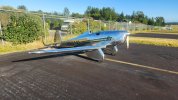
Is it not much easier to make that happen with such a light and small tail dragger, though?Get on the brakes hard enough on any tail dragged and it’ll go up on the nose.

pfarber
Pattern Altitude
- Joined
- Jun 20, 2021
- Messages
- 1,653
- Display Name
- pfarber
If you think hauling MOGAS in 2 gallon buckets is part of the fun then you go be you. Also now you need a VERY nice Uber driver or a crew car that who's FBO doesn't mind the smell of gas AND an ethanol free gas station.And what tailwheel aircraft have you flown to make such a comparison. You ARE tailwheel endorsed, aren't you?
Ever see one of these?
Did you write or call them and ask for a cost estimate? And BTW, it's not uncommon for a new design engine to start out with a lower TBO. Once hours are built in the field that time typically grows.
New ones? Remember, stay with the subject at hand.
Well, I'm sure there's also limitations on pilot size, so yea, that takes you out of the market on one.
MOGAS in the wild is just not a realistic option. I wish it was.
Ah, yes, another personal attack... how many A350s have you sat in recently? LOLOLOLOL Also since I am building a conventional gear E/AB of course I have a tailwheel endorsement... but I'll admit until I actually finish my EAB renting any sort of tailwheel AC is not a real option. But it was a fun long weekend and J3 cubs are highly overrated (even though my hangar mate is in fact, a J3).
This plane is about a niche as they get. If you gave me one I'd sell it before I ever flew it.
pfarber
Pattern Altitude
- Joined
- Jun 20, 2021
- Messages
- 1,653
- Display Name
- pfarber
Genuinely curious.. since its an S-LSA is it exempt from Pt 43 record keeping? If I am not mistaken S-LSAs are still given an experimental certificate. But there are supposed to be manufacturers maintenance manuals.it's not like there aren't FAA reps at Osh
21.191 (k) specifically lists LSAs. Or is that a different kind of LSA, not S-LSA?
Doc Holliday
En-Route
No one suggested a bucket.If you think hauling MOGAS in 2 gallon buckets is part of the fun then you go be you.
But yet, many people do use mogas. If you actually spent any time around GA airports you would know this.Also now you need a VERY nice Uber driver or a crew car that who's FBO doesn't mind the smell of gas AND an ethanol free gas station.
MOGAS in the wild is just not a realistic option. I wish it was.
The E/AB that you somehow can't tell anyone what it is? What's the big secret?Also since I am building a conventional gear E/AB of course I have a tailwheel endorsement...

Dana
Final Approach
Not necessarily. It's more about the CG's location (horizontal and vertical) relative to the main wheels.Is it not much easier to make that happen with such a light and small tail dragger, though?
moparrob66
Pre-takeoff checklist
- Joined
- Mar 31, 2024
- Messages
- 491
- Display Name
- Moparrob
- Home Airfield
- S75
I think its cool, I hope they sell a bunch of them, but I cant picture buying one. I do like to look at it, though.
Dan Thomas
Touchdown! Greaser!
- Joined
- Jun 16, 2008
- Messages
- 12,389
- Display Name
- Dan Thomas
I've done it and it's not a hassle at all. And we have our own vehicles to haul the containers. Do you not?If you think hauling MOGAS in 2 gallon buckets is part of the fun then you go be you. Also now you need a VERY nice Uber driver or a crew car that who's FBO doesn't mind the smell of gas AND an ethanol free gas station.
MOGAS in the wild is just not a realistic option. I wish it was.
And of what significance is that? Have you ever flown a heavy airplane? Of course not. I have sat in the cockpits of some interesting airplanes, and flew three of them. The Twin Otter, the Quest Kodiak, and the Gippsland GA-8. But that impresses nobody here; there are airline pilots and air force pilots here, and they snicker at those whose claim to fame is sitting in an airliner cockpit on the ground.Ah, yes, another personal attack... how many A350s have you sat in recently? LOLOLOLOL
Doc Holliday
En-Route
and they snicker at those whose claim to fame is sitting in an airliner cockpit on the ground.
Yea but his claim to fame is he got a show and tell trip on the airport and they allowed him to look inside the cockpit...........
