The crumbsnatcher is at it again

Crumbsnatcher

Filing Flight Plan
Joined
Mar 23, 2025
Messages
2
Display Name
Lil Crumbsnatcher
Home Airfield
KSFB
So this Lil guy has given me quite the adventure I won't go into all the new stuff he's finagled out of my pockets but after the latest avioncs upgrade with a new engine monitor we had a partial engine loss on take off. It was due to fuel starvation and he's being all dramatic about it so we got a new electric fuel pump and carburetor because there was some debris found in the lines when installing his fancy new engine monitor. So now all should be well being as though the lines are all flushed out and pretty much all but the engine is new which runs very strong. But nooooo.. now the monitor is doing funny business on the first high speed taxi after the pump and carburetor was installed. The fuel flow indicator went from 25mph to 0.9 1000024095.jpg1000024093.jpg1000024094.jpgTake a look and let me know what you guys think because he's stressing my life.. could it be air in the lines? Something due to new equipment? What?? This is like diagnosing a hypochondriac

 
Probably debris in the fuel flow transducer. That little box is in the fuel line to the carb, and has a tiny paddlewheel in it that measures the flow. If debris jams the wheel, it stops turning and also restricts the fuel flow, dropping the pressure.
 
I’m curious why no manifold pressure gauge.
 
What was the cause of fuel starvation? You replaced the fuel pump AND carb, but were one of those definitely the cause?

Your tank vents are good? Tank switch? How many GPM does fuel pump free-flow into a gas can, to rule out any other blockage?
 
My guess....piece of Teflon tape got sucked into the transducer. Happened on dad's after upgrade. Ei sent a new unit under warranty and after inspection found the Teflon....no longer warranty. So have a brand new transducer on the shelf.
 
My guess....piece of Teflon tape got sucked into the transducer. Happened on dad's after upgrade. Ei sent a new unit under warranty and after inspection found the Teflon....no longer warranty. So have a brand new transducer on the shelf.
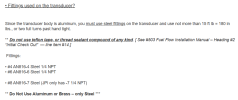
So often, it's a result of the mechanic not reading the installation instructions. For example, in the installation stuff for a JPI fuel flow transducer, we see this:


1742834888751.png

Not following that will almost guarantee trouble.

In the manual for an Electronics International system, we find this sort of thing:
1742835223490.png

And a few pages further on, this:

1742835264582.png

Now, why would they have to say it multiple times? It's because they get multiple calls about a system that won't work or is causing engine problems. Mechanics tend to make the same mistakes, and the manuals have advice that must be followed to avoid those mistakes.

AC43.13-1B, the mechanic's bible, says this:

1742835578536.png

It's actually worse than that. Teflon tape can extrude forward as the threads come together, and bits of it get into the fuel system and cause trouble. If the fitting is removed, tape debris is left in the threads, and it gets pushed into the system when the fitting is reinstalled.
 
So often, it's a result of the mechanic not reading the installation instructions. For example, in the installation stuff for a JPI fuel flow transducer, we see this:


View attachment 139291

Not following that will almost guarantee trouble.

In the manual for an Electronics International system, we find this sort of thing:
View attachment 139292

And a few pages further on, this:

View attachment 139293

Now, why would they have to say it multiple times? It's because they get multiple calls about a system that won't work or is causing engine problems. Mechanics tend to make the same mistakes, and the manuals have advice that must be followed to avoid those mistakes.

AC43.13-1B, the mechanic's bible, says this:

View attachment 139294

It's actually worse than that. Teflon tape can extrude forward as the threads come together, and bits of it get into the fuel system and cause trouble. If the fitting is removed, tape debris is left in the threads, and it gets pushed into the system when the fitting is reinstalled.

I thought that the use of Teflon tape in an aircraft fuel system as verboten was common knowledge among those that work on aircraft. Guess not ... :confused:

ETA: The use of silicone (RTV) in a fuel system is not wise: http://www.kathrynsreport.com/2014/06/toledo-lincoln-county-oregon.html
 
Last edited:
So often, it's a result of the mechanic not reading the installation instructions. For example, in the installation stuff for a JPI fuel flow transducer, we see this:


View attachment 139291

Not following that will almost guarantee trouble.

In the manual for an Electronics International system, we find this sort of thing:
View attachment 139292

And a few pages further on, this:

View attachment 139293

Now, why would they have to say it multiple times? It's because they get multiple calls about a system that won't work or is causing engine problems. Mechanics tend to make the same mistakes, and the manuals have advice that must be followed to avoid those mistakes.

AC43.13-1B, the mechanic's bible, says this:

View attachment 139294

It's actually worse than that. Teflon tape can extrude forward as the threads come together, and bits of it get into the fuel system and cause trouble. If the fitting is removed, tape debris is left in the threads, and it gets pushed into the system when the fitting is reinstalled.
Electronics International states thread sealant MUST be used for their transducers and they discuss Teflon tape and pipe dope.
 
So, if Bubba never reads the manual. How is Bubba going to see this?
Yes, that's a problem. A further problem is the guy that reads it and ignores its instructions.

Maybe it comes down to the mechanic having to read the manual and pass a written exam on its contents, after which the kit is shipped to the buyer.

In the flight school our students had to study the POHs for the airplanes they were flying and pass exams. Open-book, but still a good way to force-feed them the stuff they really should know.
 
Electronics International states thread sealant MUST be used for their transducers and they discuss Teflon tape and pipe dope.
Opposite to what JPI says. I believe JPI has cut Dryseal pipe threads in their transducers; those threads are bottoming threads and won't leak.

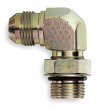
I still cannot understand why aviation has generally not adapted to the modern world and used JIC-style fittings instead of NPT. The JIC uses an O-ring as a seal that never leaks and never puts debris into the system. An added advantage is it's "clockability;" one can orient an elbow to where one needs it pointing, and tghen the jam nut is snugged up and all is secure.

1742921078896.png
1742921467864.png

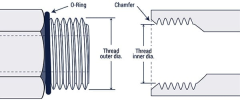
The component (such as a transducer) has a straight thread in it and a chamfer in its outer end. That O-ring seals between the chamfer and the unthreaded portion of the fitting, and the washer forces the seal into chamfer as the jam nut is torqued up. No risk of tapered-thread sealants or leaking, or of splitting the component when the fitting is forced too firmly into position. Too many times I have had NPT fittings either too loose when lined up, or would need to be way too tight with one more turn, so I had to try a bunch of fittings until I found one with its thread start suitable for the job. The threads on these things are not all machined exactly in the same clocking position. They're often not all the same depth of cut, either.
 
I have those fittings all over a John Deere tractor. Occasionally they do leak. But tractor is 20 years old now, and new o-rings always fixes it.
 
I still cannot understand why aviation has generally not adapted to the modern world and used JIC-style fittings instead of NPT.
Mainly because as systems were upgraded aviation moved to MS flareless fittings in a number of cases. While JIC fittings are good they are made to a lesser standard than AN and have a different thread class. But given AN fittings also come in straight threads that accept an o-ring and are used in that manner, it was more the component or part was produced with NPT ports than not. Have even seen JICs used on aircraft however lacked the necessary "paperwork" to keep them installed.
 
I still cannot understand why aviation has generally not adapted to the modern world and used JIC-style fittings instead of NPT. The JIC uses an O-ring as a seal that never leaks and never puts debris into the system. An added advantage is it's "clockability;" one can orient an elbow to where one needs it pointing, and tghen the jam nut is snugged up and all is secure.
I'd think that would be most welcome. Clocking is one of the things that annoys me most when R/R'ing lines when cleaning the carb inlet screen and replacing a transducer.
 
Mainly because as systems were upgraded aviation moved to MS flareless fittings in a number of cases. While JIC fittings are good they are made to a lesser standard than AN and have a different thread class. But given AN fittings also come in straight threads that accept an o-ring and are used in that manner, it was more the component or part was produced with NPT ports than not. Have even seen JICs used on aircraft however lacked the necessary "paperwork" to keep them installed.
I ran into the MS o-ring fittings on large aircraft. Been used there since about 1960. They're available and aviation-approved but the GA manufacturers persist in using NPT.
 
I ran into the MS o-ring fittings on large aircraft.
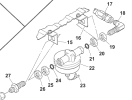
MS flareless were also used on various small aircraft especially when system pressures were above 2000 PSI. As were straight thread AN fittings like in the diagram below. To me where NPT fittings were used the most had more to do with the lineage of the part or aircraft. I have seen where NPTs were replaced via an alteration with straight thread fittings but for most legacy SELs not really worth the investment. But as you've said in the past, goes back to installing things per the book or reference that keeps issues to a minimum. And over tightening NPT fittings is pretty high on the list of not following those references.
1742938716956.png
 
The fuel flow indicator went from 25mph to 0.9 Take a look and let me know what you guys think because he's stressing my life.. could it be air in the lines? Something due to new equipment? What?? This is like diagnosing a hypochondriac
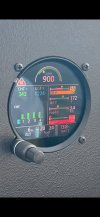
Where in the system is it sensing the flow?

On my plane, it was not practical to place the FF sensor downstream of the electric pump. Instead, it's in parallel with that pump. As a result, when the electric pump is turned on, sensed FF drops. Could something like that explain your issue?
 
Where in the system is it sensing the flow?

On my plane, it was not practical to place the FF sensor downstream of the electric pump. Instead, it's in parallel with that pump. As a result, when the electric pump is turned on, sensed FF drops. Could something like that explain your issue?
Well that makes it about useless.
 
Well that makes it about useless.
No, it makes it useful without having to make major modifications to the arrangement of components in the engine bay and replumbing a significant chunk of the fuel delivery system. The electric pump is on for a few minutes at takeoff and a few minutes at landing. For those two short windows my fuel flow is not being measured correctly, but over the course of a two hour flight the error introduced from that is within the noise of the sensor accuracy.
 
No, it makes it useful without having to make major modifications to the arrangement of components in the engine bay and replumbing a significant chunk of the fuel delivery system. The electric pump is on for a few minutes at takeoff and a few minutes at landing. For those two short windows my fuel flow is not being measured correctly, but over the course of a two hour flight the error introduced from that is within the noise of the sensor accuracy.
I don't think you can say that, but you do you.

Having an open circuit in parallel is going to impact the reading even when the pump is off. Perhaps not enough to matter, but I sure as heck wouldn't trust it to make fuel decisions.

For one, if your line gets restricted to the engine you'll see a nice fuel flow, but it could just be circulating through your parallel line.
 
Last edited:
I don't think you can say that, but you do you.

Having an open circuit in parallel is going to impact the reading even when the pump is off. Perhaps not enough to matter, but I sure as heck wouldn't trust it to make fuel decisions.

For one, if your line gets restricted to the engine you'll see a nice fuel flow, but it could just be circulating through your parallel line.
I admit I don't know where there might be check valves in the system. That's something i should look into.

So there may be some cases where the FF sensor is fooled. I don't know that that's true, but right now I don't know that it's not, so I grant the possibility.

But I also know from years of experience based on comparing measured total fuel usage via the sensor vs. fuel taken from the pump that in normal operation the accuracy is good enough. There's no way the system would ever be perfect enough that I would trust it to make fuel decisions to the level of a couple of gallons, but under normal conditions when I have a specific engine power setting at a specific altitude at a specific temperature and see the fuel flow that I expect to see, I can have some confidence that the engine is performing normally, and I can have an expectation that I will have a reasonably accurate fuel flow measurement that is useful for making refueling decisions.

So, to your original comment: "that makes it about useless", I disagree. I have found it quite useful, even if it has limitations.
I hear you. But I’m not sure you understand that it’s very possibly accurate today but completely and utterly wrong when you most need it. (If you have a restriction in the line to the engine)

When plumbed properly, it will tell you if you have a flow issue to the engine. When plumbed like this, it most likely will not.

A fuel flow check during run up has prevented more than one takeoff with a serious issue.
 
So we got the fuel flow thing settled, turns out it was the engine monitor that needed recalibration. As I said before they installed a new carburetor and I got it back and it flew great on the way home. THEN like never before i started getting a bad mag drop on the left side, ran it up, burned it off and he flew fine, but I gotta do that every time I take off and yes i lean the heck out of this Lil guy in flight and take good care of the engine. Never had that happen. Spark plugs were checked and they were pretty much new so that wasn't the issue. So I took him back and told them to check some mixture adjustment that I found on the web may be the issue like causing it to run rich. They said that wasn't the issue and the mixture was set properly but they found the left mag timing was a bit off and adjusted it so we figured that solved the issue. Again, on his best behavior I flew the crumbsnatcher back home and everything was beautiful. Only for next flight to have the SAME ISSUE with the left mag drop.. burned it off again and went to fly but I get a 1/2 mile out and the plane is vibrating. Never has that happened before so I try different combos of mixture and power and once I find nothing is working I terminate the flight about 2miles out. what's going onnnnn?? Help meh
 
You've got a graphical analyzer. When the mag drop occurs is there any indication that it is limited to one particular cylinder?
 
Back
Top