

You are using an out of date browser. It may not display this or other websites correctly.
You should upgrade or use an alternative browser.
You should upgrade or use an alternative browser.
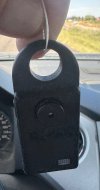
Testing CO monitor
- Thread starter Let'sgoflying!
- Start date

Cap'n Jack
Final Approach
Something like this (yes/no, cheap):
Or to check a bit more strictly, and more expensive, try this:
Edit- the links seem to work despite the "Whoops, we couldn't find that" message.
I don't think a properly tuned car running outside should generate much CO.
Or to check a bit more strictly, and more expensive, try this:
Edit- the links seem to work despite the "Whoops, we couldn't find that" message.
I don't think a properly tuned car running outside should generate much CO.
Last edited:


Let'sgoflying!
Touchdown! Greaser!
Let'sgoflying!
Touchdown! Greaser!
I dangled it at the truck exhaust pipe, nothing.
Thinking it’s dead.
Thinking it’s dead.
Was the engine running?I dangled it at the truck exhaust pipe, nothing.
Let'sgoflying!
Touchdown! Greaser!
lolWas the engine running?

Hang 4
En-Route
- Joined
- Aug 18, 2017
- Messages
- 3,425
- Display Name
- Hang 4
Was it a Tesla?Was the engine running?
Lindberg
Final Approach
If it shows a reading before you die then it's working.Or, run your lawnmower in the garage (closed) for a couple minutes and take a measurement. I expect at least 200ppm.
Let'sgoflying!
Touchdown! Greaser!
I didn’t hear it alert before, but I think it did after I died, not really sure now. Need to pay better attention I guess.If it shows a reading before you die then it's working.

chemgeek
En-Route
- Joined
- Dec 5, 2009
- Messages
- 3,243
- Display Name
- chemgeek
- Home Airfield
- KVGC
I'm not familiar with that model, but the most important things you need to know if it is actually useful is (1) what is the alarm level and (2) what is the dwell time? The other thing to pay attention to is that all amperometric, battery powered CO units have a finite lifetime due to electrolyte depletion. There should be an expiration date on such units.
Devices intended for critical alerting in the transportation sector (trucks, aircraft) should alarm at a low level (say 25 ppm) with a short dwell time (say 30 seconds at that level). Many CO detectors designed for home or workplace use will not alarm until concentrations are multiple 100s of ppm for a long period of time (say 30 minutes). This type of detector is not acceptable for aircraft use.
If your model is one with a long dwell time, you could position it in a stream of 100% CO and it might not alarm for many minutes. The Forensics Detector and Sensorcon units are appropriate for aircraft use, they have digital displays that will show you sub-alert levels of CO, and they can self-calibrate in fresh air.
Let'sgoflying!
Touchdown! Greaser!
I'm trying to decide if it's even important for me, the aircraft I'm flying get their cabin heat from pressurized intake air (turbos)
I guess there is always the remote chance of exhaust coming from other sources ie cabin leaks, but it's not like the risk from a muffler shroud.
I guess there is always the remote chance of exhaust coming from other sources ie cabin leaks, but it's not like the risk from a muffler shroud.

Stewartb
Final Approach
- Joined
- Nov 21, 2014
- Messages
- 9,026
- Location
- Wasilla, AK
- Display Name
- stewartb
- Home Airfield
- Wolf Lake
Read the unit’s documents. Most CO monitor’s sensors are life limited. If out of date, replace.

Gary Ward
En-Route
- Joined
- Jan 16, 2020
- Messages
- 3,639
- Location
- Lawrenceburg, Indiana
- Display Name
- Challenger1
- Home Airfield
- I67
If you hold it in auto truck exhaust you will taint it and drastically shorten its life. Don’t do that.
Let'sgoflying!
Touchdown! Greaser!
i started out with weak concentrations of co, then gradually built up. It’s dead.If you hold it in auto truck exhaust you will taint it and drastically shorten its life. Don’t do that.

camorton
Pre-takeoff checklist
- Joined
- Nov 29, 2018
- Messages
- 282
- Display Name
- Craig Morton
My test procedure: taxi to runup, point the airplane downwind, set power to idle, open the windows. That always sets mine off.
The prop blows the exhaust rearward, then the breeze kind of reverses it and blows it back into the cabin.
The prop blows the exhaust rearward, then the breeze kind of reverses it and blows it back into the cabin.

JimBirk
Pre-takeoff checklist
Fun fact: Umm...one can test a sensitive aviation CO detector by committing flatulence near it. Err...a friend told me that. Yeah, a friend told me...I would never...well...you know... 
Just what PoA needs, potentially a new way of evaluating airspeeds.
-- Jim
Just what PoA needs, potentially a new way of evaluating airspeeds.
-- Jim