
You are using an out of date browser. It may not display this or other websites correctly.
You should upgrade or use an alternative browser.
You should upgrade or use an alternative browser.
T-mobile Satellite Anyone?
- Thread starter asicer
- Start date
- Joined
- Jul 29, 2011
- Messages
- 1,466
- Display Name
- MountainDude
- Home Airfield
- KPDX
Don't know about T mobile, but I tested the satellite texting on my iPhone and it worked. No photos or attachments allowed. Just text.
Apparently TSatellite is somewhat more limited on the iPhone than Android at the moment.Don't know about T mobile, but I tested the satellite texting on my iPhone and it worked. No photos or attachments allowed. Just text.
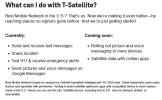
Also, it seems to use a different technology than Apple's satellite service for iPhone.

Stewartb
Final Approach
- Joined
- Nov 21, 2014
- Messages
- 9,026
- Location
- Wasilla, AK
- Display Name
- stewartb
- Home Airfield
- Wolf Lake
Tmobile’s satellite service rollout crashed Starlink. That was a pain in the butt.
iPhone sat texting uses Globalstar, since Apple has an ownership share in Globalstar. Nothing about Globalstar service in Alaska has ever impressed me but iPhone texting has worked pretty well so far. Good enough to turn off my Iridium phone service for the first time in 20+ years. I still have my Inreach and will keep it for now.
For you sat texters, look into BoltWX. It’s a text query-respond weather service and it works with satellite texting. I keep a list of locations so I can check familiar places along my routes.


rwellner98
Pattern Altitude
- Joined
- Jul 26, 2009
- Messages
- 1,662
- Display Name
- rw2
It is not a replacement for a PLB. You want both. Their missions are quite different.Anyone have Tmobile satellite service? I'm curious how well it works in a typical spam can and also whether it could serve as a reasonable proxy for a PLB.
Thanks for the tip! I’ve now signed up for BoltWX.For you sat texters, look into BoltWX. It’s a text query-respond weather service and it works with satellite texting. I keep a list of locations so I can check familiar places along my routes.
I’ve also messaged BoltWX and asked them to implement wind in knots, directions in degrees and winds aloft and they told me they have now added those features to their roadmap to support backcountry pilots. I’ve also requested being able to query METARs and TAFs for nearby airports.
Because a PLB goes straight to search and rescue rather than an intermediary? Because SARSAT is better than Starlink? Or because orbiting cell towers are hacky?It is not a replacement for a PLB. You want both. Their missions are quite different.
rwellner98
Pattern Altitude
- Joined
- Jul 26, 2009
- Messages
- 1,662
- Display Name
- rw2
Those are decent reasons. And that it's constantly sending for 24 hours. And it's more likely to work in a forest.Because a PLB goes straight to search and rescue rather than an intermediary? Because SARSAT is better than Starlink? Or because orbiting cell towers are hacky?
t mobile, or a starlink dish like I carry, or in reach, or whatever are great devices for non-emergency.
"Hey, I'm stuck off airport and need tools and a battery" is not a great time to only have a PLB.
"Hey, I'm stuck upside down in my plane in a forest with a broken leg" is not a great time to only have a phone with satellite connectivity.
When a PLB is $250-400 for seven years of Plan B it's just always seemed like a no-brainer to me.
Could you recommend some you like? You make a good argumentWhen a PLB is $250-400 for seven years of Plan B it's just always seemed like a no-brainer to me.
Stewartb
Final Approach
- Joined
- Nov 21, 2014
- Messages
- 9,026
- Location
- Wasilla, AK
- Display Name
- stewartb
- Home Airfield
- Wolf Lake
If your plane carries an ELT why would you carry a PLB?
An Inreach is every bit as good as a PLB. Better, given it offers texting, tracking, weather, and a GPS.
An Inreach is every bit as good as a PLB. Better, given it offers texting, tracking, weather, and a GPS.
Brad W
En-Route
It's been a while since I dug into the weeds of these options, but as I recall, one of teh drawbacks of teh sat communicators....or should I say advantages of the PLB, is the beacon they transmit on guard. Allows rescuers to home in on you
Is SAR homing on cell signals these days?It's been a while since I dug into the weeds of these options, but as I recall, one of teh drawbacks of teh sat communicators....or should I say advantages of the PLB, is the beacon they transmit on guard. Allows rescuers to home in on you
Stewartb
Final Approach
- Joined
- Nov 21, 2014
- Messages
- 9,026
- Location
- Wasilla, AK
- Display Name
- stewartb
- Home Airfield
- Wolf Lake
ELTS, EPIRBs, PLBs, and devices like Inreach and SPOT with emergency functions use a 406 mhz signal. ELTs, EPIRBS, and PLBs usually depend on triangulation from multiple satellites to determine location, which takes a few minutes. My RCC friends tell me the location solution is remarkably accurate, to like 20 meters. If the device is GPS enabled, it will send coordinates with the help signal. Little devices like Inreach and SPOT include GPS coordinates in their signal. I’ve asked my RCC friends if Inreach and SPOT beacons are treated differently from NOAA registered beacons or if there was any difference in beacon reliability. Their answer was no and no.
My two ELTs are 406. Only one is GPS enabled and given what I know of how they work, I’m good with that. I usually take an Inreach when flying, mostly for texting. iPhone texting may change that. The satellite text feature also works for the iPhone 911 help feature and it includes GPS coordinates. The tech we carry in our pockets is amazing.
My two ELTs are 406. Only one is GPS enabled and given what I know of how they work, I’m good with that. I usually take an Inreach when flying, mostly for texting. iPhone texting may change that. The satellite text feature also works for the iPhone 911 help feature and it includes GPS coordinates. The tech we carry in our pockets is amazing.
Last edited:
rwellner98
Pattern Altitude
- Joined
- Jul 26, 2009
- Messages
- 1,662
- Display Name
- rw2
I don't have any reason to believe that one is better than another, so I bought the McMurdo FastFind based on price and size.Could you recommend some you like? You make a good argument
Good reason to carry a PLB is in case your plane burns. Or you have an emergency while hiking the trails next to whatever backcountry strip you landed at. Or your ELT antenna gets damaged in the wreck.If your plane carries an ELT why would you carry a PLB?
An Inreach is every bit as good as a PLB. Better, given it offers texting, tracking, weather, and a GPS.
InReach is great for non-emergency messaging. It's also quite likely to be useful in an emergency. It only broadcasts at 1.6 watts and often has trouble finding a satellite from under a canopy. PLBs broadcast continuously at 5 watts.
121.5 is very much past it's "Best Buy" date at this point. ELTs and PLBs broadcast on 406 for a long time now.It's been a while since I dug into the weeds of these options, but as I recall, one of teh drawbacks of teh sat communicators....or should I say advantages of the PLB, is the beacon they transmit on guard. Allows rescuers to home in on you
But this is a good thing. PLBs on 406 are tons easier to find than 121.5 beacons ever were both because of improved technology and the fact that your GPS coordinates are encoded into the 406 beacon.
So, no one is going to hear you on guard anymore, but on the whole the system got a massive improvement with the change.
I don't see anything suggesting that inreach and spot use 406. The SOS button sends a message using the same radio as the "normal" two way messaging. If you have a citation showing otherwise, I'd love to read more.ELTS, EPIRBs, PLBs, and devices like Inreach and SPOT with emergency functions use a 406 mhz signal.
Stewartb
Final Approach
- Joined
- Nov 21, 2014
- Messages
- 9,026
- Location
- Wasilla, AK
- Display Name
- stewartb
- Home Airfield
- Wolf Lake
No, but if SAR is alerted to a text 911? They’ll already know where you are and I bet you’ll get a text back. 406 beacon responses are defined in SAR procedures. Cell phone 911 messaging is too new to have much history but I’ll bet a cell 911 is handled like a 406 beacon. That is, the first response is to do a telephone investigation to validate the emergency. Ever set off a 406? It doesn’t take very long before your phone rings, right? I’ve asked RCC guys how they feel when they get dispatched for a beacon for things like a person getting lost on a hike or a 4-wheeler running out of gas where nobody’s hurt and life is not in danger. I was surprised to hear them say their job is to help people when they need help. They don’t care why. With this cell texting they may be able to determine the nature of the problem so they can provide a better response.Is SAR homing on cell signals these days?
Stewartb
Final Approach
- Joined
- Nov 21, 2014
- Messages
- 9,026
- Location
- Wasilla, AK
- Display Name
- stewartb
- Home Airfield
- Wolf Lake
Yes, Inreach’s signal uses Iridium to send a 911 to a monitored emergency center. SPOT uses Globalstar to do the same. Both work well, but only one works well in the far north. 25 years with an Iridium phone has taught me a lot about where they work, and with respect to texts? That’s pretty much everywhere. Deep valleys, tree canopies, it works fine.
My “problem” with typical beacons is they lack any ability to define the “emergency.” Are you in danger? Injured? Just broken down and have camping gear? Out of gas? C’mon, be more specific. Carry a device that provides communication so you don’t call out SAR when SAR isn’t required.
My “problem” with typical beacons is they lack any ability to define the “emergency.” Are you in danger? Injured? Just broken down and have camping gear? Out of gas? C’mon, be more specific. Carry a device that provides communication so you don’t call out SAR when SAR isn’t required.
Last edited:
Brad W
En-Route
Do they continuously transmit a homing beacon?and devices like Inreach and SPOT with emergency functions use a 406 mhz signal
well maybe...except that an aircraft flying overhead might just maybe be monitoring 121.5. Who monitors 406? Is that only just the satellites?121.5 is very much past it's "Best Buy" date at this point. ELTs and PLBs broadcast on 406 for a long time now.
(regardless, I understand your point. 121.5 is full of noise and false alarms, probably not monitored as much as it used to be and is likely less reliable compared to the satellites, which are always "there" in good or bad weather)
I probably have this very wrong, so school me please. This is how I was remembering it. Pressing the SOS button will transmit an "I need help" message to the mothership, and that message will hopefully contain your GPS coordinates.I don't see anything suggesting that inreach and spot use 406. The SOS button sends a message using the same radio as the "normal" two way messaging.
My understanding was that at that point it's in monitor mode, and you can chat back and forth with mothership. Otherwise, you're just waiting for them to arrive based on that one message. Is that correct?
I do remember reading lots of reports of it having trouble reaching satellites when under a canopy, on the side of a mountain, etc...
and I know that GPS devices generally need a fairly good view of a large chunk of teh sky to get a fix
but what I don't recall is how these satellite communicators function if they don't have a connection when you press the sos button. Do they keep trying, either constantly or periodically?
My understanding is that a PLB will continuously transmit the homing beacon signal. (and as has been pointed out it's a stronger signal)
But how do they handle the GPS location? Is that a one-time thing or does it keep trying?
If there aren't enough sats in view when the button is pushed to get a good fix, does it keep trying to get a fix and then transmit it when it does?
If you're moving when the button is pressed, does it keep updating the position?
I've been getting back into SCUBA and I'm considering something for that application too. There's a different type of device (RescueMe) in that space that uses AIS to signal man overboard line of sight to nearby boats. It's cheaper and seems like perhaps better if in an ara with lots of boat traffic with large well equipped boats, but I rekon a lot of small boats won't get the signal....so I'm leaning towards either an inreach or a PLB
The inreach seems more versatile and useful, but also less good for "oh cr@p I need help now" situations. It's probably the best compromise investment though, if you can get past the price of subscription
Stewartb
Final Approach
- Joined
- Nov 21, 2014
- Messages
- 9,026
- Location
- Wasilla, AK
- Display Name
- stewartb
- Home Airfield
- Wolf Lake
Inreach continues to transmit a 911 signal until it sends. The status of that message is shown on the screen. By continuing to transmit it can make contact with a satellite when it passes in-line with even a small window in a tree canopy or deep valley. Iridium texting has worked that way for many years. When a signal is received on the SAR end, you get a text back and the same transmit until received is in play.
If a guy believes a PLB is a better tool, the question is why doesn’t he have a GPS enabled 406 ELT in his plane? 121.5 monitoring was turned off a long time ago. If some airline guy calls a 121.5 beacon in? Nobody is coming. RCC may ask for corroboration from other sources but chances are they don’t do anything. As an RCC guy explained to me, an airliner hearing a beacon at 35,000 feet covers such a large area that it’s not practical to look.
If a guy believes a PLB is a better tool, the question is why doesn’t he have a GPS enabled 406 ELT in his plane? 121.5 monitoring was turned off a long time ago. If some airline guy calls a 121.5 beacon in? Nobody is coming. RCC may ask for corroboration from other sources but chances are they don’t do anything. As an RCC guy explained to me, an airliner hearing a beacon at 35,000 feet covers such a large area that it’s not practical to look.
If some airline guy calls a 121.5 beacon in? Nobody is coming.
This is why I switched to inreach a couple years ago. We were flying somewhere out in Center airspace and a couple guys reported hearing an ELT the controller asked if they saw anything that looked like a plane crash. They said no, and the controller said I'll tell my supervisor when I see him.
At least with inreach I know they have my location and know I need help if that SOS button is pushed. If it's not an emergency I can just fire off a text through the same device. To me its the best of both worlds.
rwellner98
Pattern Altitude
- Joined
- Jul 26, 2009
- Messages
- 1,662
- Display Name
- rw2
It's not a homing beacon. But as was pointed out, they do have the benefit of knowing if the signal was received and will retry until battery death or success.Do they continuously transmit a homing beacon?
Yes, it's 'only just the satellites'. But that's a way better system than was the old 121.5 based approach.well maybe...except that an aircraft flying overhead might just maybe be monitoring 121.5. Who monitors 406? Is that only just the satellites?
Cospas-Sarsat System Overview | SARSAT
 www.sarsat.noaa.gov
My point was that they are not 406 beacons. You have all the rest correct. And, assuming you can get a message through, the two way coms are a big advantage.I probably have this very wrong, so school me please. This is how I was remembering it. Pressing the SOS button will transmit an "I need help" message to the mothership, and that message will hopefully contain your GPS coordinates.
My understanding was that at that point it's in monitor mode, and you can chat back and forth with mothership. Otherwise, you're just waiting for them to arrive based on that one message. Is that correct?
The inreach style devices do not keep transmitting once they have successfully gotten their message through. But that's fine, they don't need to be wasting power doing anything but listening at that point.I do remember reading lots of reports of it having trouble reaching satellites when under a canopy, on the side of a mountain, etc...
and I know that GPS devices generally need a fairly good view of a large chunk of teh sky to get a fix
but what I don't recall is how these satellite communicators function if they don't have a connection when you press the sos button. Do they keep trying, either constantly or periodically?
Same data packet every time.My understanding is that a PLB will continuously transmit the homing beacon signal. (and as has been pointed out it's a stronger signal)
But how do they handle the GPS location? Is that a one-time thing or does it keep trying?
The link above is everything I know about the constellation. Notably, it doesn't go into enough detail to answer your question about coverage except to note that there are geosynchronous satellites, which should mean that they are always in sight.If there aren't enough sats in view when the button is pushed to get a good fix, does it keep trying to get a fix and then transmit it when it does?
If you're moving when the button is pressed, does it keep updating the position?
Absolutely.The inreach seems more versatile and useful, but also less good for "oh cr@p I need help now" situations. It's probably the best compromise investment though, if you can get past the price of subscription
In case that was directed at me. I'm not arguing "PLB is better". I'm arguing that all these tools are useful when the worst happens. And, when the worst happens I'm fine with having put more layers of Swiss cheese into the equation. So I have a 406 elt, 406 plb AND inreach. I also carry a starlink with me for other reasons. I'm not looking to figure out which ONE of those things is most likely to save me. I'm arguing that there is value in having layers of protection if the situation unravels.If a guy believes a PLB is a better tool, the question is why doesn’t he have a GPS enabled 406 ELT in his plane? 121.5 monitoring was turned off a long time ago. If some airline guy calls a 121.5 beacon in? Nobody is coming. RCC may ask for corroboration from other sources but chances are they don’t do anything. As an RCC guy explained to me, an airliner hearing a beacon at 35,000 feet covers such a large area that it’s not practical to look.
I have never once had to use a 406. But I've used both my starlink and inreach to get needed assistance.
Last edited:
Brad W
En-Route
It's not a homing beacon. But as was pointed out, they do have the benefit of knowing if the signal was received and will retry until battery death or success.
The inreach style devices do not keep transmitting once they have successfully gotten their message through. But that's fine, they don't need to be wasting power doing anything but listening at that point.
I thought of another question
In my experience when a GPS is powered on it can take some time for it to lock position. Especially so if the unit is nowhere near it's last known location when it was turned off or if it's been a long time since it was turned off. No doubt it's a lot faster now than it used to be, but still I reckon there's a delay...especially if it's obstructed and not seeing many satellites.
so
If a person powers up the inreach or similar devise becasue he or she needs help, and immediately presses the SOS button before the location is found, will the unit send a message without the location, and then keep trying to locate, and then automatically send another message once it find's its place in the world?
rwellner98
Pattern Altitude
- Joined
- Jul 26, 2009
- Messages
- 1,662
- Display Name
- rw2
Great question. And since I'm not an LLM I have the luxury of simply admitting I don't know, rather than hallucinating an answer into existence.I thought of another question
In my experience when a GPS is powered on it can take some time for it to lock position. Especially so if the unit is nowhere near it's last known location when it was turned off or if it's been a long time since it was turned off. No doubt it's a lot faster now than it used to be, but still I reckon there's a delay...especially if it's obstructed and not seeing many satellites.
so
If a person powers up the inreach or similar devise becasue he or she needs help, and immediately presses the SOS button before the location is found, will the unit send a message without the location, and then keep trying to locate, and then automatically send another message once it find's its place in the world?
