PaulS
Touchdown! Greaser!
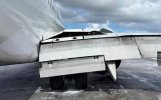
West Jet 737-8 right main "collapsed" supposedly due to hard landing. Didn't look particularly hard to me, but who knows.


The passengers on board would bed to differ.Didn't look particularly hard to me, but who knows.


Exactly. You can see in some of the post evacuation photos that the gear is poking through the top of the wing.Everything looks consistent with the Alaska Airlines incident at John Wayne airport in Orange County (SNA). Particularly how the strut pushed up through the top of the wing.
Doubtful. The gear is still upright. But the top of the mount is playing peekaboo above the wing.Maybe there was a side load.
The video taken of from outside didn't look very bad.The passengers on board would bed to differ.
Are you by chance a Naval Aviator?
Low rider don't use no gas now


The passengers on board would bed to differ.
Are you by chance a Naval Aviator?

No, I did actually land in an airliner there about 2 years ago, not West Jet, and it was pretty hard, then they locked up the wheels and left at least 500 feet of rubber on the runway. I haven't read any accounts from the passengers. But I did see the photo Fearless posted, it will be interesting to read the report on this one.

Yup, a few years back, my wife and I spent the day on that beach. It was a cool place to watch planes (of all sizes) landing there. And, yes, he did look to be a bit higher than I remember of large aircraft approaching that runway.From runway skid marks he landed long. Also looked like the pilot was high coming over the beach. Look up that beach. People hang out there.

Alaska SNA case study deja vu indeed. On this one I'm willing to bet the landing Gs were in the envelope, and likely a structural/mx-dereliction failure.

What a nightmare getting that jet repaired on a Island and ferry out. Closed the airport till today reported.

Yeah, people do hang out there….From runway skid marks he landed long. Also looked like the pilot was high coming over the beach. Look up that beach. People hang out there.

 www.facebook.com

There's video from the mountain, looking down at the airport, and it shows a touchdown well within the touchdown zone.From runway skid marks he landed long.
Definitely hit the mark from other videos.There's video from the mountain, looking down at the airport, and it shows a touchdown well within the touchdown zone.
There's video from the mountain, looking down at the airport, and it shows a touchdown well within the touchdown zone.
how do you know? Maybe he’s just a lousy shot.But he didn't aim for the numbers........

dead on larry. ive never found it to be any more difficult than any other airport. now, loose one on TO and thats a different story......Landing at SXM isn't particularly challenging. It's an RNAV approach with relatively high minimums due to the terrain at the far end of the runway. Runway is long enough for a normal landing. You do have to turn around an back-taxi to clear, either at the end or at a pad about 3/4 of the way down the runway.
Takeoff is a bit more interesting and weight restrictions are an issue. Often it's a Flaps-25 takeoff on the 737. You make an immediate right turn and proceed southbound over the marina.
The interesting part of this approach, though unrelated to the accident, is that the MAP (MAPON) is 2.0nm from the runway threshold. At that point, the flight director will command a right turn and you'll lose your VNAV path. That can be confusing if you're not expecting it. One technique is to have the PM turn off your F/D at MAPON.dead on larry. ive never found it to be any more difficult than any other airport. now, loose one on TO and thats a different story......
That’s interesting to me…I’m going to have to look at that in my system, as I doubt it would make the turn at MAPON. I’ve been looking for an example like that since they lowered the DA on the ILS at KRNO that used to be 1800 feet or so AGL.The interesting part of this approach, though unrelated to the accident, is that the MAP (MAPON) is 2.0nm from the runway threshold. At that point, the flight director will command a right turn and you'll lose your VNAV path. That can be confusing if you're not expecting it. One technique is to have the PM turn off your F/D at MAPON.
STT has a similar situation on the RNAV Rwy 10 but it's even father from the runway at 2.3nm.
There is video from the other end of the runway, and above, showing that they touched down well within the touchdown zone of the runway.From the look of the wind sock it appears that they landed with a pretty good quartering tailwind. Perhaps coming in somewhat high with the added float from a tailwind component caused them to plant it for fear of running out of runway.
Maybe because if you live there is accountability. If you die there is none.It's interesting to me that when people survive there's a much bigger initial social inclination to seek fault on pilot technique than when pilots die. I see it on my side of the fence too. What a peculiarly human unwitting hypocrisy that one. Almost like giving themselves social permission to attack the living, but conditioned that doing the same for the dead is a no no, probably since youth.
In this case, I think it has more to do with how consistent this accident was to the previous accidents that resulted from trunnion pin failures under normal loads.It's interesting to me that when people survive there's a much bigger initial social inclination to seek fault on pilot technique than when pilots die.
In this case, I think it has more to do with how consistent this accident was to the previous accidents that resulted from trunnion pin failures under normal loads.
Which Alaska? I’m guessing 261, but was there some Alaska landing gear accident?Looks exactly like the Alaska Airlines failure. So it's on maintenance or Boeing my guess or whoever reworked the trunnion.