Shutterbugs - resurgence in 35 mm SLR cameras?

Sac Arrow

Touchdown! Greaser!
Joined
May 11, 2010
Messages
21,565
Location
Charlotte, NC
Display Name
Snorting his way across the USA
I still have my Canon AE-1 Program and a couple lenses and a flash from my film days. And I burned through a LOT of film. I was about to relegate it to the boneyard, when some cursory research indicated that 35 mm film is making a comeback and there are even some new SLR cameras being manufactured. Why?

Thoughts?
 
I guess it’s a combination of nostalgia and also having hard copies of things versus being stored on hard drives.
 
I guess it’s a combination of nostalgia and also having hard copies of things versus being stored on hard drives.
The first one i understand, but as for storage... all the negatives and slides that I have that are important to me I made digital copies of for both peace of mind and sharing purposes. I don't really see a benefit to having physical copies vs ones and zeros.
 
The first one i understand, but as for storage... all the negatives and slides that I have that are important to me I made digital copies of for both peace of mind and sharing purposes. I don't really see a benefit to having physical copies vs ones and zeros.
I’m not disagreeing with you but people who want their photos to potentially survive an EMP might value that. And no, I’m not convinced about EMPs destroying everything.
 
Same reason some people still like old and loud muscle cars, in the age where EVs are way better in most ways for most people.
 
When recording music, digital is awesome but sometimes a too clean signal works against the fabric of what the creator has in mind. There is a place for noise, fuzz, & overdrive.

Some movie makers have used film as it has certain characteristics that are desired to promote the effect being sought ...
 
Whether you’re talking about images or sound, digital at its best is still an approximation of its analog source.
 
All the world's an analog stage and the digital players only have bit parts.

That being said, the current crop of digital cameras are doing better in both dynamic range and resolution than film. It's taken a while to get this far.
 
Whether you’re talking about images or sound, digital at its best is still an approximation of its analog source.

Barely, if at all. And just for now.

Years ago I gave up on my Topcon RE Super 35mm and my Rolleiflex 2.8F and sold them on eBay. They had been sitting on a closet shelf for years. Don’t really miss them. Cool tech for the day, though.

54482417673_629c9727a8.jpg


54482335249_7a851cb507.jpg


And to add insult to injury, of course both of those images were taken with an iPhone.
 
Last edited:
I still have my Minotla SR-T201, the first camera I saved up to purchase and an old Voightlander rangefinder that my Dad bought when he was in the Army in Germany.

Nostalgia I suppose.
 
I still have a couple of 35mm cameras in the closet. I just unloaded all my first generation digital stuff (Canon 20D and various EF lenses) on ebay. Probably should sell the film stuff but I didn't think it would net enough to be worth it. I did find a few rolls of undeveloped film which I have no idea what they are that I'll have to send off. I did find a lab that not only will develop the stuff but scan it at the same time.
 
All the world's an analog stage and the digital players only have bit parts.
:yeahthat:


During my career at Lockheed, I was an analog electronics specialist (among other things) and I headed our analog design assurance program for 20 years. For a long time, my email sig included "All the world is an analog stage and digital is merely a bit player."

A few more of my favorite quips, often given to analog classes I taught, include:
- "Real EEs work in volts and amperes; bits and bites are for sissies."​
- "Any idiot can count to one."​
- "While I'm sure there is nothing morally wrong with writing VHDL for a living, people should do it in private and wash their hands afterward."​
- "The best programming language is solder."​
 
I've seen a couple of YT folks talk about the transition back to film. I think, as mentioned here already, there is a desire to get back to the 'creativity' and 'manual skill' side of things that film brings. I am 100% proof that digital photography requires marginal skill to get decent (I'm not saying GREAT) shots. I can take my Sony A7IV and shoot a few hundred shots at my sons' basketball or soccer games at 10fps and ISO12800, drop it into a photo editor and change white balance, crop it in, and use AI to smooth it back out and BAM - there's a wall-hanger. Can't do that with film - if you can pull off a wall-hanger with film in some of those crap environments, you've definitely done your homework and got some skill.

I still have an old Canon Rebel 35MM body that I may break out when we go to Colorado at the end of the month to see what I can get for some landscape shots. The next question is - where he heck do you get film developed these days?
 
This is all fine to chat about on a forum. Just remember, putting those pictures into the flyers you mimeograph will be a challenge…
 
My dad's last camera was a rangefinder Leica, a 3F IIRC. In spite of the sentimental attachment, I also sold it, 30 years ago or so.

I wonder what the "collector's market" will do for prices on these relics. I suspect not much, since the generation that reveres this tech is fading rapidly, and younger folks rarely have an affinity for such things. I guess they've appreciated, but barely enough to keep up with inflation...

54482627073_a0ed24f4e8.jpg
 
I've seen a couple of YT folks talk about the transition back to film. I think, as mentioned here already, there is a desire to get back to the 'creativity' and 'manual skill' side of things that film brings. I am 100% proof that digital photography requires marginal skill to get decent (I'm not saying GREAT) shots. I can take my Sony A7IV and shoot a few hundred shots at my sons' basketball or soccer games at 10fps and ISO12800, drop it into a photo editor and change white balance, crop it in, and use AI to smooth it back out and BAM - there's a wall-hanger. Can't do that with film - if you can pull off a wall-hanger with film in some of those crap environments, you've definitely done your homework and got some skill.

I still have an old Canon Rebel 35MM body that I may break out when we go to Colorado at the end of the month to see what I can get for some landscape shots. The next question is - where he heck do you get film developed these days?

True. I haven't used a real darkroom since college days, but it required some artistic skill to do edging and burn-in and push processing. A digital photo editor is trivial.

But I'm lazy and like the easy way. :)
 
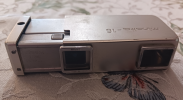
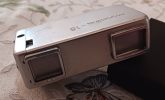
I have the same mini 16. My Dad got it for me in Japan on the way back from Vietnam. I also have a Canon Ft-QL and some real glass lenses from the 60s. It shoots a lot better than my AE-1 did. Sadly, my iPhone camera is my go-to device these days.
 
I've seen a couple of YT folks talk about the transition back to film. I think, as mentioned here already, there is a desire to get back to the 'creativity' and 'manual skill' side of things that film brings. I am 100% proof that digital photography requires marginal skill to get decent (I'm not saying GREAT) shots. I can take my Sony A7IV and shoot a few hundred shots at my sons' basketball or soccer games at 10fps and ISO12800, drop it into a photo editor and change white balance, crop it in, and use AI to smooth it back out and BAM - there's a wall-hanger. Can't do that with film - if you can pull off a wall-hanger with film in some of those crap environments, you've definitely done your homework and got some skill.

I still have an old Canon Rebel 35MM body that I may break out when we go to Colorado at the end of the month to see what I can get for some landscape shots. The next question is - where he heck do you get film developed these days?
Cant one just scan their film negatives in and do all of those things in Lightroom regardless of the source?

ISO 12800 on film is going to look horrible, but you can do just about everything else. The Nikon F-6 can do 8.5 fps if I'm correct about that.
 
During my career at Lockheed, I was an analog electronics specialist (among other things) and I headed our analog design assurance program for 20 years.
Analog design is still PFM to most people.

- "Any idiot can count to one."
My favorite character ever. Bob Widlar, the father of analog IC design.

1745859579173.png

- "The best programming language is solder."
Good old Bob Pease - another great name in analog design.


Anyway, back to film cameras. I still have one, a Russian Zenit 12 that I bought years ago. I was intrigued by the ruggedness and simplicity. It can also be used to hammer nails in deck planks. I still take pictures with it every now and then, just for the nostalgia. I find that a lot of film processing places don't know how to extract the best out of a color film, they just run it through the machine and then scan it for you. While I was able to develop B&W film at home with acceptable results, doing color film with the C41 process is something that I won't attempt. Not enough volume for me to justify the set-up.
Today's interchangeable lens digital cameras are good enough that I'm the limiting factor for image quality, not the image sensor.

 
Somebody decide if they're worth anything...I've got a couple old Canon Rebels, and will probably trash 'em in an upcoming move.

Ron Wanttaja
 
Ah, analog. Always reminds me of the original Link Trainer...an analog computer, using vacuum as the computational media.
1745861216288.png
1745861267006.png
Ron Wanttaja
 
Good old Bob Pease - another great name in analog design.
There’s a name I almost forgot. I used to read his columns in “Electronic Design”(? pretty sure that was the trade magazine I got)
 
10 years ago I put my Mamiya c33O and all the goodies (lenses, filters, etc..) on eBay.. Was rather surprised when the whole "kit and kaboodle" in went for $1500. Bought all of the stuff used in the 70's for a fraction of that price.

Getting medium format film these days is special order and not too expensive, but getting some of the color film processed is..


19063-590x394.jpg
 
Yes, that's it. For a long time National Semiconductor kept an archive of his columns and other stuff, but it got removed a few years ago.
Here's a PDF of most of his articles:
I’ll have to dig through those archives. I remember one particular article he wrote, not long after either a friend or family member of his was killed after flying into a box canyon. I think he was working out calculations on turn radius vs airspeed and how it all applied to stall speed. He was not a pilot but math and physics don’t care.
 
There’s a name I almost forgot. I used to read his columns in “Electronic Design”(? pretty sure that was the trade magazine I got)


IIRC, Pease died in a car wreck driving home from Jim Williams’ (LTC analog guru) funeral. We lost two of the very best analog EEs within a few days of each other.
 
Analog design is still PFM to most people.


My favorite character ever. Bob Widlar, the father of analog IC design.

View attachment 140455


Good old Bob Pease - another great name in analog design.


Anyway, back to film cameras. I still have one, a Russian Zenit 12 that I bought years ago. I was intrigued by the ruggedness and simplicity. It can also be used to hammer nails in deck planks. I still take pictures with it every now and then, just for the nostalgia. I find that a lot of film processing places don't know how to extract the best out of a color film, they just run it through the machine and then scan it for you. While I was able to develop B&W film at home with acceptable results, doing color film with the C41 process is something that I won't attempt. Not enough volume for me to justify the set-up.
Today's interchangeable lens digital cameras are good enough that I'm the limiting factor for image quality, not the image sensor.

My favorite Widlar story:
 
IIRC, Pease died in a car wreck driving home from Jim Williams’ (LTC analog guru) funeral. We lost two of the very best analog EEs within a few days of each other.
The speculation was that it wasn't the crash that killed him. People think it was a stroke/heart attack.
 
People like them to take pictures of their turntables, album collections, and Marantz 2270 receivers, maybe?
Ouch. We still have a 1060 and a 2220B sitting on the shelf that work just fine, lol. Dad bought it in the mid-70s and gave it to me as a first stereo when I was a young teenager (mid-90s). Only 30W/channel, but that was enough for my bedroom!
 
There’s a name I almost forgot. I used to read his columns in “Electronic Design”(? pretty sure that was the trade magazine I got)

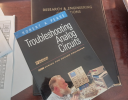
Electronic Design News. He had a column called "Analog Dialog." Some of his articles are in this book, which I just happened to have sitting in the book rack behind my desk:

1745944132825.png​

I think you can still get it on Amazon.
 
I still have three 35mm SLRs. A Zenit that I bought new in 1972 from Sears for about $80. It came with a Helios lens, which was built in East Germany by the old Carl Zeiss people. Wonderful optics, poor camera body. Once in a while the shutter would hang up and you had to hold real still for five seconds or so until it fired.

The next was a Yashica with a zoom lens, That one went everywhere with me, got beat up some but worked flawlessly.

The last is a nice Pentax that my sister bought at a garage sale for $25. She didn't know how to work it and gave it to me. I never used it.
 
Back
Top