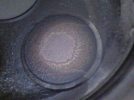
Regular borescope imaging usefulness

Cole18

Filing Flight Plan
Joined
Jun 6, 2024
Messages
18
Display Name
Cole
Saw this interesting article from Savvy Aviation that I thought I’d share and wanted to see feedback from others and thoughts.


They are reporting on their borescope initiatives and results from it. Basically they found a surprising number of aircraft with distressed exhaust valves. By finding this early they were able to do just a $200 valve lapping instead of waiting longer, having bad compression and replacing a Cylinder for thousands of dollars. So seems like it could be useful to regularly borescope.

Does anyone here regularly borescope their engines? Have you found it helpful for finding problems early and fixing them cheaply? Should more of us start borescoping regularly?
 
Yep. I don't do it on a schedule though, but when my EGTs sneak up I take a peek. Found 2 to lap that way.

I feel like this is more of a Continental Motors thing than Lycs but... who knows :)
 
... I feel like this is more of a Continental Motors thing than Lycs but... who knows :)
Generally true for the common engines, due to their different valve construction, but every rule has its exceptions. The prior engine in my airplane was an O-320-D2J that burned an exhaust valve. When we pulled the jug we noticed some spalling/pitting on the cam lobe, so I ended up replacing the engine with an O-360.

But to the point, I think a borescope inspection is so valuable, if borescopes existed when the regs were written, they would probably be mandatory.
 
Added thought: If I was a dude who pulled/rotated spark plugs every oil change (I'm not, I don't, I'm lazy) then I think NOT borescoping exhaust valves is a missed opportunity.
 
if borescopes existed when the regs were written, they would probably be mandatory.
Borescopes were in use in aviation when Part 43 was rewritten from CAR 18. And there have also been several FAA guidance docs on what, where, and how of borescopes. However, it wouldn't be until decades later when someone realized a borescope could be used as an added tool to troubleshoot engine cylinder problem. Unfortunately, as with any "new" tool, there are people who don't fully understand its purpose and simply cause themselves more work or grief than necessary.
 
Borescopes were in use in aviation when Part 43 was rewritten from CAR 18. ...
Wasn't that during the 1960s? I didn't realize fiber optic scopes were in use that early.
 
There is an assumption that those scoped distressed valves would have resulted in problems that were averted by lapping. I happen to agree because it makes sense.

However, one would not know because those problems never got a chance to occur. You have to have a data set of scoped valves that looked a certain way that were NOT lapped that then later failed.

Is there a controlled study that supports this? Like a statistically significant number of say green asymmetrical patterns on the chamber side of valves that were progressively observed (scoped) until failure? I’m sure there is somewhere.
 
Does anyone here regularly borescope their engines? Have you found it helpful for finding problems early and fixing them cheaply? Should more of us start borescoping regularly?

I do at each annual since 2018.

I have not found any issues yet.

Yes, why not have a look at the cylinder while the plugs are out. I have a baseline of my valves, cylinders, and pistons and at a minimum can learn something about my leaning practices.

Sure, some can say “what actionable info is there”? Well then screw it, don’t look at anything else under the hood either. If it’s open, I’m looking. Feels irresponsible to myself and my passengers to not do so.
 
Is there a controlled study that supports this?
I've never seen one or heard of one. And the only entity that may have one would be Continental since they're the only OEM that recommends the borescope check that I can recall. Beyond that I think if there was something actually definitive that could predict the failure of a component with such certainty, it would be more embraced by the industry and at the least every engine OEM from a liability standpoint??
 
I've never seen one or heard of one. And the only entity that may have one would be Continental since they're the only OEM that recommends the borescope check that I can recall. Beyond that I think if there was something actually definitive that could predict the failure of a component with such certainty, it would be more embraced by the industry and at the least every engine OEM from a liability standpoint??

Thanks. I just figured I’d call attention to the assumed basis of the photo database, if there was no study.

It’s a great idea, but just that there is a presumed link that a given patterning is bad without data that shows how some of them progress to failure <burnt/leaking> more than non-patterned ones.

Am I off-base?
 
It’s a great idea, but just that there is a presumed link that a given patterning is bad without data that shows how some of them progress to failure <burnt/leaking> more than non-patterned ones.
I assumed it was well established that certain asymmetric patterns on exhaust valves indicate they are about to fail. Plenty of photos of valves in various stages both pre and post failure with documentation on this topic.

But all I know is what I've read and seen over the years. Is it not as well established as it seems? How much more proof is needed?

Where is the proof is what I’m asking. I take it for granted, and I’m challenging myself to not do so. I still borescope, and if I find a non-symmetrical pizza or green, I’m going to “fix” it, but I recognize that I’m taking anecdotal accounts as my proof. I’ve learned a lot of stuff by word of mouth and by folks who have taught me stuff (mostly non-aviation shiz), but never questioned. I’m not saying this is “an old wive’s tale”, but I’m also curious - where did this come from?
 
Where is the proof is what I’m asking. I take it for granted, and I’m challenging myself to not do so.
One exercise I had done with my new or existing owner assist customers when these type questions were raised was to have them research the topic to the nth degree. Once done I'd have them separate the results between "authoritative" sources and anecdotal sources and go from there. However, once all that that source material was laid out togather they were usually able figure things out on their own.
 
I'm not the exhaust valve guru, but here's one of my own that I saw under scope:

1747843158543.png

You can see the normal concentric deposits in the center, but there is also the "C" shape and the shiny bit of the valve seat that seems happening on the layer above. I presumed that the rotocoil had failed and the exhaust was now no longer rotating and exhaust was headed out of the cylinder in one spot, which threatened valve and valve seat. Compressions were high (for a CMI) so likely not leaking.

I replaced the rotocoil and lapped the valve just in case (probably didn't need to lap it). But to your point, 455 Bravo Uniform, this valve might have been just fine and the "cleanup" of deposits to the right might have been from some other unknown cause.

In my case, rotocoils are $20 and jugs are $2200 so I figured this was the play. Who needs data for feel-good vibes-based mx? :D
 
Back
Top