Questions

bdoss2006

Pre-Flight
Joined
Mar 1, 2025
Messages
72
Display Name
bdoss2006
If you’re on final approach and kinda high, is it ok to pitch over a little and increase your airspeed slightly about approach speed, to help lose altitude, and then pitch back up close to touch down to get back to approach speed before flaring?

Also, how do determine the known rpm settings for different stages? Is it in the POH in some aircraft? I haven’t been able to find it in the one I train in. Or do you just have to find out from experience or someone with experience telling you?
 
If you’re on final approach and kinda high, is it ok to pitch over a little and increase your airspeed slightly about approach speed, to help lose altitude, and then pitch back up close to touch down to get back to approach speed before flaring?
Pitch and power work together. Reduce power and lower the nose to maintain the appropriate airspeed.
Also, how do determine the known rpm settings for different stages? Is it in the POH in some aircraft? I haven’t been able to find it in the one I train in. Or do you just have to find out from experience or someone with experience telling you?
It’s all experience, whether it’s yours or someone else’s.
 
You could do that, but you’re gonna float way down the runway. A better solution is to slip down to a landing, maintaining approach speed. Just be sure to break the slip, arrest the decent, & straighten out before the touchdown.

RPMs just come with time. But what you’re looking for is a proper speed for each leg (assuming you’re talking about landing pattern legs when you say “stages.”). After all, you can fly your final approach speed at idle, but you can also fly it at ¾ throttle with a very high deck angle (what is known as being behind the power curve). The former a normal landing, & the latter a technique used in some short field landings,but both at the same airspeed.
 
My first answer is NO. But better answer would be, what can you do to increase your drag which would increase your sink rate. Less power? More flap?

As rhkennerly said, Slip it. If your approach speed is stable, why screw it up by pitching down, then you are too fast chasing airspeed to get it back on track, and floating down the runway waiting for the wings to let you land.
 
Pitch and power work together. Reduce power and lower the nose to maintain the appropriate airspeed.

It’s all experience, whether it’s yours or someone else’s.
I guess I was meaning more when you’re already at idle power.
 
My first answer is NO. But better answer would be, what can you do to increase your drag which would increase your sink rate. Less power? More flap?

As rhkennerly said, Slip it. If your approach speed is stable, why screw it up by pitching down, then you are too fast chasing airspeed to get it back on track, and floating down the runway waiting for the wings to let you land.
I guess I was meaning more when you’re already at idle power.
 
Pitch and power work together. Reduce power and lower the nose to maintain the appropriate airspeed.

It’s all experience, whether it’s yours or someone else’s.
I guess I was meaning more when you’re already at idle power.
 
In a single, I would reduce power a smidge and slip. Management is so much simpler at a constant airspeed (energy stays constant). If that's changing you have NO IDEA where you are.
I guess I was meaning more when you’re already at idle power.
 
If you’re high and already at idle then more flaps (if available) or a slip are your options. Or a go-around.


Sent from my iPhone using Tapatalk
 
If you’re on final approach and kinda high, is it ok to pitch over a little and increase your airspeed slightly about approach speed, to help lose altitude, and then pitch back up close to touch down to get back to approach speed before flaring?
No, that would be poor technique. Add flaps or slip.
Also, how do determine the known rpm settings for different stages? Is it in the POH in some aircraft? I haven’t been able to find it in the one I train in. Or do you just have to find out from experience or someone with experience telling you?
It is not in the POH explicitly, though there are power settings for cruise and sometimes climb in there. The rest is based on that information combined with experience.
 
No, that would be poor technique. Add flaps or slip.

It is not in the POH explicitly, though there are power settings for cruise and sometimes climb in there. The rest is based on that information combined with experience.
Why is it poor technique? I’m not arguing by any means. I’m just trying to learn more.
 
Why is it poor technique? I’m not arguing by any means. I’m just trying to learn more.
Well, for one, it doesn't work. If you're high, lower the nose and increase airspeed, you're just converting potential energy to kinetic energy. You need to get rid of the excess energy, not convert its form. But doesn't drag increase with airspeed, you ask? Only if you're on the front side of the total drag curve, and then, not that much at speeds appropriate to approaches. The second reason is that it destabilizes your approach. The third reason is it makes it difficult to judge your glide path.
 
If you are at best glide and idle power a slip or increasing flaps are certainly great options. You could also pitch up and slow down to lose altitude. Not really recommended as you are then reducing your margin above stall but many pilots approach well above best glide speed.

Pointing at the runway by dropping the nose is not the answer as the speed you gain will increase your landing distance by a large float factor.

In my plane to get down in a hurry the power goes to idle, the flaps to full, the controls get crossed and away we go ... way down
 
Well, for one, it doesn't work. If you're high, lower the nose and increase airspeed, you're just converting potential energy to kinetic energy. You need to get rid of the excess energy, not convert its form. But doesn't drag increase with airspeed, you ask? Only if you're on the front side of the total drag curve, and then, not that much at speeds appropriate to approaches. The second reason is that it destabilizes your approach. The third reason is it makes it difficult to judge your glide path.
(For teaching purposes only) .....Which is why constant airspeed on the approach allows you to judge your energy state.....and if you vary your airspeed not only might you infringe upon 1.0 Vso (accident!) and whether or not you need more drag. You might not need more drag if your airspeed is low and you are HIGH on the sight picture!

Eliminate the variable. Fly 1.3 Vso. Nail it...or go around.
 
If you are high, at idle power, and at approach speed, crank in that slip. I prefer coming in right on speed and high and then slipping it in because I prefer to stay as far away from the ground as possible until it is time to be on the ground. If you try to pitch up or down to control speed on final, you're going to end up behind the airplane, slow (or too fast), and quite possibly, up a creek without a paddle. Always have somewhere to go and a means to get there in an airplane if you want to avoid a bad outcome. Using pitch in that way will most likely end up removing both of those.
 
Did this purposely the other day. Trees on approach end of 27 and sun right in my eyes made it hard to tell how close those trees were. The airport owner ended up in the trees a few years ago. Was at idle and high. Crank in that slip. Good to practice and kind of fun.
 
High and fast are the same thing. So pitching down to trade altitude for airspeed doesn't solve your problem. You need to steepen your approach, which means either slipping, using flaps or other drag devices, or slowing down (if you have margin to).
 
If you are at best glide and idle power a slip or increasing flaps are certainly great options. You could also pitch up and slow down to lose altitude. Not really recommended as you are then reducing your margin above stall but many pilots approach well above best glide speed.
So many pilots afraid of stalling. It makes them approach at higher speeds that the POH recommends, and often it just increases the glide ratio to the point that they're always high and too fast.

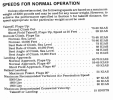
From the 172N POH:

1743291708085.png


1743291775694.png

1743291853745.png

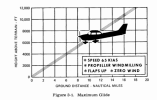
Now, the flaps-up stall is 50 knots. The recommended flaps-up approach speed is 60-70 knots. So an approach at 60 knots is only 1.2 VSO, yet it's within the recommended range. Since it is below the 65 knot best glide speed, that airplane will sink faster and descend more steeply, as its AOA is higher than ideal. Slowing the airplane down will make it descend faster, flaps up or down, without slipping at all. I used to teach that in the Champ, which has no flaps. It slips well, but the students needed to see that there are other tools in the toolbox. It was easy to turn a too-high approach into a too-low approach doing that.

Remember that the ASI gets less accurate at higher AoA. Go up and do power-off stalls and watch that airspeed indicator and see what it says at the stall. Might surprise a lot of pilots.

How many pilots are flying at recommended approach speeds anyway? Many are far too fast on final. One sees it all the time.
 
Now, the flaps-up stall is 50 knots. The recommended flaps-up approach speed is 60-70 knots. So an approach at 60 knots is only 1.2 VSO, yet it's within the recommended range.
Vso is 44KCAS…so you’d have to convert 60KIAS to KCAS to get an accurate ratio.
Since it is below the 65 knot best glide speed, that airplane will sink faster and descend more steeply, as its AOA is higher than ideal.
Best glide is also flaps up, so not a relevant comparison, either.
 
Like is explained in the old book “Stick and Rudder”,if you raise the nose and slow down even more,you will descend faster (After a briefly reduced descent rate or even level flight depending how aggressively you go about it).
Aerodynamics are kind of weird concepts to grasp but just remember that you there is 3 kinds of “energy” in an airplane in flight.
-Engine propulsion
-Altitude
-Airspeed
Just pushing the nose over will get you down,but you are putting energy from the altitude department into the airspeed department.It is still there and still needs to be dissipated before you can do a proper landing.Im not sure why I’m even typing this because others before have explained it well but yes,just pushing over and coming down fast is bad technique,nobody wants to be that guy that floats halfway down the runway.
-Hold the proper speed
-Power to idle
-More flaps?
-Slip
-If the above fails,go around.There is no shame in a go around and people hurt perfectly good airplanes and occasionally themselves trying to salvage a bad approach
 
... is it ok to pitch over a little and increase your airspeed slightly about approach speed, to help lose altitude, and then pitch back up close to touch down to get back to approach speed before flaring?
My rule is you can do almost anything you want as long as you know what you're doing. Since you're asking, you don't know, so the answer is NO! But somebody else finding themselves too high in a Cessna 182 with full flaps deployed might know that diving for the numbers will work out perfectly fine because the increase in speed is not much of a penalty due to all the drag of the big windmilling motor and barn-door flaps. For you, work on how to finesse your approach. I didn't see "S" turns on final mentioned yet, so add that to your repertoire.
 
Unless you're in a very draggy airplane or on a very long final (so you have room to get slowed down again), diving at the runway just makes you float farther as you bleed off that excess speed.

In my plane (no flaps and lots of drag) I plan to high on final and always slip, constantly adjusting the amount of slip as needed to hit the target touchdown point.
 
If you’re on final approach and kinda high, is it ok to pitch over a little and increase your airspeed slightly about approach speed, to help lose altitude, and then pitch back up close to touch down to get back to approach speed before flaring?
Engine power allows you to adjust how much energy you have, pitch allows you to allocate it between speed and altitude.

All three represent how much energy you have. High and fast both mean too much energy (reduce power or add drag), low and slow both mean too little (add power). If you're high and slow, pitch down, if you're low and fast, pitch up.

If you're at idle power and still too high, then you'll need to either slip or go around.
Also, how do determine the known rpm settings for different stages? Is it in the POH in some aircraft? I haven’t been able to find it in the one I train in. Or do you just have to find out from experience or someone with experience telling you?
It's mostly given to you by your instructor and/or learned from experience. If your instructor doesn't tell you, I learned a rule of thumb that's pretty close in most small aircraft, that being the 20/16/12 rule: 20"MP or 2000 RPM for level, 16"MP or 1600 RPM for 500 fpm descent, or 12" or 1200 RPM for 1000 fpm descent. Adjust as necessary from there for whatever plane you fly.
 
In a single, I would reduce power a smidge and slip. Management is so much simpler at a constant airspeed (energy stays constant). If that's changing you have NO IDEA where you are.
This. Your best bet if you really want to understand is read Stick and Rudder by Wolfgang Langewiesche. The yoke does NOT control glidepath to any extent, You push forward you go down quicker but also go forward faster and it washes out. Pull back and you go down slower but you move forward slower. To change the glidepath requires ENERGY control. Either you adjust the amount of energy you're putting in (change the power setting) or you make more power required (add drag either flaps, slipping, speedbrakes, etc...).

This is why you're often taught that you pitch for airspeed but adjust power for glidepath. Of course, I like to push the yoke forward when pulling on to the runway and when I hit 60 knots, I'll put the power in and climb :)
 
Back
Top