Primer plunger (piston) leaks fuel

MountainDude

Cleared for Takeoff
PoA Supporter
Joined
Jul 29, 2011
Messages
1,466
Display Name
MountainDude
Home Airfield
KPDX
Cessna 182. Noticed this for the first time. When I pull the plunger out, the shaft is wet with fuel.
Anyone know how serious this is? Any chance it can cause an in-cabin fire?
 
Fuel leak? Of course it’s serious.

O-rings and lubricant are cheap are cheap and

minimal labor.
 
If the primer is in and locked and working, no fuel should be able to flow into the primer cylinder. That said, it's one of those things that is so cheap and easy that you should fix it right now. Buy the kit on spruce (p/n 05-03637).

Fuel selector off, pull plunger out partway, carefully unscrew the thingy. With a rag in one hand to catch any fuel that might drip out, with the other hand, gently and slowly pull the plunger the rest of the way out. You'll probably discover that the o-rings are chewed up. Use a toothpick or your favorite MIL-STD plastic pokey stick to remove the old ones. Rub some of the lubricant between your fingers, then rub some on the o-rings until they look wet. If they look visibly goopy, you put too much on.

While you're at it, take a look under the panel and inspect the lines that run from the firewall to the primer. Make sure they're not kinked or otherwise damaged, because a leak there can dump gas in your lap.

 
Last edited:
One other possibility, the primer nozzles themselves might be clogged. Nowhere for fuel to go, so it slides over the o-rings. Occam's Razor says the o-rings, but operating the plunger should be silky smooth and little resistance pushing in once o-rings are addressed.
 
Thank you guys. Very helpful replies.
 
Fuel leak? Of course it’s serious.

O-rings and lubricant are cheap are cheap and

minimal labor.

Use the part number for thr o-ring. The compound is not the same as a generic aviation o-ring. Unless the primer is hard to push in, the nozzles are not clogged.
 
It’s not a bad idea to leak check Primer Lines on the engine when the

Cowl is off. I find quite a few broken on putting fuel ON the engine.

Most often on Piper’s that use copper lines.
 
One other possibility, the primer nozzles themselves might be clogged. Nowhere for fuel to go, so it slides over the o-rings. Occam's Razor says the o-rings,
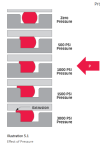
If it "slides over the o-rings," those o-rings are shot. O-rings work because pressure against them forces them tighter into the gap between piston and cylinder, sealing it tighter.
1753723138411.png

Use the part number for thr o-ring. The compound is not the same as a generic aviation o-ring.
MS29513-012. There are two common compounds, both ancient (like WW2 vintage), used in aircraft systems. MS29513 is for fuels, MS28775 is for hydraulics. MS28778 is for static hydraulic seals. Cessna, when they went back to producing the 172/182/206, used some more modern compounds that last better.
Unless the primer is hard to push in, the nozzles are not clogged.
The nozzles could be coked up so that they are not spinning the fuel inside them so that it spreads into an atomized fan on exit; they'll just shoot a straight stream that makes the engine harder to start. I have fixed numerous hard-start problems just by installing new nozzles.

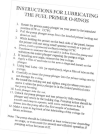
I never found any lubricant that didn't eventually gum up and make the primer sticky. I had the best service by cleaning out all old lube from the primer bore using acetone (nothing else will dissolve it) and just installing new o-rings. The fuel itself was good lube and didn't gum up. Lubricants don't last and just cause hassles. Look at what Aircraft Spruce says in that "Note" at the end of their instruction page:

1753723866547.png

Is primer repair seen as preventive maintenance OK for the owner to perform?
 
Last edited:
If it "slides over the o-rings," those o-rings are shot. O-rings work because pressure against them forces them tighter into the gap between piston and cylinder, sealing it tighter.
Totally agree. My point was to not just replace the o-rings and be done with it. Excess back pressure could contribute to premature wear.
 
At some point, the primer tube itself may dimensionally change enough that replacement is needed. Of course, replace the o-rings first. If you find you do need to replace the primer assembly now or at a later point, McFarlane recently started selling an approved replacement.
 
That tube is far sturdier than that. We're talking hand pressure here and very little action in thousands of hours, not like the pressures and movements in the brake master cylinders, which use similarly-sized o-rings and pressures of 600 psi or more.
 
Back
Top