
You are using an out of date browser. It may not display this or other websites correctly.
You should upgrade or use an alternative browser.
You should upgrade or use an alternative browser.
Piper SB 1006B !!!!!
- Thread starter Magman
- Start date


Literally: added "remove the wings". Everything else is the same. I will give piper credit for the new format being more readable. It says corrosion is often missed due to insufficient disassembly. I guess pulling the wings off every 7 years solves that, with the side benefit of damaging the main spar attach holes and taking the airplane out of the fleet. Insanity.Whats the difference between revision B and the original SB 1006 and SB 1006A? That inspection has been around since the 90s.
bonefishpete
Cleared for Takeoff
- Joined
- Nov 10, 2024
- Messages
- 1,360
- Display Name
- Bonefishpete
Florida plane pull the wings every two years?
Literally: added "remove the wings". Everything else is the same. I will give piper credit for the new format being more readable. It says corrosion is often missed due to insufficient disassembly. I guess pulling the wings off every 7 years solves that, with the side benefit of damaging the main spar attach holes and taking the airplane out of the fleet. Insanity.
Am I reading that right?

luvflyin
Touchdown! Greaser!
- Joined
- May 8, 2015
- Messages
- 17,444
- Location
- Santa Barbara, CA
- Display Name
- Luvflyin
- Home Airfield
- KVUO
I think I would be tempted to drain the tanks before removing the wings.Step 1 . Identify chart
Step 2. Remove wings
Step 3. Drain fuel tanks
Step 4. Inspect
Really! Hmmmmm!
I believe they also added a TIS to the equation and salt laden environment requirement, plus the wing removal. As to removing the wings, it states if you recently removed the wings for a different bulletin, wing removal not required. My guess with the added spar inspections/replacements being done they have found the original 7 year requirement was a not sufficient benchmark for the fleet on several levels.Everything else is the same.
- Joined
- May 15, 2020
- Messages
- 7,764
- Display Name
- Ernie
- Home Airfield
- C81
I like how they say don't drive the bolts out. But also don't unscrew them out.
Literally: added "remove the wings". Everything else is the same. I will give piper credit for the new format being more readable. It says corrosion is often missed due to insufficient disassembly. I guess pulling the wings off every 7 years solves that, with the side benefit of damaging the main spar attach holes and taking the airplane out of the fleet. Insanity.
If they changed the fastener to something like a binding barrel, the chances of damage from threads would decrease. But I still wouldn't want to do this.

Doc Holliday
En-Route
Many of these PA28's have reached the end of their service life and then some. Years of cheap owners, parked outside and paper annuals have taken their toll.
IF the SB was done as requested on ALL PA28's I suspect more than half the active fleet would disappear. This is the reality of aging aircraft.
IF the SB was done as requested on ALL PA28's I suspect more than half the active fleet would disappear. This is the reality of aging aircraft.
They may well join Bellanca’s, Culver’s and wood wing Mooneys.
It is ironic that we have much better NDI and inexpensive scopes that
a Bulletin this intrusive is published. Seems like it’s the other way around
for the engine.
Perhaps some Legal Eagles will comment on the likelihood of a Tech
being served because they did not do the SB on an Annual or even
a Prebuy.
Why? Its not a regulatory required inspection.the likelihood of a Tech being served because they did not do the SB on an Annual or even a Prebuy.
bonefishpete
Cleared for Takeoff
- Joined
- Nov 10, 2024
- Messages
- 1,360
- Display Name
- Bonefishpete
NM

Brad Smith
En-Route
- Joined
- Nov 26, 2017
- Messages
- 3,575
- Display Name
- Brad Smith
I helped pull the wings off a 140 about ten years ago. It's not exactly rocket science, but the shop will convince the owner it's $10,000 job.

focal_plane
Pre-takeoff checklist
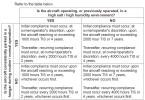
Besides the "remove wings" in step 2, there is also a table that I don't believe appears in the inital Rev and Rev A. Words "at owner/operator's discretion" are interesting.

- Joined
- Mar 2, 2005
- Messages
- 16,628
- Location
- Southeast Tennessee
- Display Name
- This page intentionally left blank
I park my plane in a hangar, I’m good! Wings ain’t gonna fall off!Besides the "remove wings" in step 2, there is also a table that I don't believe appears in the inital Rev and Rev A. Words "at owner/operator's discretion" are interesting.
View attachment 151523

Half Fast
Touchdown! Greaser!
- Joined
- May 7, 2016
- Messages
- 21,187
- Location
- Central Florida
- Display Name
- Half Fast
- Home Airfield
- KGIF
Every day I become just a little more happy that I bought a Musketeer instead of a Cherokee.

dfw11411
Pre-takeoff checklist
- Joined
- Oct 6, 2019
- Messages
- 166
- Display Name
- dfw11411
If it's not in a salt/humid environment and always hangared it says this:
"Initial compliance must occur, at owner/operator's discretion, upon the aircraft reaching or exceeding 2000 hour TIS or 7 years."
May I interpret this to mean I don't have to do anything? If that's correct, why use the word "must"? My A&P will have the final say, but I'm just confused.
"Initial compliance must occur, at owner/operator's discretion, upon the aircraft reaching or exceeding 2000 hour TIS or 7 years."
May I interpret this to mean I don't have to do anything? If that's correct, why use the word "must"? My A&P will have the final say, but I'm just confused.
Half Fast
Touchdown! Greaser!
- Joined
- May 7, 2016
- Messages
- 21,187
- Location
- Central Florida
- Display Name
- Half Fast
- Home Airfield
- KGIF
If it's not in a salt/humid environment and always hangared it says this:
"Initial compliance must occur, at owner/operator's discretion, upon the aircraft reaching or exceeding 2000 hour TIS or 7 years."
May I interpret this to mean I don't have to do anything? If that's correct, why use the word "must"? My A&P will have the final say, but I'm just confused.
The “discretion” is between 2000 hours and 7 years. Compliance is a must but the owner may choose when it’s required.
And it’s a “must” to make the Piper lawyers happy. Unless there’s an associated AD it’s not mandatory for part 91, but if you don’t comply and crash, Piper will try to use a mandatory SB as a courtroom defense.
I am interested to talk to my ia about this. The shop maintains an all pa28 flight school fleet, most of which are in the 10k hour neighborhood. Commercial use, so SB's are required. They're going to get real good at pulling wings.
focal_plane
Pre-takeoff checklist
That is one interpretation. It is a poorly written "requirement" that could be interpreted differently.The “discretion” is between 2000 hours and 7 years. Compliance is a must but the owner may choose when it’s required.
No. Your discretion is to choose either the 2000 TIS or 7 years.May I interpret this to mean I don't have to do anything?
Doubtful. While I have seen service bulletins brought up in similar discussions, without any context or standard behind their use, its usually a moot point. If it wasn't then in every accident legal actions there would lists of every service bulletin or letter that wasn't performed.but if you don’t comply and crash, Piper will try to use a mandatory SB as a courtroom defense.
FYI: Only if the maintenance program they use requires the compliance of SBs, etc. Not all do.Commercial use, so SB's are required.
focal_plane
Pre-takeoff checklist
But is almost certainly the correct interpretation from what Piper intended. The language whichever occurs first is missing from the discretion statement.That is one interpretation. It is a poorly written "requirement" that could be interpreted differently.
Perhaps look at it this way.The original SB was a singular 7 year limit. Same with Rev A. In Rev B, they add a TIS limit but give the initial compliance a discretion option for hangared aircraft, but no such option to unhangared aircraft. So the difference is an owner of a hangared aircraft can elect 7 years even if he flies more than 2000 hours in that 7 years.The language whichever occurs first is missing from the discretion statement.

hindsight2020
Final Approach
Components never designed for that kind of repetitive perturbation, in a boutique fleet environment with zero of the OEM recall/consumer protection assurances automobile owners take for granted. Glad to be out of that morass. Seeking comfort in "SB" distinctions also strikes me as "she can't get pregnant if she's on top" cope lol.
Last I checked not too many recalls or consumer issues on 60+ year old auto designs out there. And since the OEM recommended this inspection almost 30 years ago, why should they be responsible if you didnt perform that inspection? Curious had you done SB 1006 on your aircraft before you gave up?with zero of the OEM recall/consumer protection assurances automobile owners take for granted
Beaker’s Flyin
Pre-Flight
- Joined
- Feb 24, 2021
- Messages
- 71
- Display Name
- Beaker’s Flyin
I see this as a sign to NOT buy that fairly decent 60’s vintage Cherokee 6…
bonefishpete
Cleared for Takeoff
- Joined
- Nov 10, 2024
- Messages
- 1,360
- Display Name
- Bonefishpete
Lately seen a few local Warriors for sale at what id consider a discount from a similar C172’s.I see this as a sign to NOT buy that fairly decent 60’s vintage Cherokee 6…
Or use it as a sign or reminder to do your due diligence with any aircraft you wish to buy regardless the model? Even Cessna and other brands have bulletins that could lead to similar situations. However, you can also use those bulletins to your advantage with that "decent 6" by listing them for the seller as a negotiating point and see where it leads you?I see this as a sign to NOT buy that fairly decent 60’s vintage Cherokee 6…

RyanShort1
Final Approach
- Joined
- Feb 18, 2010
- Messages
- 6,480
- Location
- Dallas, Texas
- Display Name
- RyanShort1
- Home Airfield
- KRBD
Why? If you have the money to operate a 6 with any kind of frequency, they're great planes, and most people don't fly enough to really strain them. I'd just budget for it and enjoy it.I see this as a sign to NOT buy that fairly decent 60’s vintage Cherokee 6…
Of course, some people just need an excuse... so maybe that's for the best for the rest of us.
bonefishpete
Cleared for Takeoff
- Joined
- Nov 10, 2024
- Messages
- 1,360
- Display Name
- Bonefishpete
Pretty hard when due diligence means taking wings off to actually get in the places to inspect. Wing bolts and drilled spars. Having said that I would fly a Cherokee any time just not in thunderstorms. Couple hours in a straight tail Lance. Best model Cherokee Six.Or use it as a sign or reminder to do your due diligence with any aircraft you wish to buy regardless the model? Even Cessna and other brands have bulletins that could lead to similar situations. However, you can also use those bulletins to your advantage with that "decent 6" by listing them for the seller as a negotiating point and see where it leads you?
I tend to stick to the "reasonable" side of the definition. No disassembly needed. By simply researching the bulletins and inspection requirements of a particular model you can develop a list to discuss with a seller. If they are serious about selling, you can usually work out a way to reasonably determine where the aircraft stands in relation to your list or negotiate a discount value based on that list. And given the recent history of select Pipers that method works a lot better vs not addressing those topics or issues.Pretty hard when due diligence means taking wings off to actually get in the places to inspect. Wing bolts and drilled spars.