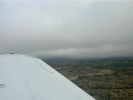
PA-28-180 3 Fatalities Mertzon Texas 11-26-23

I looked at some flightaware track from earlier in the day, flight to I 10. It didn't look good. They were based just 15 miles from here. Weather was crappy that day.
 
I’m confused. The news articles and the ASN link there say this happened at 11:00 on Sunday morning, but the FlightAware link in the same ASN page shows a flight that terminated in the same area as the reported crash location on Saturday evening (0030z Sunday). Are these two different flights?

Either way, the weather was much worse in that area on Saturday night than on Sunday morning.
 
From flightaware.com history it looks like most flights are vfr. so this pilot was not instrument rated and got caught in bad weather I assume. it's terrible.
 
Amazing how little information their is on the accident. My wife and I owned this airplane for 35 years and sold it to Jeremy in April. He got a ferry pilot to fly him from Fredericksburg Va to San Antonio. He had 0 time when he bought it. from April until October he worked on getting his private license. His first trip was to NM to visit his in-laws in October. He flew it very little until he flew back to NM again for thanksgiving. Can anyone tell me what the weather conditions were Sat night? I know the report says Sun am but that's when they discovered the wreck.
 
It was cold and rainy, surface wind out of north and overriding clouds from west. At least in Central TX, but weather was pretty similar from San Angelo to here. His last flight aware track from NM to ft Stockton looked like scud running along I 10 .
 
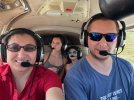
Thanks guys. Now I understand what happened. Its unfortunate that such a poor decision and not waiting for the weather to get a little better cost three people their lives and left another child an orphan. This is a picture he sent me from his first family flight in October.1702003166815.jpeg
 
Thanks guys. Now I understand what happened. Its unfortunate that such a poor decision and not waiting for the weather to get a little better cost three people their lives and left another child an orphan. This is a picture he sent me from his first family flight in October.

Thanks guys. Now I understand what happened. Its unfortunate that such a poor decision and not waiting for the weather to get a little better cost three people their lives and left another child an orphan. This is a picture he sent me from his first family flight in October
I looked at this plane back in March 2023 to buy… I’d always regretted not moving forward with the purchase as it was a really clean plane. I ended up buying a 140 this year but 63W was always in my mind. I was going thru my photos today and I saw a photo of it and looked up the tail number… it was shocking to see the tragic incident. My heart goes out to these people.

Here’s a photo of 63W that I’d takenIMG_6568.png
 
I’ve definitely see that picture before. As a newer pilot, I don’t think we are taught the dangers of night flying fully, or maybe it is discussed and it’s not comprehended fully due to information overload. I think Canada with their night endorsement has something of value there.

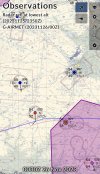
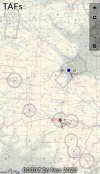
Now the forecast weather photos above of IFR is not good, but the clouds of almost 3000’ are fine. Did the pilot not see all of the relevant data? Did he only look for the cloud layers? If conditions are IFR why is he filing for 10,000’ (I don’t think he’s busting thru layers to get to 10,000’, is he?)? I don’t think this was necessarily an overconfidence issue, given he turned around and landed is demonstrating he has a personal limitation and wanted to land, I’m guessing one of the passengers had a need to be home and the pilot being inexperienced was faced with the difficult decision of to pitch a tent or continue onwards.

Regardless, it’s very sad and I hope they RIP.
 
The passengers were his wife and ten year old daughter. Eight months and 97 hours passed between his first flight and death of all onboard, which occurred at night in IMC. Eighteen minutes elapsed between the final takeoff and crash, which was preceeded by hours of scud running.

Senseless beyond comprehension.

While at E41, the pilot purchased 24.39 gallons of 100 low-lead fuel and then delayed the departure for about 2 hours and 38 minutes for unknown reasons. ADS-B data showed the airplane departed E41 about 1818 during nighttime conditions. According to the US Naval Observatory Astronomical Applications Department, official sunset for the Mertzon, Texas, area was 1741. The airplane departed to the north then turned right and climbed to 3,900 ft momentarily then descended and flew between 3,700 and 3,500 ft. Around 1829, the airplane turned right to the southeast for about 7 miles while flying between 3,500 and 3,000 ft. The airplane then turned left and began a shallow left turn while descending and accelerating until the last 4 seconds of flight, when the left turn rate increased. The last ADS-B data point recorded the airplane, about 2,200 ft msl , about 281 ft northeast of the accident site, as shown

 
Now the forecast weather photos above of IFR is not good, but the clouds of almost 3000’ are fine.
The elevation of the Fort Stockton airport is 3,011'. The elevation at Reagan County Airport, near the crash site, is 2,705'.
 
  • Like
Reactions: Tai
There's a "text messages" file in the docket (which I *can* access), and it includes this photo, which was apparently taken earlier in the day, since the final takeoff was reported to be in night conditions.
1745508591655.png
 
Don’t worry, I am highly experienced with 97 hours. Besides scud running at night is way overrated on the difficulty scale!
 
Unfathomably poor ADM. Hard to feel anything but contempt for this guy after he launched into that with his family onboard.
 
Not sure how that's relevant. The cloud reports are AGL.
I’m not sure from where clouds at 3,000’ AGL is being inferred. Most of the docket points to layers from 700’ to 1,600’ AGL except back at Las Cruces, which was the origin of the leg prior to the accident leg. The only reference to 3,000 is that MVFR categorical conditions prevailed for the majority of the route, which implies ceilings anywhere from 1,000 to 3,000’ AGL.
 
  • Like
Reactions: Tai
I’m not sure from where clouds at 3,000’ AGL is being inferred.
Not sure why you're replying to me--I was questioning why someone else was posting field elevations in response to someone else talking about 3000' clouds, so this telephone game is getting really long and confusing.

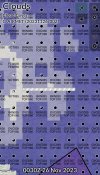
But I'm guessing people may be talking at 3000' clouds because of the cloud coverage image you posted here that shows the deck at ~3000': https://pilotsofamerica.com/communi...es-mertzon-texas-11-26-23.145312/post-3463447
 
Last edited:
Not sure how that's relevant. The cloud reports are AGL.
I was replying about the comment regarding the enroute altitude chosen by the pilot, and my quote of his post didn't make much sense. Sorry about that.
 
Not sure why you're replying to me--I was questioning why someone else was posting field elevations in response to someone else talking about 3000' clouds, so this telephone game is getting really long and confusing.

But I'm guessing people may be talking at 3000' clouds because of the cloud coverage image you posted here that shows the deck at ~3000': https://pilotsofamerica.com/communi...es-mertzon-texas-11-26-23.145312/post-3463447
‍♂️
Sorry, was agreeing. :) You were just the last in that particular chain and I should have quoted someone higher upthread.

As far as what I posted back in 2023, those cloud depictions are MSL, so it adds to the confusion. With most of the terrain in the mid 2000’s out there, that puts bases in the 500-1500 AGL range, which correlates with the NTSB report.
 
20 hours for night rating up here in Canada.

10 dual min, 5 hours dual with 2 hours XC min, 5 hours solo XC. 10 take offs and landings. Plus 10 hours of dual instruments.

My 2nd lesson and first for me to land it myself the door popped open. And with the gas strut my instructor wanted to make sure the door stays closed at lower speed cause we know it can yaw the plane evens taxing if you move the door. So he was like it’s all up to you now. Good part, got the emergency lesson done that night in 0.3 on the Hobbs. Bad thing they don’t permit take off after 10:30 so we were done once landed.

My first solo night XC realize our AI was slightly wonky taking off into a black hole. No problem, partial panel using the turn and bank till level off and on course.

We also under dual flew into some clouds one time. Instructor sat there and let me make the decision. 180 and try again 20 minutes later once clouds cleared off. I never go for a night flight now if I am not totally sure I can fly in the clear without risk. Those clouds you can’t really see in the dark areas till you are in it. We only know we were in it cause of the reflected light.

Flying over just bit North of the Toronto area you are always on a moonless day into essentially pitch black. It really makes you think thrice about if that engine is going to quit on you. You have no real reference where it is possible to try for a landing.

Not sure how folks down south are taught on black hole effects and night flight requirements but it is a rating here, and a semi separate currency requirements. You can just do night currency and it’ll cover your day requirements but not the other way around.
We kinda let folks do what they think is best and let God sort it out… Compared to you guys.
 
We kinda let folks do what they think is best and let God sort it out… Compared to you guys.
And as a reference point, this pilot apparently had 4.5 hours of night time. Given the 3-hour dual requirement to get a private pilot license, he had at most 1.5 hours of night PIC and potentially 0 hours of night PIC, with a similar range for night cross-country PIC. Even without clouds, flying across rural territory at night wasn’t something he had practiced much, or at all, before this flight.

My personal minimums for night are basically to file IFR if I can’t see the stars in every direction. I don’t know a better way to maintain VFR cloud separation in the dark.
Yeah. Risk management is inherently individualized.

I don’t fly night cross country without an IFR flight plan. I’m making pearls these days compared to the youthful version of myself.
 
Back
Top