Except even at the experimental level the aircraft must be "in a condition for safe operation" just as it is stated in the condition inspection sign off. Now whether this buyer did not comply with that requirement on the PT6 by ignorance or intent, at a minimum since he should at least be held accountable for that misstep.As long as it didn’t pose a risk to people on the ground, he is allowed to build it however he chooses.

You are using an out of date browser. It may not display this or other websites correctly.
You should upgrade or use an alternative browser.
You should upgrade or use an alternative browser.
NTSB Says Mike Patey ‘Knowingly’ Installed Unserviceable Engine
- Thread starter MountainDude
- Start date

wanttaja
Final Approach
- Joined
- Jun 7, 2008
- Messages
- 5,667
- Location
- "War-Torn" Portland
- Display Name
- Ron Wanttaja
- Home Airfield
- Twin Oaks Airpark
Considering about half of Lancair IV accidents kill the occupants, that's better enforcement than even the FAA can manage.Who loses their ticket if you build and "fly" experimental garbage? If the answer is "no one," then that's a problem IMO.
The experimental category exists to allow people to, well, experiment. The FAA knows this can have dire consequences. There are three potential outcomes of a "failed" experiment:
1. Experimental components fail, no one is injured.
2. Experimental components fail, occupants are injured or killed
3. Experimental components fail, persons on the ground are killed or injured
#1 describes the Patey case. Doubt the FAA will care.
#2 describes the more-typical Lancair IV accident. Situation is self-governing; the aircraft is probably damaged too badly to ever fly again.
#3 is what the FAA wants to avoid at all costs. In reality, the occupants of the aircraft are usually killed in these cases, so the FAA doesn't really have someone to come after. In these cases, personal injury lawsuits by the persons on the ground are likely to be a large impediment.
Instead of installing that (shudder) "unserviceable" engine, Patey would have been perfectly within his rights to drive a Corvette into his hangar and install its engine into his Lancair. Any person with an EAB has to make the decision as to whether mechanical actions they take impose an acceptable level or risk...but, of course, the "acceptable" aspect is from the owner's POV, not the FAA's. No one wants the FAA poking its nose into day-to-day homebuilt maintenance decisions, but there are people who look on their homebuilts with very rose-colored glasses....
About 25% of all homebuilt accidents are due to mechanical issues (some driven by builder or maintainer error) vs. about 7% of Cessna 172 accidents. Yes, there are more risks in flying a homebuilt. With Patey flying the airplane to the museum for (supposedly) non-flying display, he bet there was another ~10 hours left in that non-serviceable engine. Not a bad bet. Just didn't come true this time.
Ron Wanttaja
Lindberg
Final Approach
Will this one didn't die, despite what appears might have been reckless behavior. Perhaps the FAA should treat him accordingly.Considering about half of Lancair IV accidents kill the occupants, that's better enforcement than even the FAA can manage.

I directly quoted the ntsb report. It might help if you read it before forming an opinion.I hate being a YouTuber apologist. The NTSB knew there was 9000+ hours on the engine. 3500 since last overhaul. And so many hours since hot section. So I don't think the full logs consisted of one page.
I think Patey had the full logs from 1987.
However I read it as he only gave the ntsb a single page of the logbook which stated what he did since he took ownership. Which sounds like it was essentially an oil change but not inspecting the gearbox.
I’d love to know how he got the engine installed and then got past this in 12 days……
The responsible Flight Standards Office where the aircraft is based must be notified, and its response received in writing, before flying this aircraft after incorporation of a major change as defined by § 21.93 that was not presented to the FAA during the application process for the current airworthiness certificate. This notice gives the FAA the opportunity to reevaluate the aircraft operating limitations in relation to the major change to determine sufficiency or amend operating limitations if necessary. Compliance with § 91.319(b) by re-entry of Phase I is required after any major change. Notwithstanding any other operating limitation, prior to showing compliance with § 91.319(b) after a major change, all operations must be conducted under day visual flight rules (VFR) conditions and over an area described by § 91.305.

- Joined
- Jun 13, 2008
- Messages
- 9,173
- Location
- Marietta, GA
- Display Name
- Drake the Outlaw
- Home Airfield
- Cartersville, GA
A) Was this a "major change"? B) If it was, what were the operating limitations for the aircraft? There are Op Limits that allow you to put the airplane back in Phase 1 with a letter to the FAA and take it back out after performing the testing. I.E. No gatekeeper other than yourself and your ability to put a stamp on an envelope and fill out a logbook.I’d love to know how he got the engine installed and then got past this in 12 days……
Did you read what I quoted? It explains the process. The first sentence disagrees with your post.A) Was this a "major change"? B) If it was, what were the operating limitations for the aircraft? There are Op Limits that allow you to put the airplane back in Phase 1 with a letter to the FAA and take it back out after performing the testing. I.E. No gatekeeper other than yourself and your ability to put a stamp on an envelope and fill out a logbook.
It’s my understanding that even replacing an engine with the same type is considered a major change. Not sure how you could argue switching a piston with a turbine would not be.

- Joined
- Apr 18, 2013
- Messages
- 5,324
- Location
- The independent worm saloon
- Display Name
- Mantis Toboggan, MD
What's the source of that quote?Did you read what I quoted? It explains the process. The first sentence disagrees with your post.
Nauga,
in the blind
- Joined
- May 15, 2020
- Messages
- 7,770
- Display Name
- Ernie
- Home Airfield
- C81
Except it wasn't a direct quote. I did read the report. My opinion is that the one page logbook obtained from the operator (Patey) was detailing everything he did on the engine after reciept of the engine. Or at least what that's what he was willing to fork over.I directly quoted the ntsb report. It might help if you read it before forming an opinion.
The purchase document states the engine to not be serviceable. I suspect there's more damning info in the 35 years of logs the ntsb didn't see. Like a log entry stating it's not serviceable. Patey can claim oversight or dyslexia not reading the fine print on the purchase agreement. But cant explain operating a red tag. Unless he claims no prior logs.
In his video he said there was a missed ad buried in the logs from years prior.
A recently issued operating limitation document.What's the source of that quote?
Nauga,
in the blind
- Joined
- Jun 13, 2008
- Messages
- 9,173
- Location
- Marietta, GA
- Display Name
- Drake the Outlaw
- Home Airfield
- Cartersville, GA
Your understanding is wrong.It’s my understanding that even replacing an engine with the same type is considered a major change.
wanttaja
Final Approach
- Joined
- Jun 7, 2008
- Messages
- 5,667
- Location
- "War-Torn" Portland
- Display Name
- Ron Wanttaja
- Home Airfield
- Twin Oaks Airpark
And even if he wasn't (and he is), all that's needed is a test period. Replacement of an engine with the same model probably wouldn't require more than a five-hour Phase 1. That's one afternoon.Your understanding is wrong.
Ron Wanttaja
- Joined
- Apr 18, 2013
- Messages
- 5,324
- Location
- The independent worm saloon
- Display Name
- Mantis Toboggan, MD
Your quote reads like the oplim boilerplate for experimental/exhibition, not experimental/amateur built. See FAA order 8130.2.A recently issued operating limitation document.
FAA concurrence per the amateur built oplims in the FAA order is only required for test area changes.
Nauga,
papered
Last edited:
Lindberg
Final Approach
Wait, so you're saying that either Patey didn't get logs for an engine that he thought was serviceable, or he did get those logs, didn't read them, and then hid them from the ntsb. Is that it? And you think they put the fact that the engine is unserviceable in fine print? And Patey thought he was getting a great used engine for the price of a core?Except it wasn't a direct quote. I did read the report. My opinion is that the one page logbook obtained from the operator (Patey) was detailing everything he did on the engine after reciept of the engine. Or at least what that's what he was willing to fork over.
The purchase document states the engine to not be serviceable. I suspect there's more damning info in the 35 years of logs the ntsb didn't see. Like a log entry stating it's not serviceable. Patey can claim oversight or dyslexia not reading the fine print on the purchase agreement. But cant explain operating a red tag. Unless he claims no prior logs.
Do you still believe him?In his video he said there was a missed ad buried in the logs from years prior.
bonefishpete
Cleared for Takeoff
- Joined
- Nov 10, 2024
- Messages
- 1,362
- Display Name
- Bonefishpete
I’m not defending Patey’s actions, actually far from it, but this was an experimental aircraft. As long as it didn’t pose a risk to people on the ground, he is allowed to build it however he chooses. After all, the purpose of experimental aircraft is to allow for “experimentation,” despite the fact that most experimentals these days are sold as lower-cost alternative to certified aircraft.
That RV that crashed into a warehouse in California and injured numerous workers?
I believe the FAA will clamp down on experimental aircraft if these accidents keep up.
- Joined
- Jun 13, 2008
- Messages
- 9,173
- Location
- Marietta, GA
- Display Name
- Drake the Outlaw
- Home Airfield
- Cartersville, GA
I don't. Experimental accident rates are down.That RV that crashed into a warehouse in California and injured numerous workers?
I believe the FAA will clamp down on experimental aircraft if these accidents keep up.
bonefishpete
Cleared for Takeoff
- Joined
- Nov 10, 2024
- Messages
- 1,362
- Display Name
- Bonefishpete
Compared to certified aircraft I meant to say.I don't. Experimental accident rates are down.

Experimental aircraft, particularly homebuilts, consistently show a higher accident rate than the certified general aviation (GA) fleet, though recent trends show significant improvements with an all-time low in fatal accidents in FY2024,

Kenny Phillips
Final Approach
- Joined
- Jul 29, 2018
- Messages
- 6,572
- Display Name
- Kenny Phillips
One can (and should) specify conditions when donating anything.How did he know it would never be flown again? Did he plan to tell them after flying it in that it wasn't actually airworthy?
- Joined
- Jun 13, 2008
- Messages
- 9,173
- Location
- Marietta, GA
- Display Name
- Drake the Outlaw
- Home Airfield
- Cartersville, GA
The data has to be normalized by use case. Aerobatics, STOL, tailwheel, all that stuff. Then compare the numbers. Experimental is still likely to be slightly higher, but the gross numbers are a bit of a misrepresentation. But (reading what the EAA mag pushes), the FAA is satisfied with the trends in experimental safety...Compared to certified aircraft I meant to say.
View attachment 144389
Experimental aircraft, particularly homebuilts, consistently show a higher accident rate than the certified general aviation (GA) fleet, though recent trends show significant improvements with an all-time low in fatal accidents in FY2024,

Bacho
Line Up and Wait
With Patey flying the airplane to the museum for (supposedly) non-flying display, he bet there was another ~10 hours left in that non-serviceable engine. Not a bad bet. Just didn't come true this time.
Ron Wanttaja
I don't recall seeing anything that the plane was to be donated prior to this event.
In his videos he talks about weighing the options between repair and donation and he says he decides he has other things he would like to pursue.

rwellner98
Pattern Altitude
- Joined
- Jul 26, 2009
- Messages
- 1,662
- Display Name
- rw2
If you don't want do it, that's fine. But "find all that time"... I dunno. If I have a friend in the cockpit, we're having a conversation. Talking to a camera is no different. At least for me, I enjoy doing the research before a flight, learning some things about what I'm flying over and where I'm going, and sharing that with viewers. It's not a distraction from the flight, it adds to it.I fly and find I am relaxing cause it requires concentration. Always found it hard to understand people who film themselves and find all that time to talk about stuff.
Hard to say, but the comments are definitely dominated by pilots.I also don’t get how they get so many views. I wonder if it’s mostly other pilots? Or non pilots? I’d rather fly than watch someone else does it.
wanttaja
Final Approach
- Joined
- Jun 7, 2008
- Messages
- 5,667
- Location
- "War-Torn" Portland
- Display Name
- Ron Wanttaja
- Home Airfield
- Twin Oaks Airpark
All sorts of factors involved in that. Rate estimates based on hourly use depend on the FAA General Aviation Survey. This means that, if the same proportion of the fleet of RV-10s have accidents as Cessna 172s, the RV-10's accident rate will be twice the 172s, since the FAA says the RV-10 only flies 50 hours a year vs. 110 hours a year for the 172.Experimental aircraft, particularly homebuilts, consistently show a higher accident rate than the certified general aviation (GA) fleet, though recent trends show significant improvements with an all-time low in fatal accidents in FY2024,
Another factor is use. About 90% of EAB flights are recreational, vs. less than 50% of the overall GA fleet.
Finally, there's the identification of "homebuilt" aircraft in the FAA registry. About 5,000 traditional homebuilts are not identified as such in the registry; their records do not list their certification type. That's almost 20% of the "official" EAB fleet. They count as a homebuilt if they crash...but aren't counted as a homebuilt when the total fleet size is determined.
Understand, too, that the EAA/FAA tracking of the number of fatal accidents involve ALL aircraft with non-Standard airworthiness, not just EAB. Thus many warbird crashes count as "homebuilt", as do Special Light Sport and unregistered ultralights.
I agree that homebuilts have a higher accident rate, due, to a large extent, the use of non-standard engines. But if you assume an RV owner flies as much per year as a 172 owner, the RVs actually have a better accident rate.
Homebuilts, of course, have an elevated accident rate during their initial test period. About 3% of new homebuilts have an accident in the first forty hours. If these new aircraft are eliminated, I compute that homebuilts have an accident rate about 15% higher than overall. Not good, but it beats the 9x higher estimate provided by some sources.
Ron Wanttaja
wanttaja
Final Approach
- Joined
- Jun 7, 2008
- Messages
- 5,667
- Location
- "War-Torn" Portland
- Display Name
- Ron Wanttaja
- Home Airfield
- Twin Oaks Airpark
Previous comments in this thread said that it was on its way to the EAA Museum.I don't recall seeing anything that the plane was to be donated prior to this event.
[Edit] OK, Your video shows I was wrong.
Ron Wanttaja
Last edited:

Nick Geber
Pre-takeoff checklist
- Joined
- Oct 10, 2022
- Messages
- 220
- Display Name
- NIckG
- Home Airfield
- KHND
I thought that was Rebuild Rescue and Jimmy’s World MO….For us piston guys, this would be like buying a red-tagged engine, testing compression, timing mags, changing oil, and heading off across the country. Would you do that???
Bacho
Line Up and Wait
Context on the donation timing.
Last edited:
wanttaja
Final Approach
- Joined
- Jun 7, 2008
- Messages
- 5,667
- Location
- "War-Torn" Portland
- Display Name
- Ron Wanttaja
- Home Airfield
- Twin Oaks Airpark
I don't. Experimental accident rates are down.
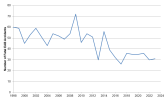
2023 saw about half the fatal EAB accidents vs. 1998. This is in spite of a more than 20% increase in the number of homebuilt aircraft.
Ron Wanttaja

unsafervguy
En-Route
you guy really need to bone up on the regs before you make comments. first, un-serviceable, red tags, what ever do not apply to a EAB. it is up to the operator to determine if it is safe for operation. period. thats the reg. smart to do? that up to the operator.
no, changing engines of the same type is not a major change. do you need to fill out a 337 when you put in a overhauled engine in a certified aircraft? no, if its the same model of engine. same for an experimental. the turbine conversion of that airframe was done years ago, which would cause it to be put back in phase one, but in this case it was nothing more than an engine replacement. they do it every day on airliners with a log book entry.
no, changing engines of the same type is not a major change. do you need to fill out a 337 when you put in a overhauled engine in a certified aircraft? no, if its the same model of engine. same for an experimental. the turbine conversion of that airframe was done years ago, which would cause it to be put back in phase one, but in this case it was nothing more than an engine replacement. they do it every day on airliners with a log book entry.

Lachlan
En-Route
I think it might have been an overlooked ADHD.Patey claims in his video that the issue was an overlooked AD against the gearbox, buried somewhere in the engine paperwork.
MauleSkinner
Touchdown! Greaser!
And while I didn’t read the full NTSB documentation, I don’t see any discussion that indicates the NTSB said that knowingly installing this engine was contrary to any regulation.you guy really need to bone up on the regs before you make comments. first, un-serviceable, red tags, what ever do not apply to a EAB. it is up to the operator to determine if it is safe for operation. period. thats the reg. smart to do? that up to the operator.
But it sure sounds like Patey is back-pedaling on his determination that it was safe for operation.
wanttaja
Final Approach
- Joined
- Jun 7, 2008
- Messages
- 5,667
- Location
- "War-Torn" Portland
- Display Name
- Ron Wanttaja
- Home Airfield
- Twin Oaks Airpark
True, however: AD notices can apply to EAB, depending on how the notice is worded. If it says, "All aircraft," then the requirement includes aircraft with Special airworthiness. Got bit by that about 20 years ago, when an A&P new to my aircraft found an AD note on the magnetos from 1968. Fortunately, it was just an inspection.you guy really need to bone up on the regs before you make comments. first, un-serviceable, red tags, what ever do not apply to a EAB. it is up to the operator to determine if it is safe for operation. period. thats the reg. smart to do? that up to the operator.
Patey says there was an unaccomplished AD notice. Of course, sounds like there were a LOT more problems than that.
BTW, anybody know how much air time he got on the new engine before the failure?
Ron Wanttaja
Are you suggesting that there is no room for criticism of installing a turbine engine that was sold as unserviceable and flying it halfway across the country 8 days later?you guy really need to bone up on the regs before you make comments. first, un-serviceable, red tags, what ever do not apply to a EAB. it is up to the operator to determine if it is safe for operation. period. thats the reg. smart to do? that up to the operator.
no, changing engines of the same type is not a major change. do you need to fill out a 337 when you put in a overhauled engine in a certified aircraft? no, if its the same model of engine. same for an experimental. the turbine conversion of that airframe was done years ago, which would cause it to be put back in phase one, but in this case it was nothing more than an engine replacement. they do it every day on airliners with a log book entry.
I did misunderstand that it was already a turbine conversion. It doesn't change my personal answer to my above question.
Bacho
Line Up and Wait
A bit? I don't know or follow any of the YouTubers (except Bryan....) but they all start low on my Respect-O-Meter. Intentionally building/flying an unairworthy plane for clicks? That gets him to less than zero in my book
The airplane was built prior to any Youtube channel documenting it. There has been little content on his channel of him flying it as well. Nothing points to "just for clicks" IMO.
They considered it so unserviceable that they labeled it as "unserviceable." How much more unserviceable is there than "unserviceable"?
"The purchase document stated that the engine was sold as an unserviceable engine."
Since they didn't tell him what criteria they used to determine it was unserviceable, was it ok for him to decide it wasn't actually unserviceable?

A calendar date driven oil change due will make it unserviceable. We install "unserviceable" engines all the time that are made serviceable after install.
I haven't seen where the nature of the status has been offered, "unserviceable" without any more details doesn't mean much IMO.
Last edited:
Lindberg
Final Approach
So the unserviceable engine magically becomes serviceable when installed in an EAB? What about the corrosion inside and out?first, un-serviceable, red tags, what ever do not apply to a EAB.
unsafervguy
En-Route
as there is no certification requirements for an EAB, ie part 23 does not apply, it is up to the person that signs the condition inspection to determine if a part is "in a condition safe for flight".So the unserviceable engine magically becomes serviceable when installed in an EAB? What about the corrosion inside and out?
unsafervguy
En-Route
no im not, i am saying all this did he comply with the op-limits, was it un-serviceable, ect do not apply to a EAB as there are no certification standards to call it unserviceable by. its up to the person signing the condition inspection. without seeing why they considered it unserviceable, i cannot say if it was or wasn't. lycoming considers an engine run out after tbo and time out, is it, maybe, maybe not. in this case P&W has no legal standing to enforce that it was unservicable for an EAB.Are you suggesting that there is no room for criticism of installing a turbine engine that was sold as unserviceable and flying it halfway across the country 8 days later?
I did misunderstand that it was already a turbine conversion. It doesn't change my personal answer to my above question.
unsafervguy
En-Route
your absolutely right about the AD's, however, from the little info i have seen those parts that failed did not fall in the time frame and part numbers listed in the AD.True, however: AD notices can apply to EAB, depending on how the notice is worded. If it says, "All aircraft," then the requirement includes aircraft with Special airworthiness. Got bit by that about 20 years ago, when an A&P new to my aircraft found an AD note on the magnetos from 1968. Fortunately, it was just an inspection.
Patey says there was an unaccomplished AD notice. Of course, sounds like there were a LOT more problems than that.
BTW, anybody know how much air time he got on the new engine before the failure?
Ron Wanttaja
as to the time question, he left spanish fork ut and made it to wi before it let loose,so a few hours at least.
i have no idea what the book says on inspection times and if there is a life limit on those gears, but i am guessing a total failure of the gear to that extent is very uncommon. could there have been a prop strike in that engines history that went undocumented? possibly, i can't see even a corroded gear failing to that extent, every tooth on it was gone.
Maybe you should read the report and look at the pictures in the docket.no im not, i am saying all this did he comply with the op-limits, was it un-serviceable, ect do not apply to a EAB as there are no certification standards to call it unserviceable by. its up to the person signing the condition inspection. without seeing why they considered it unserviceable, i cannot say if it was or wasn't. lycoming considers an engine run out after tbo and time out, is it, maybe, maybe not. in this case P&W has no legal standing to enforce that it was unservicable for an EAB.
unsafervguy
En-Route
i have, and did you notice they when on and on about corrosion, and missing paint. but not one word about any metallurgical analysis of why the gears failed. the bottom line is those gears failed. that does not happen very often on a pt-6. the report leaves a lot more questions than it answers. pt-6 engines routinely go well beyond tbo. that engine was not at tbo. granted it was close, but not there. it was only 1800 hr out of hot section, thats not a lot. everybody is rushing to throw patey under the bus, but nobody has answered the question of why did those gears fail, i truly doubt it was corrosion that caused a total structural failure of the gear set.Maybe you should read the report and look at the pictures in the docket.
I would hope “Experimental” doesn’t excuse negligence either on the part of the manufactures, mechanics, or pilots. Experimental should not be a free ticket to be able “ build it however he chooses. Any time an aircraft starts, taxis, of flys it poses a risk to people on the ground. Guess on an uninhabited island strip, in the middle of the Pacific, one would be exempt, somewhat.
Last edited:
wanttaja
Final Approach
- Joined
- Jun 7, 2008
- Messages
- 5,667
- Location
- "War-Torn" Portland
- Display Name
- Ron Wanttaja
- Home Airfield
- Twin Oaks Airpark
I think you rarely see deliberate negligence. What you DO see is an optimistic viewpoint, with the inner belief that "it'll be fine."I would hope “Experimental” doesn’t excuse negligence either on the part of the manufactures, mechanics, or pilots. Experimental should not be a free ticket to be able “ build it however he chooses. Any time an aircraft starts, taxis, of flys it poses a risk to people on the ground. Guess on an uninhabited island strip, in the middle of the Pacific, one would be exempt, somewhat.
Not that it doesn't happen. We had a guy in our EAA chapter who lost the engine on his homebuilt and crash-landed it near the airport. No one hurt, but the FAA found the guy didn't have a medical (this was ~30 years ago) and there were reasons he shouldn't be flying.
Not sure what happened, FAA-wise, but he started building a replacement aircraft. But it was like he had a lot of anger built up. He was building it in his hangar, and if something went wrong, he waled on the airplane with whatever tool he was holding.
Fortunately, he passed away before completing the aircraft.
In any case, there aren't many case of the public being injured when a homebuilt has a mechanical issue. Don't recall any, in my analysis, though it wasn't something I was tracking and may have missed some cases.
Ron Wanttaja