Even post-Chevron, I suspect a court would give considerable deference to the FAA.
Chevron, as I've very recently learned, does not apply to federal regulations.
It applies to federal STATUTES.
Because the FAA is a regulatory agency, and not a statutory agency, Chevron does not apply to the FAA.
However, the FAA enjoys something similar to Chevron, known as Auer deference, or Seminole Rock deference. Auer deference requires federal courts to accept a federal agency's reasonable interpretation of its own ambiguous regulation.
This is why nothing appeared to change on the FAA/14 CFR side of things once Chevron deference was overturned.
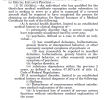
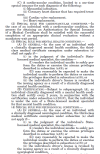
Congress allowed for medical volunteer pilots to be compensated for fuel expenses in Section 821 of the FAA Reauthorization Act of 2012. The FAA has been ignoring that, claiming authority to regulate medical flight volunteer organizations as airlines, based on an improper reading of federal law and its own regulations.
There are currently two lawsuits filed against the FAA. The first, Wings of Mercy v. FAA, was filed in the U.S. Court of Appeals for the Sixth Circuit. In Loper Bright Enters v. Raimondo, the Supreme Court eliminated Chrevron deference and replaced it with a rule requiring agencies to follow "the best reading of the statute". Texas Public Policy Commission argues that the FAA is not following the best reading of section 821 of the FAA Modernization and Reform Act of 2012 that allows reimbursement for fuel costs.
The second lawsuit,
Rivers v. FAA, was filed in the U.S. District Court for the Eastern District of Michigan. Jeremy Rivers, a volunteer pilot for Wings of Mercy, seeks to receive reimbursement under the separate “pro rata” reimbursement exception in FAA regulations. Despite the Supreme Court’s decision in
Loper Bright, FAA interpretations of its own regulations still receive a type of
Chevron deference called
Auer deference. This case seeks to overturn
Auer deference and require agencies to follow the best reading of their own regulations—not an interpretation the agency itself makes up to justify its actions.
"Congress acted to make it easier for volunteer pilots to help people in need, but the FAA essentially interpreted away that help. Loper Bright makes clear that agencies can't rewrite laws through creative interpretation. Courts must enforce the law Congress actually enacted, and that is exactly what we are asking the Sixth Circuit to do here."