I am not familiar with what an e-gap is.
Is it something that is adjusted?
Expensive to diagnose/fix?
You have to understand how a magneto generates the spark voltage first, and that means understanding alternating current and magnetic flux fields and stuff like that.
But basically, the rotating magnet generates an electron flow in the coil's primary winding. That current, in turn, generates its own field that continues after the magnet has passed the neutral position in the armature: the resultant flux. And that field is what we have to get to collapse very suddenly through the secondary winding, which is wound over the primary, in order to generate a big voltage spike that makes the spark at the sparkplug. The points are a switch that interrupts the flow of that primary current in the winding in order to get that field to collapse, and the timing of the points' opening is critical. It has to happen at a certain number of degrees past neutral to get the biggest, healthiest spark. The magnet by this time is past neutral and is starting to generate the opposite flow in the primary, which means the flux has the biggest drop in its strength and therefore the biggest spark. That number of degrees past full-register is the E-gap.
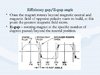
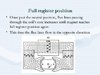
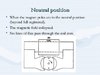
There are three factors that determine the strength of current generated in an alternator or generator or magneto:
-The strength of the magnet
-The speed of the magnet's field movement (rotation) through the coil
-The number of turns of wire in the coil.
With a magneto, we can't change the strength of the magnet, It's a permanent magnet. The number of turns of wire is also fixed. So we have to fiddle with the speed of the magnet, or with the magnetic field and current it generates in the coil, so we use the points and condenser to do that. They make that field collapse quickly, which has the same effect as a really, really fast-moving magnet. When you turn the mags off, you are just shorting across those points so that as the magnet continues rotating the field gradually changes its polarity, slowly enough that no usable high voltage is generated in the secondary coil. A bad condenser will do the same thing; it's there to absorb the initial bit of current that wants to spark across the points so that the points can open without arcing. Arcing represents continued flow that does the same thing as shorting across the points, weakening the spark. Many folks think that the condenser (a capacitor) is there to prevent the points arcing and burning, but that's only part of it. That magneto is deader than a doornail without the condenser.