[NA] outdoor activities liability

Let'sgoflying!

Touchdown! Greaser!
Joined
Feb 23, 2005
Messages
21,872
Location
west Texas
Display Name
Dave Taylor
Home Airfield
KMRF
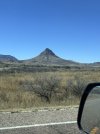
I am asked to guide hikers up a mountain on the owners property.
It is a class 3 activity and some of it is dang scary.
4hr ‘hikes’ in Texas, 1500’ vertical, fair weather only. I have no certifications.

Is there such a thing as liability insurance for me, the guide?
We have a waiver for both me & property owner.
I can think no way to screen the participants for capability, before they show up.
 
Maybe you're a 'participant' and not a guide? Liability for injuries, etc... is probably going to fall back on the property owner if anyone.
 
I am asked to guide hikers up a mountain on the owners property.
It is a class 3 activity and some of it is dang scary.
4hr ‘hikes’ in Texas, 1500’ vertical, fair weather only. I have no certifications.

Is there such a thing as liability insurance for me, the guide?
We have a waiver for both me & property owner.
I can think no way to screen the participants for capability, before they show up.
Yes, there is such thing. It's available from several companies. I just ran your scenario through one of their online quoting tools and it came up at $130 a month for a million in liability on an annual basis. They have one time coverage offerings also, but I wasn't curious enough to get a price on that.
 
The Texas Recreational Use Statute (Chapter 75, Civil Practice and Remedies Code) limits the liability of public and private landowners, protecting them from ordinary negligence lawsuits when they allow their property to be used for recreational purposes. Landowners are only liable for gross negligence, malicious intent, or bad faith.
TXCourts.govTXCourts.gov +2
Key Aspects of Texas Recreational Activity Immunity
  • Applicability: The statute applies to private landowners, agricultural land, and governmental units.
  • Covered Activities: The law broadly covers activities like hunting, fishing, swimming, boating, camping, picnicking, hiking, biking, and riding ATVs. It also includes specific, designated, or supervised activities such as skateboarding, roller-blading, and hockey on public property.
  • Protected Status: Under this statute, individuals using the land for recreation are treated similarly to trespassers. Landowners generally have no duty to warn of dangerous conditions or make the premises safe.
  • Gross Negligence Standard: Landowners can still be held liable if they act with gross negligence (a conscious indifference to the safety of others).
  • Exceptions:
    • Fees: The immunity does not apply if a fee is charged for the use of the land, unless the total charges for the year are less than 20 times the total property taxes.
    • Willful/Gross Negligence: As mentioned, intentionally injuring someone or gross negligence is not covered.
  • New Protections: Recent amendments (as of 2023) extend limited liability to recreational vehicle park or campground entities.
    State Bar of Texas
  • State Bar of Texas +7
 
The Texas Recreational Use Statute (Chapter 75, Civil Practice and Remedies Code) limits the liability of public and private landowners
As do all 50 states, but the OP is concerned about liability for the guide, not the landowner.
 
Not an attorney, have done some volunteer work. If this is volunteer, can't you get the land owner and/or participants to sign a hold harmless agreement? So that they waive right to sue. If this is for hire, can't you request the owner or leader of the group to include you as listed on their liability insurance? And if you're working as a hired guide for contract, and you can't do the other remedies, seems like insurance might be in order for yourself.
 
Not an attorney, have done some volunteer work. If this is volunteer, can't you get the land owner and/or participants to sign a hold harmless agreement? So that they waive right to sue. If this is for hire, can't you request the owner or leader of the group to include you as listed on their liability insurance? And if you're working as a hired guide for contract, and you can't do the other remedies, seems like insurance might be in order for yourself.
there is a liability release naming me and property owner
This is for hire meaning I ensure the PO gets paid but right now I'm not charging for my services.
None of these groups have any insurance.
 
there is a liability release naming me and property owner
This is for hire meaning I ensure the PO gets paid but right now I'm not charging for my services.
None of these groups have any insurance.
That sounds close to some volunteer ham radio stuff I used to do. None of the volunteer groups had any insurance, they were all community service type things. We tried to get everyone to sign waivers, and to my personal internal "risk radar" the good deed was worth whatever the residual risk was. And I kinda figured that as long as no one did anything truly terrible that we'd be OK. Along the lines of nothing much of value comes without some risk. But...I did that math in my head without having a family to support, and I'm also far from a deep pocket target.

What always struck me funny was a large "charitable" corporation that has assets in excess of 3B that requires their volunteers to sign waivers to protect the corporation. I only helped that group out once, and conveniently managed to not sign their waiver.
 
Honestly going through life afraid of “liability” has to be hell


Over going on a hike… damn
 
I am asked to guide hikers up a mountain on the owners property.
It is a class 3 activity and some of it is dang scary.
4hr ‘hikes’ in Texas, 1500’ vertical, fair weather only.

Honestly going through life afraid of “liability” has to be hell
Over going on a hike… damn
Had never heard of different hiking "classes." Had to look it up.

Below from https://backcountrysights.com/difficulty-ratings/

In defense of the OP, Class 3 terrain, 4 hours, 1500' vertical all sound like more than your typical "walk in the woods."

Agree that sometimes people can be overcautious about the "lawsuit boogeyman," but in this case, it seems reasonable to at least ask the question.

Class 3 terrain requires you to use your hands to move upwards and a rope may be used for extra safety when exposure (the distance you will fall) is high. Colloquially called “scrambling,” this kind of climbing uses both handholds and footholds but there are plenty of physical features for both. Third class terrain is not usually entirely vertical and can often be down-climbed by facing outward (back to to the wall). If you’re a Lord of the Rings fan, the winding stair to the pass of Cirith Ungol is a class 3 climb.
 
Honestly going through life afraid of “liability” has to be hell


Over going on a hike… damn
Can't speak for OP, but it reads like risk management more than fear to me. As far as risk goes, I used to work with the forestry types here in NY, and they average more than 400 search and rescues a year. Most are minor, but every year or two there's a fatality or two, and half the time it's on a well marked trail. Now the Catskills and Adirondacks are probably steeper than anything in TX, but I wouldn't underestimate how easy it is for some people to screw up and get hurt. And if kids get hurt, the chances the parents will blame their kid's actions vs someone else are usually close to zero.
 
What always struck me funny was a large "charitable" corporation that has assets in excess of 3B that requires their volunteers to sign waivers to protect the corporation. I only helped that group out once, and conveniently managed to not sign their waiver.
I once did a proposal to a very large university with approximately a $57B endowment. The process was a pain and they pushed us hard to justify the numbers in the proposal. I was casually whining about it to the team lead that we were trying to engage with. He responded, "well, you don't get an endowment this large by not dotting I's and crossing T's."
 
Guide? Are you a guide, or just a hiker who can’t help it if some randos start following you up a hill?
 
I once did a proposal to a very large university with approximately a $57B endowment. The process was a pain and they pushed us hard to justify the numbers in the proposal. I was casually whining about it to the team lead that we were trying to engage with. He responded, "well, you don't get an endowment this large by not dotting I's and crossing T's."
That's a fair point, but it also speaks to organizations who's primary purpose may just be to acquire wealth for the sake of it, and for those running it day to day. One example has popped on on here recently. The one I did the volunteer work for likes to show up at disasters, but only if there's a TV crew present.
 
Back
Top