Mooney crash near Saratoga Springs airport

Albany Tom

Final Approach
Joined
Jul 23, 2021
Messages
5,703
Display Name
Albany Tom

Don't have much on this. Weather pretty windy around here today, 22G36 or so at ALB around noonish.

From reports, it didn't hit the house but came down on the driveway. Looks like near departure end of 23. Winds were 260 at Albany near that time.
 
RIP. Lucky passenger. The fire must have been small, it apparently was handled by neighbors. Mooneys do relatively well (IMO) compared with some composite aircraft that seem to be more likely to explode following a severe impact.
 
Looks like this was the plane for sale about a year ago:

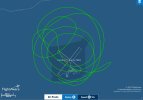
Looking for last flight track on flightaware, I didn't find that, but instead found a flight about 10 days ago. Other than initial climb and descent, speeds were between 100 and 170 mph, altitude between 2000 and 3400'. That seems a little unusual to me, but Saratoga is an uncontrolled field, and weekdays this time of year probably isn't very busy. Maybe he was checking something out and wanted to stay right above it.
 

Attachments

  • mooney-1.jpg
    mooney-1.jpg
    69 KB · Views: 40
Looks like this was the plane for sale about a year ago:

Looking for last flight track on flightaware, I didn't find that, but instead found a flight about 10 days ago. Other than initial climb and descent, speeds were between 100 and 170 mph, altitude between 2000 and 3400'. That seems a little unusual to me, but Saratoga is an uncontrolled field, and weekdays this time of year probably isn't very busy. Maybe he was checking something out and wanted to stay right above it.

Probably a good chance circling around the airport was a maintenance flight, just waiting for the engine to quit.

A little off topic: In the Mooneyspace (hyperlink) photos you posted there seems to be one photo taken of N79338 at the Logan, UT (KLGU) airport, tied down in the same ramp area as the 2016 photo I selected to use here in the POA thumbnail (Mooney & me). Enlarged both, the mountains and terrain appears to be a match. Small world.
 
Thanks for that. The flight track I posted above from about 10 days ago was apparently that of an engine check, to attempt to confirm that a problem had been resolved. That's from the Mooney board. Sounds like the accident pilot was going to be taking the plane back home the day of the accident.
 
There is a thread on Mooneyspace from the user freddb34 discussing engine issues soon after buying the plane. He was the pilot killed in the accident. Very sobering discussion. I can't post the link but should be easy to find.

The history of this plane is a bit sketchy.

Two owners ago, bought the plane in 2015 but stopped flying it in 2022. Sold it to previous owner in January of this year, out of annual, run-out engine, etc...
Previous owner apparently had the engine overhauled and got it back in annual. Seems to have flown it reasonably often... But also may not have been totally honest about its condition, since he decided to sell it after only owning it for 9 months.
Current owner (accident pilot) bought it at the beginning of October, and experienced an engine issue on the first flight. Previous owner said something like "Oh yeah, I had something go wrong with it on my last flight too, but I think it was just a clogged injector". Current owner/shop found some gunk in the fuel tanks, had them repeatedly flushed, and then did some test runs and flight prior to current owner bringing it home. Current owner hopped in with a CFII, flew around in circles over the field to verify proper operation, and then crashed.

 
After reading the thread on Mooney space, and of course having 20/20 hindsight, I find it doubtful that gunk in the tank that was never found in the fuel screen caused a total power loss.
 
Is there no way to test engines on the ground to simulate flight parameters without doing these risky maintenance flights? Cars have dynos for example.
 
Is there no way to test engines on the ground to simulate flight parameters without doing these risky maintenance flights? Cars have dynos for example.

No, you have G forces and attitudes (banking, climbing, descending) that can’t be duplicated on the ground.

The mechanic flew the airplane for a few laps around the airport and reported no problems.

He had a CFI in the right seat.

I see nothing wrong with the pilot’s or the mechanic’s judgment.


My only criticism is he bought a plane that wasn’t actively flown. Probably because it was priced low, hardly the first time someone has done that.
 
Last edited:

The history of this plane is a bit sketchy.

Two owners ago, bought the plane in 2015 but stopped flying it in 2022. Sold it to previous owner in January of this year, out of annual, run-out engine, etc...
Previous owner apparently had the engine overhauled and got it back in annual. Seems to have flown it reasonably often... But also may not have been totally honest about its condition, since he decided to sell it after only owning it for 9 months.
Current owner (accident pilot) bought it at the beginning of October, and experienced an engine issue on the first flight. Previous owner said something like "Oh yeah, I had something go wrong with it on my last flight too, but I think it was just a clogged injector". Current owner/shop found some gunk in the fuel tanks, had them repeatedly flushed, and then did some test runs and flight prior to current owner bringing it home. Current owner hopped in with a CFII, flew around in circles over the field to verify proper operation, and then crashed.

Sketchy... yeah, for sure.

Not sure if the plane had a fuel tank reseal, or the bladder mod. But in either case water can take a long time to work its way down to the sump in a Mooney (as in multiple flights). And during a climb out attitude, made worse by turbulence sloshing it around, a slug of water can be sucked up and instantly shut down the engine. The Mooney fuel pickup points are both located in the deepest part of the tanks, the inboard rear corner. To pick up the last remaining fuel (or water) in a tank is accomplished in a climb. Conversely, running one dry happens instantly when the nose is positioned downwards as the small amount of fuel remaining runs forward.

The history of this plane points at it being parked outside, in the weather. Flush mounted Mooney fuel cap seals are notoriously known for leaking.

The previous owner was an A&P who possibly bought it as a project plane and ran out of money. Or, sold it because he couldn't figure out why the engine would occasionally quit. Unfortunately for him, he never disclosed that issue to the new owner. I don't think he is sleeping too well lately.
 
The fuel pickups are above the drains so assuming the AP and pilot weren’t morons, whatever water was in the tanks should have been drained out before the engine was started, and a long time ago.

The older Mooneys had an AD to add a fuel filter after the electric boost pump, just in case the pump disintegrated. Hard to believe any substantial debris could make it all the way to the injectors. The only time I had a clogged injector was after maintenance when the fuel system integrity was compromised.

You'd think they'd be drained, but if the fuel tank caps weren't addressed and tested, then the plane sat out in the rain (or condensation), who knows?

Had one instance where my normally hangared Mooney (with fuel tank seals replaced and tested during every annual) collected water. A tank cap seal went bad after sitting out in Florida summer heat and afternoon heavy rain during the week. Water was discovered after aggressively rocking the wings during the preflight. Drained the tank, flew home, then drained again. More water found. After the next flight more water, (but less). Then one more flight (more found, but negligible). Scary.

The other time was preflighting a Mooney I inspected (had a fresh annual inspection - never again will trust that from a seller) before test flying it in Las Vegas. It was parked in an open shade hangar in dry Las Vegas for years. I drained almost two full tubes of scuzzy water, test flew then purchased it and flew it home to PA. At the first fuel stop found more water (and a broken generator bracket). At the next stop more water found, but less.

Regarding clogged injectors, they necessarily don't need dirty fuel to clog. Carbon deposits once broke loose following a low altitude, very cold OAT winter flight flown with an overly rich mixture (broken mixture cable). During the next takeoff enough carbon suddenly broke loose (at around 300' to 400 AGL), to completely clog one injector, and partially clog another, resulting in an emergency return to land on another runway. Rented a car and returned for the plane later that week.

Still guessing (WAG) the N79338 fatal accident was caused by water. Especially if it was discovered that a fuel cap leaked (they can wear and leak even with new seals) and/or if the small holes at the bottom of the tank baffles were painted over with sealant during the recent tank reseal job.
 
After reading some of the conversation on Mooney space, I wonder if a plugged or mostly plug vent tube might cause the symptoms he described there.
 
Agree the plane sounds more than a bit suspicious. But I don't think it's a coincidence that it was unusually windy/gusty here, with low level turbulence. It was not a great flying day...taking off in that, to me, is an indication he was in a rush.
 
Preliminary out (NTSB seems to some how be working faster during a government shutdown). Engine lost power on takeoff

*** Preliminary Report ***

On October 31, 2025, about 1035 eastern daylight time, a Mooney M20E, N79338, was destroyed when it was involved in an accident near Ballston Spa, New York. The pilot was fatally injured, and the flight instructor was seriously injured.

According to the flight instructor, the pilot had just purchased the airplane and he was going to fly with the pilot to Punta Gorda, Florida, where the pilot lived. The insurance company required the pilot to fly with a flight instructor due to the pilot’s lack of experience in the airplane make and model.

The flight instructor stated that he met the pilot for the first time the night before the accident, and they discussed the airplane’s maintenance issues and planned flight route. The flight instructor added that the pilot had test flown the airplane about 1 month prior to the accident flight. He also stated that the airplane’s engine lost power during the pilot’s test flight and that he had landed safely back at the airport at he end of that flight. The flight instructor described that the airplane’s fuel had been contaminated with algae and debris. A local mechanic subsequently repaired the fuel tank and cleaned out the fuel system.

On the day of the accident flight, the flight instructor and pilot performed a preflight inspection of the airplane and sampled fuel from the fuel tanks several times before departing. The flight instructor stated that after takeoff and during the initial climb, about 200 ft above ground level, the engine decreased in power from 2,500 rpm to about 1,500 rpm. A few seconds later the engine decreased to about 500 rpm and then lost all power. The flight instructor took over control of the airplane and tried to make a turn back to the airport. When he made a right turn, he realized that the airplane was too low. He then made a slight left turn to avoid a house before the airplane impacted a tree.

The accident site was located in a subdivision beside a house. The airplane impacted a tree about 20 ft up, fell to the ground, and came to rest oriented on heading of 232° magnetic. The engine was fractured off its mounts and lying beside the fuselage. The propeller was still attached to the engine and did not display s-bending, leading edge gouging, or chordwise scratching. All major components of the airplane were located at the accident site. A postimpact fire consumed portions of the engine, instrument panel and cockpit. No useful information was obtained from the remaining instrumentation.

The right wing root was still attached to the fuselage and about 6 ft of the outboard portion of the wing was located in a tree directly above the main wreckage. The aileron was still attached to the outboard portion of the wing. The right flap remained attached to the wing. The flaps were in the full retracted position. The left wing also remained attached to the fuselage. The wing was consumed by fire, and the left fuel tank was destroyed. The flap was attached to the wing. About 3 ft of the outboard portion of the left wing fractured off the wing and was located about 20 ft from the main wreckage. The left wing had several tree impressions down the leading edge. The cockpit, instrument panel, and engine bay were destroyed by fire. No useful information was obtained. The tail section was attached to the empennage. The left stabilator and elevator were bent up mid-span. The rudder and right elevator were unremarkable.

The airplane was further examined after it was recovered from the accident site. Flight control continuity was visually established through torque tubes and fracture surfaces consistent with impact damage. The fuel system from the pickup tubes to the engine fuel injectors was clear of debris and air was passed through all lines and valves. The system exhibited no blockages or other abnormalities.

The engine rocker box covers, engine driven fuel pump, magnetos, and the remnants of the airframe baffling were removed. The crankshaft was rotated by applying hand pressure to the propeller, and after the start ring gear and propeller collar were removed, full 360° rotation of the crankshaft was achieved. Compression and suction were observed on all four cylinders, normal valve action was observed on all cylinders, the accessory idler gears were observed rotating, and mechanical continuity was confirmed throughout. The cylinders were examined with a boroscope. Oil pooling was observed in the No. 2 and No. 4 cylinders, and all cylinders were clean with very little deposits on the piston faces or combustion domes. The induction plenum was inspected via borescope and no blockage or obstructions were observed. All four induction tubes remained attached to the engine with various levels of impact-related damage. The exhaust system remained secure to the engine and was partially crushed from impact forces. It was inspected via borescope and no blockage was observed.

The fuel flow divider remained secure to the crankcase spine. All four fuel injection lines remained secure to the flow divider, and to their respective fuel injection nozzles. The fuel inlet line remained secure to the flow divider. The flow divider and lines were removed and the flow divider was disassembled. The diaphragm was brittle and destroyed consistent with exposure to extreme heat, and no blockage was observed in the flow divider. Air was blown through the inlet fitting and was observed coming out of all four injection nozzle lines. All four fuel injection nozzles were removed and oil was present in the No. 2 and No. 4 nozzles (oil likely from the orientation of the engine after the accident). The oil was blown out and no contamination was observed in any of the fuel injection nozzles. All four of the nozzles had the restrictor inserts installed. Air was blown through the flow divider inlet fuel line and fuel flow transducer, no obstructions observed.

The engine-driven fuel pump remained attached to the engine accessory housing with the fuel inlet and outlines secure to it. The fuel inlet line had been cut during the engine recovery process. The engine driven pump was removed; it did not create inlet suction and outlet pressure when the lever was actuated. The pump was disassembled, the diaphragms were brittle and destroyed consistent with exposure to extreme heat. The fuel pump was filled with engine oil.

The left and right magnetos remained secure to the engine accessory housing with the harness caps secure to the magnetos. The magnetos were removed and both drives were found secure via castle nut and cotter pin. The left magneto’s drive was not free to not rotate. While the right magneto’s drive rotated, no spark was observed. Both of the magnetos displayed thermal damage consistent with exposure to the postimpact fire.

About 6 gallons of fuel was removed from the right wing fuel tank. The fuel was blue in color and smelled like 100LL fuel. No water or debris was found in the right fuel tank. The left fuel tank was consumed by fire.
 
Why would the engine driven fuel pump be filled with engine oil?
The destruction of the diaphragms from post crash fire heat and the orientation of the engine after the crash probably allowed engine oil to flow into the pump body.
 
But...is it safe to say that we don't know if the rubber parts in the fuel system were functioning properly before the accident? Something apparently caused the engine to lose power and stop. There were known problems with the fuel system before, but that doesn't mean that the fuel system was the only problem.

It does sound like the gusty conditions didn't have much if anything to do with the crash, though.
 
The fuel booster pump is a check list item and used during all Mooney takeoffs and landings. It should handily keep the fuel flowing following the failure of the engine driven fuel pump.
 
The fuel booster pump is a check list item and used during all Mooney takeoffs and landings. It should handily keep the fuel flowing following the failure of the engine driven fuel pump.

There’s an AD on Mooneys to add a screen after the boost pump, when pumps fail they would disintegrate clogging fuel lines/injectors. If this AD wasn’t done or somehow it’s fail then it could have failed as described.
 
Cherokees have an electric boost pump, too. After reading of a failure of something, somewhere (don't remember), I make a conscious habit to check fuel pressure every time before start, after turning on the main and pump. If there's not a lot of other noise, you can hear the pump spin up, and see the pressure come up. No idea if a Mooney system is similar. After start, for taxi before takeoff, I turn off the electric pump to make sure the mechanical pump works, too.
 
There’s an AD on Mooneys to add a screen after the boost pump, when pumps fail they would disintegrate clogging fuel lines/injectors. If this AD wasn’t done or somehow it’s fail then it could have failed as described.

That would be a lot of years of missing and/or intentionally not complying with that AD by multiple A&P's. I don't recognize it (maybe it was a SB?) so I think by my year (1982) it was factory installed.

Considering the amount of engine failures the accident plane had been experiencing, and the reported fuel flushing and screen inspections and cleaning, any fuel pump (or other) debris should have been discovered and dealt with. But you never know... this fatal is as sketchy as it is tragic.

I think it was only required for those with the Duke fuel pumps.

The inline filter was required by AD81-18-03 and S/B M20-222.
 
The fuel booster pump is a check list item and used during all Mooney takeoffs and landings.
While I believe this is true of the M20E, it is most certainly NOT true of "all Mooney takeoffs and landings". My R, for one, does not use the boost pump for takeoff or landing.
 
While I believe this is true of the M20E, it is most certainly NOT true of "all Mooney takeoffs and landings". My R, for one, does not use the boost pump for takeoff or landing.

Thanks! I did not know that. My Mooney world of familiarity has only been with normally aspirated Lycoming powered E, F and J Models... I forget there's a new generation of high horsepower models.
 
While I believe this is true of the M20E, it is most certainly NOT true of "all Mooney takeoffs and landings". My R, for one, does not use the boost pump for takeoff or landing.

Interesting, so fuel pumps don’t fail on Continuental engines?
 
Interesting, so fuel pumps don’t fail on Continuental engines?
Totally different fuel system, and the electric pump significantly affects the mixture. I've got high and low boost, and the high boost switch is red and guarded because under normal circumstances it will make the mixture so rich the engine will quit.
 
Is there no way to test engines on the ground to simulate flight parameters without doing these risky maintenance flights? Cars have dynos for example.
The runups we do as part of our pre-takeoff checklists are probably about as good as anything.

I've had issues with alternators that passed every conceivable ground check but failed in flight. There are so many differences with vibrations, g-forces, temperatures, airflow, etc that you just can't fully account for without a test flight.
 
I've had issues with alternators that passed every conceivable ground check but failed in flight.
Except maybe the 500-hour alternator brush check, maybe? That item is the single biggest cause of alternator failures.
 
Except maybe the 500-hour alternator brush check, maybe? That item is the single biggest cause of alternator failures.
So the full narrative is long and about 7 years old but the specific one I'm thinking of was a "new" out of the box reman unit that worked fine on the runup, worked fine initially after takeoff. It failed when I attempted a steep turn- burnt electrical smell in the cabin and a popped field breaker. The bearing in the rear of the unit had been assembled with one of the little needles laying perpendicular to the shaft allowing just enough wobble to cause a short when g-forces were applied.

The alternator that one replaced got fresh brushes and an inspection, worked correctly on ground tests and during runup. Failed immediately after rotation on the first flight.

This whole thing was a big frustrating fiasco.... point being these things do happen.
 
Fuel pressure is part of “check engine gauges in the green” early in the takeoff roll.
Right...and I don't want to sidetrack the thread much, because I'm familiar with a PA-28 fuel system but not Mooney. On a PA-28, knowing you have green for fuel pressure at run up is important, but you wouldn't know if that's just because one of the pumps is working. Then if the one working pump fails on takeoff, you have a problem. By checking the electric for pressure before start, and then doing taxi without electric, you know both are functioning.
 
Right...and I don't want to sidetrack the thread much, because I'm familiar with a PA-28 fuel system but not Mooney. On a PA-28, knowing you have green for fuel pressure at run up is important, but you wouldn't know if that's just because one of the pumps is working. Then if the one working pump fails on takeoff, you have a problem. By checking the electric for pressure before start, and then doing taxi without electric, you know both are functioning.
That precisely what I (an M20C owner) do. I use the electric pump enough to pressurize the lines to start, then turn it off. Taxi and runup are solely on the engine-driven pump. This has the benefit you mentioned as well as the benefit of reducing wear on the electric pump while not really needed during longer taxis and waiting for the engine to warm up for runup.
 
That precisely what I (an M20C owner) do. I use the electric pump enough to pressurize the lines to start, then turn it off. Taxi and runup are solely on the engine-driven pump.

Exactly. Boost pump is used to prime the engine and then turned back off prior to start. Taxi and runup on engine driven fuel pump, then boost pump on is part of the takeoff checklist. Boost pump off again for me at 2000agl.
 
I'm the owner from 2015-2022. Just learned about this today :' ( It's absolutely the same plane from the UT picture, which I think was taken at KBMC. You can find some more pictures of it here: https://photos.google.com/share/AF1...?key=Y0daZWtKYVBpcGpvNGhrQkpjclFlRXlKY3dtSHpR.

I can confirm that 79338 was not hangared and lived outside for most of the time that I owned it. I only ever found water in the tanks once, and only a small amount. They were sealed tanks, not bladders.

Between 2015 and 2020 I was doing well and the plane was maintained by the Mooney specialists at Lake Aero Styling and Repair. In 2020 Covid happened and I stopped being able to fly it as much. I kept it in annual two more years before I got busy working on starting a company, at which point it stopped flying completely as the records show. Earlier in '25 I sold it out-of-annual at a barn-find price to an A&P IA, who is listed as the owner at the time of accident. He bought the plane from me with the intention to get it in annual on behalf of his friend, the pilot who lost his life in the crash.

If I can provide any more useful information I'm happy to oblige.
 
Back
Top