Midair at IAC contest?

Ed Haywood

Final Approach
Joined
Jul 12, 2020
Messages
7,624
Location
Tampa FL
Display Name
Ed
Home Airfield
FD77
Just read a post about a midair today at Ft Morgan CO involving an Extra 300 and a Cessna 172.

There was an IAC contest at Fort Morgan today. Wonder if it occurred in the box or pattern?

This could be a BFD for the aerobatic community.
 
Last edited:
Reports say one dead and one hospitalized in the Extra. Two in the Cessna walked away with minor injuries, which is amazing considering the Cessna was almost 100% consumed by fire.
 
Wow. I've flown into Ft. Morgan several times but was nowhere near an airplane today. Really brings home the need to always be vigilant for traffic.

Who would have the right of way? And were they talking and listening on CTAF?
 
Wow. I've flown into Ft. Morgan several times but was nowhere near an airplane today. Really brings home the need to always be vigilant for traffic.

Who would have the right of way? And were they talking and listening on CTAF?

Traffic pattern rules are standard. Aerobatic aircraft monitor box freq in the box, but switch to CTAF in the pattern.

Some aerobatic pilots get in the habit of flying a tight rounded 180 instead of a squared off base. In a low wing or mid wing aircraft, that keeps aircraft on final in the blind spot. Gotta drop that wing to clear final.
or just fly square patterns like they were trained…..
 
Traffic pattern rules are standard. Aerobatic aircraft monitor box freq in the box, but switch to CTAF in the pattern.

Some aerobatic pilots get in the habit of flying a tight rounded 180 instead of a squared off base. In a low wing or mid wing aircraft, that keeps aircraft on final in the blind spot. Gotta drop that wing and clear final.
Well that clears up everything I was typing and asking you if there was a separate frequency in the box.

I almost busted something similar to this after diverting due to weather and not hearing anything on atis/awos about staying away one side of the field. Luckily the spotter kept me from getting into the box well before it became an issue.

So it would sound like the Cessna should have been making his calls the extra wouldn't have been privy to while he was in the box. Then the extra should have switched to ctaf and the 2 either weren't aware or each other's location or the switch didn't happen.

To answer @Crashnburn... It sure would appear the extra would be more at fault?
 
I checked with a friend who was at the contest on Sunday....horrible and no further info until IAC and NTSB start the investigations.
 
Traffic pattern rules are standard. Aerobatic aircraft monitor box freq in the box, but switch to CTAF in the pattern.

Some aerobatic pilots get in the habit of flying a tight rounded 180 instead of a squared off base. In a low wing or mid wing aircraft, that keeps aircraft on final in the blind spot. Gotta drop that wing to clear final.
What is the box?
 
Traffic pattern rules are standard. Aerobatic aircraft monitor box freq in the box, but switch to CTAF in the pattern.

Some aerobatic pilots get in the habit of flying a tight rounded 180 instead of a squared off base. In a low wing or mid wing aircraft, that keeps aircraft on final in the blind spot. Gotta drop that wing to clear final.
Where was the box? Over the airport? What were the vertical limits?
 
I have had issues with two different aerobatic pilots at two different airports.

Steep descending round turns from pattern altitude, are simply dangerous.

I flew a tight pattern, throttle to idle at the numbers, and turns at proper altitudes, flare at the numbers. The Stearman behind me made a round turn, strong slip, and landed in front of me. His speed was fast, he landed well down the runway, and missed the midfield turnoff. He was still on the runway when I crossed the numbers, and did a go around.

On the ground, he simply stated that I should have landed, since he was well down the runway, and would soon have been off at the end taxiway. That is neither legal nor reasonable.


A an airport with view to the right restricted by a row of trees, the only traffic to check is straight out. If none in sight, taxi to the runway, and take off immediately. As I opened the throttle, a biplane came over me, and landed. With a round turn, he was not visible until a relatively few seconds before he was at the runway. His opinion was that I should have taxied to the runway, turned 90 to the right for a last traffic check, then 180 and departed. On a 35 foot wide runway such maneuvering is hard, and can result in going off the edge, with difficulty getting back on.

Again, Steep descending round turns from pattern altitude, are simply dangerous. Normal pilots and technique do not mix well with them.

 
If the 172 was on a long straight-in, it seems possible it made its last radio call before the Extra switched to CTAF, but the Extra should have made calls that the 172 heard.

I’m a bit surprised that non-towered airports don’t open a temporary tower during an aerobatic contest.
 
If the 172 was on a long straight-in, it seems possible it made its last radio call before the Extra switched to CTAF, but the Extra should have made calls that the 172 heard.

I’m a bit surprised that non-towered airports don’t open a temporary tower during an aerobatic contest.
One could argue that the Extra probably should've been visible... especially if the 172 was straight-in.
 
I have had issues with two different aerobatic pilots at two different airports.

Steep descending round turns from pattern altitude, are simply dangerous.
Most aerobatic biplane pilots would disagree with your unsupported assertion.
I flew a tight pattern, throttle to idle at the numbers, and turns at proper altitudes, flare at the numbers. The Stearman behind me made a round turn, strong slip, and landed in front of me. His speed was fast, he landed well down the runway, and missed the midfield turnoff. He was still on the runway when I crossed the numbers, and did a go around.

On the ground, he simply stated that I should have landed, since he was well down the runway, and would soon have been off at the end taxiway. That is neither legal nor reasonable.
Believe it or not, you CAN land on the same runway as long as you aren't a collision hazard. You can argue all day if it's smart, but it's not illegal.
A an airport with view to the right restricted by a row of trees, the only traffic to check is straight out. If none in sight, taxi to the runway, and take off immediately. As I opened the throttle, a biplane came over me, and landed. With a round turn, he was not visible until a relatively few seconds before he was at the runway. His opinion was that I should have taxied to the runway, turned 90 to the right for a last traffic check, then 180 and departed. On a 35 foot wide runway such maneuvering is hard, and can result in going off the edge, with difficulty getting back on.

Again, Steep descending round turns from pattern altitude, are simply dangerous. Normal pilots and technique do not mix well with them.
Technically, landing aircraft have the right-of-way... unless you landed and are trying to exit.
 
One could argue that the Extra probably should've been visible... especially if the 172 was straight-in.

Maybe. If the Extra was flying a rounded base, going fast and descending, I can picture it swinging in from behind the 172, say at the 172’s 8:00, and the 172 not seeing it. In such a situation, the Extra would be banked and also unable to see the 172
 
Maybe. If the Extra was flying a rounded base, going fast and descending, I can picture it swinging in from behind the 172, say at the 172’s 8:00, and the 172 not seeing it. In such a situation, the Extra would be banked and also unable to see the 172
It should've been visible on downwind before arcing.
 
I have had issues with two different aerobatic pilots at two different airports.

Steep descending round turns from pattern altitude, are simply dangerous.

I flew a tight pattern, throttle to idle at the numbers, and turns at proper altitudes, flare at the numbers. The Stearman behind me made a round turn, strong slip, and landed in front of me. His speed was fast, he landed well down the runway, and missed the midfield turnoff. He was still on the runway when I crossed the numbers, and did a go around.

On the ground, he simply stated that I should have landed, since he was well down the runway, and would soon have been off at the end taxiway. That is neither legal nor reasonable.


A an airport with view to the right restricted by a row of trees, the only traffic to check is straight out. If none in sight, taxi to the runway, and take off immediately. As I opened the throttle, a biplane came over me, and landed. With a round turn, he was not visible until a relatively few seconds before he was at the runway. His opinion was that I should have taxied to the runway, turned 90 to the right for a last traffic check, then 180 and departed. On a 35 foot wide runway such maneuvering is hard, and can result in going off the edge, with difficulty getting back on.

Again, Steep descending round turns from pattern altitude, are simply dangerous. Normal pilots and technique do not mix well with them.
Not disagreeing with what you said other than two landing airplanes on the runway at the same time being illegal. There’s no law/rule/regulation I’ve ever seen stating that. It happens all the time at Towered Airports.
 
Maybe. If the Extra was flying a rounded base, going fast and descending, I can picture it swinging in from behind the 172, say at the 172’s 8:00, and the 172 not seeing it. In such a situation, the Extra would be banked and also unable to see the 172
That’s the picture I was getting in my minds eye. The Extra doing a Crowbar1 arrival and ‘stepping on’ the Cessna
 
Probably. Of course, it’s often difficult to spot another plane even when you know it’s there, let alone when you don’t.
Just conjecture here, but maybe the Extra had ADS-B and the Cessna didn't. (KFMM is well away from DIA) and didn't see the Cessna on the screen so assumed there was no conflicting traffic, wasn't keeping an eye out, and was on the wrong frequency. There's your accident chain.
 
Probably. Of course, it’s often difficult to spot another plane even when you know it’s there, let alone when you don’t.
I know, and there might've been someone under a hood on the straight-in, too, but there's a known risk, and you should be scanning downwind and base, so that's a bad look.
 
Is someone on the ground talking on box frequency while also monitoring CTAF?

Yes. Normal procedure is to have two hand held radios at the judging station. The chief judge is the only person talking on the box freq. He clears aircraft in and out of the box. Next to him is a safety spotter on CTAF. He watches for other aircraft approaching the box and advises them. If an aircraft enters the box, the spotter tells the chief judge, who tells the aerobatic pilot to cease maneuvering.

If the Cessna called final several miles out, it is quite possible the Extra missed it because he was still in the box.
 
Most aerobatic biplane pilots would disagree with your unsupported assertion.

Believe it or not, you CAN land on the same runway as long as you aren't a collision hazard. You can argue all day if it's smart, but it's not illegal.

Technically, landing aircraft have the right-of-way... unless you landed and are trying to exit.
So you have no problem with plane behind you cutting in front to land, when you are making a zero power tight pattern?


When I was at the numbers, he was less than 500 feet ahead of me, and still floating from his excessive speed.


And you would land behind that plane when he botched his landing so bad he missed the normal turnoff? I had my doubts of what he would do wrong next, so played it safe and went around. He could have decided to back taxi and messed up my landing. I know who HE would have thought should take the grass.


The second plane was not visible due to trees and his round turn to short final when I reached the runway, my wife makes a last check out the right window as I turn down the runway, so who should I yield to? No call on UNICOM (the term used then for CTAF back then). I had called taking the runway for departure, but they apparently were not on frequency.

Normal squared off turns would have put him in sight, and I would have yielded by either staying on the taxiway, or returning to it from the runway.

Yielding to planes that are out of sight and not on the frequency is difficult.
 
Last edited:
He clears aircraft in and out of the box.

If the Cessna called final several miles out, it is quite possible the Extra missed it because he was still in the box.

When the chief judge clears a plane OUT of the box, would he typically advise the plane about any pattern traffic?
 
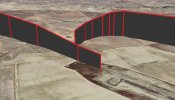
Here's the NOTAM for Sunday. The times are Zulu, MDT is Zulu minus 6. And, no ATIS at KFMM to add comments to, plus, many ASOS/AWOS do not have that capability either.


FMM08/880Airspace08/31/2025 130009/01/2025 0100AIRSPACE AEROBATIC ACFT WI AN AREA DEFINED AS 2NM RADIUS OF FMM SFC-4000FT AGL
2508311300-2509010100
 
Last edited:
Yes. Normal procedure is to have two hand held radios at the judging station. The chief judge is the only person talking on the box freq. He clears aircraft in and out of the box. Next to him is a safety spotter on CTAF. He watches for other aircraft approaching the box and advises them. If an aircraft enters the box, the spotter tells the chief judge, who tells the aerobatic pilot to cease maneuvering.

If the Cessna called final several miles out, it is quite possible the Extra missed it because he was still in the box.
At which point the spotter should make the plane exiting the box aware there's a plane on final.

See and avoid doesn't always work.
 
Where was the box? Over the airport? What were the vertical limits?

I'm not sure. Usually the near edge of the box is aligned with a runway, offset a hundred yards or so to one side, on the opposite side of buildings and structures. But every layout is different.

The top of the box is 3500 AGL. The bottom varies by category, from 1500 AGL for primary and sportsman to 350(?) for unlimited.

The box was not a factor here. Neither was aerobatic maneuvering. This might not have even been a contest sortie, given there were two persons on board.

This was a standard failure to see and avoid by two aircraft approaching to land.
 
So you have no problem with plane behind you cutting in front to land, when you are making a zero power tight pattern?
Well, I clearly wasn't addressing the behind issue, but it sounds like he thought you were flying wide enough that he could be on the ground before you, and it sounds like he proved it, too. Not saying that's great, but it's an interesting situation.

Technically, if you weren't on final yet, it's a gray area. The regs leave some real gaps in the scenarios, and that's usually a good thing for liberty of choice, but it can be an issue.

(g) Landing. Aircraft, while on final approach to land or while landing, have the right-of-way over other aircraft in flight or operating on the surface, except that they shall not take advantage of this rule to force an aircraft off the runway surface which has already landed and is attempting to make way for an aircraft on final approach. When two or more aircraft are approaching an airport for the purpose of landing, the aircraft at the lower altitude has the right-of-way, but it shall not take advantage of this rule to cut in front of another which is on final approach to land or to overtake that aircraft.
When I was at the numbers, he was less than 500 feet ahead of me, and still floating from his excessive speed.


And you would land behind that plane when he botched his landing so bad he missed the normal turnoff? I had my doubts of what he would do wrong next, so played it safe and went around. He could have decided to back taxi and messed up my landing. I know who HE would have thought should take the grass.
I bet you know him and made the right call. If I knew him, and visa-versa, chances are I would land. I used to fly with a guy like that at 5C1.
The second plane was not visible due to trees and his round turn to short final when I reached the runway, my wife makes a last check out the right window as I turn down the runway, so who should I yield to? No call on UNICOM (the term used then for CTAF back then). I had called taking the runway for departure, but they apparently were not on frequency.

Normal squared off turns would have put him in sight, and I would have yielded by either staying on the taxiway, or returning to it from the runway.

Yielding to planes that are out of sight and not on the frequency is difficult.
Trees make things interesting, but you aren't thinking about the biplane's visibility issues, and there are really good reasons why a lot of them turn. One's he's straight in from a square pattern, he can't see YOU, period. That's often true even in a Cub.
 
Back
Top