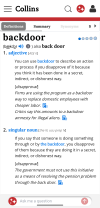
Lightspeed Aviation is moving up on my list. Lightspeed created something that is useless to skirt the intent of laws! Their malicious compliance with the current right to repair laws will not stand.
Light speed has and possesses the required documents and tools if not, they could not manufacture or have the item manufactured for them. (Discovery on this will be fun)
Even if the item is under warranty, you have the right to repair it yourself, period! Right to Repair laws are now on the books in states across the country Washington, California, Colorado, Oregon, Minnesota, New York, and others require manufacturers to make parts, tools, and documentation available directly to the
owner, not just to a authorized repair shop they cannot force you to use them for the repair.
Sometimes when a item is under warranty it is more efficient to do a self repair "if you are technically able" or a third party then to go thru the hassle of a warranty process.
And no, repairing it yourself does not void your warranty. Federal law the Magnuson-Moss Warranty Act, 15 U.S.C. § 2302(c) bans conditioning warranty coverage on using OEM-only parts or service. They can only deny a
specific claim if they prove (the burden of proof is on them) your repair caused the defect. That's it. That's the standard.
In washington right to repair law,
RCW 19.415 Aviation Electronics are not exempted! During the legislative precess that proposed exemption was withdrawn! This is can be used as legislative intent.
Section 5 of of RCW 19.415 (the exemptions section) is a deliberately enumerated list. The legislature carved out, by name:
- Medical devices
- Motor vehicles and motor vehicle equipment
- Power generation/storage and EV charging equipment
- Products never sold at retail
- Solar generation/storage systems
- Public safety communications equipment
- Utility, farm, construction, mining, and off-road equipment
- Video game consoles
- Certain set-top boxes/modems/routers
Dep't of Ecology v. Campbell & Gwinn, 146 Wn.2d 1, 9–12, 43 P.3d 4 (2002).
Washington courts follow a two-step approach:
- Plain meaning first. The court looks at the statute's text, related statutes, and the overall statutory scheme. If the meaning is clear on its face, that plain meaning is treated as the expression of legislative intent.. full stop. The court doesn't need to (and generally won't) look past the text.
- Legislative history only if ambiguous. Courts only turn to floor debates, committee hearings, bill reports, and amendment history the "legislative session" material when the statute is genuinely ambiguous, meaning susceptible to more than one reasonable interpretation. At that point, legislative history becomes a proper aid to construction.