Lear in the river - Chicago

My office is but a few miles away (10 miles) and looks toward this area. The WX today has been mild. Temps got up into the 20's and the sky is clear with a high cirrus layer. Winds are fairly calm too. I wonder what happened?

RIP!
 
Here is the Flight Aware track for it.
http://flightaware.com/live/flight/RAX988/history/20100105/1841Z/KPTK/KPWK%3Cbr%20/%3E

Being that is was a Cargo jet, it won't have any passengers on board. Meaning the "Two reported fatalities" will be the Pilot, and Co-pilot.

May they RIP.

I've read that the -35 just came on the line, and was used (along with another of their aircraft) for charter... the others were for cargo.

Sad that they were lost, but hopeful that they were repositioning for pickup of folks not yet on board.
 
My office is but a few miles away (10 miles) and looks toward this area. The WX today has been mild. Temps got up into the 20's and the sky is clear with a high cirrus layer. Winds are fairly calm too. I wonder what happened?

RIP!

I was thinking Tailplane ice until I read this. Very sad indeed:frown3:
 
It will be interesting to see what got a fellow L35 pilot. Condolences to the families involved.
 
I've read that the -35 just came on the line, and was used (along with another of their aircraft) for charter... the others were for cargo.

Sad that they were lost, but hopeful that they were repositioning for pickup of folks not yet on board.

Crap, that's not good. As you said, lets hope they were coming in to pick up the passengers.
 
The two pilots are now confirmed dead and the bodies have to be moved or identified. The only thing to be really thankful for is where the crash occurred. The area around KPWK is a heavily populated suburb and the only clear place is a narrow strip of forest along the Des Plaines river where the plane impacted the ground.
 
Wow... I am based at KPWK. I was at the airport only an hour and half before the incident is reported to have happened. They were using RWY 34 at the time. Due to the nice weather, I speculate that it has something to do with the approach. They operate the ILS16 circle to land RWY 34 when RWY 34 is in use. It is pretty tight with the O'hare Class Bravo and all, so that might of been a contributing factor.

Really makes it scary when its your home airport.
 
Learjets do not fall out of the sky. This loss is very sad. I agree with the no speculation idea; let's wait for the preliminary report from the NTSB.
 
That company's freighters stop here several times each year hauling expedited parts for the nearby nuclear plant. I wonder if I had met them.
 
One so called expert today mentioned the from initial indications it appears to be a classic stall spin type accident. That is not a typical type of accident for small jets.

Can someone explain that is familiar with this aircraft if there is anything different about form typical SE prop planes to help prevent that type of event?
If that's what happened I would be amazed. If you do an approach even half by the book, it would be tough to let things degenerate to the point of a stall spin. In a Lear 35 you have an angle of attack meter, a stick shaker, a stick pusher and (most importantly) a second set of eyes for looking at the ASI. The pilot not flying is calling out IAS in relation to Vref; he's also calling out approach and before landing check lists, which should prevent not putting down flaps.

I'll wait to see what the NTSB says.
 
The radius of the circle to land is TIGHT to keep out of ORD space ("advise approach on initial contact if unable to comply"). This is how Mark Turek died in his 421- a icy night, a tight turn, and the secuity cameras at the UStoreIt caugh the 421 nose down about ten feet off the ground.
 
The radius of the circle to land is TIGHT to keep out of ORD space ("advise approach on initial contact if unable to comply"). This is how Mark Turek died in his 421- a icy night, a tight turn, and the secuity cameras at the UStoreIt caugh the 421 nose down about ten feet off the ground.
No kidding that is a tight turn, I have done it myself. Reminded me of the engine off precision landings for the commercial ticket.

But even then is it reasonable to assume, giving all of the things Lance said that something like that could happen?
 
No kidding that is a tight turn, I have done it myself. Reminded me of the engine off precision landings for the commercial ticket.

But even then is it reasonable to assume, giving all of the things Lance said that something like that could happen?

Colgan flight 3407 managed to stall and they didn't even need to turn.
 
But even then is it reasonable to assume, giving all of the things Lance said that something like that could happen?
Not saying that's what happened but I don't think it's all that implausible. Lear 35s aren't forgiving of being too slow. It's true they have a shaker and a pusher but if you get the pusher in the pattern and you are in a steep bank as you are stalling... I asked to do a stall to the pusher in the sim once and even though I knew it was coming the pusher practically pulled the yoke out of my hands. Again, I think it's better to wait for the NTSB report because a lot of things are possible.
 
Colgan flight 3407 managed to stall and they didn't even need to turn.
But the also managed to fly into some icing conditions too. I was just thinking that it was a pretty nice day when this happened and that you would have to be really forcing the issue.
 
Not saying that's what happened but I don't think it's all that implausible. Lear 35s aren't forgiving of being too slow. It's true they have a shaker and a pusher but if you get the pusher in the pattern and you are in a steep bank as you are stalling... I asked to do a stall to the pusher in the sim once and even though I knew it was coming the pusher practically pulled the yoke out of my hands. Again, I think it's better to wait for the NTSB report because a lot of things are possible.
Thanks.

I am not trying to do the inviestigation by proxy, I am just wanting to learn some knowledge about the Lear 35.
 
The pilots have been identified

http://www.chicagobreakingnews.com/...-air-freight-cook-county-forest-preserve.html

Pilot Stephen Ellis was identified using identification cards in his possession, as well as fingerprint records, according to a statement by the Cook County Forest Preserve Police.
The co-pilot was identified by authorities as Ryan Daenzer, 40.


pilotpic300.jpg

Tracey-Ryan300.jpg
 
i was wondering about the stall/spin possibility. that turn when landing to the north at palwaukee can be a little cramped with ORD right there. I felt that way in a 182, I can imagine it would be really cramped in a Lear.
 
i was wondering about the stall/spin possibility. that turn when landing to the north at palwaukee can be a little cramped with ORD right there. I felt that way in a 182, I can imagine it would be really cramped in a Lear.
I'm not understanding something here - they were IFR, right? I never had to make a tight turn at PWK when circling, and I'm not understanding how the class B would have anything to do with it IFR.
 
I'll be interested to see if the crew's training history is publicly discussed. Some of the hauler pilots have never seen a sim, and their in-airplane training is several notches short of wonderful.

Not saying that's what happened but I don't think it's all that implausible. Lear 35s aren't forgiving of being too slow. It's true they have a shaker and a pusher but if you get the pusher in the pattern and you are in a steep bank as you are stalling... I asked to do a stall to the pusher in the sim once and even though I knew it was coming the pusher practically pulled the yoke out of my hands. Again, I think it's better to wait for the NTSB report because a lot of things are possible.
 
I'm not understanding something here - they were IFR, right? I never had to make a tight turn at PWK when circling, and I'm not understanding how the class B would have anything to do with it IFR.
I don't know if this is what the this particular flight did, but I do know that many times arrivals will be on the ILS16 circle to land runway 34. Aircraft are sent on normally a left or right hand downwind with their landing clearance and then told to remain clear of the bravo which is real close to the arrival end of 34.

On the day of this accident it was VMC. On days like that traffic is often still funneled into a 16 arrival for a visual to land on 34. It can be a little tight if you are a fast mover.
Unable? I wasn't told to remain clear when I circled to 34, but I wonder why one would accept such a restriction if flying a faster aircraft. SO glad I'm not flying in C90 airspace anymore.
 
I'm not understanding something here - they were IFR, right? I never had to make a tight turn at PWK when circling, and I'm not understanding how the class B would have anything to do with it IFR.

I thought you've been flying around Chicago. The ORD TRACON doesn't tolerate non airline traffic well including jet powered FLIBs. They can and do insist that all traffic not landing at ORD avoid the Class B much of the time.

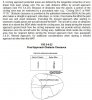
What would be a "normal" speed for a Lear like this one in the pattern? At 140 KIAS you could just barely get a 2.5 nm final (ignoring wind) to 34 using 30° banks if you flew a right downwind. Of course the only reason you'd land on 34 would be for a northerly wind which would shorten the final slightly because your path in the turns wouldn't be exactly circular at a constant bank and IAS. At 150KIAS the final would shrink to about 2.3 nm. This is all based on almost "brushing" the Class B inner ring and staying below 2300 MSL on downwind, 1900 MSL while turning to base and final. On a left downwind it would be quite a bit tighter. Is a 2 nm final sufficient for this type of airplane?
 
What would be a "normal" speed for a Lear like this one in the pattern?
That would depend on weight, but I would say the mid-range of ref speeds would be 115-120 knots. You circle with 20 degrees of flaps which means you are not supposed to be slower than ref +20 unless you limit your banks to 15 degrees. So that would mean you would be circling at 135-140 knots.

On a left downwind it would be quite a bit tighter. Is a 2 nm final sufficient for this type of airplane?
If you look at the circle to land diagram the Lear 35 circles as a category D so you need to be within 2.3 nm of the end of the runway anyway to stay in the protected area.
 

Attachments

  • Circling approach.jpg
    Circling approach.jpg
    111.2 KB · Views: 15
We got Breiling reports regularly when I taught at Simuflite. "Entry level" jets (Lears, Citations, older airplanes) and turboprops had significantly higher accident rates than big iron (G's, F's, etc). Differences were thought to be due to crew experience and training.
 
Differences were thought to be due to crew experience and training.
I don't know about training but the crew seems to have been quite experienced.

http://www.ntsb.gov/ntsb/brief.asp?ev_id=20100105X11839&key=1

According to the operator, the captain was hired in October 2003, and had accumulated approximately 7,000 total flight hours, and approximately 3,500 hours in Learjets. The first officer was hired in February 2005, and had accumulated approximately 7,000 total flight hours, and approximately 3,000 hours in Learjets.
 
Back
Top