KC135 down in Iraq

ArrowFlyer86

En-Route
PoA Supporter
Joined
Jul 17, 2019
Messages
3,285
Location
Around
Display Name
Flight
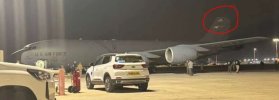
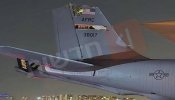
The one that landed is missing several feet of the vert stab
 

Attachments

  • FB_IMG_1773361051945.jpg
    FB_IMG_1773361051945.jpg
    29.4 KB · Views: 120
How would two KC's wind up in close proximity? Is that a function of refueling procedures, or just crazy happenstance?
 
Combat operations and high optempo is a killer even over friendly territory…Hope the outcome is loss of equipment only…prayers for all involved.
 
How would two KC's wind up in close proximity? Is that a function of refueling procedures, or just crazy happenstance?
Consolidating gas between oncoming and off-going tankers or perhaps even practice plugs as every training matrix requires X number every so often for each pilot.
 
Saw on another forum that they don't fly with chutes in the back anymore? I remember hopping on a C-130 a couple decades ago and there were some hanging from a rack.
 
Consolidating gas between oncoming and off-going tankers or perhaps even practice plugs as every training matrix requires X number every so often for each pilot.

I had no idea tankers could transfer between each other. Wow. I guess that explains it!
 
Wish I had a camera the day Tuna was dumping gas to get light enough to have enough power to get connected up to the tanker, to get gas.

We were flying a tanker by the way….
 
Saw on another forum that they don't fly with chutes in the back anymore? I

That is correct. I believe they took them out of the -135 a decade or so ago.

--brk brk--

yes tankers have receiver capability; they practice plugs as "receiver" as part of their quals.

On the dedicated receivers side of the house, some airframes can even give fuel back. In the Buff we could "reverse-AR" since the tank pumps were large enough to accomodate the fuel px required. Emergency use only. I think the C-5 is capable of it too but not sure.

BL, tankers fly as 2/3-ship not counting their receivers in two, with relative frequency. They also do (dry) plugs as receivers for currency, or live plugs for fuel management/receiver queue as already highlighted by another poster upthread. Mid airs happen, it's just rough when you don't have parachutes.
 
I'll ask the question. Why didn't they have parachutes? I can understand that maybe the odds were low of getting out if there was a problem, but why not give somebody a chance for their last X seconds is the thought that comes to my mind.
 
I'll ask the question. Why didn't they have parachutes? I can understand that maybe the odds were low of getting out if there was a problem, but why not give somebody a chance for their last X seconds is the thought that comes to my mind.

think about how the guy will get away from the aircraft without be splattered on the tail or hitting the leading edge of the wing.
 
think about how the guy will get away from the aircraft without be splattered on the tail or hitting the leading edge of the wing.
I get that. But if the aircraft is tumbling out of the sky, like we've all seen the tragic videos of B-17's and such in ww2, if they can get out they might have a chance. That said, I don't know anything about the risks or statistics around any of it. And even if it was close to impossible, I'd rather it be someone that was fighting for that chance, rather than waiting for what was inevitable. Maybe I'm being too simplistic about it.
 
That is correct. I believe they took them out of the -135 a decade or so ago.

--brk brk--

yes tankers have receiver capability; they practice plugs as "receiver" as part of their quals.

On the dedicated receivers side of the house, some airframes can even give fuel back. In the Buff we could "reverse-AR" since the tank pumps were large enough to accomodate the fuel px required. Emergency use only. I think the C-5 is capable of it too but not sure.

BL, tankers fly as 2/3-ship not counting their receivers in two, with relative frequency. They also do (dry) plugs as receivers for currency, or live plugs for fuel management/receiver queue as already highlighted by another poster upthread. Mid airs happen, it's just rough when you don't have parachutes.
I had no idea tankers could transfer between each other. Wow. I guess that explains it!
Almost no KC-135s can take gas as a receiver.

There’s only 8 KC-135Rs that are receiver capable (there may be less now, but there were 8 when I was flying them). They’re all at McConnell. By the tail flash, this doesn’t look like one of them.
 
Last edited:
think about how the guy will get away from the aircraft without be splattered on the tail or hitting the leading edge of the wing.
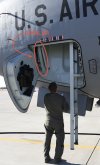
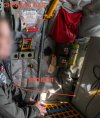
The Boeing engineers are way ahead of you. KC-135 crew gets in the plane by climbing up a ladder in the “crew entry chute.” If you search for a picture online, you’ll see that the chute is on the lower forward fuselage on the left hand side. There’s a door that opens to allow the crew to enter. At the top of the chute, there’s a large metal pole that usually sits flush against the fuselage. That’s the “chinning bar.” In flight, if you had to bail out, you would release the chinning bar and it would fold down horizontally. This would cause the crew entry chute door to separate from the aircraft and simultaneously drop a spoiler down about 5 feet into the slipstream, forward of the chute. A crew member would hang from the chinning bar and let go, falling down the chute and hopefully the spoiler would allow them to fall far enough that they would clear the aircraft on the way down.
IMG_0179.jpegIMG_0180.jpeg
 
Last edited:
Hey hey, easy… Tuna isn’t a FLA. Took me a minute to remember his name!

SLJO is a FLA.
 
That is correct. I believe they took them out of the -135 a decade or so ago.

--brk brk--

yes tankers have receiver capability; they practice plugs as "receiver" as part of their quals.

On the dedicated receivers side of the house, some airframes can even give fuel back. In the Buff we could "reverse-AR" since the tank pumps were large enough to accomodate the fuel px required. Emergency use only. I think the C-5 is capable of it too but not sure.

BL, tankers fly as 2/3-ship not counting their receivers in two, with relative frequency. They also do (dry) plugs as receivers for currency, or live plugs for fuel management/receiver queue as already highlighted by another poster upthread. Mid airs happen, it's just rough when you don't have parachutes.
Why? Why would they take the parachutes out?
 
That is correct. I believe they took them out of the -135 a decade or so ago.

--brk brk--

yes tankers have receiver capability; they practice plugs as "receiver" as part of their quals.

On the dedicated receivers side of the house, some airframes can even give fuel back. In the Buff we could "reverse-AR" since the tank pumps were large enough to accomodate the fuel px required. Emergency use only. I think the C-5 is capable of it too but not sure.

BL, tankers fly as 2/3-ship not counting their receivers in two, with relative frequency. They also do (dry) plugs as receivers for currency, or live plugs for fuel management/receiver queue as already highlighted by another poster upthread. Mid airs happen, it's just rough when you don't have parachutes.

No KC-135 tanker has a refueling receptacle, unless they’ve recently been modified. Only the EC/RC versions have that capability, if I remember correctly.

I’ve got about 5000 hours in B-52G/H’s (when dinosaurs still roamed the earth), and I don’t recall any capability to reverse refuel any tanker. If I’m wrong, someone, please, show me the -1 procedure. I’ve got an inquiring mind…
 
The S-3A could always take fuel, the B was plumbed to give fuel via a pod on the wing station. So we could both receive and give.

One thing they did was take from -135s and -10s and shuttle it in country to give away… one reason being it DID have ejection seats and was more suited to being where it could get shot.
 
No KC-135 tanker has a refueling receptacle, unless they’ve recently been modified. Only the EC/RC versions have that capability, if I remember correctly.

I’ve got about 5000 hours in B-52G/H’s (when dinosaurs still roamed the earth), and I don’t recall any capability to reverse refuel any tanker. If I’m wrong, someone, please, show me the -1 procedure. I’ve got an inquiring mind…
If you read my post above, eight KC-135s are refuelable. They’re all stationed at McConnell AFB.

I don’t have a -1* in front of me, but @hindsight2020 is correct that straight (non-air refuelable) KC-135s can be “reverse AR’d” by certain receiver aircraft. B-52 being one of those. It’s a long process and the fuel doesn’t transfer quickly and in only goes into the aft most tank, so CG could become a problem if you needed to take on a lot of fuel, but rest assured, B-52s reverse AR**-ing KC-135s has been around since ol’ Curt LeMay roamed the halls of SAC.

*Dash One: Aircraft Flight Manual
**AR: Air Refuel
 
Last edited:
Absent a transfer, would more than one KC typically fly in close formation with each other?
 
Why? Why would they take the parachutes out?
Mostly weight (fuel) savings. Add to that, bailing out of a KC-135 was pretty rare (it’s happened once in the history of the jet). It’s a very controlled maneuver, where the plane is straight and level, flying along and you had to bail out. It wasn’t made for an out of control aircraft—which it seems that this one might (or probably) have been.
 
Absent a transfer, would more than one KC typically fly in close formation with each other?
Define “close.”

Close enough to hit each other? Not unless somebody or something really screwed up. We’d fly a lot of formation (we called it “cell”). But we were typically one mile in trail, stacked up (or down, depending) in 500 foot increments.
 
Mostly weight (fuel) savings. Add to that, bailing out of a KC-135 was pretty rare (it’s happened once in the history of the jet). It’s a very controlled maneuver, where the plane is straight and level, flying along and you had to bail out. It wasn’t made for an out of control aircraft—which it seems that this one might (or probably) have been.
My thought was to ease the maintenance burden of the parachutes going mostly unused, but still having to be unpacked and inspected and all the work that entails. That's a lot of man hours for equipment that never gets used. Until you need it.
 
Reporting all six dead…guess it was inevitable considering…RIP
 
The Boeing engineers are way ahead of you. KC-135 crew gets in the plane by climbing up a ladder in the “crew entry chute.” If you search for a picture online, you’ll see that the chute is on the lower forward fuselage on the left hand side. There’s a door that opens to allow the crew to enter. At the top of the chute, there’s a large metal pole that usually sits flush against the fuselage. That’s the “chinning bar.” In flight, if you had to bail out, you would release the chinning bar and it would fold down horizontally. This would cause the crew entry chute door to separate from the aircraft and simultaneously drop a spoiler down about 5 feet into the slipstream, forward of the chute. A crew member would hang from the chinning bar and let go, falling down the chute and hopefully the spoiler would allow them to fall far enough that they would clear the aircraft on the way down.
View attachment 150752View attachment 150753
The E-3 has a similar bailout chute. They took parachutes off the E-3 before I got there in 2001. Pull the red handle to blow the door. Throw a tool box down the chute to hopefully rip off all the blade antennas on the bottom of the fuse. First lucky guy grabs the chinning bar, dangles, and lets go. Rinse, lather, repeat.
 
My thought was to ease the maintenance burden of the parachutes going mostly unused, but still having to be unpacked and inspected and all the work that entails. That's a lot of man hours for equipment that never gets used. Until you need it.
Gonna guess that a half-dozen parachutes wouldn't really figure in the maintenance costs. Lost in the noise.
 
Gonna guess that a half-dozen parachutes wouldn't really figure in the maintenance costs. Lost in the noise.
Nor, I think would they weigh so much as to make a significant difference in fuel consumption.

But at ROTC summer camp we all got to ride in a -135, including a refueling mission. We all had to don parachutes during that, but, of course, with no instructions on how to bail out.....

Ron Wanttaja
 
Saw on another forum that they don't fly with chutes in the back anymore? I remember hopping on a C-130 a couple decades ago and there were some hanging from a rack.
I flew C-130s. There were 30 parachutes in the cargo compartment, but we often had far more people on board. I don't know much about KC-135s.
 
Back
Top