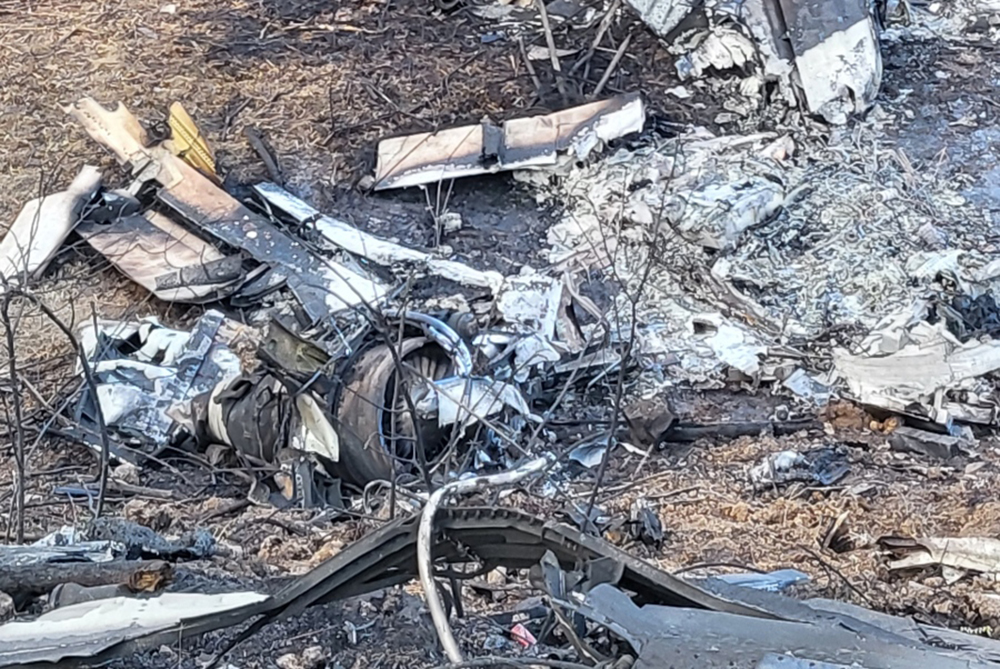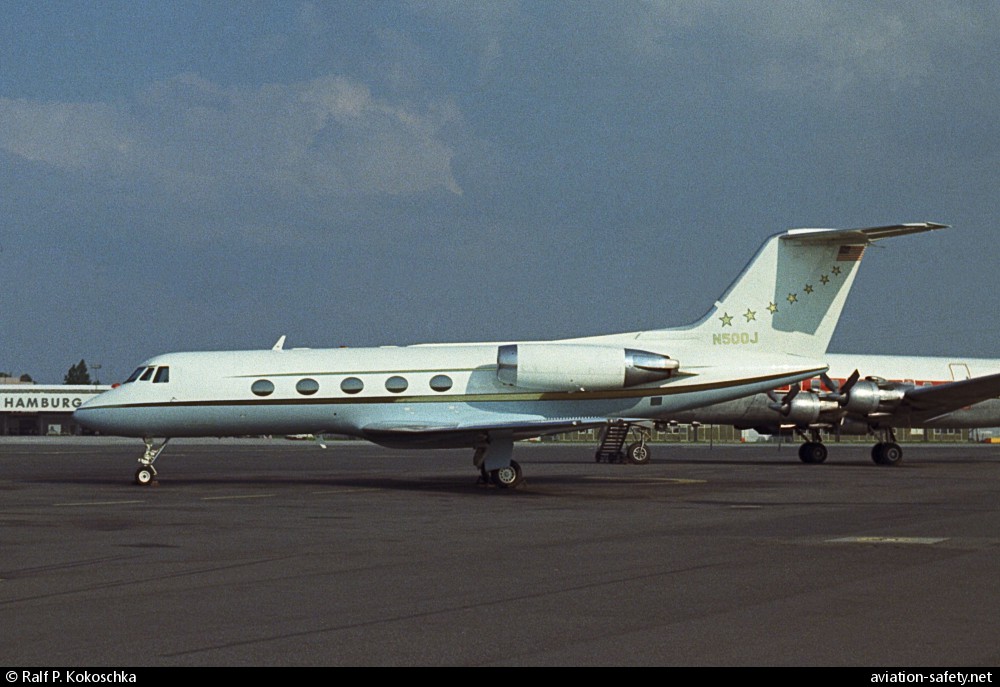
Ingalls Field VA 5 dead

Reported to be an 1125 Astra. Tabletop airport. With winds howling out of the west all day, emergency landing would have been challenging.

KHSP 101855Z AUTO 28019G38KT 10SM SCT020 BKN024 OVC045 M02/M08 A2965
 
Reported to be an 1125 Astra. Tabletop airport. With winds howling out of the west all day, emergency landing would have been challenging.

KHSP 101855Z AUTO 28019G38KT 10SM SCT020 BKN024 OVC045 M02/M08 A2965
Looks like it came up short. I’ve flown into HSP a few times, mostly flying the ILS 25. With the winds coming from the west, they’re whipping right over the ridge causing a HUGE downdraft 9n short final. While I was in a PA32, I wouldn’t want want to fly in up there in those conditions.
 
Early reports indicated the HSP landing was a divert due to an emergency. However, a Virginia State Police (VSP) statement on 3/11 indicates that HSP was the intended destination.

VSP statement excerpt:

“The flight originated in Fort Lauderdale, FL and was scheduled to land at Ingall’s Field. According to the plane owner’s attorney and family friend, the occupants were attending an event at the Homestead Resort in Hot Springs, Va. The occupants of the aircraft were the Pilot (male), First Officer (Co-pilot), (male) and three passengers, (one male, one female and a male juvenile). “
 
Wind was insane yesterday across most of the state. Last airport I would want to go to is HSP.
 
Passengers identified as owner of a south Florida flight school and jet charter company, his wife, and son. Accident aircraft was one of the jets listed for his jet charter company.

Of the two pilots and aircraft owner, I find only one listed in the FAA Airman Database (one pilot) and that one is listed for a 1st medical with no certificates. Non-U.S. licensed?
 
From today’s news reports:

No indication that flight crew declared an emergency (NTSB investigator in charge)

Three of the five people on board were not from the United States, and are from Russia, India, and Spain, complicating identification of victims (VSP)
 
From today’s news reports:

No indication that flight crew declared an emergency (NTSB investigator in charge)

Three of the five people on board were not from the United States, and are from Russia, India, and Spain, complicating identification of victims (VSP)

No ATC archive of last transmission?
 
Looks like they hit the same spot as Johnson & Johnson in 1976:


That black spot on the side of the hill lasted for years.
 
Last edited:
ILS on runway 24. Ceiling 4500 AGL with good visibility underneath. Winds were 280 at 19G38. Came up short. Not enough gust factor in approach speed?

Not a jet guy, but engines take a bit longer to spool up, no?
 
ILS on runway 24. Ceiling 4500 AGL with good visibility underneath. Winds were 280 at 19G38. Came up short. Not enough gust factor in approach speed?

Not a jet guy, but engines take a bit longer to spool up, no?
As @Brad Z indicated, the wind conditions that day would put a huge downdraft at the approach end of the runway. Probably strong enough that I don’t think gust factor or spool-up time would make a difference.
 
As @Brad Z indicated, the wind conditions that day would put a huge downdraft at the approach end of the runway. Probably strong enough that I don’t think gust factor or spool-up time would make a difference.
Two corporate jets have now crashed 500' below DH there, one in fog, the other in wind. What can be common to both? Glideslope antenna? Flight director model? Other??
 
Pilots trying to get into an airport when it’s a bad idea to go there?

Wind and rocks don’t play nice. At first glance it appears that airport is on a ridge. Probably should have gone somewhere else. I didn’t read the article but know corporate pilots get alot of pressure to get the job done.
 
Getting the job done without exposing the flight to unacceptable risk is paramount. In this case there was unacceptable risk: strong gusty winds and a very likely downdraft on the leeward side. Only way to avoid it, besides not landing there, was to land long and overfly the riskiest spot. With a 5600 foot mountain top runway and an approach speed of ~125 knot [plus gust factor], not a wise thing to attempt. I’ve flown a jet in there on a light wind day and it’s intimidating enough.
 
SIC twice called for a go-around.

NTSB Final Report for N1125A

NTSB probable cause: The PIC’s continuation of an unstabilized approach in gusting wind conditions and his failure to monitor the airplane’s altitude during the approach, which led to a descent into terrain short of the runway. Contributing was the flight crew’s failure to set the appropriate altimeter setting and failure to properly configure the avionics for the ILS approach.
 
Two corporate jets have now crashed 500' below DH there, one in fog, the other in wind. What can be common to both? Glideslope antenna? Flight director model? Other??
In the current crash, failure to tune to the ILS, which meant the approach display was generated by the FMS, not the ILS parameters. There was also failure to acknowledge an unstable approach and two go around calls by the PM ignored by the PF.

In the J&J crash, another unstable approach, an incorrect altimeter setting, and continuance of an approach into fog extending to ground level and 1/8 mile visibility.

There were other crew performance failures and issues related to approach avionics.

Ignoring those conditions caused the ground to rise up and smite both aircraft.
 
Pilot was visual, visual glide slope indicators were available, yet he stubbed it into the hill (which rises about a thousand feet in a thousand feet, so ~45°).
 
Pilot was visual, visual glide slope indicators were available, yet he stubbed it into the hill (which rises about a thousand feet in a thousand feet, so ~45°).
The NTSB report stated, "A review of his training records found that multiple instructors had listed flight management system (FMS) use as one of the pilot’s weaknesses."

Unfortunately in my experience this is usually paired with an over-reliance on automation and tendency to ignore what's out the windshield.
 
Nothing that flying a classic stick and rudder VFR plane couldn’t have fixed.
 
Back
Top