I'm new and am working on getting my private license, any tips?

hossdaboss69

Filing Flight Plan
Joined
Dec 7, 2025
Messages
1
Display Name
HossDaBoss
I recently started flight school and I'm new to the whole aviation thing, I will take any help or suggestions for my journey and anything would be helpful.

 
Fly as often as you can.​
​
Get the solo under your belt asap.​
​
No idea where in the country you are, but use the winter to get the course work behind you.​
​
We all hit slumps…power through.​
​
If you are not connecting with your instructor, just say that you your instructor. Instructors hear it all the time (he’s probably as frustrated trying to click with you). Even if you are comfortable now, watch interactions around you at the school & spot likely replacement candidates. Talk with other students. You want options if your instructor gets the call up to the bigs.​
​
Enjoy.​
 
- "Chair fly." Between lessons, sit in a chair and practice everything you've been taught. Make hand motions for the controls, make radio calls, turn your head as though checking traffic, etc. Believe it or not, this helps a LOT, and it's free.

- Connect with other students. Often you'll help each other over tough spots, and you'll each catch onto things your instructor might not make clear. Again, this is free.

- Study and be prepared for each lesson, otherwise you're wasting time and money.

- Fly with other private pilots whenever you can. You'll learn from watching how they do things.

- Take a scanner or aviation radio to the airport and listen to radio calls. You'll catch on to the phrasing more quickly.

- Arrange for your paycheck to be directly deposited to the flight school's account, and get the school to give you a small allowance for food and housing. It's simpler that way.
 
In addition to all the above great info... Fly as much as you can, or at least do not have LONG pauses in between. A LOT of flying in muscle memory, so the more frequently you fly, the quicker it is locked in.
 
Welcome to leaning to fly :)

Just to reiterate

- fly as often as you can. 2-3 x per week will help retain information. And save you money. Schedule out as far as they will let you.

- do your homework before lessons.

- sign up for ground school OR start self study now.

- you need a FAA flight physical. If you’re not 100% healthy, schedule a consultation with an FAA medical doc first to let them help guide you through the process.
 
- "Chair fly." Between lessons, sit in a chair and practice everything you've been taught. Make hand motions for the controls, make radio calls, turn your head as though checking traffic, etc. Believe it or not, this helps a LOT, and it's free.
This. Lots. The best student I ever had was a chair flyer, and with less than 1/3 of the time it normally took us to solo people, I was trying to figure out what to do with him until he was old enough to solo.
- Connect with other students. Often you'll help each other over tough spots, and you'll each catch onto things your instructor might not make clear. Again, this is free.
Plus, I think one (of many) reasons people don’t stick with it is that they don’t know other people who fly. Most people are social by nature, and if aviation isn’t a common bond with anyone you know, you’re probably going to give up flying sooner rather than later.

- Study and be prepared for each lesson, otherwise you're wasting time and money.
As @Gilbert Buettner stated, an instructor with a syllabus who assigns homework is huge.
 
You need to retain everything you learn in a lesson. Forever. You can't just remember it long enough to pass a test. Therefore, it's one of those endeavors that demands full attention, no time to engage in other learning activities that distract you and dilute your time available to study. It's a matter of life or death, actually. Some may disagree, imo.
 
Welcome to POA ,make sure you will pass a medical,start a study program so you can discuss the information you don’t understand,find an instructor that wants to teach as apposed to building time.. remember flying is supposed to be fun.
 
From my boilerplate for my CAP cadets and Young Eagles, works for the adults too.

Take a deep breath. Check your savings account.

Everything FAA

To start - the FAA Medical - Form 8500-8, google a PDF version.
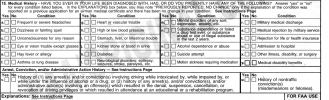
The important question (and the only one that really matters) is #18.

I would suggest going over the form with your family physician. DO NOT LIE or otherwise evade on the medical form. This is a Federal document.

If you and/or family physician have any questions schedule a CONSULTATION with an AME. If the AMEs office will not schedule a CONSULTATION, go find another AME.
If there are any issues, the AME will explain what tests and/or reports are needed. Once you have all the information, tests and reports, then make an appointment for another consultation.

If the AME sees no problems, then go ahead and fill out the MedXpress form (the online version of the PDF form) for the Class 3 medical exam for the meeting with the AME.

Books to read and learn for both the written exam (which is really online these days) and to learn about flying:

https://www.faa.gov/regulations_policies/handbooks_manuals/aviation

Aeronautical Chart User’s Guide
FAA-H-8083-3C Airplane Flying Handbook
FAA-H-8083-28A, Aviation Weather Handbook
FAA-H-8083-25C Pilot’s Handbook of Aeronautical Knowledge (aka the PHAK)
FAA-H-8083-1B Weight & Balance Handbook

All the books from Sportys, Gleim, Jeppesen, Kings are nothing more than these books, but these are free!

Most of us fly with an iPad and Foreflight. For a beginner don't worry about the iPad for now, get the VFR (visual flight rules) paper chart (sectional) for where you live. You can order them from Aircraft Spruce or Sportys or MyPilot store or many other places. Start learning about the colors, the symbols, the widgets, etc.

Next - don't go buy all sorts of stuff for flying. Save your money for flight training. I use a cheap backpack from Target for my headset and charts and my iPad. A knee board is a good idea, but don't go spending lots of money.

The Headset. Everyone has their preference. But you need to try different headsets to see which is best for you, pretty much like buying shoes. What's comfortable for one person isn't comfy for someone else. Most of the major headset companies offer a 30 day return period. Make use of it.

ANR - Active Noise Reduction available in Bose, Lightspeed and Dave Clarks. Bose tends to be the most expensive, Lightspeed not far behind but all 3 are great. Sigtronics and Telex are also quality headsets.

Dave Clark also makes non-ANR headsets.

These are the major headset companies - they offer sales at various times during the year, so you don't always need to pay retail. You may find used headsets online, too.

Where are you located? Join your state's pilot association. We're always happy to have company on the flyins (and to share costs). Meet interesting people.

Well....you asked.
 
Last edited:
Do not put any money that you can't afford to lose in a flight school account (there's a history of flight schools going bankrupt and taking everyone's money). Do not borrow any money for flight school. Fly often, study between flights.
 
Last edited:
Fly as often as you can.
Agree
Get the solo under your belt asap.
Don't sweat this, I have had students solo at 12 hrs, I have had other solo at 50 hrs, Nearly all my students take the checkride between 60-70 hours, hours when they solo doesn't change the total hours almost at all. The fly as often as you can is a much bigger factor if you go weeks or more without flying then the total hours to checkride starts climbing.

Also don't shoot for doing you private rating in minimum hours, 65 hr applicants fly way better and have a much higher pass rate than 40 hr applicants. Plus both will still need 250 hrs (unless part 141, but still needs hours) to take the commercial test.
No idea where in the country you are, but use the winter to get the course work behind you.
Agree
We all hit slumps…power through.
Agree
If you are not connecting with your instructor, just say that you your instructor. Instructors hear it all the time (he’s probably as frustrated trying to click with you). Even if you are comfortable now, watch interactions around you at the school & spot likely replacement candidates. Talk with other students. You want options if your instructor gets the call up to the bigs
Agree, a good instructor will probably at some point in your training recommend you fly with another instructor. Especially if something isn't clicking for you.
Start figuring out your medical situation now.
If you haven't already done this, make sure you fully understand even the most minor issues you list or should list on your application before you go for the exam. Insist on a consult and don't show the examiner any part of the application until you fully understand what any issue you might have might require. The problem is once the examiner starts the exam, he is required to finish it with what ever information you can provide at the time of the exam, which might delay or cost thousands of dollars to get vs coming fulling prepared and knowing what to expect. It might be as simple as bringing the right test result and documentation to avoid the delays and expense. If something comes up that is to costly or difficult to get around you should evaluate if Sport pilot is what you want to do vs other ratings that require a medical. But if you mess up the medical application process, the sport pilot option is no longer available.

Lot of other good advice give on this thread already. As much as possible hang out around the airport and other pilots. Maybe study at the airport if they have a place where you can see/visit with pilot arriving and departing. Ask about organizations like flying clubs, Experimental Aircraft Association, and other organizations that are active there and have meetings you can attend, learn, and network with other pilots.

Brian
CFIIG/ASEL
 
I recently started flight school and I'm new to the whole aviation thing, I will take any help or suggestions for my journey and anything would be helpful.
A. Have the funds to finish now.
B. Plan to fly 3x a week.
C. If your CFI doesn’t use a syllabus and a training folder, get a different CFI. You should always know what the next lesson is, what the objective and completion standards are, and how you are progressing.
D. Flight training is one element, quality ground training is required. That can be augmented with self study, but you need one on one ground with your CFI too.
 
Keep on keeping on, keep pushing.
I've been lucky to have really liked the 2 CFI's I've had. If you can't stand yours, try your best to find another.
Remember that it's normal when learning any hand/eye physical skill to have days when you seem to get worse. That's part of the learning process, work through it.
Before your first solo, learn a little bit about risk management. Those "attitudes to avoid" seem corny, but they're important.
Remember that more or less, the same things that lead people to fly are the things that lead us to not listen enough to people that know better.
As others have said, keep the tempo up. It's faster and in the long run less expensive.
Remember to have fun.
 
I recently started flight school and I'm new to the whole aviation thing, I will take any help or suggestions for my journey and anything would be helpful.

Flying as frequently as possible is valuable, but it needs to be balanced with time to think between lessons. Many student pilots aim to fly every day in hopes of reaching the finish line quickly. While that pace can boost short-term retention, material learned too quickly often fades just as fast. Spacing flights by a few days - and using that time for self-reflection and review - will lead to a deeper understanding and stronger long-term progress than simply stacking flights back-to-back to log hours.

It also helps to record your flights with a GoPro or similar camera. A cockpit is an awful classroom; there is too much happening at once, and you will not remember everything your instructor says. Reviewing a recording afterward will significantly increase your retention - at least that's been my experience.
 
I have 200 flying hours as of today .. I am considering my self as NEW pilot and still learning

1- Read alot

2- Watch aviation videos alot

3- Talk to pilots. each pilot has different story and perspective even if they talk about the same landing or trip. listen to them all

Aviation is not just flying .. it's a continuous learning and experience

Good luck
 
I hope the OP is out there and we have not scared you off. If our good-natured ribbing was a putt-off, you can try The Pilot's Place forum. It's a bit gentler and less cynical.

But remember, we only tease those we love.
 
Fly twice a week if you can. Read up on aircraft operation, systems, and navigation, especially material appropriate for your current lessons. Ask lots of questions. For the plane you fly, read and use the POH. If you have the opportunity. Fly a variety of aircraft during your training. They are not the same, but not all that different. I think it is beneficial to exercise your flying brain by controlling different aircraft (low wing, high wing, tail wheel). I got to fly a C152, C172, PA28-140/180, plus a Citrabria for spins during training.
 
I hope the OP is out there and we have not scared you off. If our good-natured ribbing was a putt-off, you can try The Pilot's Place forum. It's a bit gentler and less cynical.

But remember, we only tease those we love.
Given my upbringing, when people are gentle and non-cynical with me, I assume that I'm in a near death situation that I'm not aware of yet....or that it's a trap.
 
Enjoy it, it's going to be one of your most exciting and memorable experiences. Your long solo cross country will be an amazing adventure.
 
Part 121 or 61?

1. Get a medical done asap
2. Get your written done sooner than later
3. The various YouTube channels or podcasts like Part Time Pilot helped me understand some lessons in smaller bites
4. If you know that you will finish training, “buy once, cry once” on a headset. I you aren’t sure then don’t spend a ton of money on stuff like a Bose headset.
5. ForeFlight and sky vector is awesome, poke around at everything you can. It will really help your understanding of maps.
6. Same thing for the aviation weather website, as well as rhe aviation weather handbook
 
Get your written done sooner than later
If you've already started your training, then it might not matter. But there is 24 month expiration on the Written Exam. So if you think there is any chance your flight training will be delayed, then I'd hold off on the Written. Study for it as it will help you in your training. But don't rush to actually take the test if you think "life" or whatever may delay your training.

As for the medical, if you're planning to work as a pilot, DO get it right away. If there is anything that stops you from getting a 1st or 2nd Class Medical, that will stop you from flying professionally. I'm sure the flight school is telling you that you need at least a 3rd Class sooner than later to Solo, but it's not as big of a rush if you're going to fly GA.
 
Plan ahead!

- Do most of your ground school first. Don't do just test prep, actually learn it.
- Save as much money as possible that you can draw from for training. The key to flight training is momentum and you dont want things like vacations, moves, finances stopping you from flying when there are already other things that can (illness, weather, maintenance, etc.)
- As you are almost done with ground, start flight lessons. This will allow you to get a visual of the things you learn and help it sync in. Take your FAA written before more than 2-3 flight lessons. This will prepare you to be ahead of the airplane mentally for flight lessons. They will go smoother and easier and youll have to redo less lessons and spend less
 
Have fun following the great advice and insight posted thus far.

Keep us posted on your progress!!
 
I recently started flight school and I'm new to the whole aviation thing, I will take any help or suggestions for my journey and anything would be helpful.
Here's the critical part of FAA Form 8500-8. Do not go for a medical Class 1, 2 or 3 unless you can truthfully answer NO every one of them. For anything that is a YES, make an appointment with an AME for a CONSULTATION. Discuss the issues. They will give you direction how to respond, such as additional testing, letter from your personal physician, etc. Then and only then go for the actual medical exam with the AME.

If the AME will not do a consult, find another AME.

For example, #X - Surgery. Yep, I had total knee replacement. Letter from orthopedic surgeon describing such, confirming the physical therapy was successful, and in his opinion there's no limitation to my flying. A complete no-brainer.

In today's world, #M, N and O can be very time-consuming and expensive to resolve.

1767561790944.png
 
Last edited:
And P can be even worse, if it's surmountable at all.
With a few well documented cases of planes going down intentionally, and the fact that no one nor their MDs, councleors, etc. can guarntee the issue will NEVER come up again, it's not surprising that its a No Go item.
 
BTW - that's my boy - he's too young to solo - just slow rolling his way across the next few years to get ready to solo when he turns 16 - he's going Sport Pilot for now.
 
Back
Top