IFR practice and proficiency plans

Chris Mixon

Pre-takeoff checklist
Joined
Oct 27, 2022
Messages
105
Display Name
Chris Mixon
Home Airfield
KIYA
I received my IR in December of last year and started a two-approach and a hold each month plan, which I felt was helping me stay compliant with the regulations, but I didn't feel like I was becoming more proficient. Overall, I fly about 10 hours a month on average, with two to three under the hood.

This 2-approach a month plan fell apart when 114SG was down for 6 months for multiple problems, so I did an IPC with my CFII yesterday. While I was "safe enough", I was not where I felt I needed to be.

What plans do y'all use to stay competent and proficient?
 
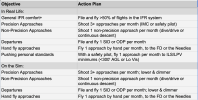
Chris, you point out an ongoing challenge for all of us. Not sure I'm doing all that well at it, but years ago I set out for myself an Action Plan:
wam-action-plan.png
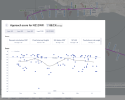
... and I upload all my flights to FlySto.net for analysis. With humility, here's a summary of my last 100 IRL approaches (instrument and visual):
wam-last-100-approaches.png
Progress is elusive. :cool:
Wayne
 
Last edited:
What I do? 2-3 IFR checkrides per year.

I would maybe suggest getting with the CFII who did your IPC and putting together a plan to address your specific weak points, to include flying with an instructor once a month or so until you’re comfortable with where you’re at.
 
I file IFR if traveling, and do an IPC every 6 months or so. Real IFR is usually less task-saturating than training.
 
I file IFR frequently, but flying IFR in VMC isn't great at building proficiency for me. I need to fly with a safety pilot once every couple of months if I don't get real IMC time. To get real IMC time, I actively look for cloudy days to fly where ceilings are above minimums but without danger of icing and thunderstorms. On those rare days I do a bunch of approaches.

The other problem is that IFR in the busier parts of the Northeast is becoming... challenging. NYApp will now route me out to Scranton when I'm trying to fly to New England. So I often find myself opting for VFR + flight following rather than IFR for my cross country flights, which also doesn't help with proficiency.
 
Flight in the system helps with procedural proficiency which includes communications, avionics, and most elements of IFR competence except hand-flying in the clouds. Those who are able to add clouds to that are in decent shape, but if it’s the same old routes, we can become complacent.

Simulation and flight with a safety pilot can help with a lot, but you have to be creative enough to create challenges. And simulation - and often safety pilot work) miss the communications component. If you can do that, simulation can be a real boon. (When is the last time you flew an ODP as part of a sim session even though it doesn’t count for currency?) Or subscribe to something like PilotEdge.

Flights with a CFII can round things off but I’ve kind of fallen out of love with the IPC unless it’s an “IPC+” - covers more. Even with the liberalization of the ACS, I think that while it is a baseline, it’s too targeted toward minimal checkride skills rather than things the pilot may need to work on.
 
….
This 2-approach a month plan fell apart when 114SG was down for 6 months for multiple problems, so I did an IPC with my CFII yesterday. While I was "safe enough", I was not where I felt I needed to be.

What plans do y'all use to stay competent and proficient?
The most proficient most recreational flyers will be is on check ride day; the hand flying atrophies greatly and quickly thereafter since most don’t keep practicing at the rate they were before the check.

When our plane was down for an engine six month swap, I rented and took a CFII along to work on some things I wasn’t truly comfortable with, mostly some weird setups like a back course or arc with lower mins if able to ID a specific fix.

Night foggle work can introduce some other challenges, as can a technique I recently picked up which is a dealer’s choice option where the Safety Pilot tells me whether I continue at mins or not. If no, then we execute missed as published then go to the alternate for a full stop. We usually do this with flight following, so radio work gets some exercise, too.

Having said that, there’s no real shortcut to maintaining proficiency, which is why identifying your ‘comfort’ limits as important as knowing where the nearest VMC is when you’re flying IFR.
 
The most proficient most recreational flyers will be is on check ride day; t
I disagree. I don't think it was ever really true, but it's definitely not true today.

If you change the statement to "The most proficient most recreational flyers will be at the task of hand-flying without visual reference is on check ride day," I can agree. But while an essential skill, that compromises maybe 10% of what flying IFR is all about. (I used to say 20%). If they're so proficient, why all the discussions about taking baby steps after the checkride?

IMO, the "typical" pilot who passes the instrument checkride, even in the past, has a very limited skill set, almost zero real world experience (even if they trained in actual). They never did a visual approach, didn't have to figure out how to fly an ODP, barely knows what a SID or a STAR is, probably never got an enroute amendment on the CFII-packaged instrument cross country. Depending on where they trained, they may have accomplished 90% of their approaches without talking with ATC and are still mic-shy. The list can go on forever.

The flight portion of the checkride is three approaches they've done 50 times during training, a bit of "loss of primary flight instruments," and unusual attitude recoveries. If they're "lucky," the applicant will get a non-published hold. It may be a challenge, but it is a test of basic skills, not overall IFR competence. The toughest part may well be DPE-induced stage fright.

At least back then, the avionics themselves were simple which meant it was at least feasible for a typical applicant to push into the clouds soon after the checkride.

In 2025, let's add modern avionics. You don't have to go further than the questions already-certificated instrument pilots ask about how to use them, never mind my "GPS Tasks Pilots Don't Know How to Do." I'm sure I've told this one before: There are a few large flight schools which which travel to my home base for their students' checkrides. The trip is usually 2 applicants and an instructor in case something comes up. Iusually spend some time speaking with the instructors. One day, while one of their students was doing their instrument ride, I sat down with the instructor.

Me: Assuming your students pass the checkride today, are they prepared to file and fly IFR tomorrow?​
They: Absolutely not.​
​
Or are you saying that they really are the most competent they will ever be, so stay the heck out of the clouds and the system?

 
…"The most proficient most recreational flyers will be at the task of hand-flying without visual reference is on check ride day,"…

Is what I was referring to.

…IMO, the "typical" pilot who passes the instrument checkride, even in the past, has a very limited skill set, almost zero real world experience (even if they trained in actual). They never did a visual approach, didn't have to figure out how to fly an ODP, barely knows what a SID or a STAR is, probably never got an enroute amendment on the CFII-packaged instrument cross country. Depending on where they trained, they may have accomplished 90% of their approaches without talking with ATC and are still mic-shy. The list can go on forever….
This, to me, is more of an indictment on the -IIs sending the student to the DPE; assuming passing the check ride, the newly minted pilot is legal to file and fly back to an approach to mins with an ODP and via a STAR. The student may need to see that actual event during training, but they sure as heck need to be able to do it.

…
The flight portion of the checkride is three approaches they've done 50 times during training, a bit of "loss of primary flight instruments," and unusual attitude recoveries. …

Me: Assuming your students pass the checkride today, are they prepared to file and fly IFR tomorrow?​
They: Absolutely not.​
​
These two things are why I say this is an indictment on the -IIs. Though I have some ideas on how a training plan could be structured to improve outcomes, I also recognize the reality of 61.65 and the ACS performance being the lowest common denominator to check ride endorsement.

…
At least back then, the avionics themselves were simple which meant it was at least feasible for a typical applicant to push into the clouds soon after the checkride.

In 2025, let's add modern avionics. ….
I’ll simply say it there were also fewer ways for non-flying practice back in the day. I saw exactly one session in an AST 300 before I took my break from flying. Today, I can practice procedural steps on my laptop using Garmin G1000s and the GTN trainer, and desktop XP12 setup that emulates (with limitations) our 172s G5/GTN suite. Add to it services like PilotEdge and that stuff can he great homework/ground training for a student.

Again, I don’t claim to have all the answers and there are limitations, especially with 141 programs, but I don’t think it’s unrealistic for the majority of what you’ve brought up to be addressed in 40 hours of flight training, assuming a motivated student. Maybe I’m wrong, too.
 
This, to me, is more of an indictment on the -IIs sending the student to the DPE; assuming passing the check ride, the newly minted pilot is legal to file and fly back to an approach to mins with an ODP and via a STAR. The student may need to see that actual event during training, but they sure as heck need to be able to do it.
Yes they are legal but as we are fond of saying "legal ≠ safe."

I think it's less a CFII failure than an unfortunate reality. I'm not sure there is a cost-effective way around it. A real-world license to learn/personal minimums issue, far more than when earning the private ticket. Fortunately, personal minimums is a checkride task and my experience is that the "typical" newly-minted IFR pilot (there are exceptions) understands their limitations well and takes those baby steps after acquiring the rating.
 
Last edited:
Wow, lots of great discussion and suggestions here! Thanks to everyone for their input and feedback.
 
Almost impossible to be proficient as opposed to legal without owning a IFR capable airplane.

Early on, fly all flights IFR in the system regardless of actual meteorological conditions. This will hone radio technique and flows.

Go places in the airplane which forces you to fly new approaches. If proficient you should be able to read, brief, and fly any approach anywhere to mins.

Cloudy rainy day - grab your instructor and do a short flight with multiple approaches, misses, and holds. Seek IMC altitudes to the extent possible. Much harder than a long cross country since there’s little time to set things up. Ask for delay vectors if needed.

A well trained IFR pilot should be able to fly a precision approach to minimums at an unknown field the day after their checkride IMHO. That’s what the training was for.

All said, it’s the most perishable skill in aviation. Six weeks out of a cloud let alone six months and for many the scan and flow, while safe and legal still, is one titch less good.
 
Even on VFR flight **while you ARE looking out the window** ask for a practice approach into every airport to go through the procedure. If you can't get it, think of your Downwind Arrival as an Approach of sorts.

While enroute, keep a mental state that you're flying in IMC. What going to happen next and then the next thing after that. Where do you review the "Approach" into your destination, even if it is to join the Downwind. When do you descend. Don't go crazy and take all the fun out of flying and looking around to see what there is to see. But just go through different exercises that you would definately be doing in IMC.

ADDED: And I hear you. Life has a funny way of messing up your proficency and currency if you don't fly for a living.
 
Fly IFR all the time (even if the weather is good).

I'll periodically (much more than every six months) go out and do 4-6 approaches. I do each one twice, once entirely hand flown and once fully done with the AP. I want confidence that I can do either as the situation calls for.
 
Back
Top