How to fly this ILS chart exception

Blaze Merkel

Filing Flight Plan
Joined
May 2, 2026
Messages
3
Location
Knoxville
Display Name
Bat Fink
Home Airfield
KDKX
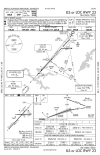
I see that there is an exception for the Eaver fix that requires you to have dual VORs (which I have), but I'm able to identify the fix using RNAV. Would it be acceptable to identify the fix with RNAV or am I required to identify it using the Holston VORTAC?
 

Attachments

  • Screenshot_20261012-035346.Files by Google.png
    Screenshot_20261012-035346.Files by Google.png
    569.6 KB · Views: 64
First, there's no requirement to even identify EAVER if you're flying the full ILS. It's only a step down for the LOC-only approach (see the little * on it that leads you to the LOC ONLY note).
Second, even if you need to identify it, you only need one VOR. Your final appoach course is a LOCALIZER not a VOR radial. (Technically, really, since most people use a combined LOC/VOR receiver).
Third, you don't need the EAVER fix on then non precision approach even, you can use the non-EAVER minima. EAVER just allows you to descend from 2500 to a lower MDA.
Finally, yes you can use the GPS to identify it, this is just a step down, not lateral guidance on the final appraoch.
 
I see that there is an exception for the Eaver fix that requires you to have dual VORs (which I have), but I'm able to identify the fix using RNAV. Would it be acceptable to identify the fix with RNAV or am I required to identify it using the Holston VORTAC?
It’s not an exception, it is a lower minimum if you have the EQ and ability to identify the fix
 
I see that there is an exception for the Eaver fix that requires you to have dual VORs (which I have), but I'm able to identify the fix using RNAV. Would it be acceptable to identify the fix with RNAV or am I required to identify it using the Holston VORTAC?
1. Yes, you can use RNAV to identify the intersection. Read AIM 1-2-3
2. You don't need to identify EAVER if you are flying the ILS. Note the asterisk; it's LOC only.
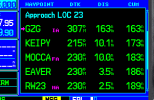
3. If you are flying the LOC, EAVER will be there if you loaded the LOC approach in your GPS (see pic)
4. What do you mean by an "exception?"

1791832190568.png
 
1. Yes, you can use RNAV to identify the intersection. Read AIM 1-2-3
2. You don't need to identify EAVER if you are flying the ILS. Note the asterisk; it's LOC only.
3. If you are flying the LOC, EAVER will be there if you loaded the LOC approach in your GPS (see pic)
4. What do you mean by an "exception?"

View attachment 155655
Re: Item 3, if the ILS 23 is loaded, does EAVER show up in the list? Without it, and needing the lower minimums, it would be difficult to degrade the ILS to LOC only (glidepath died) without going missed and starting over with a reload of the approach LOC 23.
 
…it would be difficult to degrade the ILS to LOC only (glidepath died) without going missed and starting over with a reload of the approach LOC 23.
While this technique has been taught for decades by some CFIIs, I strongly recommend against it. Prepare (brief) and set-up the approach you intend to fly, and fly THAT approach. If, at some point, it becomes impossible to fly the approach you prepared and set-up for, then execute a missed approach and find a safe corner of the sky where you can sort things out. A LOC is a different approach from an ILS even though they share the same lateral guidance, and any attempt to revert to non-precision procedures and mins while inside the FAF, especially in challenging circumstances, is to invite undesired outcomes.

G/S failures on approach are very rare, but human failures are not: don’t needlessly create another opportunity to bust your ass by trying to switch horses at full gallop.

 
Last edited:
Re: Item 3, if the ILS 23 is loaded, does EAVER show up in the list?
It does not. The ILS is the ILS. The LOC is the LOC. They’ve been distinguishing the two in the database for some years now.
Without it, and needing the lower minimums, it would be difficult to degrade the ILS to LOC only (glidepath died) without going missed and starting over with a reload of the approach LOC 23.
Going missed is what many recommend as a best practice. If you are one who wants the option to change the horse in mid-gallop, load the LOC.

Edit: @Roger Wilco, I swear, I didn’t see your ”full gallop” before I wrote that.
 
I see that there is an exception for the Eaver fix that requires you to have dual VORs (which I have), but I'm able to identify the fix using RNAV. Would it be acceptable to identify the fix with RNAV or am I required to identify it using the Holston VORTAC?
RNAV is an authorized substitution for an Intersection. I’m assuming you want to fly the Approach using conventional NAV, or why would you ask. You wouldn’t have to go through all the rigmarole of loading the Approach. Just a EAVER direct enter enter(or whatever the syntax is for your Navigator) will tell you when you’re over it.
 
While this technique has been taught for decades by some CFIIs, I strongly recommend against it. Prepare (brief) and set-up the approach you intend to fly, and fly THAT approach. If, at some point, it becomes impossible to fly the approach you prepared and set-up for, then execute a missed approach and find a safe corner of the sky where you can sort things out. A LOC is a different approach from an ILS even though they share the same lateral guidance, and any attempt to revert to non-precision procedures and mins while inside the FAF, especially in challenging circumstances, is to invite undesired outcomes.

G/S failures on approach are very rare, but human failures are not: don’t needlessly create another opportunity to bust your ass by trying to switch horses at full gallop.
When this technique was taught, there were a higher percentage of unmonitored ILS approaches than today. The pilot was advised to calculate time to MAP and start the timer for the LOC on every ILS approach just in case. Which no one does today. Also we teach a different technique for non precision approaches with a VDP calculation that was not done back then.

If you do the planning pre approach clearance, it probably is not that big of a mental switch.
 
Last edited:
When this technique was taught, there were a higher percentage of unmonitored ILS approaches than today. The pilot was advised to calculate time to MAP and start the timer for the LOC on every ILS approach just in case. Which no one does today. Also we teach a different technique for non precision approaches with a VDP calculation that was not done back then.
I was hearing about not changing approaches back when I received my instrument training over 30 years ago. Timing was to identify the MAP when there was no other method to identify it, period, not to play musical approaches. Time an ILS? Sure. You lose the GS and go missed. You still want to know where the MAP is. Sure, you can always climb, but no guarantee about that first turn until after the MAP.
 
I’ve had one. Glideslope came in and centered normally and froze. I should have realized I wasn’t that good. It took a low altitude alert to get my brain back in gear.
I’m inclined to think that it was one of the old expensive-but-crappy electromechanical instruments that betrayed you.

FWIW, I’ve flown or monitored many thousands of ILS approaches and I have never encountered a G/S failure during an approach. None nil nada. The vast majority of those were in airline operations, where the quality of the equipment and maintenance standards are both much higher than those of light GA. I have heard others talk about stuck localizer and G/S indicators on old CDIs, but I haven’t heard of any such failures with glass.
 
When this technique was taught, there were a higher percentage of unmonitored ILS approaches than today. The pilot was advised to calculate time to MAP and start the timer for the LOC on every ILS approach just in case. Which no one does today. Also we teach a different technique for non precision approaches with a VDP calculation that was not done back then.

If you do the planning pre approach clearance, it probably is not that big of a mental switch.
Apparently it’s still being taught.

The rationale for going missed, instead of trying to make the transition to non-precision procedures and minimums inside the FAF, has nothing to do with whether the facility is monitored or not and it was the same in the before times as it is now.

It may seem easy to do at your home ‘drome, flying an approach that’s very familiar, in favorable conditions, on a day when you’re fresh and on your game. Very different story at an unfamiliar airport with a more complicated procedure, in challenging conditions, when you’re fatigued and struggling to maintain situational awareness and keep up with the airplane.

Seek ways to reduce risk rather than increase it.

Just go missed. Enter a hold. No rush. Take time to get yourself together. Figure out what went wrong if you can. Come up with a solution and a plan that makes good sense. Prepare yourself and set everything up. When you’re fully ready, execute your plan.

Just my $0.02.
 
Last edited:
I was hearing about not changing approaches back when I received my instrument training over 30 years ago. Timing was to identify the MAP when there was no other method to identify it, period, not to play musical approaches. Time an ILS? Sure. You lose the GS and go missed. You still want to know where the MAP is. Sure, you can always climb, but no guarantee about that first turn until after the MAP.
So 30 you were a private pilot working on an instrumemt rating, but you know why and how things were taught.Got it.

Maybe you also might comment why 30 years ago the IR written test had a question asking if a pilot could continue an ILS approach as an LOC if GS was lost.
 
So 30 you were a private pilot working on an instrumemt rating, but you know why and how things were taught.Got it.
Yes, I was taught not to switch. It's not hard to know when "why and how" questioning is natural for you and you have a CFII who answers with more than "because I said so."

But thanks for explaining your learning and teaching styles. Got it
 
Yes, I was taught not to switch. It's not hard to know when "why and how" questioning is natural for you and you have a CFII who answers with more than "because I said so."

But thanks for explaining your learning and teaching styles. Got it
The teaching style is understand it is an option and to use ADM to make the decision, not just automatically go missed when it’s 700-2. If the IAP is low IMC that may be different decision. Or they can just go missed every time because you said so.
 
Last edited:
The teaching style is understand it is an option and to use ADM to make the decision, not just automatically go missed when it’s 700-2. If the IAP is low IMC that may be different decision. Or they can just go missed every time because you said so.
Duh. Of course it ultimately comes down to ADM, It would be pretty silly to go missed if you broke out just after crossing the FAF.
I’ve had one. Glideslope came in and centered normally and froze. I should have realized I wasn’t that good. It took a low altitude alert to get my brain back in gear.
It was my home base, it was an approach I knew like the back of my hand, I knew the danger of being low (a ridge with power lines on 3 mile final) and the altitude I needed to climb back to, and although I was in the clouds, the ceiling well above LOC minimums. And I had ATC to help with my situational awareness. Sure I continued after climbing back to the LOC step-down altitude. It didn’t even need time for the decision since, if I didn’t break out when I got closerI was in perfect position to go missed.

But the fact that there are exceptions doesn’t negate the value of a general SOP to go missed when there is a loss of a nav component while on the FAS.
 
Duh. Of course it ultimately comes down to ADM, It would be pretty silly to go missed if you broke out just after crossing the FAF.

It was my home base, it was an approach I knew like the back of my hand, I knew the danger of being low (a ridge with power lines on 3 mile final) and the altitude I needed to climb back to, and although I was in the clouds, the ceiling well above LOC minimums. And I had ATC to help with my situational awareness. Sure I continued after climbing back to the LOC step-down altitude. It didn’t even need time for the decision since, if I didn’t break out when I got closerI was in perfect position to go missed.

But the fact that there are exceptions doesn’t negate the value of a general SOP to go missed when there is a loss of a nav component while on the FAS.
It’s a tool in the box. The CFII should be teaching the alternatives available, the risks and risk mitigation to various scenarios.
 
When this technique was taught, there were a higher percentage of unmonitored ILS approaches than today. The pilot was advised to calculate time to MAP and start the timer for the LOC on every ILS approach just in case. Which no one does today. Also we teach a different technique for non precision approaches with a VDP calculation that was not done back then.

If you do the planning pre approach clearance, it probably is not that big of a mental switch.
Yeah. If you have it pre planned, you’ll already know what the MDA and Visibility Minimum will be when you make the switch from flying to a DA. In other words, you’ll know what your ‘secondary minimums’ are :devil:
 
It’s a tool in the box. The CFII should be teaching the alternatives available, the risks and risk mitigation to various scenarios.
I don’t disagree that risks and mitigation should be taught about pretty much everything.
 
Back
Top