How many landings are tires usually good for?

kicktireslightfires

Pre-takeoff checklist
Joined
Jun 11, 2020
Messages
364
Display Name
kicktireslightfires
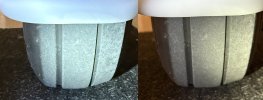
Does anyone know about how many landings a set of good GA tires are typically good for? I know it varies by tires and airplane and taxi distance, etc., but what's the average? I've got about 120 landings on my Michelin Pilot tires and seems to me I've run through about 75% of the life so far. So maybe 40 more landings and they'll be due for a change. Just curious if this is about average or not.


Attachments

  • Tires.jpg
    Tires.jpg
    986.5 KB · Views: 21
I put an Airhawk on my Lance when I bought it. It's bald now, but no cords through yet. 4 years, ~600 hours, ~700 landings. Getting replaced with a new Airhawk now.

From another thread on tires. Been very happy with the Airhawks. The Lance is heavy and doesn't dance around once she's on the ground like a Cessna does, especially on a windy day.

FWIW, those don't look anywhere close to 75% worn to me. More like 75% remaining.
 
From another thread on tires. Been very happy with the Airhawks. The Lance is heavy and doesn't dance around once she's on the ground like a Cessna does, especially on a windy day.

FWIW, those don't look anywhere close to 75% worn to me. More like 75% remaining.
Jim, Well, the left side of that main tire is doing better than the right side. Both tread lines were originally the same depth. So my comment about 75% worn really pertains to the right side. It has a lot of camber.
 
I'm not sure that it's possible to come up with an average, since it's going to vary significantly depending on landing surface, technique, and your propensity to use heavy braking. I use retreads on mine and they look basically new after six months of use and maybe 100 landings.
 
I'm not sure that it's possible to come up with an average, since it's going to vary significantly depending on landing surface, technique, and your propensity to use heavy braking. I use retreads on mine and they look basically new after six months of use and maybe 100 landings.
What are retreads?
 
What are retreads?
Used tires that are exhaustively inspected and then have a new layer of rubber adhered to the outside. Used extensively in the airlines. Testing suggests that they wear better and longer. I had Desser retreads put on mine and they have been fantastic. I couldn't be happier. If I had a retract aircraft, I'd be a little more worried (due to retreads being slightly oversized, I believe) but for a fixed-gear aircraft, I'll continue with retreads for the foreseeable future.
 
propensity to use heavy braking
Good point. I fly out of a class C with 6000' and 8000' perpendicular runways. Crosswinds are rarely an issue, and I rarely use my brakes.
 
Depends on surface conditions, pilot skill, and wind, probably in about that order.

Grass can make tires last an incredibly longer time.
 
Like said your tires have plenty of tread left IMO.
I flew a pair of air hawks on the mains on a 172 for 4 year and over 2400 landings. I would say 30% of the landings were on grass. They were really wore out and very thin. I won't do that again.
I replaced them with Monster retreads, love them.
Over the weekend I replaced a Goodyear flight special II. It was on the front and was more wore than I realized. I put another Goodyear on the front. Just couldn't put air hawks on the front.
Both of these tires are Goodyear flight special II 500-5.
IMG_5234.jpeg
 
Last edited:
Anyone not too familiar with tires and want to run under “first cord shows”

should be aware of this. I have some with “ first cord” and let folks

examine them. Put one finger on cord area and the other inside.

There is very little in between!

Cessnas normally wear the outside edges more as it contacts the ground

first and leaves last. Owner reversing as PM may make sense but hiring a

Tech do so might not be cost effective. Flat Spring Gear can be shimmed

but will not eliminate the condition.

Many folks inflate to the exact spec and do not recheck for a while.

This often leads to under inflated tires that wear quickly. My personal

preference is 5# over spec as same wheels and tires are used on heavier

models.
 
Last edited:
Vastly depends

Airplane

Has the plane ever had its camber checked with grease pads?

Running correct inflation?

Bigger factor

How are your landings, side loading, landing too hard, etc

How is the surface? Nice grass or beaches? Paved runways? Paved runways with a little snow or sand on them?

With my plane I’ll probably end up replacing them off age vs wear

Flight school planes, 3-4mo due to wear
 
We would get about 1300+ landings on the PA-25 tires and replace them each year during the annual inspection. About 1/2 way through the year we would turn them around for even tread wear. For most privately owned GA aircraft, the tires show dry rot before the tread life is gone.
 
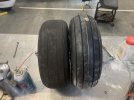
Here are the Air hawks after 2400+ landings. I did not flip them on the rim during the 4 years they were in use.
I was surprised on how thin they were in this condition.
3ba10aef-a27a-4169-b1ee-c0dabd7dadad.jpg

Ours and another nearby airport got the runways recoated last year or 2 ago. They used a very abrasive coating mixed with fine crushed granite stone I believe? There was dump truck piles of it on the apron before it was mixed with the sealer.
Anyway it is abrasive and wears our tires out much faster now. These tires above are smooth with no slices and before the recoating.
Check out this tire below, sliced to heck. Both of these are the same size tire, lot's of tread missing on the old one. I tried to add up the landings through 3 log books during the 4 years and 7 months it was in use. It will take more time in the logs as I quit adding up landings on this tire in my log book at 689 landings with 1.5 log books still to total. I bet it has close to 2000 landings.
68f3ffb6-aba3-47b9-8b9d-2bf1aec9bd44.heic
 
Last edited:
Not directly related but maybe someone can answer.

Say you have two identical tire and tube combos, outside of ply rating. Do both tires support the same load at the same psi regardless of ply? Then the higher ply tire, can support more weight with increased psi?

For example only say a 5.00x5 6 ply tire at 40psi can support 1000lbs safety and so can the same tire at 10ply at 40psi. However the 10 ply has the ability to support more weight when you add psi?

Or…

Should the 10ply always be ran at a higher psi than the equivalent 6ply regardless of the weight be supported?

I understand other dynamics for certification specs, weight, ride quality, and additional potential load on gear components.
 
Has the plane ever had its camber checked with grease pads?
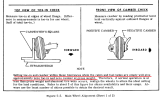
With Cessna gear, you're stuck with considerable camber when the aircraft is off the ground. Can't help that with bendy gear legs. It makes for much more wear on the outer edges of the tire. Cessna has specifications for camber and toe-in on the ground. From a 182 manual:

1741651019892.png
They want zero camber and zero toe-in on the ground at loaded weight.

Braking eats a lot of tire tread. It's the biggest wear factor for large-aircraft tires. Pilots who habitually brake hard will get short tire life, and if they're in the habit of taxiing at 1000 RPM and controlling speed with the brakes, they'll eat lots of tire rubber and brake linings and brake disc steel. Gets expensive.
Here are the Air hawks after 2400+ landings. I did not flip them on the rim during the 4 years they were in use.
I was surprised on how thin they were in this condition.
Air Hawks are made by Specialty Tires of America, formerly McCreary. Terribly cheap tires, always were. For a while their 4" tailwheel tire was the only one available and our students went through plenty of them on the Citabrias. They were about the same quality as a cheap handcart tire. Then some other outfit came out with a much sturdier tire with more thickness to its tread. Never looked back. For the mains I bought Condors. Good tires, made in Thailand by Michelin. Prices were OK, but no idea what they are now. It wasn't worth buying expensive Goodyears since training is hard on tires, with students trying to fix a too-fast landing with heavy braking and skidding the tread off the tires.
 
The Monster retreads advertising says 11/16"deep tread. They were much heavier than the wore out tires I removed.
I have been very happy with the retreads.
 
I run Desser retreads. In a TW training environment, as long as there's not a brake / skid event, I'll typically get about 1500 landings. I swap them (per BillTIZ) about halfway through for even wear.

I get to that time without a skid on 2/3 of them.

--Tony
 
Lots of good advice to preserve thread life. Also if able, using 10Âş flaps on take-off shortens take-off roll.
Depends on the airplane, obviously, but treating most normal takeoffs as "soft-field" departures does a lot for tire life.
 
The Monster retreads advertising says 11/16"deep tread. They were much heavier than the wore out tires I removed.
I have been very happy with the retreads.
+1 on Gary's comments. Monster retreads on Goodyear's are on my plane as well. They are heavier. The one gotcha is some people with wheel pants forget to add a little more clearance for the mud scrapper. Tires flex on landing and when the plane leans and catch on the scrappers if not adjusted for the heavier tread.
 
Last edited:
The Monster is quite a bit taller than a stock size tire.
Although it fit under my wheel pants with no adjustments needed.
5da1e539-58a9-41e5-831a-25e661adaaf8.jpg


17136146-fc56-46bf-89e8-8b1e9c7926da.jpg
 
Last edited:
How many? One really bad one.

But seriously- when I was maintaining a fleet of daily flown trainers, we got more than 2,000 landings out of a set of Desser 6.00X6 main tires and more on the nosewheel 5.00X5s.

Yes, we logged landings on the time sheets. Yes, we had knuckleheads flat spotted them down to the cords every now and then, but they were less than a third the cost of new Goodyears. They gave us a core refund for our turn-in tires, too!
 
Dessers are also a bit heavier, correct?
 
How many licks does it take to get to the center of a Tootsie Pop? The world may never know.
 
I love these comments, I'm cracking up! For what it's worth, I'm a flight instructor for almost 41 years now, have owned my own 152 this entire time and I still own it! I've had three flight schools during this time, I'm currently running one that I've had going since 1995. We've been teaching and everything from 1947 Stinson to a 1980 warrior and just about everything in between. My advice is get the cheapest tires you can if you're gonna run a Flight school because you honestly are not saving any money and getting any more wear getting Michelin's or something like that. I've always used six ply on everything. This includes backcountry and pavement. Your technique is gonna matter more than the amount of money you spent on your tire. Weather checking is probably gonna be the private owners biggest nightmare, if you store this airplane outside get some little canvas covers or something cheesy like that for your tires. The sun really destroys things. We keep everything in our hangars , so that sure extends the life of stuff.
My mantra for the last 40 years has been "slow airplanes are foot airplanes ". The one thing I see with pilots of all experience levels is very few of them know how to use their rudder on final. Quit touching down crooked and you'll get more life out of those tires. And a quick aside, I've been teaching Tailwheel since the 1980s and one of the worst pieces of advice I have to train out of people is that dance on the pedals stuff. Yes, you have to be ready with your feet but when I see people dance on the pedals when they fly with us, it is them correcting their own Overly excited inputs lol. The airplane knows what to do, leave it the hell alone.

 
Back
Top