How best to figure out what make/model of plane fits you best

The best advice I ever got was to roll right into your IFR rating after PPL. I completely ignored it, but it was still really good advice.
I would disagree with that. I think there's a lot of value in getting some XC experience, particularly using flight following. I was very comfortable using FF, so IFR communications was less of a huge leap, and comms are half the battle. It also gives you a chance to reinforce all that landing and pattern stuff you just learned before you start flying approaches nonstop.
 
I would disagree with that. I think there's a lot of value in getting some XC experience, particularly using flight following. I was very comfortable using FF, so IFR communications was less of a huge leap, and comms are half the battle. It also gives you a chance to reinforce all that landing and pattern stuff you just learned before you start flying approaches nonstop.
I can see both sides of that argument. So far I'm doing decently well with the comms piece once I was able to get 30 years of using Army radio procedures modified to FAA speak. Not being shy when you key the mike is half the battle. No matter what I'm in a good place to keep hitting the pattern a lot - I'm 5 minutes from the airport now that I'm past the solo I can get over and do pattern work most any time I want to.
 
Bring a box of doughnuts to an a&p you might use. Check out his shop, see what he's working on and if there's any models you're thinking of, get his opinions. If you see any you like ask him to pass along your info to the owner for a flight. Not necessarily to buy but to get a feel for the model.
The power of donuts/doughnuts and a good relationship with a reputable shop cannot be overestimated. It got me a hangar invitation probably a couple of years earlier than I could have hoped for, as well as what seems to be good "old" labor pricing and excellent access when I need something. Giving them half my paycheck over the last year probably helped too.
 
The first three flights in your new Bonanza will likely scare you just a bit. It IS a lot of airplane. About flight number 5 or 6, your sphincter will unclench and you'll say: 'wow this is the way gen aviation should be.' Flights 8 through 3000 will be great, wondering why other planes(182, cough, cough) were even built. Get your IR inyour own Bo and get used to its feel. One important thing. If you get into trouble and head for redline, the solution is the throttle, NOT the elevator. I have about 800 hours on V tails and started flying them with 208 total in my log. You will own it forever and support is all over the globe with a simple phone call.
 
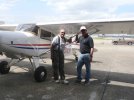
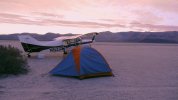
I would attend some of the bigger airshows and try on some of the planes you are thinking about. A lot of really interesting and fun planes are not available for any price on the rental market, so if you restrict your shopping to planes you can actually rent, you'll have a significantly smaller pool of aircraft to consider. Going to big airshows (Sun-N-Fun, AirVenture Oshkosh etc) will let you sit in a variety of aircraft displayed by certified builders and by sellers of kit aircraft. You can also wander the rows of aircraft that flew in and have substantive conversations with owners. They can provide insights on the pluses and minuses of owning their type of plane. You might even get offers of rides. Interactions with dealers and pilot/owners of planes at airshows is what led to my first two aircraft purchases and I was very happy with both planes! I'm currently on my 5th plane, not because I was unhappy with any of the previous rides, but because my mission has changed over the years. I'm currently flying a Maule because my primary mission these days is airplane camping and backcountry flying. Before buying my Maule, I flew to Georgia for a couple hours of dual with Ray Maule (while he was still alive and flying) and the experiences on that trip were more than worth the cost. I also visited Sun-N-Fun while I was in that corner of the country.
Me and Ray Maule: Ray-N-Me.jpg

My kind of flying these days:
Sat.Sunrise1.jpeg.jpg
 
Last edited:
Thanks everyone for the inputs!

Yes, deliberately did not discuss aircraft under consideration because I did not want the thread to devolve into a comparison discussion, which there are many of those already out there, since I'm looking for more practical advice on 'how do I go about seeing them for myself.' Having said that, the three that I'm leaning towards (each with relative strengths and weaknesses with regards to what I think I need and the considerations some of you have noted) are:

Bonanza 35 (likely S35 through V35 A/B) - think this hits the higher end of my requirements, but too much airplane at this stage?
C182 (likely N through R, also interested in the RG variants) - my flight school has a 182N that it uses for IFR training so I will get time in this one
Piper Turbo Arrow III - more lower end of requirements (maybe) - big question is how comfortable will this be for primary passenger (wife) since she needs to like flying in it too

One question: I've seen some posters online commenting on the value of IFR training in your own machine IOT get time with an instructor with the actual systems as configured in the plane you will be flying. Sure, but how valuable is that actually? Enough to move up my timeline on acquisition?
Nice list, and I echo what everyone has said about the 182 being the jack of all planes, but I went a different route. I took my wife for a cross-country trip in a 172, and that was the end of that for 172s and 177s...When I showed her a 182 (Robin Ardoin's, in fact), she liked it, but it didn't really click.

That 5-hour cross-country in a 172 established that while we wanted reasonable cross-country performance, we valued comfort the most. After a lot of shopping and research, we came back to the Rockwell Commander. I joined the Commander owners group, started networking, and got some great feedback from the group on some of the airframes I was considering. The level of support I got from the COG was a major factor in my final choice of the 114 over other low-wing retracts.

I gave up some speed and range for the comfort factor. 1100 lb payload, so I can carry 4 normal people with 45 gallons of fuel, or 3 with the full 68 gallons on board. I plan at 140 TAS and 14 gallons. My IFR range is about 400 NM with two people, 250nm with 4 on board. We are normally aspirated, so I fly between 6 and 10,000 feet, but there are tubocharged and turbo-normalized Commanders out there from the factory and aftermarket.

Take a look at Commanders, you might be surprised..
 
You've got a lot of posters talking about specific planes, but you're asking about the process. I think specific planes comes next. Here would be more of a process related thought. If I were in your shoes, here's what I would try to think through:

1) Identify exactly what it is that you actually want to do with this plane - the classic "what's your mission" question. Define this first, but also be open to feedback about your mission (as in, if you said your mission was to fly to Aspen with 6 people and bags in winter storms on a regular basis, you're going to get feedback like "that's not realistic for where you're at as a pilot"). Defining your mission includes numerous criteria:
- How much weight are you likely hauling? Of what type (people [how big are they], gear, baggage, etc)
- How far do you typically want to go?
- What are the places like that you want to go? Paved runways, grass, dirt, off-airport?
- Where are you located and what kind of terrain do you envision flying over?
- What is your tolerance for time in the airplane?

2) Understand your financial capability. What's a reasonable purchasing budget and how much are you committed or willing to spend on operating and maintaining the aircraft per year? A strong recommendation is to slightly undershoot your financial capability, it will be a lot more enjoyable that way. But, don't cheap out either.

3) Once you have those two figured out, post it here. Some may give you a lot of flack for posting a subject that has been hashed out 100 times before, but secretly, they all love it. You'll get plenty of responses and ideas. Hash out your own ideas in that thread.

4) Ideally, go take a look at a couple of the examples that surface in step #3. The idea of attending a big airshow is a good one, but in my experience, it's pretty hard to "test drive" planes - I bought my first plane without ever having flown that model and I didn't even get to test fly it before purchase - sometimes that's just how it goes.

As a side comment, I would buy a plane whenever you're ready. No reason, IMO, to wait until after PPL and definitely no reason not to train in it for IR. I bought my plane after PPL and did all my IR training in it and it was great. There are plenty of additional recommendations and debates along the way (high time vs. low time, fully equipped or plans-to-update, insurance costs and coverage availability, buy now or buy later, buy the plane you will want in the future now vs. buy the plane you're actually experienced for today) but those all come down the line.

PS - It will be hard to get this perfect. Eventually you'll buy a second plane anyway. Just try to get it "good enough" so that it lasts you 5-6 years.

 
Back
Top