High EGT Low CHT on one cylinder and it is not the spark plug! Looking for some eyes to see what this could be :)

xander75

Pre-takeoff checklist
Joined
Jan 21, 2022
Messages
119
Display Name
xander75
hey folks, I had a situation today I like your opinion/suggestion on. Engine: (IO360c1c / pa28r-200). When I went flying with her I noticed that EGT#1 was about 150F higher then normal, 2-3-4 all within the usual. At the same time the CHT was lower then before also on CYL#1.
As always during cruise I go to peak or slightly lop and something strange happened. cyl#1 peaked super early, well before the normally expected 7.2gph I usually have at 22sq. peak happened about about 8.2gph. as I pulled it back further, the engine vibration was hefty. started to do some troubleshooting. left mag/right mag suspecting a faulty plug. But on both the mag alone or eis alone, the vibration was still there. this made me belief it is not the spark plugs. going full rich makes it fly smooth. but with the notion of higher EGT and lower CHT than the usual.
So went back, cleaned all plugs. cyl#1's regular (mag driven) plug was a bit more dirty, all clean, and made a test flight. it made no difference.
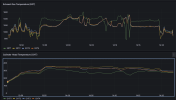
Interestingly when i pulled mixture back a bit more to 6.9/7 gph on a 22sq the EGT and CHT for #1 were dropping as if it was shutting down!! (with vibration obviously).

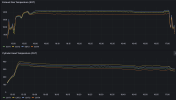
I am suspecting a dirty nozzle? or a clogged fuel injector line? I have here 2 JPI graphs from last week with all smooth and from the test flight today after I cleaned the plugs.
You can see the mega dips in EGT/CHT for #1 at around 14.12p at around 14.20p it was landing sequence so disregard that part.

You can see 2/3/4 being all behaving normal as before, it is just #1 that is a bit off.

Now if this is a full injector or fuel line, is that an owner can fix or clean or is this excluded from the "preventive maintenance list"?

Or if this could be something else, what are your thoughts?!

thanks for looking along!
xander


This is from today after I cleaned the plugs and did some experimentation at around 14.10p where it looks to me like cyl#1 is shutting down.
todays situation.png

This is pretty much the normal what I am used to
usual graphs.png
 
Maybe start with checking then cleaning only the nozzle from the troubled cylinder? I had some issues years ago, in my case I cleaned each nozzle then did extensive ground runups before flying again. I was back to good.

I did the Hoppes #9 procedure, more or less. Just go slow, double check the work.
 
thank you @Dan Thomas and @sourdough44 I'll check if that is something easy to do myself or if its better to have a professional do it and let you know what the result is.
I am curious to see what is in there... If it is fuel contamination (never seen anything during preflight in the tester) I would expect all cyls to have some issue?

Also a compression issue due to the cylinder itself or (sticky) exhaust valve would manifest itself differently too, right?
 
You remember that story about giving food or teaching one to fish? Depending on your cowling, and exact cylinder, removing then cleaning a nozzle is no more of an issue than changing a spark plug. Look online for advice & videos.

As I recall, you don’t want to stick anything hard inside the nozzle or orifices, scratching or changing things. I used fishing line as a tester/poker. Have proper fitting wrenches, be aware of nut size & type, don’t be stripping anything.

Just go slow, if things feel they may go sideways, stop. Of course, don’t stray too far out of your comfort zone.
 
I'll check if that is something easy to do myself or if its better to have a professional do it
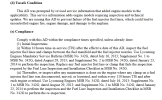
Get a pro. There is an AD on Lycoming fuel injection lines that must be complied with when stuff is disassembled. It's easy enough to create a problem with a line and have a leaking line spraying fuel everywhere. From that AD:

1753022766915.png
https://drs.faa.gov/browse/excelExt...CB0F30786257ECF005D80C7.0001?modalOpened=true
Also a compression issue due to the cylinder itself or (sticky) exhaust valve would manifest itself differently too, right?
The mixture going from rich to lean wouldn't affect that.
 
You remember that story about giving food or teaching one to fish? Depending on your cowling, and exact cylinder, removing then cleaning a nozzle is no more of an issue than changing a spark plug. Look online for advice & videos.
FAR 43, Appendix A, Part C:

(c) Preventive maintenance. Preventive maintenance is limited to the following work, provided it does not involve complex assembly operations:

(1) Removal, installation, and repair of landing gear tires.
(2) Replacing elastic shock absorber cords on landing gear.
(3) Servicing landing gear shock struts by adding oil, air, or both.
(4) Servicing landing gear wheel bearings, such as cleaning and greasing.
(5) Replacing defective safety wiring or cotter keys.
(6) Lubrication not requiring disassembly other than removal of nonstructural items such as cover plates, cowlings, and fairings.
(7) Making simple fabric patches not requiring rib stitching or the removal of structural parts or control surfaces. In the case of balloons, the making of small fabric repairs to envelopes (as defined in, and in accordance with, the balloon manufacturers' instructions) not requiring load tape repair or replacement.
(8) Replenishing hydraulic fluid in the hydraulic reservoir.
(9) Refinishing decorative coating of fuselage, balloon baskets, wings tail group surfaces (excluding balanced control surfaces), fairings, cowlings, landing gear, cabin, or cockpit interior when removal or disassembly of any primary structure or operating system is not required.
(10) Applying preservative or protective material to components where no disassembly of any primary structure or operating system is involved and where such coating is not prohibited or is not contrary to good practices.
(11) Repairing upholstery and decorative furnishings of the cabin, cockpit, or balloon basket interior when the repairing does not require disassembly of any primary structure or operating system or interfere with an operating system or affect the primary structure of the aircraft.
(12) Making small simple repairs to fairings, nonstructural cover plates, cowlings, and small patches and reinforcements not changing the contour so as to interfere with proper air flow.
(13) Replacing side windows where that work does not interfere with the structure or any operating system such as controls, electrical equipment, etc.
(14) Replacing safety belts.
(15) Replacing seats or seat parts with replacement parts approved for the aircraft, not involving disassembly of any primary structure or operating system.
(16) Trouble shooting and repairing broken circuits in landing light wiring circuits.
(17) Replacing bulbs, reflectors, and lenses of position and landing lights.
(18) Replacing wheels and skis where no weight and balance computation is involved.
(19) Replacing any cowling not requiring removal of the propeller or disconnection of flight controls.
(20) Replacing or cleaning spark plugs and setting of spark plug gap clearance.
(21) Replacing any hose connection except hydraulic connections.
(22) Replacing prefabricated fuel lines.
(23) Cleaning or replacing fuel and oil strainers or filter elements.
(24) Replacing and servicing batteries.
(25) Cleaning of balloon burner pilot and main nozzles in accordance with the balloon manufacturer's instructions.
(26) Replacement or adjustment of nonstructural standard fasteners incidental to operations.
(27) The interchange of balloon baskets and burners on envelopes when the basket or burner is designated as interchangeable in the balloon type certificate data and the baskets and burners are specifically designed for quick removal and installation.
(28) The installations of anti-misfueling devices to reduce the diameter of fuel tank filler openings provided the specific device has been made a part of the aircraft type certificiate data by the aircraft manufacturer, the aircraft manufacturer has provided FAA-approved instructions for installation of the specific device, and installation does not involve the disassembly of the existing tank filler opening.
(29) Removing, checking, and replacing magnetic chip detectors.
(30) The inspection and maintenance tasks prescribed and specifically identified as preventive maintenance in a primary category aircraft type certificate or supplemental type certificate holder's approved special inspection and preventive maintenance program when accomplished on a primary category aircraft provided:

(i) They are performed by the holder of at least a private pilot certificate issued under part 61 of this chapter who is the registered owner (including co-owners) of the affected aircraft and who holds a certificate of competency for the affected aircraft (1) issued by the holder of the production certificate for that primary category aircraft that has a special training program approved under § 21.24 of this subchapter; or (2) issued by another entity that has a course approved by the Administrator; and
(ii) The inspections and maintenance tasks are performed in accordance with instructions contained by the special inspection and preventive maintenance program approved as part of the aircraft's type design or supplemental type design.
(31) Removing and replacing self-contained, front instrument panel-mounted navigation and communication devices that employ tray-mounted connectors that connect the unit when the unit is installed into the instrument panel, (excluding automatic flight control systems, transponders, and microwave frequency distance measuring equipment (DME)). The approved unit must be designed to be readily and repeatedly removed and replaced, and pertinent instructions must be provided. Prior to the unit's intended use, and operational check must be performed in accordance with the applicable sections of part 91 of this chapter.


"Preventive maintenance is limited to the following work," it says. I don't see cleaning fuel injectors listed there. Do you?
 
thank you again guys! seems like its wise to have a mechanic do it. especially looking at some of the dyi vids make it sound it is super sensitive stuff...
 
FAR 43, Appendix A, Part C:

(c) Preventive maintenance. Preventive maintenance is limited to the following work, provided it does not involve complex assembly operations:

(1) Removal, installation, and repair of landing gear tires.
(2) Replacing elastic shock absorber cords on landing gear.
(3) Servicing landing gear shock struts by adding oil, air, or both.
(4) Servicing landing gear wheel bearings, such as cleaning and greasing.
(5) Replacing defective safety wiring or cotter keys.
(6) Lubrication not requiring disassembly other than removal of nonstructural items such as cover plates, cowlings, and fairings.
(7) Making simple fabric patches not requiring rib stitching or the removal of structural parts or control surfaces. In the case of balloons, the making of small fabric repairs to envelopes (as defined in, and in accordance with, the balloon manufacturers' instructions) not requiring load tape repair or replacement.
(8) Replenishing hydraulic fluid in the hydraulic reservoir.
(9) Refinishing decorative coating of fuselage, balloon baskets, wings tail group surfaces (excluding balanced control surfaces), fairings, cowlings, landing gear, cabin, or cockpit interior when removal or disassembly of any primary structure or operating system is not required.
(10) Applying preservative or protective material to components where no disassembly of any primary structure or operating system is involved and where such coating is not prohibited or is not contrary to good practices.
(11) Repairing upholstery and decorative furnishings of the cabin, cockpit, or balloon basket interior when the repairing does not require disassembly of any primary structure or operating system or interfere with an operating system or affect the primary structure of the aircraft.
(12) Making small simple repairs to fairings, nonstructural cover plates, cowlings, and small patches and reinforcements not changing the contour so as to interfere with proper air flow.
(13) Replacing side windows where that work does not interfere with the structure or any operating system such as controls, electrical equipment, etc.
(14) Replacing safety belts.
(15) Replacing seats or seat parts with replacement parts approved for the aircraft, not involving disassembly of any primary structure or operating system.
(16) Trouble shooting and repairing broken circuits in landing light wiring circuits.
(17) Replacing bulbs, reflectors, and lenses of position and landing lights.
(18) Replacing wheels and skis where no weight and balance computation is involved.
(19) Replacing any cowling not requiring removal of the propeller or disconnection of flight controls.
(20) Replacing or cleaning spark plugs and setting of spark plug gap clearance.
(21) Replacing any hose connection except hydraulic connections.
(22) Replacing prefabricated fuel lines.
(23) Cleaning or replacing fuel and oil strainers or filter elements.
(24) Replacing and servicing batteries.
(25) Cleaning of balloon burner pilot and main nozzles in accordance with the balloon manufacturer's instructions.
(26) Replacement or adjustment of nonstructural standard fasteners incidental to operations.
(27) The interchange of balloon baskets and burners on envelopes when the basket or burner is designated as interchangeable in the balloon type certificate data and the baskets and burners are specifically designed for quick removal and installation.
(28) The installations of anti-misfueling devices to reduce the diameter of fuel tank filler openings provided the specific device has been made a part of the aircraft type certificiate data by the aircraft manufacturer, the aircraft manufacturer has provided FAA-approved instructions for installation of the specific device, and installation does not involve the disassembly of the existing tank filler opening.
(29) Removing, checking, and replacing magnetic chip detectors.
(30) The inspection and maintenance tasks prescribed and specifically identified as preventive maintenance in a primary category aircraft type certificate or supplemental type certificate holder's approved special inspection and preventive maintenance program when accomplished on a primary category aircraft provided:

(i) They are performed by the holder of at least a private pilot certificate issued under part 61 of this chapter who is the registered owner (including co-owners) of the affected aircraft and who holds a certificate of competency for the affected aircraft (1) issued by the holder of the production certificate for that primary category aircraft that has a special training program approved under § 21.24 of this subchapter; or (2) issued by another entity that has a course approved by the Administrator; and
(ii) The inspections and maintenance tasks are performed in accordance with instructions contained by the special inspection and preventive maintenance program approved as part of the aircraft's type design or supplemental type design.
(31) Removing and replacing self-contained, front instrument panel-mounted navigation and communication devices that employ tray-mounted connectors that connect the unit when the unit is installed into the instrument panel, (excluding automatic flight control systems, transponders, and microwave frequency distance measuring equipment (DME)). The approved unit must be designed to be readily and repeatedly removed and replaced, and pertinent instructions must be provided. Prior to the unit's intended use, and operational check must be performed in accordance with the applicable sections of part 91 of this chapter.


"Preventive maintenance is limited to the following work," it says. I don't see cleaning fuel injectors listed there. Do you?
I believe there is a later interpretation letter stating that the list of prev maint described is not an exhaustive list and that other similar actions are counted as prev maint. Or just use no 22 on the list. Maybe a guy thinks the line is bad so he disassembles, cleans and rechecks.

Cleaning an injector is not changing the way the fuel is metered or anything and is a pretty straight forward procedure.
 
I believe there is a later interpretation letter stating that the list of prev maint described is not an exhaustive list and that other similar actions are counted as prev maint. Or just use no 22 on the list.
Then they need to rewrite FAR 43 Appendix A(C) to reflect that, as well as FAR 43.3.

"Prefabricated fuel lines" means just that, not injector lines.
Cleaning an injector is not changing the way the fuel is metered or anything and is a pretty straight forward procedure.
And yet there are people that could screw it up. That cannot be relied upon to not go pushing a wire through the injector, for instance, or overtorquing it or the fuel line nut when reinstalling it. Those nut threads are easily stripped, or the nut split.
 
Then they need to rewrite FAR 43 Appendix A(C) to reflect that, as well as FAR 43.3.
They may need to rewrite FAR 43 Appendix A(C), and the Counsel opinion (Coleal) to which the earlier poster refers does indicate that such a change is in the works (see last sentence in the excerpt below). But that Counsel opinion was written 16 years ago. So it's has been the controlling document for a while, now. Specifically it says re. the issue of what is preventive maintenance.

Many preventive maintenance tasks are listed in 14 C.F.R. part 43, appendix A,
paragraph (c). The paragraph sets forth in 32 numbered subparagraphs items the FAA
has determined to be preventive maintenance. Even though the introductory text of
subparagraph (c) states that "[p]reventive maintenance is limited to the following work
...." (emphasis added), in view of the broader definition of preventive maintenance in
section 1.1, we believe that such limitation is not controlling. Similarly, for the same
reason, we also believe that the following sentence in Advisory Circular 43-12A,
Preventive Maintenance (which was referenced in Mr. Hernandez's letter), is overly
restrictive. That sentence, found in Paragraph 3(b)(1), states: "If a task or maintenance
function does not appear in the list, it is not preventive maintenance." As with the other
paragraphs of Appendix A (i.e., on major repairs and major alterations), the lists are
better viewed as examples of the tasks in each category-they cannot be considered all-
inclusive. There are, no doubt, many "simple or minor preservation operations [tasks]"
and many "replacement of small standard parts not involving complex assembly
operations" performed daily, especially on small general aviation aircraft, that the agency
would consider to be preventive maintenance, though they are not included in the 32
listed items. It is our understanding that Flight Standards' Aircraft Maintenance
Division is planning to clarify this issue in a future revision to the AC.

The list of 32 items is better viewed as examples of the tasks. They can't be considered all inclusive.
 
"Preventive maintenance is limited to the following work," it says. I don't see cleaning fuel injectors listed there. Do you?

Using the interpretive guidance provided by the FAA in the Coleal memo, yes.
 
Be very careful cleaning that injector. They are flow checked to fine tolerances at the factory. Clean it per the manufacturers instructions to avoid damage. Do not try to pass a wire through or scratch the orifice. Ultrasonic works well. Hoppe’s # 9 works well but don’t leave it submerged overnight. Just clean it and be done.
 
I asked the mechanic remove the nozzle and yup there was a lot of carbon build up!
we put it in a cleaning solution for a little bit and blew it out with compressed air (seems like the "standard" remedy).
after reinstallation took her for a flight and all graphs are back to where they used to be!

that EDM appears to be of great value ...! (I have a different/older post with downloads for the decoder JPI EDM tool and full install dockers with mysql and grafana for plotting in case you dont want to use the CSV in Excel).

the operation of removing, cleaning and reinstalling the nozzle on this IO360c1c seemed pretty straight forward.
there seems to be some discrepancy whether an owner can do this or if this falls outside the preventative maintenance, so will chekc more on that.

Anyways I wanted to share that the diagnoses we concluded here appeared to be correct and that things are back in good shape.

only surprising thing is how this changed from one flight good to next flight bad! I could not derive from the graphs from earlier flight a slow degradation!

so besides a qt of oil and a screwdriver, some pliers and hoppe9 are now part of the flight bag :)
 
Last edited:
the operation of removing, cleaning and reinstalling the nozzle on this IO360c1c seemed pretty straight forward.
there seems to be some discrepancy whether an owner can do this or if this falls outside the preventative maintenance, so will chekc more on that.

No discrepancy. You can do it. Google FAA Coleal memo.
 
only surprising thing is how this changed from one flight good to next flight bad! I could not derive from the graphs from earlier flight a slow degradation!
A bit of carbon breaks off and gets stuck a little farther down in the injector where it throttles the fuel flow.

We once had one that was intermittently cutting a cylinder out. It was a tiny flake of paint jammed in the nozzle bore and it would pivot from "open" to "closed" like a throttle. The source of the paint was a mystery until we dismantled that fuel system and found paint inside the fuel supply bulkhead fitting on the firewall, which someone had painted while the engine was off and the fittings not taped shut. That flake got past the servo filter, which must have been loose or damaged at one time, and past the manifold screen, which we found loose inside the manifold. This was an airplane we had just bought and were fixing up for the school.
 
so besides a qt of oil and a screwdriver, some pliers and hoppe9 are now part of the flight bag :)
Pliers? Please tell me you're not planning to attack your airplane's engine with pliers.
 
Pliers? Please tell me you're not planning to attack your airplane's engine with pliers.
In a pinch, doing a field/AOG repair to get home, pliers are a good tool to have (assuming you're not too ham-handed with them).
 
In a pinch, doing a field/AOG repair to get home, pliers are a good tool to have (assuming you're not too ham-handed with them).
Pliers are a dandy way to end up disposing of a lot of money. I have had to replace expensive stuff that was damaged by pliers or vise-grips.

There's an old saying among aircraft mechanics: "There is nothing so dangerous as a pilot with a screwdriver." They love to overtighten every screw they find, and stuff gets busted. Or the Philips socket gets torn out so that subsequent removal is made so much harder and more expensive.
Channellock pliers are a favorite method to wreck fasteners.

It seems like very few 'mechanics' have proper tools for fuel systems, particularly flare fitting wrenches. Using a standard open end wrench on those fittings causes distortion, and can damage its ability to seal properly. That can result in leaks, and a possible fire.
 
I'm trying to think of something pliers can be used for around an airplane. The only thing I came up with is crushing one's index finger with them so the repair effort is aborted.

:biggrin:
You need pliers to loosen the Lycoming's dipstick/oil filler cap after someone has made sure it will never vibrate loose.
 
2 crescent wrenches, one small, another medium do lot better than plyers, side cutters are useful dealing with safety wire. Unwind the twists, then cut.
 
Back
Top