High EGT Indication Cylinder 3, C172 Lycoming O-320 with Ly-Con 160hp STC

Jon Wilder

Line Up and Wait
Joined
Oct 19, 2015
Messages
607
Display Name
Jwylde
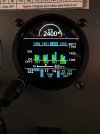
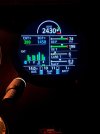
My thought is a faulty probe since the CHT is consistent with cylinder 4. But wanted to see what the experienced mechanics here think.
 

Attachments

  • IMG_3563.jpeg
    IMG_3563.jpeg
    1.5 MB · Views: 39
  • IMG_3566.jpeg
    IMG_3566.jpeg
    997.7 KB · Views: 40
Potential induction leak. You can have low cht and high egt... Think lean of peak operations. Which if you had an induction leak would give a lean mixture on one cylinder.

I'd swap probes or use a temp gun to confirm accuracy
 
Is this new behavior?
No. This is on a club aircraft. I joined the club in June and it's been like that since I've been flying it. No one in the club seems too concerned. But if this is just a sensor issue that can be resolved by changing the sensor, I'd like to know I'm getting good information.
 
Potential induction leak. You can have low cht and high egt... Think lean of peak operations. Which if you had an induction leak would give a lean mixture on one cylinder.

I'd swap probes or use a temp gun to confirm accuracy
Wouldn't that have some effect on the CHTs also? The max differential on the CHT side is only 25°F.
 
Ok, I'm definitely not an experienced mechanic. But my understanding is that EGT readings are influenced by (among other things) the placement of the probe. If the #3 probe is further from, or closer to the exhaust valve than the other probes, the readings will be different. If the engine is running well I personally wouldn't be too concerned, unless something changes.

But that said, perhaps you could upload the data from the monitor to Savvy Aviation, or an experience A&P/IA and have them give you a more informed opinion.
 
Trends are more important than absolute numbers. As others have mentioned, higher EGT can come from probe placement, an induction leak or timing problems from magnetos or spark plugs. I don't think the difference in your image is large enough to be concerned about, especially if the engine is running smooth.
 
Last edited:
Wouldn't that have some effect on the CHTs also? The max differential on the CHT side is only 25°F.
Typically. But not always.

A burned valve could cause a moderate egt spike as well.

Could be nothing. Could be something. Download the data and see if "it's been like that". 407 on the cht is a little hotter than I'd like to be.
 
You are slightly (1.2%) above the recommended 400F max CHT for lycomings (but still FAR from redline). That said you could have a temp probe(s) that are just out of spec. Have you calibrated them or validated them by swapping leads on the sensors?

I would first check/retime magnetos. While under the cowl look for induction leaks, check baffles/seals and boroscope the cylinders and look for valve issues. If even just a tiny smidge of an anomaly is detected, consider lapping in place.

Leaning generally isn't a huge red flag and won't raise CHT unless you are leaning for peak power. If you are running LOP then an excessivly lean mixture won't raise CHT, but will EGT.

Honestly your oil temp is fine and you are not experiencing engine roughness. I would not really waste much time on this unless your club has an AnP with free time and wants to tinker.
 
Last edited:
This is on a club aircraft. I joined the club in June and it's been like that since I've been flying it. No one in the club seems too concerned.
Without any additional history or troubleshooting results cant offer much, but if its a club aircraft not sure what else you'll be able to perform. Have you discussed it with the club's mechanic? Perhaps start simple and determine when it was first noticed or maybe convince the members to check the accuracy of the indications at a minimum?
 
Without any additional history or troubleshooting results cant offer much, but if its a club aircraft not sure what else you'll be able to perform. Have you discussed it with the club's mechanic? Perhaps start simple and determine when it was first noticed or maybe convince the members to check the accuracy of the indications at a minimum?
I can offer information to the club mechanic. That's all I'm doing at this point is researching. I'm also the club's avionics technician so if a probe needs to be replaced or swapped, it will probably be me doing it under supervision of the club mechanic.
 
Back
Top
